

Business
New GST Rates Likely To Be Implemented By September 22, Says Report

Last Updated:
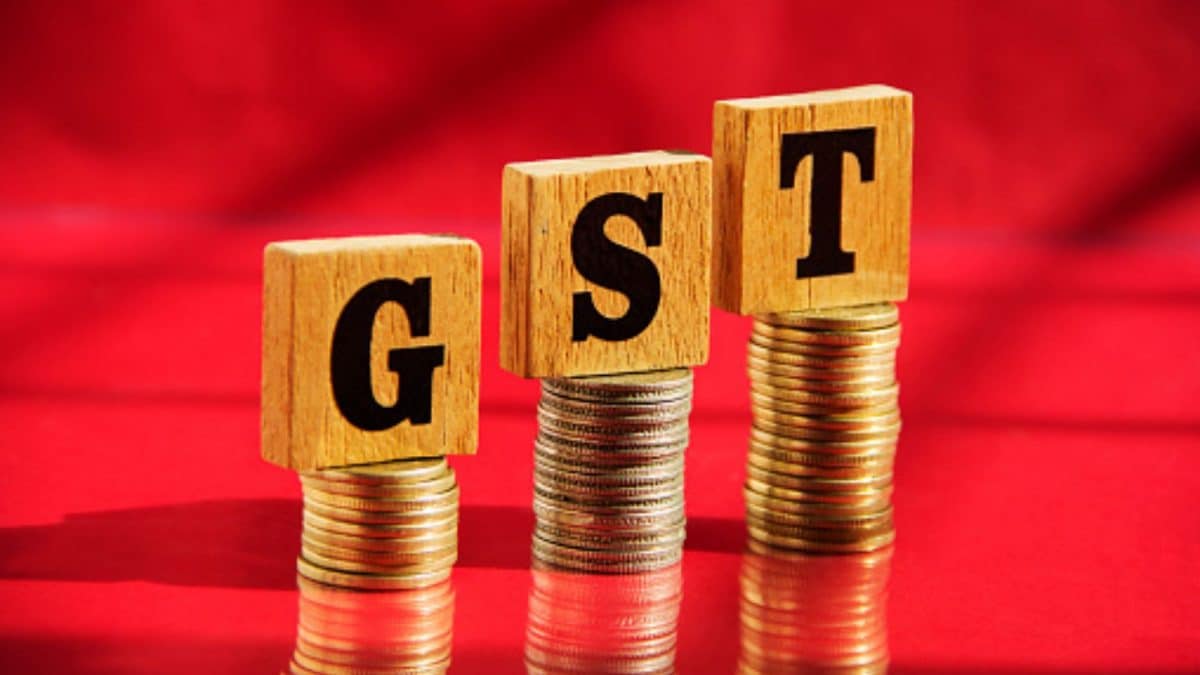
The GST Council will meet in the national capital on September 3-4 to deliberate on the Centre’s proposal for a simplified two-rate GST structure of 5% and 18%.


Notifications on the new GST rates will likely be issued within five to seven days after the Council’s decision.
The Goods and Services Tax (GST) Council, headed by Finance Minister Nirmala Sitharaman, is likely to roll out new GST rate slabs around September 22 to push festive demand in the country, NDTV Profit has reported citing government sources. The implementation is expected to coincide with the Navratri celebrations.
The GST Council will meet in the national capital on September 3-4 to deliberate on the Centre’s proposal for a simplified two-rate GST structure of 5% and 18%. According to the report, notifications on the new rates will likely be issued within five to seven days after the Council’s decision.
The Group of Ministers (GoM) on rate rationalisation, compensation cess, and health and life insurance met earlier this week and, in principle, agreed to the Centre’s plan for a two-slab GST.
As per the reforms proposed by the Centre, GST would move from the current four-tier structure of 5%, 12%, 18% and 28% to a two-rate system. Goods and services would be classified under ‘merit’ (5%) and ‘standard’ (18%) categories. A special 40% rate would apply on select luxury and sin goods such as ultra-premium cars, while certain labour-intensive items would continue to enjoy concessional rates as low as 0.1%, 0.3% or 0.5% to support employment-intensive sectors.
On Independence Day 2025, Prime Minister Narendra Modi had announced the upcoming reforms, describing them as ‘GST 2.0’. Calling GST one of the most significant reforms since its launch in 2017, he underscored the need for rationalisation to provide relief to the common man, farmers, the middle class, and MSMEs.
Finance Minister Nirmala Sitharaman has also said the new GST regime will make people self-sufficient and boost growth in manufacturing and MSMEs.
Speaking to Groups of Ministers (GoMs) on rate rationalisation, insurance taxation, and compensation cess, Sitharaman last week said the proposal by the central government is with a vision to usher in the next generation of GST reforms in India’s journey towards becoming the Atmanirbhar Bharat.
Exemption for Insurance Premiums For Individuals
Bihar Deputy CM Samrat Choudhary, who is also the convenor of insurance GoM, said the Centre has proposed exempting health and life insurance premiums from GST for individuals, to which some states differed. Currently, such premiums attract 18% GST.
“The Centre’s proposal is clear that the insurance sector’s individual and family (policies) should be exempt from GST. This has been discussed and the GoM report will be presented to the Council,” Choudhary told reporters last week after the GoM meeting.
The panel, comprising ministers from 13 states including Uttar Pradesh, West Bengal, Karnataka, Kerala and Tamil Nadu, will submit its report to the GST Council by October-end.
Union Minister of State for Finance, Chief Minister of Goa, Deputy CM of Bihar and Finance Ministers of States in the three GoMs were also present at the meeting.

Haris is Deputy News Editor (Business) at news18.com. He writes on various issues related to personal finance, markets, economy and companies. Having over a decade of experience in financial journalism, Haris h…Read More
Haris is Deputy News Editor (Business) at news18.com. He writes on various issues related to personal finance, markets, economy and companies. Having over a decade of experience in financial journalism, Haris h… Read More
Read More




NEW DELHI: People with job cards assigned under Mahatma Gandhi National Rural Guarantee Scheme will be able to get work without disruption when transition takes place to new rural employment framework under Viksit Bharat-Guarantee for Rozgar and Aajeevika Mission (Gramin) Act.Even though exact timeframe is not known yet, rural development ministry officials said the VB-G RAM G scheme will come into force in the coming financial year after the Centre frames and notifies the rules. After govt notifies the Act’s commencement date, states will get six months to make their schemes to enable implementation of the law.To ensure there is no disruption and job guarantee is upheld during transition from MGNREGA, it has been proposed to enable workers to use the same job cards issued under MGNREGA with Aadhaar-based eKYC.The officials said that as of now, around 75% of job cards have been verified with eKYC under the ongoing scheme. Moreover, ongoing projects under MGNREGA, if incomplete when the transition happens to the new scheme, would stay on course.Meanwhile, work is on to frame rules, lay out regulations on normative allocations, fund flow plan, IT framework, a national-level steering panel and social audits.Under the new law, focus will be on transparency to weed out leakages and duplicacy of work,the social audit system will be strengthened, and technology leveraged to create systems to establish work progress, timely wage payment and accountability through ‘e-measurement’ books, sources said. Demand for work will have to be entered on a digital platform. Officials made it clear the new law in no way interferes with demand-driven character of the scheme.
Business
Gurugram Attracts Rs 86,588 Crore In Real Estate Investments In 2025 As RERA Clears 131 Projects

Last Updated:
Alongside rising investments, Gurugram RERA strengthened regulatory oversight to safeguard homebuyer and investor interests


Gurgaon Real Estate (Representative Image)
Gurugram emerged as one of India’s top real estate investment destinations in 2025, with projects worth Rs 86,588 crore receiving regulatory approvals during the year, according to data from the Gurugram Real Estate Regulatory Authority (Gurugram RERA).
Market observers said the numbers reflect strong investor confidence in the NCR’s largest commercial and residential hub.
Gurugram RERA registered 131 projects in calendar year 2025, representing development potential of 35,455 units across housing and commercial segments.
A striking feature of the data was the dominance of large-ticket projects. Just 28 major developments accounted for investments worth Rs 59,360 crore, highlighting the growing influence of institutional capital and large developers in shaping Gurugram’s property market.
Residential assets continued to attract the bulk of investment interest. Of the total units approved, 31,455 were residential, underscoring sustained end-user demand and long-term confidence in the city’s housing fundamentals.
According to Authority data, the residential mix included 17,405 group housing units, 5,720 mixed land use units, 4,040 residential floor units, 2,122 affordable group housing units, 1,954 units under the Deen Dayal housing scheme, and 214 residential plotted colony units.
Market observers said this diversified supply pipeline indicates capital deployment across both premium and mass segments, helping reduce concentration risk and deepen market resilience.
On the commercial side, Gurugram RERA approved about 4,000 commercial units, of which 168 were dedicated to IT parks, reinforcing Gurugram’s position as a preferred hub for technology firms and Global Capability Centres.
Analysts noted that the combination of office-led employment growth and residential expansion continues to make Gurugram attractive for long-term capital deployment.
Industry experts said the scale of investments approved in 2025 highlights Gurugram’s ability to attract capital despite global uncertainty, supported by infrastructure growth, a strong corporate base and an improving regulatory environment.
“With a large pipeline of approved projects and sustained interest from developers and institutional investors, Gurugram is expected to remain a key real estate investment destination in the coming years,” a Gurugram-based real estate expert said.
Tighter regulatory checks
Alongside rising investments, Gurugram RERA strengthened regulatory oversight to enhance transparency and safeguard homebuyer and investor interests.
“These steps included stricter scrutiny of developer submissions, mandatory site inspections by domain experts, and public consultation through mandatory notices before project registration,” an Authority official said.
 Click here to add News18 as your preferred news source on Google.
January 16, 2026, 07:44 IST
Read More

Last Updated:
National Startup Day highlights India’s thriving startup ecosystem, celebrating innovation, entrepreneurship and job creation driven by founders, unicorns and Startup India mission
National Startup Day 2026 honours Indian startups, entrepreneurs and innovators driving economic growth and job creation.
National Startup Day 2026: India’s startup ecosystem has evolved into one of the world’s most vibrant and promising innovation hubs. To recognise the contribution of entrepreneurs, founders and startups transforming ideas into impactful solutions, National Startup Day is observed every year on January 16 across the country.
Launched by Prime Minister Narendra Modi in 2022, the day celebrates visionary entrepreneurs who play a crucial role in economic growth, employment generation and technological advancement.
National Startup Day serves as a reminder that innovation, backed by determination and policy support, can reshape society and create global impact.
National Startup Day 2026 Theme
The official theme for National Startup Day 2026 is yet to be announced. However, the core focus areas are expected to revolve around:
- Innovation and emerging technologies
- Entrepreneurship and leadership
- Self-reliance (Atmanirbhar Bharat)
- Startup India Mission
- Youth empowerment
- Job creation
How Startups Are Shaping India’s Future
India currently ranks as the third-largest startup ecosystem globally, with over 1.59 lakh startups recognised by the Department for Promotion of Industry and Internal Trade (DPIIT) as of early 2025. Backed by 100+ unicorns, the ecosystem continues to grow rapidly.
Metro cities such as Bengaluru, Hyderabad, Mumbai and Delhi-NCR lead this expansion, while Tier-2 and Tier-3 cities are emerging as new innovation centres, adding diversity and scale to India’s entrepreneurial journey.
Startups across fintech, edtech, health-tech, e-commerce and deep-tech are addressing real-world challenges and gaining global recognition. Technologies like artificial intelligence, blockchain and IoT are increasingly driving innovation, according to Startup India ecosystem reports.
Industry-Wise Startup Impact
DPIIT-recognised startups have generated over 16.6 lakh direct jobs across sectors as of October 31, 2024, strengthening India’s employment landscape.
- IT Services: 2.04 lakh jobs
- Healthcare & Life Sciences: 1.47 lakh jobs
- Commercial & Professional Services: 94,000 jobs
Through the Startup India initiative, the government continues to focus on skill development, funding access, ecosystem collaboration and global outreach.
Key Initiatives Under Startup India
- Capacity building and mentorship
- Outreach and awareness programmes
- Ecosystem development events
- International exposure and global linkages
- Collaboration between startups, corporates and institutions.
Click here to add News18 as your preferred news source on Google.
January 16, 2026, 07:00 IST
Read More


Adidas Promo Codes: Up to 40% Off in January 2026

State Department lists major sporting events in addition to World Cup, Olympics exempt from Trump’s visa ban

PSX rebounds on rate cut hopes, US-Iran de-escalation talk

-

 Politics1 week ago
UK says provided assistance in US-led tanker seizure
-

 Entertainment1 week ago
Does new US food pyramid put too much steak on your plate?
-

 Entertainment1 week ago
Why did Nick Reiner’s lawyer Alan Jackson withdraw from case?
-
 Business1 week ago
Trump moves to ban home purchases by institutional investors
-

 Sports5 days ago
Clock is ticking for Frank at Spurs, with dwindling evidence he deserves extra time
-

 Sports1 week ago
PGA of America CEO steps down after one year to take care of mother and mother-in-law
-

 Tech3 days ago
New Proposed Legislation Would Let Self-Driving Cars Operate in New York State
-
 Business1 week ago
Bulls dominate as KSE-100 breaks past 186,000 mark – SUCH TV