

Fashion
Next eyes Russell & Bromley as latest buy – report


Published
December 15, 2025
Retail giant Next has been a major acquirer of brands in recent years and a report claims that premium footwear chain Russell & Bromley is now on its shopping list.
Next either owns or has majority stakes in Reiss, FatFace, Joules, Cath Kidston, Made, Laura Ashley’s homewares and more. But while it has a big war chest for acquisitions, it’s not the only company targeting Russell & Bromley.
Sky News reported that the 145-year-old family-owned footwear and accessories is courting investors and Next is one of several parties in talks with Russell & Bromley’s advisers about a deal. None of the other potential buyers have been identified.
Russell & Bromley confirmed this autumn that it had appointed advisory specialist Interpath to look at funding options for the business.
In October, CEO Andrew Bromley said: “We are currently exploring opportunities to help take Russell & Bromley into the next phase of our ‘Re Boot’ vision. Since the announcement of the ‘Re Boot’ earlier this year we have made significant progress, positioning us well to build on our momentum and continue along our journey. We are looking forward to working with our advisory team to secure the necessary investment to accelerate our expansion plans.”
The company has stores and concessions in the UK and Ireland and is led by Bromley, who’s from the fifth generation of his family to run the chain.
Earlier this year, he oversaw the launch of a five-year turnaround plan focused on “refining the brand proposition, elevating the product offering, streamline operations and fuel market expansion at pace”.
In September, the change of approach could be seen when the company launched a quirky campaign fronted by pop star-turned-actress Billie Piper. It was overseen by creative director Daniel Beardsworth-Shaw (who joined as the brand’s first CD in 2024) and was an unusual move for the label that’s not previously been known for its celebrity ambassadors or surreal campaign concepts.
In its last accounts, covering 2023, the company reported turnover down to just under £40 million from almost £45 million. EBITDA was a loss of £3.2 million after a narrower loss of £404,000 the year before. And the loss after tax was £6.9 million, also wider than the loss in the prior year of £4.6 million. The company didn’t share any details about what had gone wrong.
Those accounts were filed in early November 2024 and its next filing (covering 2024) is due before the end of this year.
Whether Next or another business buys it or takes a stake (it’s unclear which option the controlling family favours) will clearly have big impact on its future direction. Next already has a strong track record in the premium sector in which Russell & Bromley operates with its stewardship of Reiss.
Next declined to comment on the Sky News story, and both Russell & Bromley and Interpath couldn’t be reached.
Copyright © 2025 FashionNetwork.com All rights reserved.
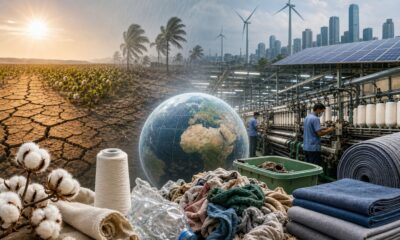






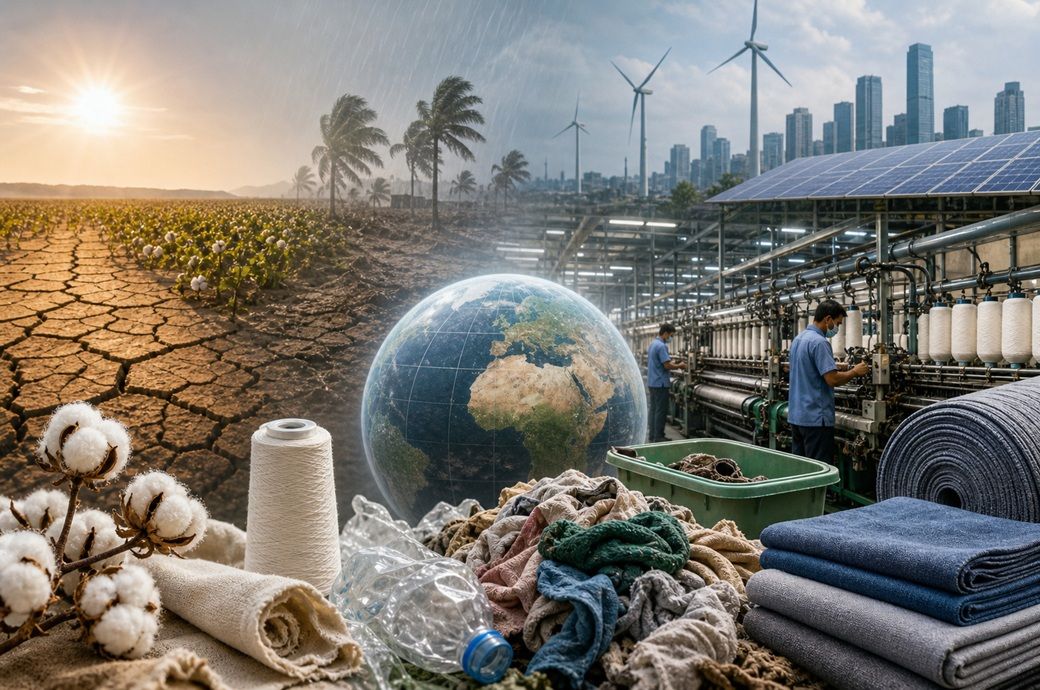
The apparel climate story has moved out of the ESG report and into the cost sheet. In ****–****, climate risk is showing up as cotton quality loss, import dependence, energy volatility, cooling capex, carbon-price exposure and mandatory textile-waste fees. For brands and suppliers, the question is no longer whether climate action is ‘responsible’. It is whether delay will make product margins uncompetitive.
The latest data makes the shift visible. Textile Exchange says global fibre production reached *** million tonnes in **** and could hit *** million tonnes by **** if business continues as usual. Polyester alone now makes up ** per cent of global fibre output, with ** per cent still fossil-based. That scale gives apparel a low-cost material engine, but it also ties the sector to fossil energy, petrochemical volatility and future carbon accounting.
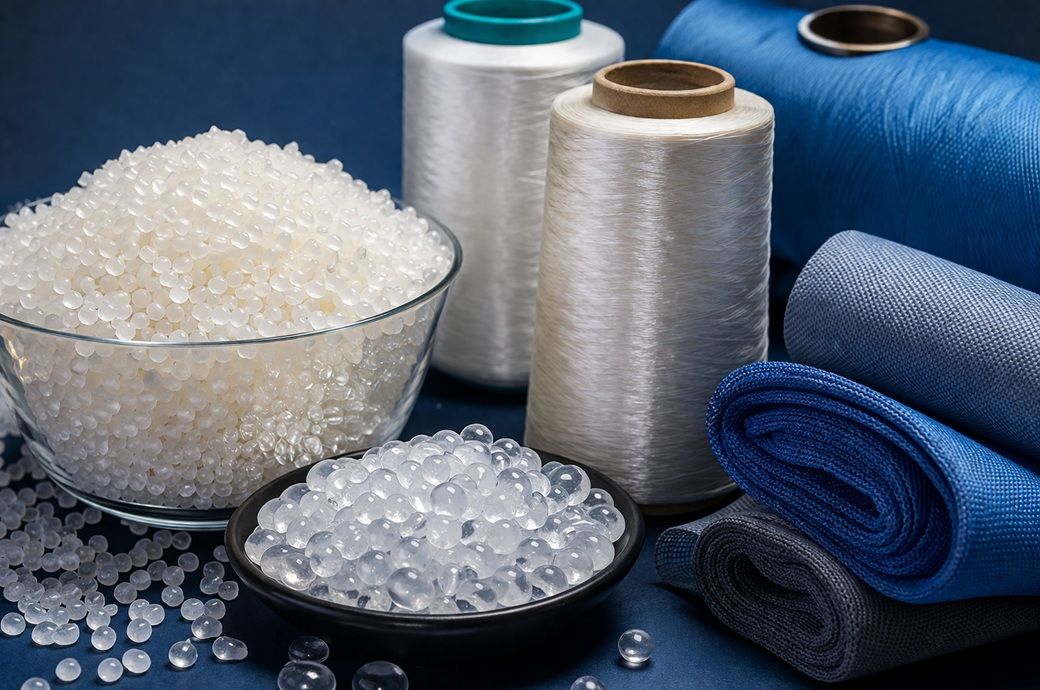
Caprolactam (CPL) prices initially held near $*.**–*.**/kg with minimal movement, while nylon chips saw uptick to ~$*.***/kg (+*.* per cent WoW) driven by short-term restocking. Nylon filament yarn (DTY **D/**F) prices remained stable at ~$*.**–*.**/kg, supported by existing inventory and steady downstream textile operations.
By the second week (April * to April **), benzene stabilised, but caprolactam began to weaken to ~$*.**–*.**/kg (−*.* per cent WoW), signalling the start of broader chain pressure. Nylon chips responded with a mild correction to ~$*.***/kg (−* per cent WoW), while filament yarn prices continued to hold steady due to inventory buffers and ongoing execution of prior textile orders. In the third week (Apr **–**), caprolactam stable to ~$*.*/kg, and chips followed to ~$*.***/kg (Stable WoW).

Total registered FDI, including newly registered and adjusted capital, along with foreign investors’ contributions and share purchases, reached $18.24 billion as of April 27, up 32 per cent year on year (YoY), according to the Ministry of Finance’s National Statistics Office (NSO).
Vietnam attracted $18.24 billion in FDI in January–April 2026, up 32 per cent, driven by manufacturing and processing.
Realised FDI hit a five-year high, signalling continued capacity expansion.
Trade surged to $344.17 billion, supported by strong US demand and rising imports from Asia, highlighting deeper global supply chain integration and export momentum.
A total of 1,249 new projects were licensed with combined registered capital of $12.15 billion, reflecting a 3.7 per cent annual increase in project numbers and a 2.2-fold rise in value. Manufacturing and processing dominated, attracting $8.12 billion, or 66.8 per cent of total newly registered capital.
Realised FDI in the January–April period was estimated at $7.40 billion, up 9.8 per cent YoY and marking the highest level for the period in the past five years. Of this, the manufacturing and processing sector disbursed $6.12 billion, accounting for 82.7 per cent. Meanwhile, 316 existing projects registered additional capital of $3.13 billion, representing a sharp 51 per cent decline compared to the same period last year. Combining newly registered and adjusted capital, total FDI into manufacturing and processing reached $10.49 billion, or 68.6 per cent of the total.
Foreign investors carried out 976 capital contribution and share purchase transactions worth $2.96 billion, up 61.9 per cent YoY. Among these, 325 deals increased enterprises’ charter capital by $445.13 million, while 651 share acquisitions without capital increases totalled $2.51 billion. Wholesale and retail trade led these investments, capturing $1.89 billion, or 63.9 per cent.
Among 53 countries and territories with newly licensed projects, Singapore was the largest investor with $6.05 billion, accounting for 49.8 per cent of the total. It was followed by the Republic of Korea with $4.08 billion (33.6 per cent), China with $524.1 million (4.3 per cent), Japan with $462 million (3.8 per cent), Hong Kong (China) with $329.2 million (2.7 per cent), and the Netherlands with $318.5 million (2.6 per cent).
On the trade front, Vietnam’s total trade with the rest of the world was estimated at $344.17 billion in the first four months of 2026, a significant increase from $277.21 billion in the same period last year, the NSO said. In April alone, trade volume reached an estimated $94.32 billion, rising 8 per cent from March and 26.7 per cent YoY.
The United States remained the largest importer of Vietnamese goods, with imports valued at $53.9 billion, while China continued as the top supplier with $69 billion. Imports from traditional markets also surged, with South Korea and ASEAN recording growth rates of 57.8 per cent and 44.3 per cent, respectively.
Fibre2Fashion News Desk (MS)


‘I Actually Thought He Was Going to Hit Me,’ OpenAI’s Greg Brockman Says of Elon Musk
Government needs to act on Middle East impact on retail, industry warns

WWE star Chelsea Green reveals she underwent ‘heart procedure’ to address SVT

-

 Tech1 week ago
A Brain Implant for Depression Is About to Be Tested in Humans
-

 Tech1 week ago
Almost 90% of women leave tech industry within 10 years | Computer Weekly
-

 Sports1 week ago
Pro wrestling star Steph De Lander reveals how colleague’s advice helped lead her to title triumph at ACW
-
 Business1 week ago
‘I had £20,000 stolen and had to fight a 13-month fraud reporting rule to get it back’
-

 Entertainment1 week ago
Norway joins Type 26 Frigate Programme to boost NATO naval power
-

 Tech1 week ago
Are tech leaders risking a cyber resourcing crisis? | Computer Weekly
-

 Entertainment1 week ago
Melania Trump says ABC should ‘take a stand’ on late-night host Kimmel
-
 Business6 days ago
PSX plunges over 4,800 points | The Express Tribune