

Business
Nike to lay off about 1% of corporate staff in its latest effort to refocus the business


Nike is planning another round of layoffs as part of CEO Elliott Hill’s efforts to realign the business and get it back to growth, CNBC has learned.
The cuts will impact less than 1% of Nike’s corporate staff. It’s unclear how many jobs will be impacted. Nike’s EMEA and Converse businesses will not be impacted.
“As we shared in Q4 earnings, NIKE, Inc. is in the midst of a realignment. The moves we’re making are about setting ourselves up to win and create the next great chapter for NIKE,” the company told CNBC in a statement. “This new formation is built to put sport and sport culture back at the center, to connect more deeply with the athlete and the consumer, and to give us the space to create what only NIKE can.”
Last February, Nike announced plans to lay off 2% of its staff, or more than 1,500 jobs, as part of a broader restructuring. The latest round of layoffs is part of Hill’s efforts to change how teams are structured within the corporation.
Under former CEO John Donahoe, Nike changed the way its business was segmented. Instead of being divided by sport, it was divided into women’s, men’s and kid’s as part of a broader effort to grow its lifestyle business.
Some critics say that adjustment was among the reasons that Nike’s innovation pipeline fell apart as the company focused on lifestyle products geared to a wide range of consumers, instead of being directed at athletes.
A Nike store in Hanoi, Vietnam, on July 3, 2025.
Nhac Nguyen | Afp | Getty Images
Hill, a longtime Nike veteran, is now undoing that work so the business is squarely focused on sports and culture. After Hill shared his vision in June, leaders were identified in July to head the new teams, the company said, adding a “small number” of staff will depart as a result of the shifts.
In a memo to staff, Nike said as part of the changes, some staff will take on a new position or level, report to a new manager or join a new team.
Staff will learn if they’re impacted during conversations by Sept. 8. The majority of the new roles will take effect on Sept. 21.
“To make space for these conversations, corporate employees based in an office location in the U.S. and Canada will work remotely next week, unless otherwise informed by your leader,” the memo said.
Since taking the helm of the world’s largest sportswear brand, Hill has been on a mission to reverse an ongoing decline in sales, reignite innovation and win back wholesale partners.
When announcing fiscal fourth-quarter earnings in June, Nike said it expects its sales and profit declines to moderate in the quarters ahead, indicating the worst is now behind it and the fruits of its turnaround could come sooner than expected. In a call with analysts at the time, Hill hinted at the realignment that’s now starting to materialize.
“Instead of a men’s, women’s and kids construct, Nike, Jordan, and Converse teams will now come to work every day with a mission to create the most innovative and coveted product, footwear, apparel and accessories for the specific athletes they serve,” said Hill.
Hill said the company would organize into “sport-obsessed teams” which would “drive a relentless flow of innovative product across all three of the brands.”



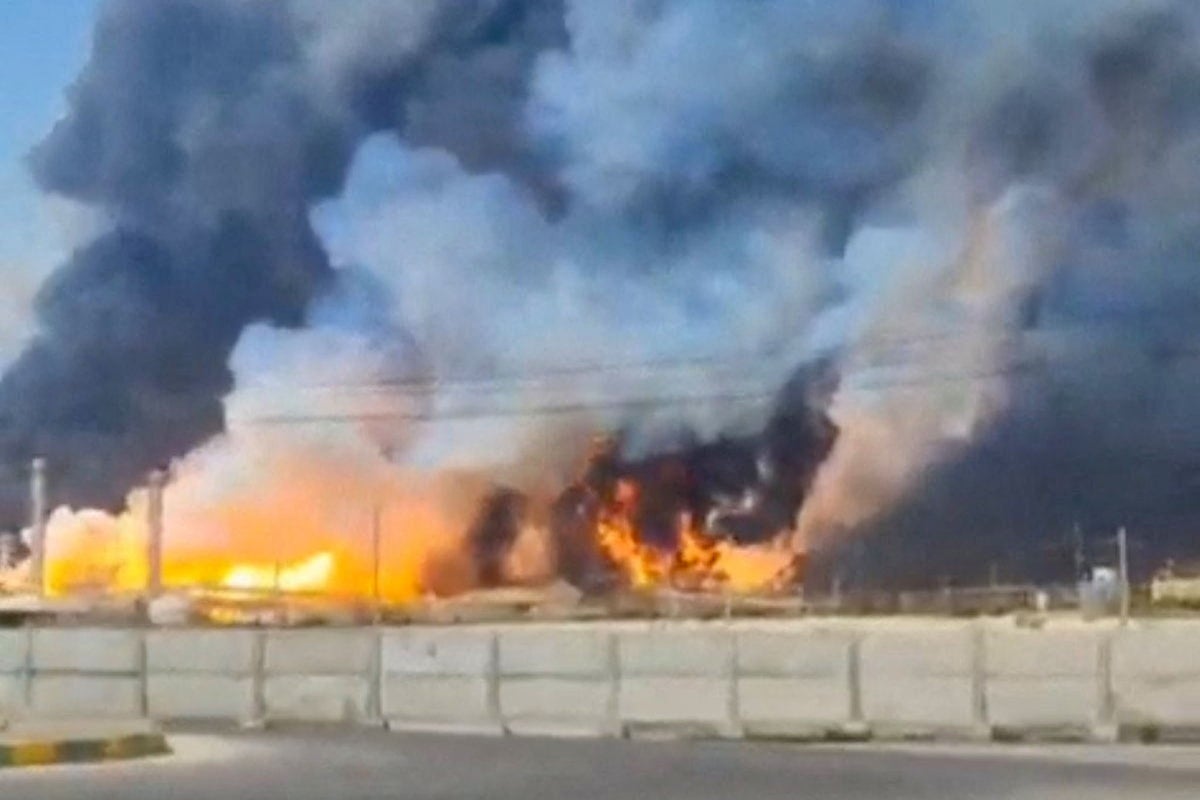
Britain is to “step up” defensive support for Gulf states after Iran attacked energy sites across the region in a “serious escalation” of the war that could push up inflation and interest rates.
The price of Brent crude climbed as high as $119 a barrel and European gas prices briefly surged by 35 per cent after Iran pounded Qatar’s Ras Laffan energy hub and other Middle Eastern oil and gas infrastructure with missiles.
Interest rates were held at 3.75 per cent instead of the previously expected cut, as the Bank of England warned that the war could push inflation as high as 3.5 per cent by July on the back of rising energy bills, and that rates could rise – creating misery for homeowners.
It came as:
- US defence secretary Pete Hegseth said “ungrateful” European allies should be thanking Donald Trump for the war
- Trump claimed he was unaware of Israel’s strike on Iran’s South Pars gas field
- Oman called the US/Israel attacks a “grave miscalculation”
- Europe’s biggest airlines warned of higher fares
Iran’s attacks were in retaliation to an Israeli strike on the vital South Pars gas field, which drew condemnation from the Gulf states as well as Tehran. It was the first attack of the war so far on an energy production facility. Tehran fired missiles at multiple energy sites across the Gulf, including a Saudi oil refinery, Qatari gas facilities and two more oil refineries in Kuwait.
While Sir Keir Starmer and Emmanuel Macron called for de-escalation, President Trump threatened to “massively blow up” the South Pars facility if Iran did not halt its retaliatory attacks, repeating his claim that US forces had “obliterated” Iran’s navy and military, adding that the war was “substantially ahead of schedule”. He denied that plans were being made to send more American troops to the region.
John Healey, the UK defence secretary, said Tehran’s tit-for-tat responses threatened to further destabilise the region and Europe’s economies. He called them a “serious escalation”, adding: “They further destabilise the region and we will step up the defensive support that we can offer to those Gulf states.”
British forces are already deployed to the Middle East, with RAF jets flying defensive sorties against Iranian drones across the Gulf and British air defence systems protecting critical infrastructure in Saudi Arabia. UK military planners have also joined US Central Command to help formulate proposals for opening the Strait of Hormuz, a critical trade route for the world’s oil and gas.But there were signs of growing frustration towards Washington’s war aims in the Gulf states, with Oman’s foreign minister claiming that the conflict was President Trump’s “greatest miscalculation”.
In the most scathing attack on Washington’s foreign policy yet by a Gulf state, Badr Albusaidi said “this is not America’s war” and criticised Mr Trump for supporting Israel. Writing in The Economist, he called on American allies to help extricate it from the conflict, which has continued for a third week despite failing to achieve the US and Israel’s stated aim of instigating regime change in Tehran or stopping its nuclear programme.
Meanwhile, the Bank of England has warned that it may have to put up interest rates if the war continues to drive up inflation and unemployment. Its governor, Andrew Bailey, said the impact was already being felt by consumers as petrol prices surge and that he is “ready to act as necessary to ensure inflation remains on track to meet the 2 per cent target”. That would pave the way for a rate hike as early as the end of April.
Bets on the financial markets suggest a 50/50 chance that Britain will face higher interest rates from next month – and the possibility of two more rises by the end of the year.
Danni Hewson, head of financial analysis at AJ Bell, said: “Markets are now pricing in an almost 50 per cent chance that April’s meeting will see rates rise to 4 per cent with the potential for two additional rate hikes by the end of the year. But no one has a crystal ball. No one knows how long the conflict will last or the amount of damage that could be inflicted on crucial energy infrastructure by the time it ends.”
From fuel to mortgages, the BBC looks at how oil and gas prices could push up the cost of living.
Source link
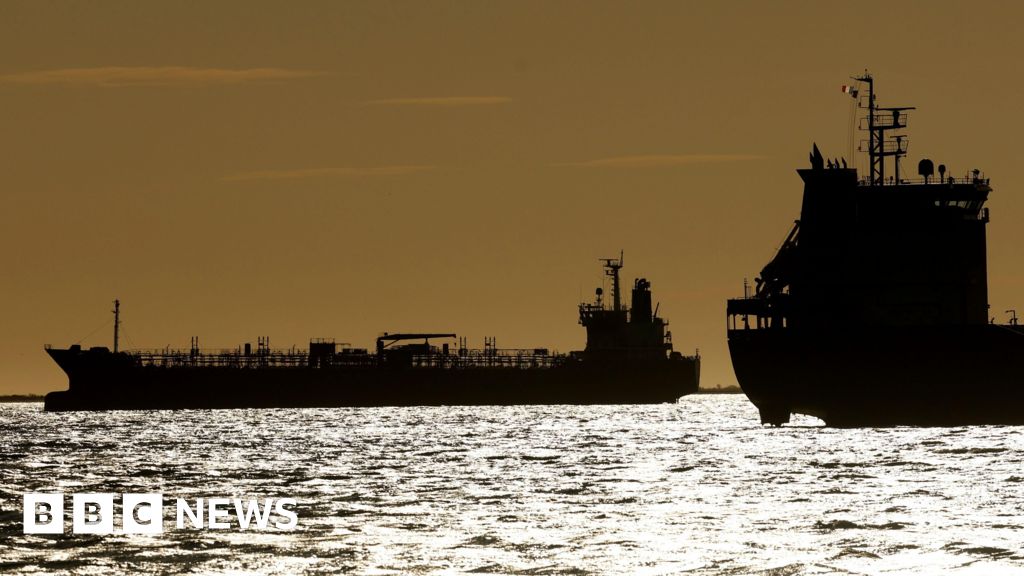
“To put it mildly, this is bananas,” said David Tannenbaum, director of Blackstone Compliance Services, a consultancy specialising in maritime sanctions. “Essentially we’re allowing Iran to sell oil, which could then be used to fund the war effort.”


TCU backs up its tough talk, bounces Buckeyes in 1st round

“The Bachelorette” season with Taylor Frankie Paul canceled after 2023 video surfaces, ABC says

‘Uncanny Valley’: Nvidia’s ‘Super Bowl of AI,’ Tesla Disappoints, and Meta’s VR Metaverse ‘Shutdown’

Stock market crash today (March 12, 2026): Nifty50 opens below 23,600; BSE Sensex down over 900 points on continuing US-Iran war – The Times of India

UK’s Topshop unveils Tolu Coker capsule collection
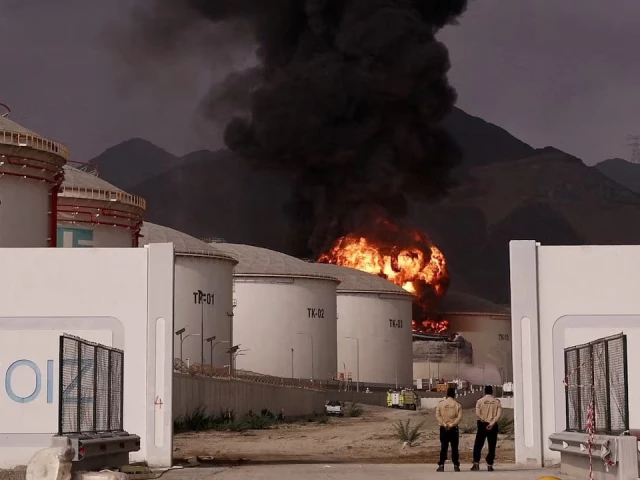
US ignites Iran war, but Gulf Arab states pay the price | The Express Tribune

-
Business1 week ago
Stock market crash today (March 12, 2026): Nifty50 opens below 23,600; BSE Sensex down over 900 points on continuing US-Iran war – The Times of India
-
 Fashion1 week ago
UK’s Topshop unveils Tolu Coker capsule collection
-
Business1 week ago
US ignites Iran war, but Gulf Arab states pay the price | The Express Tribune
-

 Fashion1 week ago
India’s textile recycling market may reach $3.5 bn by 2030: Report
-

 Tech1 week ago
Meta Developed 4 New Chips to Power Its AI and Recommendation Systems
-
 Sports1 week ago
Bangladesh crush Pakistan in ODI series opener | The Express Tribune
-
 Business1 week ago
8th Pay Commission: How Much Will Central Govt Employees’ Salaries Rise? What We Know So Far
-

 Entertainment1 week ago
Ed Sheeran makes surprising Benny Blanco confession after hygiene uproar