

Fashion
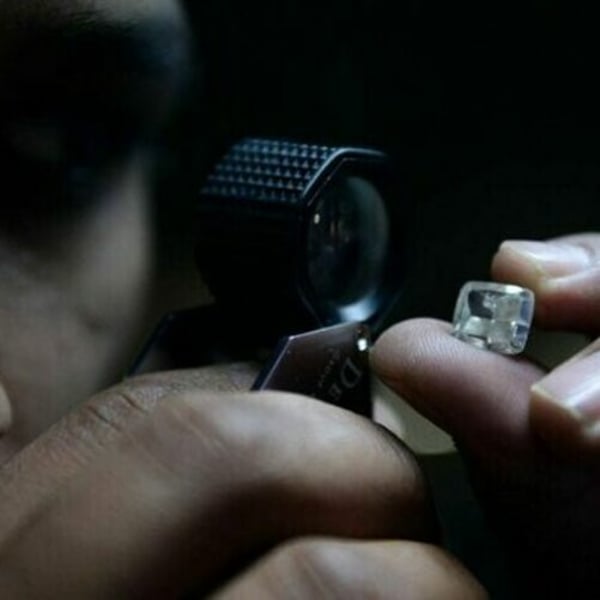
Lab-grown diamonds robbing southern Africa of riches

By
AFP
Published
September 14, 2025
Botswana and southern African peers that built much of their prosperity on diamonds are scrambling for alternatives as cheaper, lab-grown stones threaten their economies.
Diamond-dependent Botswana is leading the way and launched a sovereign wealth fund this week to lay the “foundation for a more resilient, sustainable and diversified future beyond diamonds”.
It is exploring other avenues too, like boosting luxury wildlife tourism, launching into the medicinal cannabis market and exploiting its abundant sunshine for solar power.
President Duma Boko has even mooted taking a majority stake in industry giant De Beers and selling Botswana’s diamonds independently.
“Countries such as Angola, Namibia and South Africa are all exposed but not to the same degree as Botswana,” economist Brendon Verster at the Oxford Economics Africa think tank told AFP.
The stones are the country’s main source of income and account for about 30 percent of its gross domestic product (GDP) and 80 percent of its exports, according to the International Monetary Fund.
But, as consumers turn to cheaper diamonds created in China and India, the average price of a one-carat natural diamond is falling.
The price dropped from a peak of $6,819 in May 2022 to $4,997 by December 2024, according to the World Diamond Council.
Botswana, which is 70 percent desert, was lifted from poverty by the discovery of diamonds in the 1960s. It is already feeling the effects of the lab-grown competition.
– ‘Risks of economic collapse’ –
As its foreign reserves deplete, the government has turned to debt to fill the public coffers.
Government funds ran so low that the health system teetered on the verge of collapse in August, leading Boko to declare a state of emergency.
“If left unaddressed, there is a real risk of the situation becoming not just an economic challenge but a social time bomb,” he said in July.
Highlighting the fears, global ratings agency S&P on Friday dropped its long-term ratings on Botswana one notch to “BBB” and declared a negative outlook, citing the rapid expansion of the lab-diamond market.
Synthetic stones had captured “approximately 20 percent of the global market by value and up to 50 percent by volume in the US engagement ring segment in 2025,” it said in a statement.
Diversification is “essentially now or never”, Verster said.
“We don’t really see anything that would cause a monumental shift back in favour of natural diamonds to curb the rising popularity of synthetic diamonds.”
Also suffering is tiny Lesotho, where diamonds contribute up to 10 percent of its $2 billion GDP and the larger, vital textile market has been hit by US tariffs.
This month its biggest diamond mine, Letseng, said it would lay off a fifth of its workforce, citing “sustained pricing pressure” and “softer demand in key markets”.
The mine closures “could heighten risks of economic collapse”, independent economic analyst Thabo Qhesi told AFP, stressing an urgent need to explore other options, such as rare-earth resources.
In a bid to keep the sparkle alive, Angola, Botswana, Namibia, South Africa and the Democratic Republic of Congo pledged in June to allocate one percent of their annual diamond revenues to marketing natural diamonds.
The campaign would need to reframe their value as a coveted “luxury product”, former Bank of Botswana deputy governor Keith Jefferis told AFP.
“We see a significant opportunity to engage consumers in the story of responsibly sourced diamonds from Botswana,” De Beers, also taking part, told AFP.
The South Africa-British firm is meanwhile exploring the potential of synthetic diamonds in high-tech fields like quantum networks and semiconductors, as prices fall below $100 per carat.
For Botswanan ministry of minerals official Jacob Thamage, natural and lab-made diamonds “offer different value propositions to different consumers and therefore can and will coexist”.
In an upscale Johannesburg mall, behind fortified steel gates, a natural yellow diamond priced at over $50,000 stood as a symbol of exclusivity.
Just steps away, a lab-grown diamond valued at $115 was unguarded.
“We each have our target,” one jeweller said. “So long as everyone is happy.”
Copyright © 2025 AFP. All rights reserved. All information displayed in this section (dispatches, photographs, logos) are protected by intellectual property rights owned by Agence France-Presse. As a consequence you may not copy, reproduce, modify, transmit, publish, display or in any way commercially exploit any of the contents of this section without the prior written consent of Agence France-Presses.






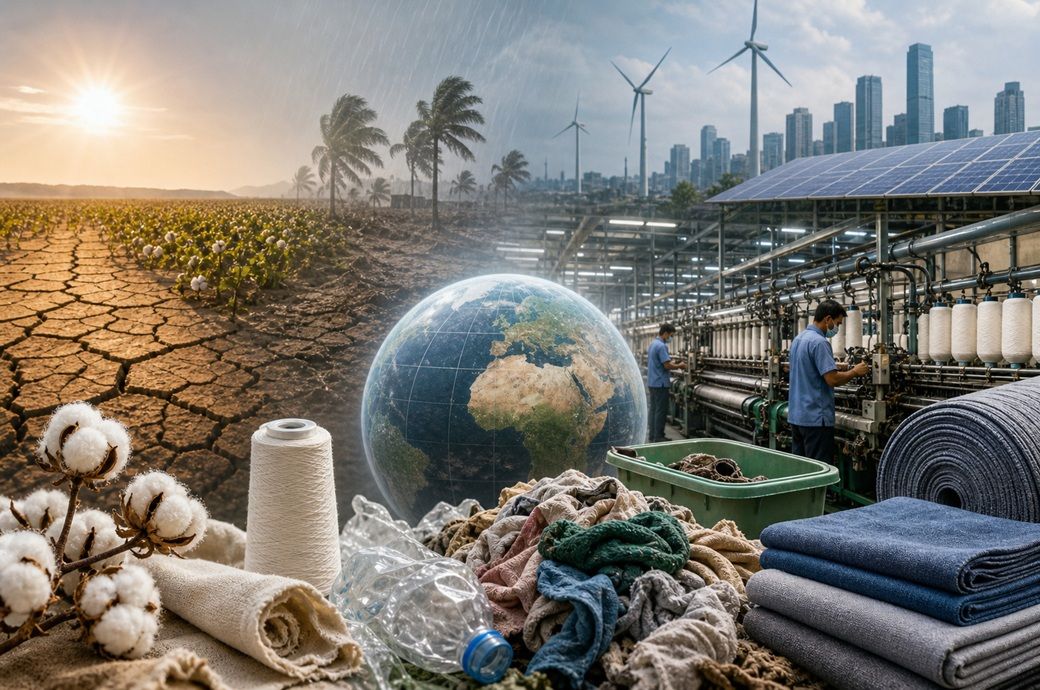
The apparel climate story has moved out of the ESG report and into the cost sheet. In ****–****, climate risk is showing up as cotton quality loss, import dependence, energy volatility, cooling capex, carbon-price exposure and mandatory textile-waste fees. For brands and suppliers, the question is no longer whether climate action is ‘responsible’. It is whether delay will make product margins uncompetitive.
The latest data makes the shift visible. Textile Exchange says global fibre production reached *** million tonnes in **** and could hit *** million tonnes by **** if business continues as usual. Polyester alone now makes up ** per cent of global fibre output, with ** per cent still fossil-based. That scale gives apparel a low-cost material engine, but it also ties the sector to fossil energy, petrochemical volatility and future carbon accounting.
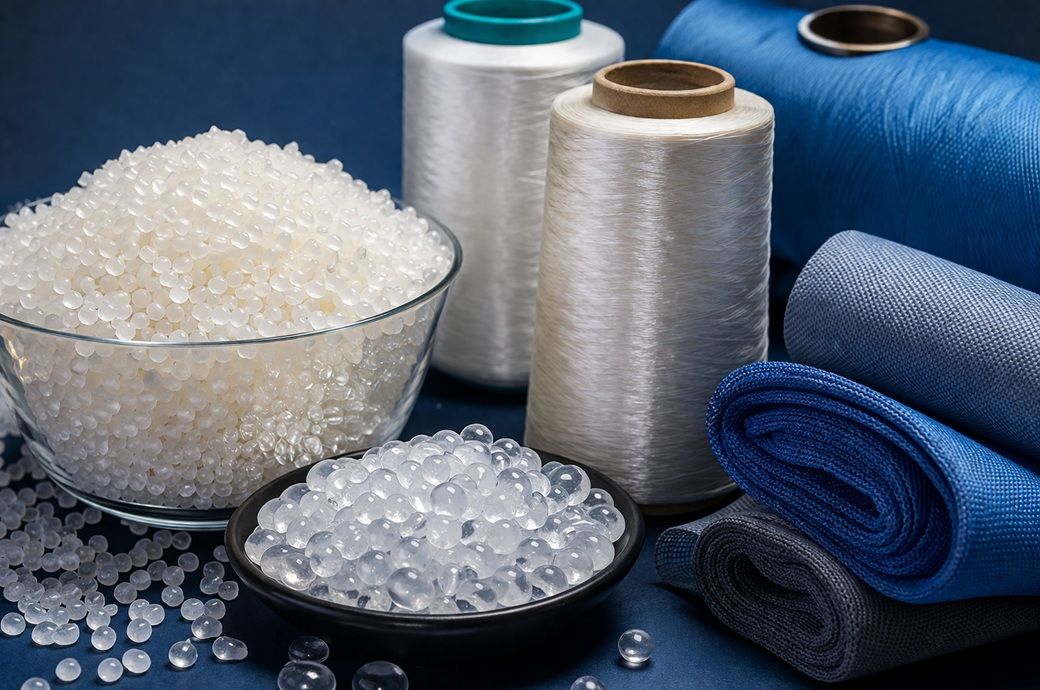
Caprolactam (CPL) prices initially held near $*.**–*.**/kg with minimal movement, while nylon chips saw uptick to ~$*.***/kg (+*.* per cent WoW) driven by short-term restocking. Nylon filament yarn (DTY **D/**F) prices remained stable at ~$*.**–*.**/kg, supported by existing inventory and steady downstream textile operations.
By the second week (April * to April **), benzene stabilised, but caprolactam began to weaken to ~$*.**–*.**/kg (−*.* per cent WoW), signalling the start of broader chain pressure. Nylon chips responded with a mild correction to ~$*.***/kg (−* per cent WoW), while filament yarn prices continued to hold steady due to inventory buffers and ongoing execution of prior textile orders. In the third week (Apr **–**), caprolactam stable to ~$*.*/kg, and chips followed to ~$*.***/kg (Stable WoW).
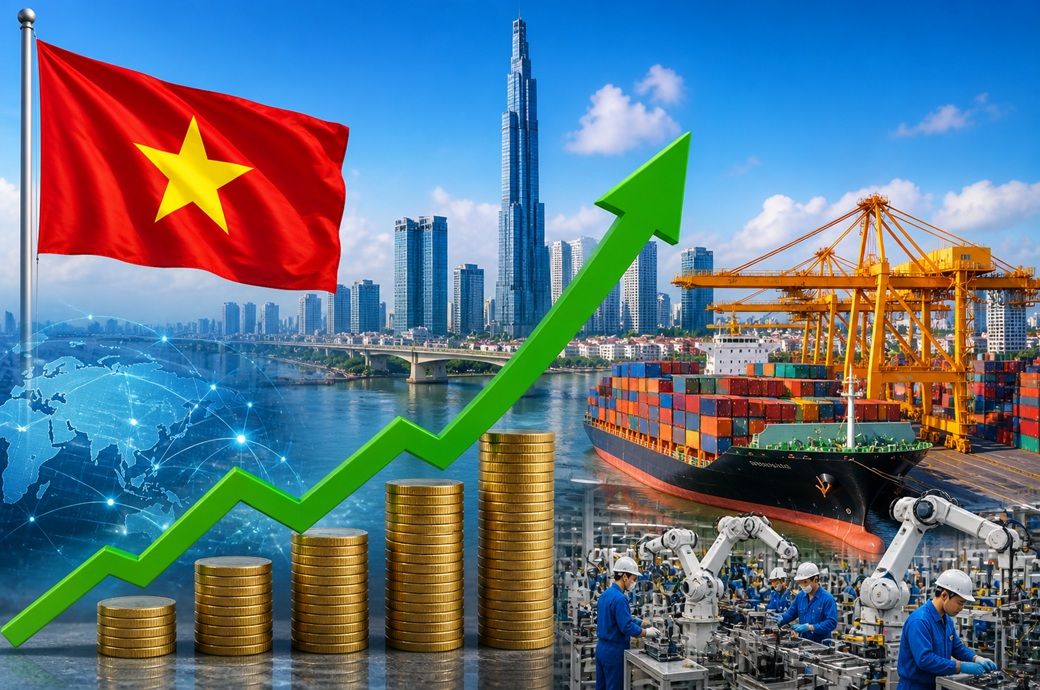
Total registered FDI, including newly registered and adjusted capital, along with foreign investors’ contributions and share purchases, reached $18.24 billion as of April 27, up 32 per cent year on year (YoY), according to the Ministry of Finance’s National Statistics Office (NSO).
Vietnam attracted $18.24 billion in FDI in January–April 2026, up 32 per cent, driven by manufacturing and processing.
Realised FDI hit a five-year high, signalling continued capacity expansion.
Trade surged to $344.17 billion, supported by strong US demand and rising imports from Asia, highlighting deeper global supply chain integration and export momentum.
A total of 1,249 new projects were licensed with combined registered capital of $12.15 billion, reflecting a 3.7 per cent annual increase in project numbers and a 2.2-fold rise in value. Manufacturing and processing dominated, attracting $8.12 billion, or 66.8 per cent of total newly registered capital.
Realised FDI in the January–April period was estimated at $7.40 billion, up 9.8 per cent YoY and marking the highest level for the period in the past five years. Of this, the manufacturing and processing sector disbursed $6.12 billion, accounting for 82.7 per cent. Meanwhile, 316 existing projects registered additional capital of $3.13 billion, representing a sharp 51 per cent decline compared to the same period last year. Combining newly registered and adjusted capital, total FDI into manufacturing and processing reached $10.49 billion, or 68.6 per cent of the total.
Foreign investors carried out 976 capital contribution and share purchase transactions worth $2.96 billion, up 61.9 per cent YoY. Among these, 325 deals increased enterprises’ charter capital by $445.13 million, while 651 share acquisitions without capital increases totalled $2.51 billion. Wholesale and retail trade led these investments, capturing $1.89 billion, or 63.9 per cent.
Among 53 countries and territories with newly licensed projects, Singapore was the largest investor with $6.05 billion, accounting for 49.8 per cent of the total. It was followed by the Republic of Korea with $4.08 billion (33.6 per cent), China with $524.1 million (4.3 per cent), Japan with $462 million (3.8 per cent), Hong Kong (China) with $329.2 million (2.7 per cent), and the Netherlands with $318.5 million (2.6 per cent).
On the trade front, Vietnam’s total trade with the rest of the world was estimated at $344.17 billion in the first four months of 2026, a significant increase from $277.21 billion in the same period last year, the NSO said. In April alone, trade volume reached an estimated $94.32 billion, rising 8 per cent from March and 26.7 per cent YoY.
The United States remained the largest importer of Vietnamese goods, with imports valued at $53.9 billion, while China continued as the top supplier with $69 billion. Imports from traditional markets also surged, with South Korea and ASEAN recording growth rates of 57.8 per cent and 44.3 per cent, respectively.
Fibre2Fashion News Desk (MS)


Longtime entertainment publicist was 82

Spirit starts monthslong process of dismantling airline after biggest collapse in a generation

AS-level Business Studies paper allegedly leaked online

-

 Tech1 week ago
A Brain Implant for Depression Is About to Be Tested in Humans
-

 Sports1 week ago
Pro wrestling star Steph De Lander reveals how colleague’s advice helped lead her to title triumph at ACW
-

 Tech1 week ago
Almost 90% of women leave tech industry within 10 years | Computer Weekly
-
 Business1 week ago
‘I had £20,000 stolen and had to fight a 13-month fraud reporting rule to get it back’
-

 Entertainment1 week ago
Norway joins Type 26 Frigate Programme to boost NATO naval power
-

 Entertainment1 week ago
Melania Trump says ABC should ‘take a stand’ on late-night host Kimmel
-

 Tech1 week ago
This Ambitious Laptop Doesn’t Leave Much Room for Your Hands
-
 Business6 days ago
PSX plunges over 4,800 points | The Express Tribune