

Politics
Oil-rich UAE turns to AI to grease economy


ABU DHABI: Deep in the Abu Dhabi desert, a vast AI campus a quarter the size of Paris is starting to emerge, the oil-rich UAE’s boldest bet yet on technology it hopes will help transform its economy.
Towering cranes clank as long, low buildings take shape below, the eventual home of data centres powered by five gigawatts of electricity — the biggest such facility outside the United States.
The campus will provide storage and computing capacity over a 3,200-kilometre (1990-mile) radius covering up to four billion people, said Johan Nilerud, chief strategy officer of Khazna Data Centres, a subsidiary of Emirati AI giant G42, which is spearheading the project.
Since the 1960s, oil has fuelled the United Arab Emirates’ rise from a desert outpost of nomadic tribes to a Middle East economic and diplomatic powerhouse.
Now, the UAE is hoping that AI can help fill the gap when oil demand inevitably wanes.
“The UAE is punching above its weight because it’s a very small country that really wants to be at the forefront,” said Nilerud.
“The idea is obviously to bring in international partners… to be this AI-native nation,” he added.
Phase one of the AI campus — the G42-built, one-gigawatt Stargate UAE cluster — will be operated by OpenAI and is backed by other US tech giants such as Oracle, Cisco, and Nvidia.
And last month, Microsoft announced more than $15.2 billion in investments in the UAE by 2029, after injecting $1.5 billion last year into G42.
Core subject
The UAE has been betting heavily on AI since 2017, when it named the world’s first AI minister and became the second country after Canada to unveil a national AI strategy.
A year later, G42 was founded with backing from Abu Dhabi-based sovereign wealth fund Mubadala. Chaired by the UAE president’s brother, Sheikh Tahnoon bin Zayed Al Nahyan, it offers a range of AI products and employs more than 23,000 people.
The UAE said it has pumped more than $147 billion into AI since 2024, including up to 50 billion euros ($58 billion) in a one-gigawatt AI data centre in France.
“AI, like oil, is a transversal sector, which can potentially have a leverage effect and an impact on different activities,” said Professor Jean-Francois Gagne of the University of Montreal.
In 2019, Abu Dhabi opened Mohamed bin Zayed University of Artificial Intelligence (MBZUAI), the world’s first AI-dedicated university. Last August, AI became a core subject in the country’s public schools from kindergarten up.
MBZUAI and Abu Dhabi’s Technology Innovation Institute (TII) have since launched generative AI models, including Falcon, which compared favourably with industry leaders and now has an Arabic version.
Keen to cut reliance on imported hardware and expertise, the UAE has made large investments in research, development, and homegrown programmes.
TII opened a research lab with Nvidia to “push the boundaries” of generative AI models and develop robotics systems, said executive director Najwa Aaraj.
“Sovereignty and self-sustainability and domestic customisation of technology to local needs are all very, very important,” Eric Xing, president of MBZUAI, told AFP.
“And also difficult to achieve if you solely rely on importing and external… technical transfer.”
Chips ahoy
In the race for AI market share, the UAE is in the chasing pack behind the US and China, the clear leaders. But the small, desert country has its advantages, chiefly money and energy.
With oil, gas and year-round sun for solar power, it can quickly build electricity stations to feed data centres — a major obstacle elsewhere.
And as the region’s business hub, with a population that is nearly 90% expatriate, the UAE has the edge compared to other nations in the region.
All the while, the UAE has engaged in a balancing act between the US and China as it seeks imports vital for AI, including the specialist chips that make data centres work.
Last month, intense lobbying bore fruit when the US approved the export of advanced Nvidia chips to both the UAE and Saudi Arabia.
“They (UAE) clearly don’t want to be dependent on China, but that doesn’t mean they want to depend on the US either,” said Gagne.
But despite its progress and years of heavy investment, success in this complex, ever-changing sector is far from guaranteed.
“Right now, we don’t know what the right strategy is, or who the good players are,” Gagne said.
“Everyone is betting on different players, but some will lose, and some will win.”
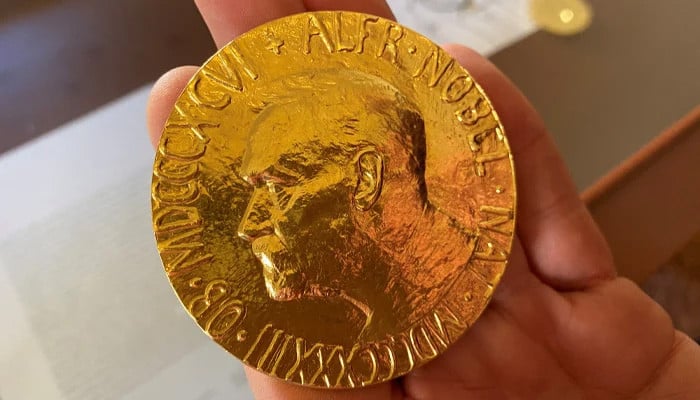
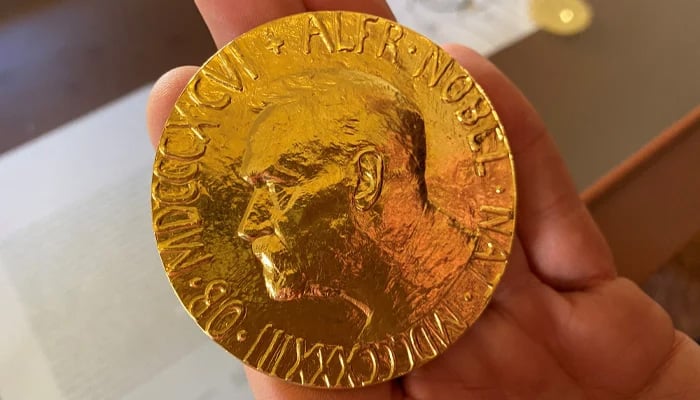
Some 287 candidates will be considered for the 2026 Nobel Peace Prize, the secretary of the Norwegian Nobel Committee said on Thursday, with US President Donald Trump likely to be among the nominees.
Of this year’s nominations, 208 are individuals and 79 are organisations, said Kristian Berg Harpviken, adding that there were many new nominees compared to last year.
“Since I am new in the job, one of the things that has to some extent surprised me is how much renewal there is from year to year on the list,” Harpviken said in an interview. He has held the position since January 2025.
Despite the number of conflicts rising worldwide and international cooperation under pressure, the award remains relevant, he added.
“The Peace Prize is even more important in a period like the one we’re living in,” he said. “There is as much good work, if not more, than ever.”
Trump likely nominated, but not confirmed
The leaders of Cambodia, Israel and Pakistan have said they nominated Trump for this year’s prize. Their nominations, if made, would have been done in spring and summer 2025, and they are therefore valid given the deadline was January 31.
There is no way of verifying they have done as they have said as nominations remain secret for 50 years and Harpviken declined to say on Thursday whether Trump had been nominated.
A nomination is not an endorsement by the award body.
In addition to committee members, thousands of people worldwide can propose names: members of governments and parliaments; current heads of state; university professors of history, social sciences, law and philosophy; and former Nobel Peace Prize laureates, among others.
Many names appear on betting sites giving odds on this year’s possible laureates, from Russia’s Yulia Navalnaya, the wife of the late Russian opposition leader Alexei Navalny, to Pope Leo and Sudan’s Emergency Response Rooms, a volunteer aid group, among others.
Concern for health of jailed Iranian laureate
Harpviken said the committee was deeply concerned about the health of the 2023 Peace Prize laureate, Iranian human rights activist Narges Mohammadi, which is worsening after she suffered a heart attack in prison.
Her supporters said on Wednesday her life was in imminent danger.
“Her sister was able to visit her in prison yesterday and the reports coming out after that are actually quite alarming as to her health condition,” said Harpviken.
“We see there is a lot of international pressure now. So we hope that the Iranian authorities do pay attention to that and release her so that she can have proper medical treatment.”
Who else could be nominated?
Among possible nominees for this year’s prize are Lisa Murkowski, the US senator for Alaska, and Aaja Chemnitz, a member of the Danish parliament elected from Greenland, according to the Norwegian lawmaker who nominated them both.
“Together they have worked relentlessly to build trust and to secure a peaceful development of the Arctic region over many years,” said the lawmaker, Lars Haltbrekken.
Greenland has been in particular focus this year due to Trump’s relentless push to acquire the island from Nato ally Denmark.
This year’s Nobel Peace Prize will be announced on October 9, while the ceremony will take place on December 10.
- Khamenei says US faces disgraceful defeat in its plan.
- Iran to secure Gulf, eliminate “enemy’s abuses”: supreme leader.
- Iranian rial has fallen to historic lows against dollar.
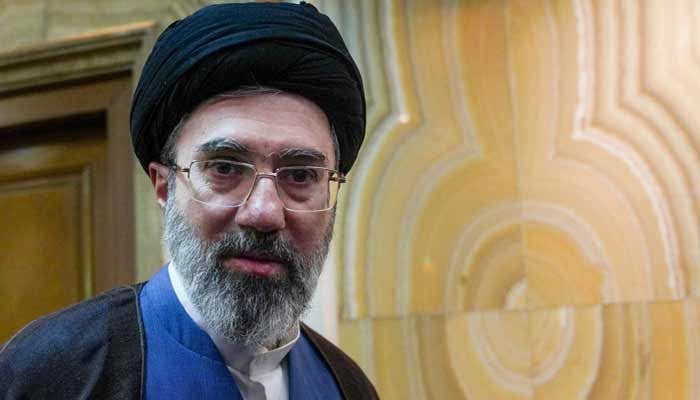
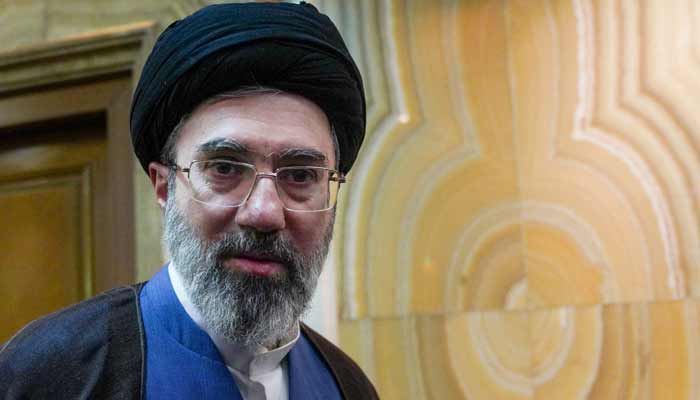
Iran’s new Supreme Leader Mojtaba Khamenei said in a published written message on Thursday that a new chapter for the Gulf and Strait of Hormuz has been taking shape since the Iran war with the United States and Israel broke out on February 28.
Iran’s Supreme Leader said that Tehran would secure the Gulf region and eliminate what he described as “the enemy’s abuses of the waterway.”
The Supreme Leader added that new management of the Strait of Hormuz would bring calm, progress and economic benefits to all Gulf nations.
“Today, two months after the largest military deployment and aggression by the world’s bullies in the region, and the United States’ disgraceful defeat in its plans, a new chapter is unfolding for the Persian Gulf and the Strait of Hormuz,” he said, hailing Iran’s control over shipping in the strait.
Khamenei was wounded in the initial US-Israeli strikes that assassinated his father Ali Khamenei, and has not been seen in public since being named his successor as supreme leader last month.
The United States imposed a blockade on Iran’s ports two weeks ago, while the Islamic republic has maintained its stranglehold over the strategic Strait of Hormuz since the start of the Middle East war in February.
Now, a State Department official told AFP, Washington is seeking to set up an international coalition comprising allied states and shipping firms to coordinate safe passage through Hormuz — while maintaining its own blockade of ships serving Iran.
“Any attempt to impose a maritime blockade or restrictions is contrary to international law… and is doomed to fail,” Iran’s President Masoud Pezeshkian said, in a statement that warned the blockade that began on April 13 would be “a disruption to lasting stability in the Persian Gulf”.
And Iran’s parliament speaker Mohammad Bagher Ghalibaf, who has emerged as an influential figure, said control of Hormuz would allow Tehran to “provide itself and its neighbours with the precious blessing of a future free from American presence and interference”.
‘Choking’
Trump is expected to receive a briefing on Thursday on new plans for potential military action in Iran from Admiral Brad Cooper, the head of US Central Command, two sources with knowledge of US planning told news site Axios.
This week Trump has reportedly told oil executives and national security officials to prepare for a long US blockade designed to force Tehran to surrender its nuclear programme.
US Central Command said on Wednesday in a social media post that it had reached a “significant milestone after successfully redirecting the 42nd commercial vessel attempting to violate the blockade”.
It said there are “41 tankers with 69 million barrels of oil that the Iranian regime can’t sell”, estimating the value at more than $6 billion.
Oil prices struck a four-year high on Thursday. International benchmark Brent crude soared more than 7% to $126 a barrel, but then eased in midday trading in London.
UN chief Antonio Guterres said the closure of Hormuz was “strangling the global economy” and International Energy Agency chief Fatih Birol told a meeting at his Paris headquarters: “The world is facing the biggest energy crisis in history.”
The European Central Bank also warned that the longer the war and high energy prices continue, “the stronger is the likely impact on broader inflation and the economy.”
Trump faces domestic political pressure to end the war, which is unpopular even with much of his base, has increased costs for American consumers and has unnerved US allies.
Iran’s economy is also suffering and the rial has fallen to historic lows against the dollar.
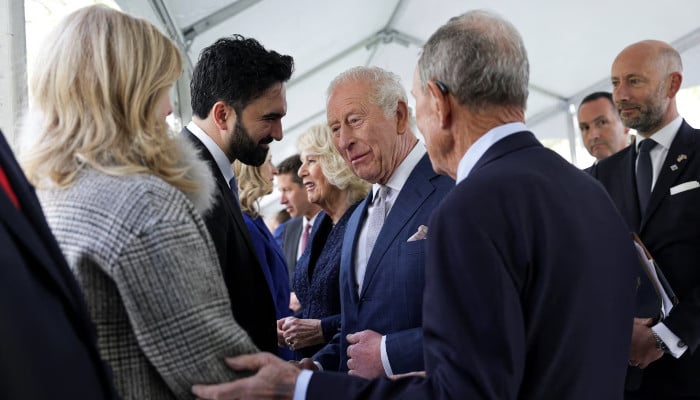
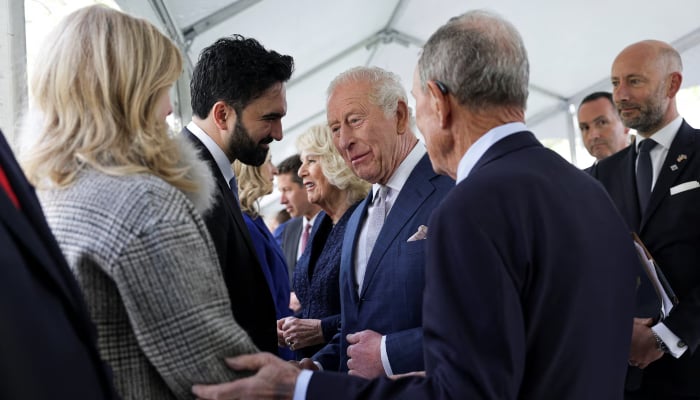
New York City Mayor Zohran Mamdani said on Wednesday he encourages Britain’s King Charles to return the Koh-e-Noor Diamond, with his comments coming during the British monarch’s ongoing US visit.
“If I were to speak to the king separately from that, I would probably encourage him to return the Koh-e-Noor Diamond,” Mamdani, who is Indian American, said when asked at a press conference hours before a ceremony that commemorated victims of the deadly September 11, 2001, attacks.
Later in the day, the king spoke with Mamdani at the ceremony. Buckingham Palace declined to comment. Mamdani’s office did not respond to a request to comment on whether Mamdani brought up the issue with the king.
India has previously repeatedly demanded that Britain return the 105-carat diamond.
Britain’s then colonial governor-general of India arranged for the huge diamond to be presented to Queen Victoria in 1850 after the East India Company had annexed the region of Punjab in 1849 and taken the diamond from a deposed Indian leader.
Charles on Wednesday commemorated victims of the September 11, 2001, attack on New York City, laying a floral bouquet at the memorial where the World Trade Centre’s twin towers once stood.
India received independence from British rule in 1947. The British colonisation of India and the widespread atrocities committed against people during that period remain sensitive issues in the country.
India has previously said the diamond was a “valued piece of art with strong roots in our nation’s history.” The diamond’s possession by the British is seen by many Indians as a symbol of colonial atrocities during British rule.
The diamond has been previously owned by India’s Mughal emperors, shahs of Iran, emirs of Afghanistan, and Sikh maharajas, according to the Historic Royal Palaces charity.


Musk v. Altman Kicks Off, DOJ Guts Voting Rights Unit, and Is the AI Job Apocalypse Overhyped?

China’s brain-control weapons race being led by Harvard scientist who was jailed in US

Markets are underpricing the risk of Middle East pullback in AI, says tech investor Jack Selby

PSL 11: Hyderabad Kingsmen opt to field after winning toss against Multan Sultans

Trump administration in advanced talks for a rescue package for Spirit Airlines, source says
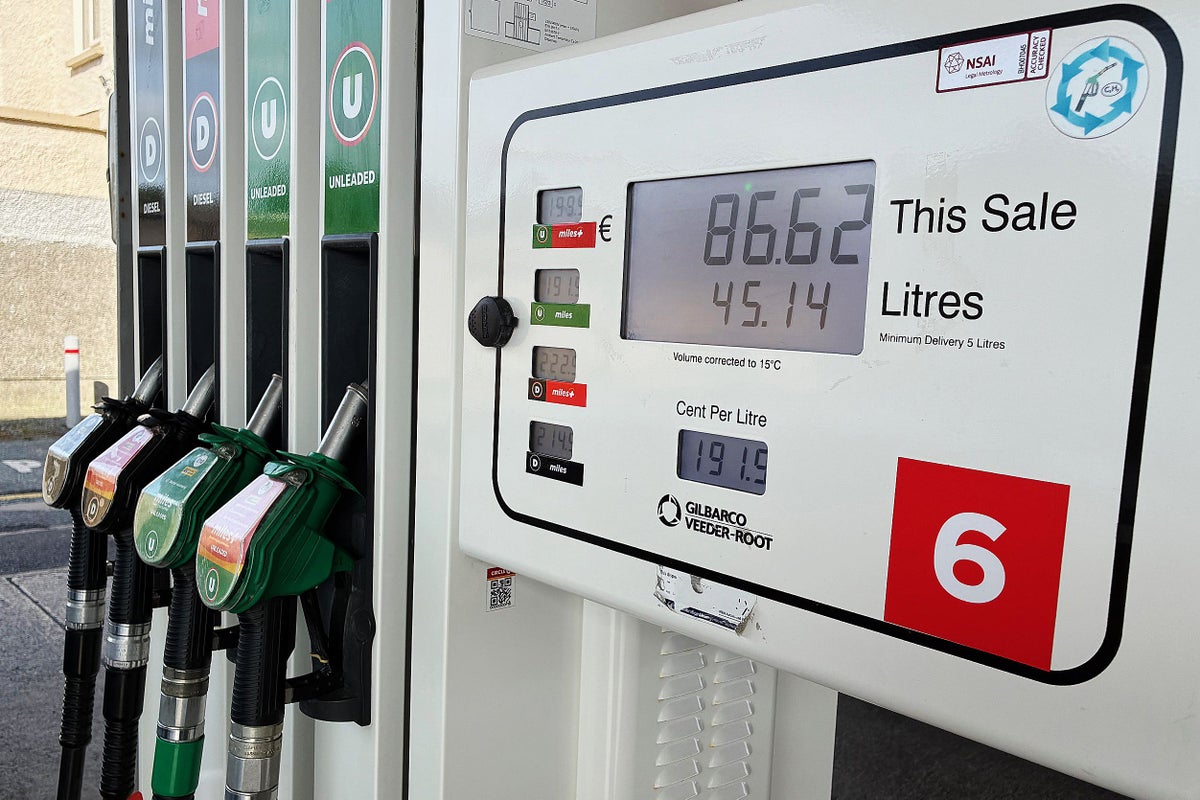
UK inflation accelerates after Iran war drives sharp rise in fuel prices

-
 Sports1 week ago
PSL 11: Hyderabad Kingsmen opt to field after winning toss against Multan Sultans
-
Business1 week ago
Trump administration in advanced talks for a rescue package for Spirit Airlines, source says
-
Business1 week ago
UK inflation accelerates after Iran war drives sharp rise in fuel prices
-

 Entertainment1 week ago
Anne Hathaway shares major news about ‘Princess Diaries 3’
-
 Tech1 week ago
Microsoft faces court battle in £2bn Windows Server class action | Computer Weekly
-
 Business1 week ago
Gold prices in Pakistan Today – April 23, 2026 | The Express Tribune
-

 Tech1 week ago
Blackbox replaces two racks of HPE storage with 8U of Everpure | Computer Weekly
-
 Fashion1 week ago
Bangladesh RMG units call for allowing local FOC raw material sourcing