

Tech
One Tech Tip: How to prepare for outages that impact our online lives, from banking to chatting apps

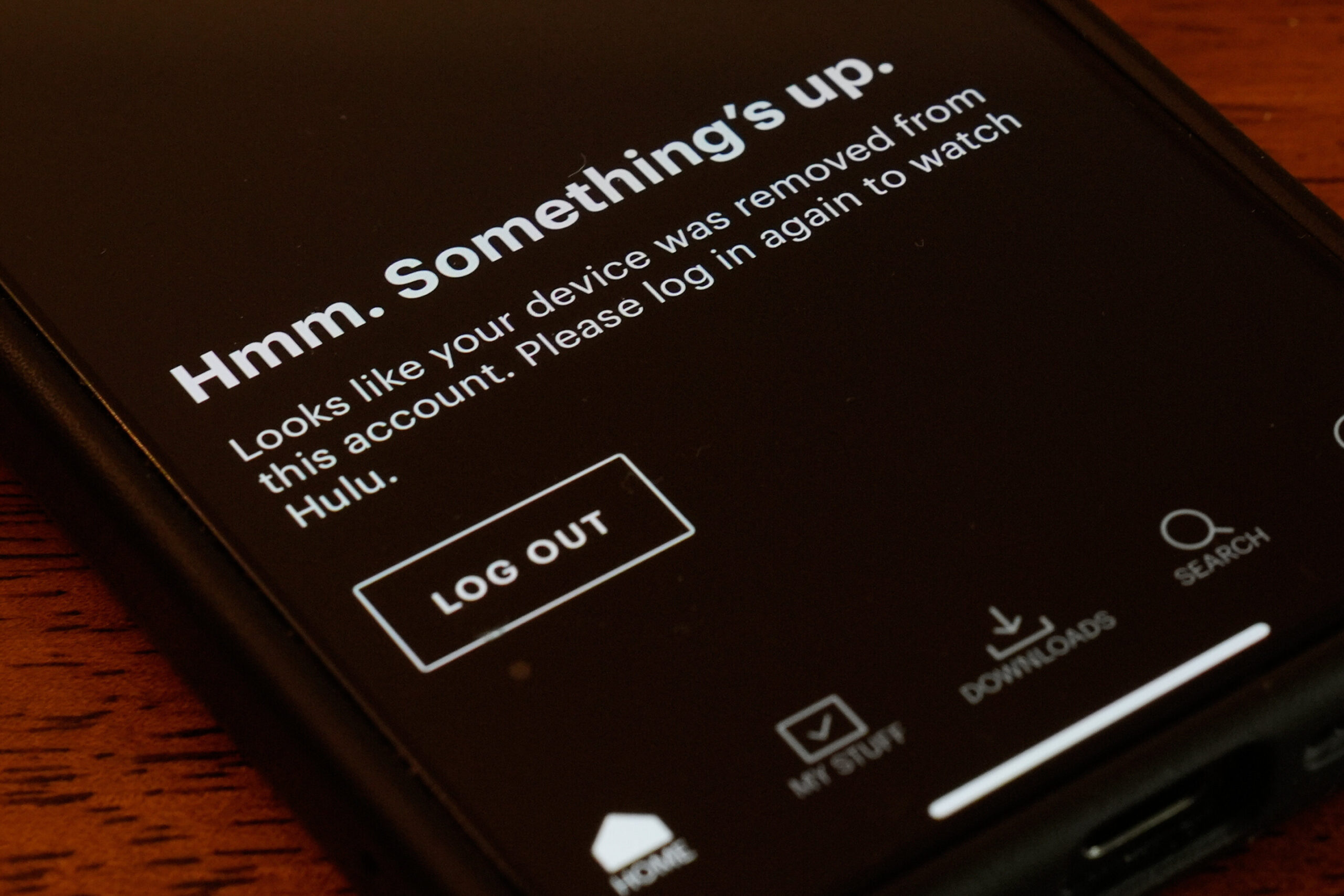
A major Amazon Web Services outage disrupted scores of online platforms on Monday—leaving people around the world unable to access some banks, chatting apps, online food ordering and more.
History shows these kinds of system outages can be short-lived, and are often minor inconveniences—such as placing a lunch order in person or waiting a few hours for a gaming platform to come back online—than long-term problems, but recovery can be a bumpy road. And for people trying to move money, communicate with loved ones or work using impacted services, disruptions are especially stressful.
Consumers may not realize how many platforms they use rely on the same back-end technology. AWS is one of only a handful of major cloud service providers that businesses, governments, universities and other organizations rely on. Monday’s outage is an important reminder of that—and experts stress it’s important to diversify our online lives where we can, or even have some “old school” alternatives to turn to as a backup plan.
“Don’t put all your eggs in one digital basket,” said Lee McKnight, an associate professor at Syracuse University’s School of Information Studies, noting these kinds of outages aren’t going away anytime soon.
So what, if anything, can you do to prepare for disruptions? Here are a few tips.
Keep your money in more than one place
During Monday’s AWS disruptions, users on outage tracker Downdetector reported problems with platforms like Venmo and online broker Robinhood. Banks such as Halifax and Lloyds also said some of their services were temporarily affected, although some customers continued to report lingering issues.
Even if short-lived, outages that impact online banking and other financial services can be among the most stressful, particularly if a consumer is waiting on a paycheck, trying to pay rent, checking on investment funds or making purchases. While much of your stress will depend on the scope and length of disruptions, experts say a good rule of thumb is to park your money in multiple places.
“I’m a big fan of holding multiple accounts that can give us access, to some degree, of funds at any given time,” said Mark Hamrick, senior economic analyst at Bankrate. This underlines the importance of having an emergency savings account, he explains, or other accounts separate from something like day-to-day checking account, for example.
Keeping some cash in a safe place is also a good idea, he adds—and emergency preparedness agencies similarly recommend having physical money on hand in case of a natural disaster or power failures. Still, it’s important to keep hoarding in moderation.
“We shouldn’t go overboard, because we can lose cash—it can be stolen or misplaced,” Hamrick said. And in terms of prudent financial practices overall, he explains, you also don’t want to have lots of money “stored under a mattress” if it could instead be earning interest in a bank.
Depending on the scope of the outage, some other options could still be available.
If digital banking apps are offline, for example, consumers may still be able to visit a branch in person, or call a representative over the phone—although wait times during widespread disruptions are often longer. And if the disruptions are tied to a third-party cloud services provider, as seen with AWS on Monday, it’s not always something a bank or other impacted business can fix on its own.
Have backup communication channels
Monday’s AWS outage also impacted some communications platforms, including social media site Snapchat and messaging app Signal.
In our ever-digitized world, people have become all the more reliant on online channels to call or chat with loved ones, communicate in the workplace and more. And while it can be easy to become accustomed to certain apps or platforms, experts note that outages serve as an important reminder to have backup plans in place.
That could take the form of simply making sure you can reach those who you speak to regularly across different apps, again depending on the scope of disruption. If broader internet and cloud services that smartphones rely on are impacted, you may need to turn to more traditional phone calls and SMS text messages.
SMS texting relies on “an older telecom infrastructure,” McKnight explains. For that reason, he notes that it’s important to have contacts for SMS texting up to date, “and not just the fancier and more fun services that we use day to day” in case of an emergency.
Meanwhile, there can also be outages that specifically impact phone services. For non-cloud service outages in the past, impacted carriers have suggested users try Wi-Fi calling on both iPhones and Android devices.
Save your work across multiple platforms—and monitor service updates
Overall, McKnight suggests “building out your own personal, multi-cloud strategy.”
For online work or projects, that could look like storing documents across multiple platforms—such as Google Drive, Dropbox and iCloud, McKnight explains. It’s important to recognize potential security risks and make sure all of your accounts are secure, he adds, but “having some diversity in how you store information” could also reduce headaches when and if certain services are disrupted.
Many businesses may also have their own workarounds or contingency plans in case the technology they use goes offline. While a wider recovery from Monday’s outage is still largely reliant on Amazon’s wider mitigation efforts, individual platforms’ social media or online status pages may have updates or details about alternative operations.
You can also check outage trackers like Downdetector to see if others are experiencing similar problems.
Even after recovery, experts also suggest checking payments, online orders and messages you may have sent during or close to the outage—in case something didn’t go through.
© 2025 The Associated Press. All rights reserved. This material may not be published, broadcast, rewritten or redistributed without permission.
Citation:
One Tech Tip: How to prepare for outages that impact our online lives, from banking to chatting apps (2025, October 21)
retrieved 21 October 2025
from https://techxplore.com/news/2025-10-tech-outages-impact-online-banking.html
This document is subject to copyright. Apart from any fair dealing for the purpose of private study or research, no
part may be reproduced without the written permission. The content is provided for information purposes only.













A garlic-herb salmon with risotto was probably the best among the family meals I tried. The chopped asparagus was less than visually appealing when drizzled in garlic butter, but still tasty and a bit crisp. The salmon was tender and flaky. And the sweet pea risotto had no choice but to be delicious. There was so much cheese, butter, and lemon it was pretty much a concert of fats and acid.
That chicken parm was likewise a mountain of cheese and salt. It reminded me, pleasantly, of countless family meals I had as a child in the 1980s: cheese-topped chicken, garlic bread, shells stuffed with ricotta and topped with even more cheese. The big difference is that there is simply no way my mother would have cooked this meal without a vegetable.
Toval app via Matthew Korfhage
And nutrition is where Toval runs aground a little. The nutritional notes on that chicken parm meal betray 2,300 milligrams of sodium per serving, pretty much the entire daily allowance for an adult human. This is also on par with comparable servings of Stouffer’s meat lasagna. The Tovala meal also carried about 10 times the cholesterol as Stouffer’s.
Many other meals followed a similar pattern, loading up on fats and salt in order to make meals tasty. The net effect is that it’s a lot more like rich restaurant food than what most people prepare at home. Whether this is a good or a bad quality is up to you.
Only one meal of the seven I tried failed utterly: I flagged a teriyaki chicken dinner to my editor as a possible cultural crime against Japan. The meal was sweet soy drenching pale and steaming chicken, with an implausible side of thick egg rolls and some loose, unseasoned broccoli. It felt like the “Japanese” food you’d get at a mall food court in the ’90s. But again, this was a rare major misstep.
A more pernicious issue, in meals designed for the whole family, is the near-universal high-fat, cholesterol, and sodium content. Many with the income and inclination to eat hearty, low-effort meals like the ones from Tovala are either parents with children, or people in the retirement bracket. Each has their own reason to desire a little more nutrition, and less fat and salt.
By the end of a couple of weeks of testing recipes, I’ll admit I felt a little relieved. I was grateful to feel my arteries slowly reopen. Tovala’s culinary model makes a lot of sense to me, as a smart way of splitting the difference between prepared meals and fresh food. And the company has proven it can cook well. It might be nice if they’d also cook a diet that felt more sustainable.
Power up with unlimited access to WIRED. Get best-in-class reporting that’s too important to ignore. Includes unlimited digital access and exclusive subscriber-only content. Subscribe Today.

By law, autonomous vehicles aren’t legally allowed to carry unaccompanied minors in California. Waymo, Alphabet’s self-driving car company, doesn’t allow kids under 18 to ride alone anywhere outside of metro Phoenix, Arizona. But that hasn’t stopped some time-strapped parents from using their own accounts to transport their kids to school, extracurricular activities, and even social outings. Some have reported that the lack of drivers makes them feel safer.
Waymo is working to crack down on the practice, the company confirmed Friday, after reports of new mid-ride age-verification checks began to float around on social media. The company has “policies in place” to help it identify violations of its terms of service, Waymo spokesperson Chris Bonelli wrote in a statement to WIRED. “We are continuing to refine our system and processes for accuracy over time.” Violating its terms of service can lead to temporary or permanent suspension of an account, Waymo says.
The company uses cameras inside its cars to check that riders aren’t violating its rules. Its privacy policy notes that the company records video inside the vehicle during trips. Waymo says its support workers “may review video under certain circumstances,” and, “in more urgent circumstances,” access live video during a trip. The company says it does not use facial recognition or “other biometric identification technologies” to identify individuals.
The news comes a month after several California labor groups, including the California Gig Workers Union, filed a formal complaint with a state regulatory agency, accusing Waymo of violating the terms of its permit to operate in the state by knowingly transporting unaccompanied minors. The matter was assigned to a judge this week. The state is evaluating new rules that could allow solo riders under 18 in driverless cars, perhaps patterned after a program that permits ride-hail companies with human drivers to transport minors in California.
So far, several fresh-faced adults have been caught in the crossfire. On Tuesday, San Francisco machine learning engineer Nicholas Fleischhauer was about five minutes into his Waymo ride when the car connected him to support. A voice came over the line asking Fleischhauer to verify his age. He told the worker the truth: He’s 35. “I had messy and wet hair, and a backpack on me,” he says, by way of explaining why he might have been flagged by Waymo’s system. Plus, “people have told me that I look young for my age.” Fleischhauer says he takes Waymo weekly, but this marked the first time he had been asked about his age.
Since last summer, Waymo has allowed parents in the Phoenix area to set up teen accounts for riders ages 14 to 17. The accounts allow the teen riders’ adults to track their real-time locations during their trips. Waymo says a specially trained team of support agents deals with any issues its teen riders might have. Waymo says that “hundreds” of Phoenix families use the service each week.
In Waymo’s other markets across the US, adults are allowed to ride with guests under 18, though children under 8 must be in a secured car or booster seat.
Ethan S. Klein is 23, but his 26th LA Waymo ride on Thursday—plus the music he was listening to—was interrupted by an in-car call from a support agent who asked him, for the first time, to verify his birth date. Klein is an adult, but his first impulse was almost teen-like. “I was a little startled,” he says. “I thought I was in trouble!”
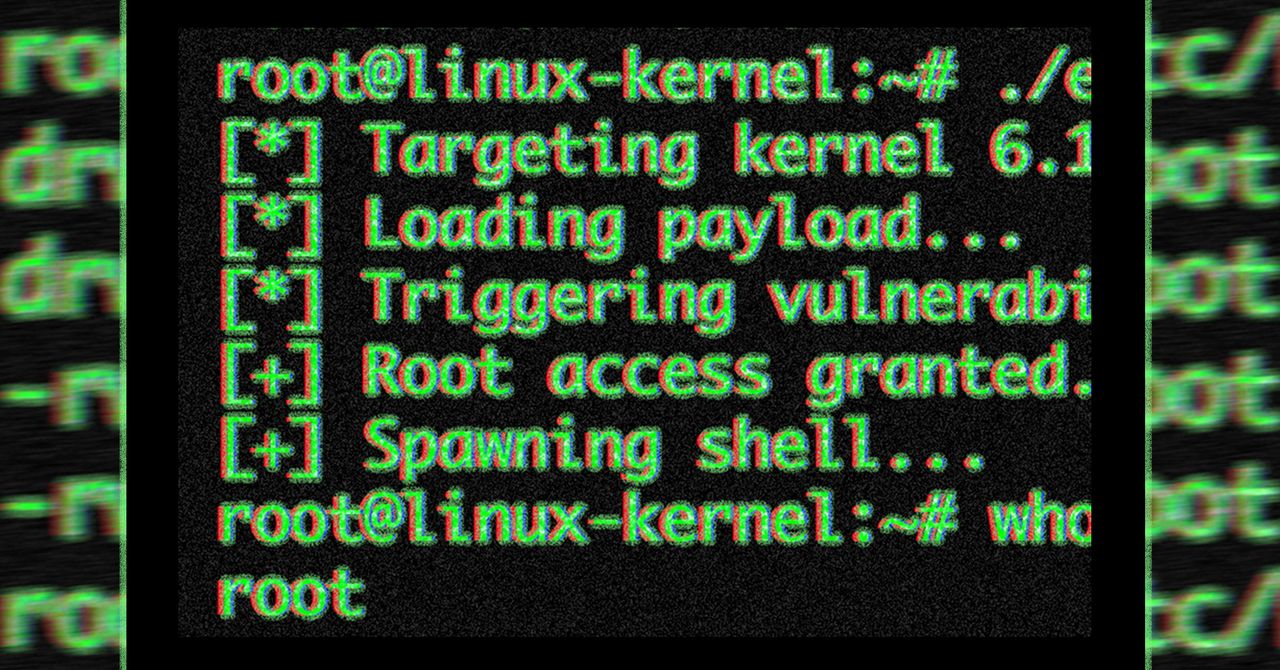
Publicly released exploit code for an effectively unpatched vulnerability that gives root access to virtually all releases of Linux is setting off alarm bells as defenders scramble to ward off severe compromises inside data centers and on personal devices.
The vulnerability and exploit code that exploits it were released Wednesday evening by researchers from security firm Theori, five weeks after privately disclosing it to the Linux kernel security team. The team patched the vulnerability in versions 7.0, 6.19.12, 6.18.12, 6.12.85, 6.6.137, 6.1.170, 5.15.204, and 5.10.254) but few of the Linux distributions had incorporated those fixes at the time the exploit was released.
A Single Script to Hack Them All
The critical flaw, tracked as CVE-2026-31431 and the name CopyFail, is a local privilege escalation, a vulnerability class that allows unprivileged users to elevate themselves to administrators. CopyFail is particularly severe because it can be exploited with a single piece of exploit code—released in Wednesday’s disclosure—that works across all vulnerable distributions with no modification. With that, an attacker can, among other things, hack multi-tenant systems, break out of containers based on Kubernetes or other frameworks, and create malicious pull requests that pipe the exploit code through CI/CD work flows.
“‘Local privilege escalation’ sounds dry, so let me unpack it,” researcher Jorijn Schrijvershof wrote Thursday. “It means: An attacker who already has some way to run code on the machine, even as the most boring unprivileged user, can promote themselves to root. From there they can read every file, install backdoors, watch every process, and pivot to other systems.”
Schrijvershof added that the same Python script Theori released works reliably for Ubuntu 22.04, Amazon Linux 2023, SUSE 15.6, and Debian 12. The researcher continued:
Why does that matter on shared infrastructure? Because “local” covers a lot of ground in 2026: every container on a shared Kubernetes node, every tenant on a shared hosting box, every CI/CD job that runs untrusted pull-request code, every WSL2 instance on a Windows laptop, every containerised AI agent given shell access. They all share one Linux kernel with their neighbors. A kernel LPE collapses that boundary.
The realistic threat chain looks like this. An attacker exploits a known WordPress plugin vulnerability and gets shell access as www-data. They run the copy.fail PoC. They are now root on the host. Every other tenant is suddenly reachable, in the way I walked through in this hack post-mortem. The vulnerability does not get the attacker onto the box; it changes what happens in the next ten seconds after they land there.
The vulnerability stems from a “straight-line” logic flaw in the kernel’s crypto API. Many exploits exploiting race conditions and memory corruption flaws don’t consistently succeed across kernel versions or distributions, and sometimes even on the same machine. Because the code released for CopyFail exploits a logic flaw, “reliability isn’t probabilistic, and the same script works across distributions, researchers from Bugcrowd wrote. “No race window, no kernel offset.”
CopyFail gets its name because the authencesn AEAD template process (used for IPsec extended sequence numbers) doesn’t actually copy data when it should. Instead, it “uses the caller’s destination buffer as a scratch pad, scribbles 4 bytes past the legitimate output region, and never restores them,” Theori said. “The ‘copy’ of the AAD ESN bytes ‘fails’ to stay inside the destination buffer.”
The Worst Linux Vulnerability in Years
Other security experts echoed the perspective that CopyFail poses a serious threat, with one saying it’s the “worst make-me-root vulnerabilities in the kernel in recent times.”
The most recent such Linux vulnerability was Dirty Pipe from 2022 and Dirty Cow in 2016. Both of those vulnerabilities were actively exploited in the wild.


Chris Brown mansion incident raises alarm as gunfire reported outside property

5/2: Saturday Morning – CBS News

Raptors star RJ Barrett nails season-saving 3-pointer to force Game 7 against Cavaliers

-

 Tech5 days ago
A Brain Implant for Depression Is About to Be Tested in Humans
-

 Tech1 week ago
They Wanted to Join Raya. They’ve Been on the Waiting List for Years
-

 Tech1 week ago
Why Do I Like Dyson’s PencilVac So Much?
-

 Tech6 days ago
Almost 90% of women leave tech industry within 10 years | Computer Weekly
-

 Fashion1 week ago
North India cotton yarn steady despite continued push by spinners
-

 Sports5 days ago
Toulouse fall to first home defeat for a year | The Express Tribune
-

 Entertainment1 week ago
Anne Hathaway makes shocking confession about Taylor Swift’s music
-

 Entertainment5 days ago
Norway joins Type 26 Frigate Programme to boost NATO naval power