

Tech
Openreach UK broadband upgrade reaches 20 million homes | Computer Weekly


In what its CEO describes as a UK infrastructure success story that is a credit to the investment, hard work and ambition of everyone at the BT-owned broadband provision company, Openreach has revealed that its current infrastructure programme has now hit a major milestone, with 20 million homes and businesses now able to access its full-fibre broadband network.
In a geographic and lyrical flourish, Openreach said its network now reaches from “the beautiful, windswept Fair Isle in Scotland’s far north to the far reaches of Devon and Cornwall in England’s South West”, its engineers having laid full-fibre cables in cities, towns and villages throughout the UK.
Ultimately, and assuming that it can take advantage of the right economic and regulatory conditions, Openreach hopes to make its full-fibre network available to as many as 30 million premises in all corners of the UK by the end of the decade. It says full-fibre infrastructure is already becoming the backbone of Britain’s digital economy, supporting everything from smart farming and sustainable transport to remote working and virtual healthcare.
Openreach describes its build-out project as one of the largest and fastest broadband infrastructure programmes in Europe, with engineers now reaching more than a million new homes every three months. It has so far included around 33,000 medical facilities and more than 25,000 colleges, schools and universities, helping to “transform” access to critical services.
Openreach claims to be building its new network to connect customers faster and further than any other provider in the UK, reaching an average of 85,000 new premises every week. In total, more than 3,500 UK towns, cities, boroughs, villages and hamlets have so far been included in the build programme, with others being reached through publicly funded partnerships.
As an indication of the progress of the build-out, on 1 July 2025, Openreach reported that 19 million premises across the UK could then order its gigabit broadband technology and that it was on track to reach five million more homes and businesses with its broadband network during the year to March 2026.
It added that seven million UK premises were already taking services based on its network via a host of popular providers – 37% of the full footprint. Yet Openreach noted that, at present, only around 38% of households that could order full-fibre from Openreach have made the switch.
For Openreach chief executive Clive Selley, reaching 20 million premises represents a UK infrastructure success story, but he stressed that the job in hand was not done yet, especially given that the next premises to connect were some of the very hardest to reach.
“In 2025, being online isn’t a luxury – it’s a lifeline. From booking GP appointments to applying for jobs, accessing education and launching businesses, digital connectivity is the gateway to opportunity. Full-fibre makes that gateway faster and far more reliable, and it will keep up with the demands of our digital world,” he said.
“But upgrades don’t often happen automatically, so people need to contact their broadband provider to make the switch. To finish the job, we need the right support as an industry, including targeted help for some rural areas, faster planning approvals, better access to multi-dwelling buildings, and a regulatory and policy environment that gives investors confidence and allows competition to thrive.”
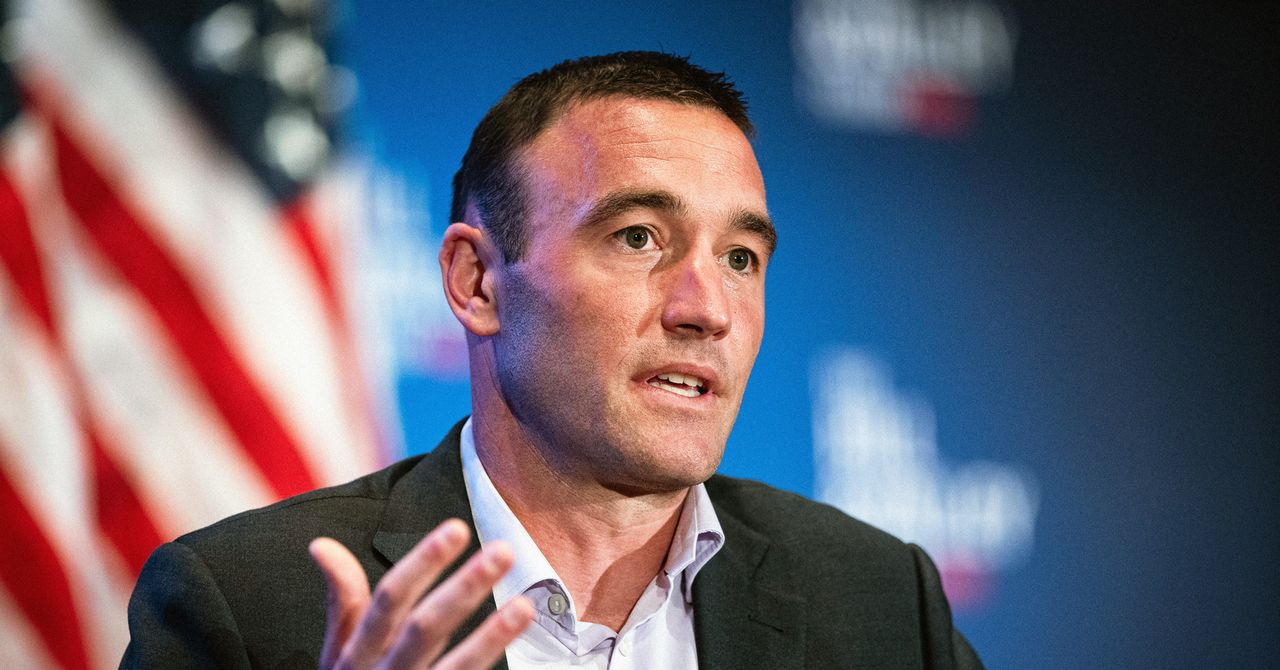
Kevin Weil, OpenAI’s former chief product officer who was recently tapped to build a new AI workspace for scientists, Prism, is leaving the company, WIRED has confirmed. Weil was previously an early executive leading product at Instagram.
OpenAI is also sunsetting Prism, which the company launched as a web app in January this year to give scientists a better way to work with AI. The company is folding the roughly 10-person team behind it into Thibault Sottiaux’s Codex team. An OpenAI spokesperson confirmed the changes, and tells WIRED this is part of the company’s effort to unify its business and product strategy. OpenAI has broader ambitions to turn Codex, its AI coding application, into an “everything app.”
Weil, who joined OpenAI in June 2024, announced last September that he would be starting a new initiative inside of the company called “OpenAI for Science.” Now, OpenAI is dispersing those employees throughout the company’s product, research, and infrastructure teams. An OpenAI spokesperson reiterated the company’s commitment to accelerating scientific discovery, and says it’s one of the clearest ways AI can benefit humanity.
OpenAI is currently trying to refocus the company around a few key areas, such as enterprise offerings and coding. Last month, OpenAI’s CEO of AGI deployment Fidji Simo told staff that the company needs to simplify its product offerings. The push to divert resources to more consequential efforts resulted in OpenAI discontinuing its Sora video-generation app.
This is a developing story. Please check back for updates.
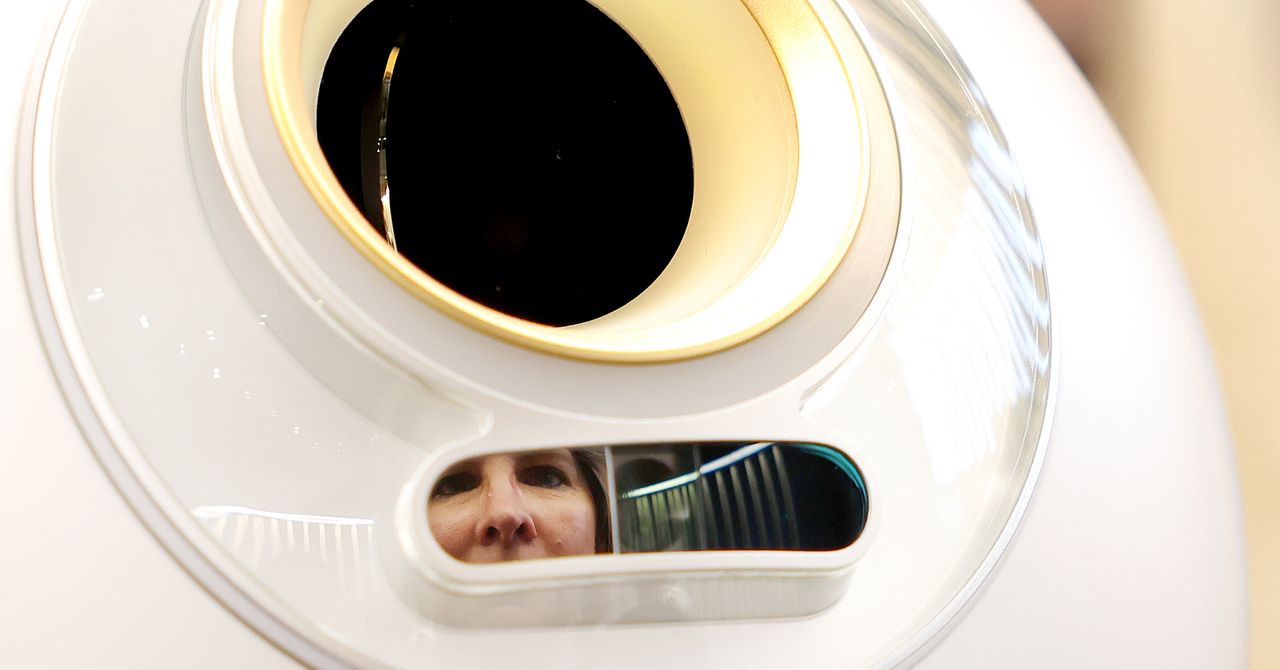
Sam Altman’s iris-scanning, humanity-verifying World project announced at an event in San Francisco on Friday that Tinder users around the globe can now put a digital badge on their profiles signaling to potential suitors that they’re a real human, provided they’ve already stared into one of World’s glossy white Orbs and allowed their eyes to be scanned. The announcement follows a pilot project for Tinder verification that World previously conducted in Japan.
The global Tinder expansion is one of the biggest tests yet for World, and the company’s bet that everyday consumers will be willing to sign up for biometric verification services to use internet applications. Founded in 2019 by Altman and Alex Blania, the World project was designed for a future where the internet is overrun with highly capable AI agents that make it incredibly difficult, if not impossible, to tell who is really human. As companies like OpenAI—where Altman is CEO—and Anthropic push AI agents into the mainstream, the problem World was built to solve feels increasingly urgent.
But World has struggled to achieve mainstream adoption, and it has encountered resistance from governments around the globe that have probed the company over suspected violations of data protection laws. The company says 18 million people have now been verified with an Orb, up from 12 million last year.
In addition to the Tinder global expansion, Tools for Humanity, the company behind World, announced a number of other consumer and enterprise partnerships on Friday at its Lift Off event in San Francisco. The startup says Tinder users who verify with their World ID will receive five free “boosts,” typically a paid feature that increases the number of users who see a profile by up to 10 times for 30 minutes. The videoconferencing platform Zoom also says that users can now require other participants to verify their identity with World before joining a call. Docusign, the contract signing software, will allow users to require World’s identity verification technology.
Tiago Sada, Tools for Humanity’s chief product officer, tells WIRED the company sees major platform partnerships as key to helping World become a mainstream identity-verification technology. Sada said he’s especially interested in working with social media companies in the future, and was encouraged to see that Reddit has started testing World as a solution to help users distinguish bots from real people.
World is also launching a tool called Concert Kit, which lets artists reserve concert tickets for verified humans, a pitch aimed squarely at the bot-driven scalping problem that critics say has plagued sites like TicketMaster. World will test the feature on the upcoming Bruno Mars World Tour featuring Anderson .Paak, who is scheduled to play a verified-humans-only show under his alias DJ Pee .Wee in San Francisco on Friday night.
No new hardware announcements or updates were made at Friday’s event. World first launched the iris-scanning Orb back in 2023, alongside a mobile app that contains “mini apps” for different verification and blockchain-related programs. After a person scans their eyeball with one of World’s Orbs, the startup creates a unique cryptographic key for each person—their World ID. This creates a private, decentralized way to verify people online, without requiring them to upload their government ID all over the internet.
The project was initially called Worldcoin, and in the early days the startup offered people free cryptocurrency to scan their irises. World still offers a cryptocurrency token and a wallet for digital currencies, but dropped the “coin” from its name in 2024 and has since shifted its focus to identity verification for the AI era. Jess Montejano, a spokesperson for Tools for Humanity, says the company still offers crypto as an incentive when new users sign up, but has also expanded its offerings to include Netflix and Apple TV subscription trials.

The US National Institute for Standards and Technology (NIST) is in the process of shaking up the way in which it handles common vulnerabilities and exposures (CVEs) listed in the National Vulnerability Database (NVD) in the face of a rapidly-changing threat environment.
Previously, the NVD programme aimed to analyse all CVEs received to add details – like severity scores and affected product lists – to help cyber teams prioritise and mitigate relevant vulnerabilities. It terms this process ‘enrichment’.
However, going forward, it will enrich only those CVEs that meet a predefined set of criteria – those flaws that don’t mean this bar will still be listed but will be marked as lower priority issues.
“This change is driven by a surge in CVE submissions, which increased 263% between 2020 and 2025. We don’t expect this trend to let up anytime soon. Submissions during the first three months of 2026 are nearly one-third higher than the same period last year,” NIST said in a statement.
“We are working faster than ever. We enriched nearly 42,000 CVEs in 2025 – 45% more than any prior year. But this increased productivity is not enough to keep up with growing submissions. Therefore, we are instituting a new approach.”
The authority hopes that these changes will enable it to stabilise its programme and buy some time to help it develop new automated systems and workflow enhancements.
Priorities
The new criteria went into effect on Wednesday 15 April, with the following CVEs prioritised:
“This will allow us to focus on CVEs with the greatest potential for widespread impact. While CVEs that do not meet these criteria may have a significant impact on affected systems, they generally do not present the same level of systemic risk as those in the prioritised categories,” said NIST.
The organisation acknowledged that the new criteria may not catch every potentially high-impact flaw, so users will be able to request reviews of lower priority CVEs for enrichment.
At the same time, NIST will no longer routinely provide a separate severity score for CVEs that have already been assigned one by the CVE Numbering Authority – firms such as Microsoft, etc – that submitted it. It said this was an effort to reduce duplication of effort and better focus its resources, although users are also able to request reviews of specific CVEs if wanted.
NIST is also changing how it goes about reanalysing enriched CVEs that have been modified after enrichment. Previously it had reanalysed all modified flaws but it will now only do so if it becomes aware of a modification that materially impacts its enrichment data. Again, a user-requested review system will be put in place.
The backlog
In relation to a significant backlog of unenriched CVEs that started to develop two years ago, NIST stated that it has not been able to clear this down and so all backlogged CVEs with an NVD publish date before 1 March 2026 will be moved into the ‘Not Scheduled’ category. CVEs falling into this bucket will be considered for enrichment provided they meet the new prioritisation criteria.
Finally, NIST is updating CVE status labels and descriptions, and making changes to the NVD Dashboard to accurately report these.
The organisation said it recognised it was making big changes that will affect everyday users, however, it reiterated, adopting a risk-based approach is necessary to manage the surge in submissions and buy it time to build new systems that will ensure the sustainability of its offering going forward.
Danis Calderone, principal and chief technology officer at Suzu Labs, said NIST had probably taken the right decision.
“An overhaul was certainly needed and probably inevitable given the volume of new CVE submissions, and we suspect that AI-assisted discovery is probably already pushing that number higher. After all, Microsoft just had its second-largest Patch Tuesday ever, and even ZDI says their incoming submissions have tripled thanks to AI tools,” said Calderone.
“We are excited to see NIST making Kev the top priority tier. That is the right call and something we’ve been doing with our clients for some time now, so we’re very happy to see that becoming the official model.”
However, Calderone criticised some perceived gaps in NIST’s new methodology, specifically the ending of CVE scoring when the submitting authority has already scored it.
“That sounds efficient until you remember that the submitting authority is often the vendor, and vendors don’t always get their own bugs right,” he said. “We just went through this with F5. A recent BIG-IP vulnerability was scored 8.7 HIGH as a denial-of-service issue for five months before it got reclassified as a 9.8 RCE. For organisations using CVSS to drive patching priority, that miscategorisation meant the real risk sat in the wrong queue for five months while attackers were already exploiting it.”
“The other thing missing here is that NIST addressed the processing volume problem but didn’t touch the scoring methodology. CVSS still scores vulnerabilities in isolation. It doesn’t model chainability, where an attacker combines a medium-severity information disclosure with a medium-severity privilege escalation and ends up with critical impact. Neither bug scores as urgent on its own, but together they give you full system compromise.”
Calderone said that for security leaders who have relied on NVD as their go-to for vulnerability context, the time was nigh to build their own prioritisation stack. This could incorporate data from Cisa’s Kev catalogue, Exploit Prediction Scoring System (EPSS) information, and their organisation’s own environmental context.
“The days of waiting for NIST to tell you what matters are over,” he remarked.


Frank Lampard’s Coventry City promoted to Premier League

WWE star Danhausen says Mets ‘curse’ isn’t exactly lifted as team drops ninth straight game

Ice Spice slapped at McDonald’s by fan: Here’s what actually happened

-

 Tech1 week ago
This AI Button Wearable From Ex-Apple Engineers Looks Like an iPod Shuffle
-

 Politics1 week ago
Indian airlines hit hardest after Dubai limits foreign flights until May 31
-

 Politics1 week ago
Chinese, Taiwanese will unite, Xi tells Taiwan opposition leader
-

 Entertainment5 days ago
Palace left in shock as Prince William cancels grand ceremony
-

 Sports5 days ago
The case for Man United’s Fernandes as Premier League’s best
-

 Entertainment7 days ago
Dua Lipa hits major career high ahead of wedding with Callum Turner
-
 Business5 days ago
UK could adopt EU single market rules under new legislation
-
 Business1 week ago
He paid $248 in illegal tariffs for this coat. Will he ever get it back?