

Entertainment
Overview of oil, natural gas, rare earth minerals

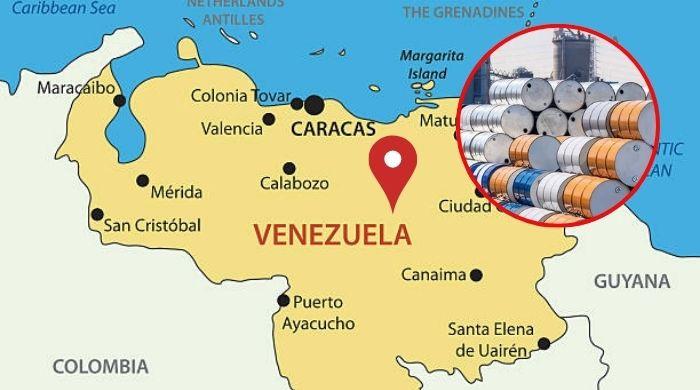
The Bolivarian Republic of Venezuela is located alongside the South America’s Caribbean coast. Its neighbouring countries are Brazil and Columbia. Having a total area of 912,050 km2 and a land area of 882,050 km2, Venezuela is enriched with natural resources.
Natural resources include petroleum, natural gas, iron ore, gold, bauxite, diamonds, and other minerals.
Oil
The country holds one of the largest oil reserves in the world and is a founder member of Organisation of Petroleum Exporting Countries (OPEC).
Statistical Review of World Energy revealed that proven oil reserves of Venezuela were around 300 billion barrels (4.8x10¹⁰m3) as of January 1, 2014.
However, the 2019 BP Statistical Review of World Energy reveals that Venezuela’s total proved reserves rose to 303.3 billion barrels, which is slightly more than Saudi Arabia (297.7 billion barrels).
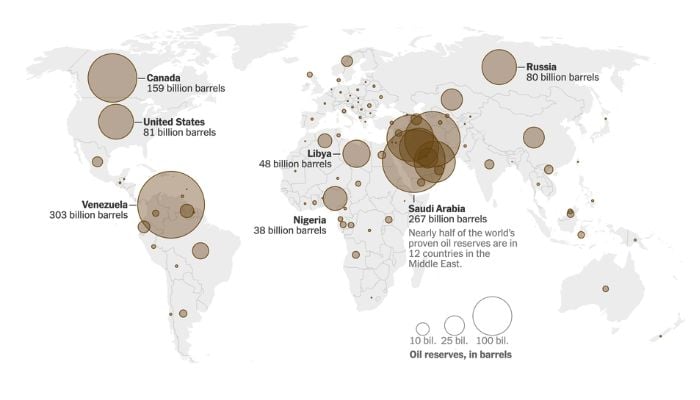
Besides conventional oil reserves, Venezuela has oil sands deposits similar in size to those of Canada in the Orinoco Belt. They are approximately equivalent to the world’s reserves of conventional oil.
It is reported that around 100 billion barrels to 270 billion barrels are the recoverable reserves of the Orinoco Belt. According to the United States Geological Survey (USGS), the Orinoco Belt alone contains 900-1,400 billion barrels of heavy crude in proven and unproven deposits.
Of this, only 380-652 billion barrels can be technically recoverable. This makes the country’s total reserves (proven and unproven) among the largest in the world.
Gold
Venezuela has significant gold resources, mainly located in the Guiana Shield in the southeast of the country. Gold mining began in the 1800s, and by the early 1970s, about 187 metric tons had been officially produced. The El Callao district is Venezuela’s most crucial gold area, having produced over 124 metric tons of gold and once being the world’s leading gold mine. Other districts, such as Kilometer 88, Lo Increíble, and Marwani, also contain gold in similar geological settings.
Diamond
Venezuela is also naturally endowed with diamonds. Its Guiana Shield is the central diamond-producing region. The Quebrada Grande area and the San Salvador de Paul mine have historically been the most prominent producers, reportedly accounting for over 90% diamond production in the 1975-1980 period.
Iron
Venezuela also has significant iron resources, mainly in banded iron formations (BIFs) of the Archean Imataca Complex. Currently, the high-grade reserves have exceeded 1,866 million metric tons at Cerro Bolivar, San Isidro, and Los Barrancos, grading about 63% iron. Combining with lower-grade materials, total reserves can reach up to 8,000-10,000 million metric tons.
Aluminum
After oil, Venezuela’s alumina industry is the second-largest foreign-currency earner. In 1987, the country produced about 1,347,000 mt of alumina and 428,000 mt of aluminum metal. Significant deposits are found at Los Pijiguaos, Upata, Nuria, Los Guaicas, and Gran Sabana. Los Pijiguaos alone holds around 700 million mt of proven and potential reserves.
Manganese
Manganese deposits are present in the greenstone belts of the Archean Imataca Complex, at locations such as San Cristobal, La Esperanza, El Palmar, Guacuripia, Upata, and El Pao. The ores are secondly enriched, containing pyrolusite, cryptomelane, and psilomelane, with total reserves in the Upata-El Palmar-Guacuripia area around 1 million mt, averaging 20-25% Mn.
Tin
Tin occurs in placer, eluvial, and lode deposits in western Bolivar State and Amazon Federal Territory, especially around Cano Aguamena. Alongside Tin, associated minerals include cassiterite, tantalum, niobium, zirconium, and titanium minerals. Although resources are not well-defined, drill samples show 0.01-0.77% tin in heavy minerals.
Niobium, Tantalum, Rare Earth Minerals (REE)
These are primarily linked to pegmatites in Parguaza granite and the Imataca Complex, with the richest deposit at Cerro Impacto, a weathered carbonatite. Lateritic soils here are enriched in Fe, Mn, Al, Ba, Th, Nb, Ti, and REE (Cerium, Lanthanum, and Neodymium). Other minerals include gorceixite, goyazite, florencite, bastanaesite, and monazite. The most significant source is Cerro Impacto.
Uranium
Uranium occurrences are scattered, primarily as radiometric anomalies in the Guiana Shield. Key areas include the Churuata ring structure and parts of the Roraima Group.
Venezuela is endowed with abundant natural resources, including petroleum, minerals, and metals, offering significant economic potential, though many deposits remain underexplored, and development varies across regions.
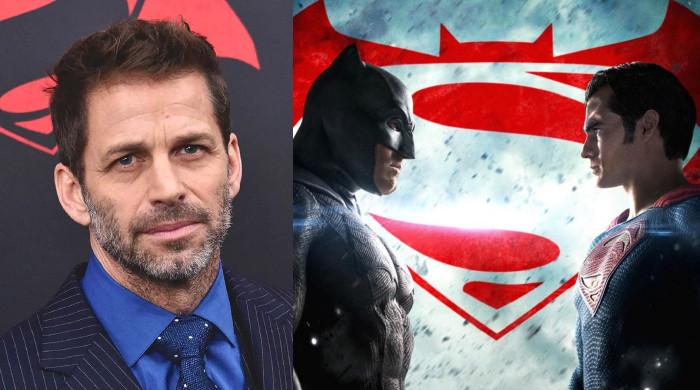
Zack Snyder has marked the 10th anniversary of Batman v Superman: Dawn of Justice with a not-so-subtle defence of the film, and a few revealing stories about just how contentious it was, even before it reached cinemas.
Appearing on the Happy Sad Confused podcast, Snyder looked back on the 2016 comic book tentpole, which opened to largely negative reviews on 25th March of that year but still went on to gross $874 million worldwide.
A decade on, the director shows no sign of second-guessing his choices.
“My 100% honest reaction to BvS and how it’s received in the world is… Do you really want a movie that’s had all the edges shaved off it by the focus groups?” he said.
“Do you really want a movie where the decisions have been made in a boardroom, or tested ideas have been rendered for your enjoyment? Do you really want the Kmart version of your story? Is that what you really want?”
Reflecting on the broader reaction to the film and his approach to the DC characters, Snyder was philosophical.
“You realize then that we were kicking the zeitgeist in the n-ts and that we were going to anger people,” he said.
“Not only do they not want their heroes deconstructed, they don’t want their heroes battling each other on a road to deconstructing the why of their existence. That’s another sacrilege.”
Batman v Superman was the second film in what became known online as the SnyderVerse, following Man of Steel and leading into Justice League, a production that took on a life of its own after Snyder departed due to a family tragedy and Joss Whedon was brought in to complete it.
The subsequent fan campaign to release Snyder’s original cut became one of the most vocal movements in modern cinema history, eventually resulting in Zack Snyder’s Justice League debuting on HBO Max in 2021.
Snyder spoke warmly about those fans, pushing back on criticism of their reputation.
“The fans should never forget they did that. They also raised a ton of money for suicide prevention. They did a lot of good. They catch a lot of flak for being toxic or whatever, but they literally saved human lives. You can go f–k yourselves if that’s what you think.”
The SnyderVerse ultimately ended before he could complete his planned trilogy of Justice League films, though he hasn’t entirely closed the door on revisiting those stories in other formats.
“We live in a world where all that is possible,” he said, confirming he has “absolutely talked about” bringing those unmade films to life through animation or comics.

Lisa Rinna and Andy Cohen have put their very public falling out behind them, with the former Real Housewives of Beverly Hills star confirming the two have reconciled after three years of tension.
The rift between them dated back to Cohen’s memoir, in which the Bravo executive shared private text messages exchanged between himself and Rinna surrounding her exit from RHOBH in 2023, a move that caused a significant fracture in what had been a long friendship.
But in an interview with E! News, Rinna, 62, made clear that things have moved on.
“As humans, we evolve, we grow, we change and we learn from things,” she said.
“Andy and I have done that. I’ve pissed him off. He’s pissed me off. We’ve gone through a lot, and he really is a dear friend.” She added with a laugh, “He’s always been a champion, until he hasn’t.”
The reconciliation happened when Rinna recently returned to Watch What Happens Live for her first appearance since the feud began.
Cohen, 57, used the occasion to apologise to her in person, and by all accounts it was a meaningful moment for both of them.
“It was a beautiful moment,” Rinna told E! News, describing it as “life-changing, healing and cathartic.”
She added, “We really do respect one another and care for one another. I just was so moved by it. It meant the world to me.”
For anyone wondering whether the reunion signals a return to RHOBH, Rinna was characteristically blunt. “No,” she said simply. “I’m grateful for my time at Bravo. I learned a lot.”
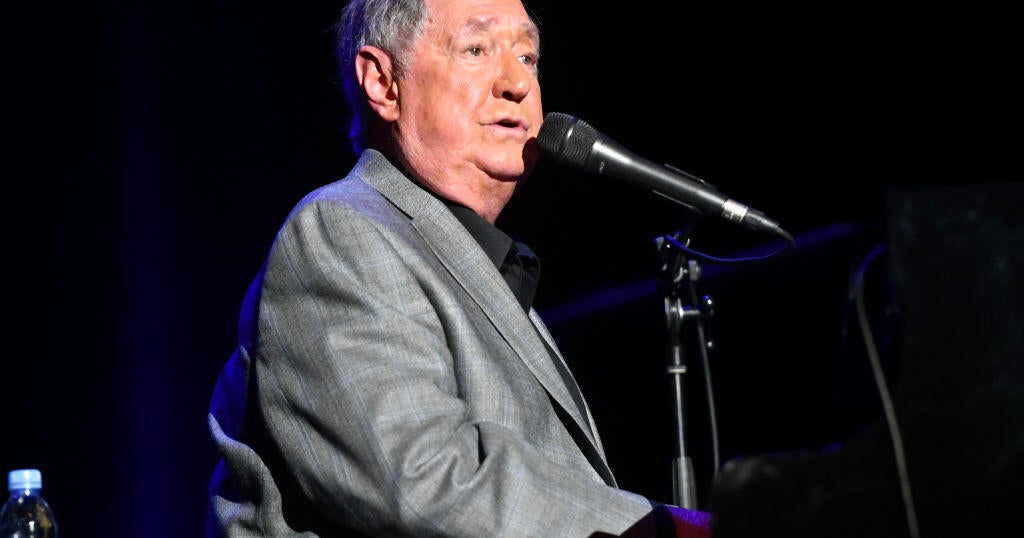
Neil Sedaka, the prominent singer-songwriter whose string of hits in the 1960s and ’70s included “Laughter in the Rain,” “Breaking Up is Hard to Do” and “Calendar Girl,” has died, a representative confirmed to CBS News on Friday. He was 86.
“Our family is devastated by the sudden passing of our beloved husband, father and grandfather, Neil Sedaka,” a statement from the family read. “A true rock and roll legend, an inspiration to millions, but most importantly, at least to those of us who were lucky enough to know him, an incredible human being who will be deeply missed.”
A cause of death was not immediately available.
Scott Dudelson / Getty Images
A key member of the Brill Building songwriting factory, Sedaka teamed with lyricist and boyhood neighbor Howard Greenfield on songs that reflected the teen innocence of the post-Elvis/pre-Beatles era of the late 1950s-early 1960s, including “Happy Birthday Sweet Sixteen,” “Calendar Girl” and “Oh! Carol,” a lament for his high school sweetheart, Carole King.
Sedaka was a Juilliard-trained, Brooklyn-born son of a Jewish taxi driver who began performing as a teen and kept at it for decades. His talent was recognized by a second-grade teacher who urged his homemaker mother, Eleanor, to buy him a piano. At 9 years old, Sedaka had already begun intensive classical piano training at the Juilliard School.
Sedaka loved songwriting and never quit, but he craved performing.
“Once a performer, always a performer. It’s that adrenaline rush. It’s like a natural high when you’re in front of an audience, and if you get that standing ovation, it’s infectious,” he once told The Associated Press.
At 16, Sedaka was chosen by legendary pianist Arthur Rubinstein in a contest as the city’s best high school piano student and performed on a classical radio station as a prize. It was the same year he discovered rock ‘n’ roll, when he performed a song, “Mr. Moon,” he had written with Greenfield, his classmate at Abraham Lincoln High School.
In 1958, at age 19, Sedaka signed with RCA Victor Records and his first single, “The Diary,” enjoyed modest success. He began touring and promoting his songs through regular TV appearances on Dick Clark’s “American Bandstand” and “Shindig!”
At the Brill Building, Sedaka and Greenfield were joined by other up-and-coming writers and lyricists including King, Neil Diamond and Paul Simon.
From 1959 to 1962, Sedaka had 10 records in the Top 10, including “Calendar Girl,” “Oh! Carol,” “Happy Birthday Sweet Sixteen” and “Next Door to an Angel.” But in the mid-1960s, the Brill Building sound, influenced by the doo-wop groups of the New York City streets, was pushed off the charts by the Beatles-led British Invasion and the psychedelic and protest music that followed. Sedaka would endure 13 years “in the wilderness,” as he described it to the AP.
After a long dry spell, he reemerged with such smashes as “Laughter in the Rain” and “Bad Blood.” The Captain & Tennille’s cover of his “Love Will Keep Us Together” was a chart-topper in 1975.
Sedaka told “CBS This Morning” in 2012 that Elton John rediscovered him in the 1970s when he was trying to start his record company. John signed him to his fledgling, U.S.-based Rocket Records label, providing him a chance at more hits with the album “Sedaka’s Back.”
Of the time between jobs, Sedaka said, “The creative mind is still working and it’s a drive. You have you to prove yourself each time. You have to raise the level of Neil Sedaka. You have to top yourself.”
Jason LaVeris/FilmMagic 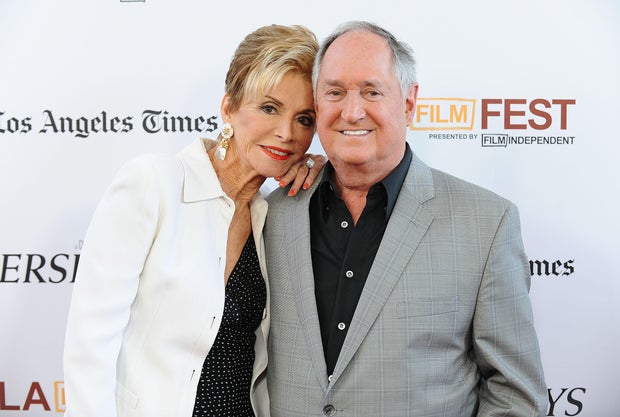
At Rocket Records, Sedaka and a new writing partner, Philip Cody, topped charts with “Bad Blood” and the joyous “Laughter in the Rain.” He also achieved a rare feat with “Breaking Up Is Hard to Do.” His original up-tempo version went No. 1 in 1962. He re-recorded it as a slow ballad in 1975, and that, too, went No. 1.
Sedaka was nominated for five Grammy awards throughout his career. He was inducted into the Songwriters Hall of Fame, but the Rock & Roll Hall of Fame eluded him despite a fan petition drive.
He still played dozens of concerts a year well into his 80s. Sedaka retained the enthusiasm and broad vocal range of his youth and never tired of the standards he had sung hundreds of times.
“Past 70, Pavarotti told me the vocal cords are not what they used to be. I’m very fortunate that my voice has held,” he told The Associated Press in 2012. “It’s nice to be a legend, but it’s better to be a working legend.”
Sedaka’s songs sold millions worldwide and have been covered by a range of performers, from Elvis Presley and Frank Sinatra to The 5th Dimension and Nickelback.
Sedaka helped propel the career of Connie Francis with “Stupid Cupid” and “Where the Boys Are,” the latter for the soundtrack of the movie with the same name. The Captain & Tennille received a best-album Grammy thanks largely to “Love Will Keep Us Together” and included a nod to Sedaka at the end of the song, when Toni Tennille exclaimed: “Sedaka’s back!”
Sedaka is survived by his wife, Leba Strassberg, whom he married in 1962, and his two children, Dara and Marc.


India’s real GDP estimated to grow 7.6% in FY26 under new base FY23

South Korea’s Misto Holdings completes planned leadership transition

Michigan tops Illinois for 1st outright Big Ten regular-season title since ’14

-

 Tech1 week ago
A $10K Bounty Awaits Anyone Who Can Hack Ring Cameras to Stop Sharing Data With Amazon
-
 Business1 week ago
US Top Court Blocks Trump’s Tariff Orders: Does It Mean Zero Duties For Indian Goods?
-

 Fashion1 week ago
ICE cotton ticks higher on crude oil rally
-

 Entertainment1 week ago
The White Lotus” creator Mike White reflects on his time on “Survivor
-

 Politics6 days ago
Pakistan carries out precision strikes on seven militant hideouts in Afghanistan
-

 Tech1 week ago
Donald Trump Jr.’s Private DC Club Has Mysterious Ties to an Ex-Cop With a Controversial Past
-
 Business7 days ago
Eye-popping rise in one year: Betting on just gold and silver for long-term wealth creation? Think again! – The Times of India
-

 Fashion1 week ago
India’s $28 bn reset: How 5 trade deals will reprice its T&A exports