

Entertainment
Overview of oil, natural gas, rare earth minerals

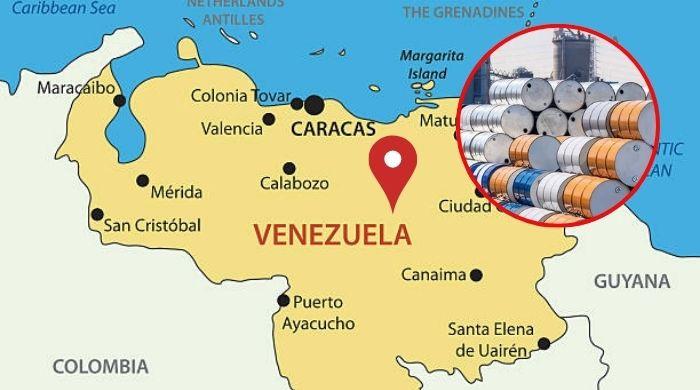
The Bolivarian Republic of Venezuela is located alongside the South America’s Caribbean coast. Its neighbouring countries are Brazil and Columbia. Having a total area of 912,050 km2 and a land area of 882,050 km2, Venezuela is enriched with natural resources.
Natural resources include petroleum, natural gas, iron ore, gold, bauxite, diamonds, and other minerals.
Oil
The country holds one of the largest oil reserves in the world and is a founder member of Organisation of Petroleum Exporting Countries (OPEC).
Statistical Review of World Energy revealed that proven oil reserves of Venezuela were around 300 billion barrels (4.8x10¹⁰m3) as of January 1, 2014.
However, the 2019 BP Statistical Review of World Energy reveals that Venezuela’s total proved reserves rose to 303.3 billion barrels, which is slightly more than Saudi Arabia (297.7 billion barrels).
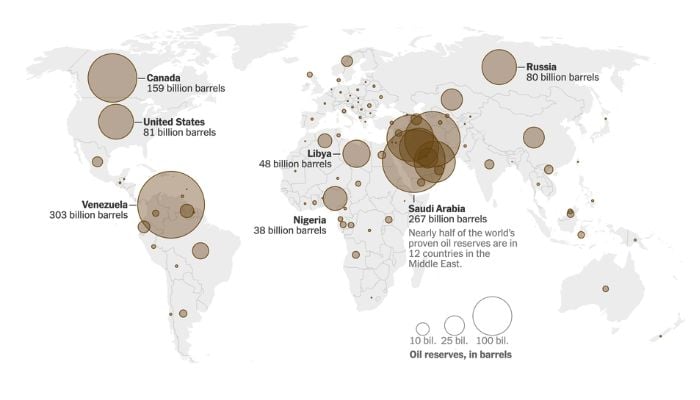
Besides conventional oil reserves, Venezuela has oil sands deposits similar in size to those of Canada in the Orinoco Belt. They are approximately equivalent to the world’s reserves of conventional oil.
It is reported that around 100 billion barrels to 270 billion barrels are the recoverable reserves of the Orinoco Belt. According to the United States Geological Survey (USGS), the Orinoco Belt alone contains 900-1,400 billion barrels of heavy crude in proven and unproven deposits.
Of this, only 380-652 billion barrels can be technically recoverable. This makes the country’s total reserves (proven and unproven) among the largest in the world.
Gold
Venezuela has significant gold resources, mainly located in the Guiana Shield in the southeast of the country. Gold mining began in the 1800s, and by the early 1970s, about 187 metric tons had been officially produced. The El Callao district is Venezuela’s most crucial gold area, having produced over 124 metric tons of gold and once being the world’s leading gold mine. Other districts, such as Kilometer 88, Lo Increíble, and Marwani, also contain gold in similar geological settings.
Diamond
Venezuela is also naturally endowed with diamonds. Its Guiana Shield is the central diamond-producing region. The Quebrada Grande area and the San Salvador de Paul mine have historically been the most prominent producers, reportedly accounting for over 90% diamond production in the 1975-1980 period.
Iron
Venezuela also has significant iron resources, mainly in banded iron formations (BIFs) of the Archean Imataca Complex. Currently, the high-grade reserves have exceeded 1,866 million metric tons at Cerro Bolivar, San Isidro, and Los Barrancos, grading about 63% iron. Combining with lower-grade materials, total reserves can reach up to 8,000-10,000 million metric tons.
Aluminum
After oil, Venezuela’s alumina industry is the second-largest foreign-currency earner. In 1987, the country produced about 1,347,000 mt of alumina and 428,000 mt of aluminum metal. Significant deposits are found at Los Pijiguaos, Upata, Nuria, Los Guaicas, and Gran Sabana. Los Pijiguaos alone holds around 700 million mt of proven and potential reserves.
Manganese
Manganese deposits are present in the greenstone belts of the Archean Imataca Complex, at locations such as San Cristobal, La Esperanza, El Palmar, Guacuripia, Upata, and El Pao. The ores are secondly enriched, containing pyrolusite, cryptomelane, and psilomelane, with total reserves in the Upata-El Palmar-Guacuripia area around 1 million mt, averaging 20-25% Mn.
Tin
Tin occurs in placer, eluvial, and lode deposits in western Bolivar State and Amazon Federal Territory, especially around Cano Aguamena. Alongside Tin, associated minerals include cassiterite, tantalum, niobium, zirconium, and titanium minerals. Although resources are not well-defined, drill samples show 0.01-0.77% tin in heavy minerals.
Niobium, Tantalum, Rare Earth Minerals (REE)
These are primarily linked to pegmatites in Parguaza granite and the Imataca Complex, with the richest deposit at Cerro Impacto, a weathered carbonatite. Lateritic soils here are enriched in Fe, Mn, Al, Ba, Th, Nb, Ti, and REE (Cerium, Lanthanum, and Neodymium). Other minerals include gorceixite, goyazite, florencite, bastanaesite, and monazite. The most significant source is Cerro Impacto.
Uranium
Uranium occurrences are scattered, primarily as radiometric anomalies in the Guiana Shield. Key areas include the Churuata ring structure and parts of the Roraima Group.
Venezuela is endowed with abundant natural resources, including petroleum, minerals, and metals, offering significant economic potential, though many deposits remain underexplored, and development varies across regions.
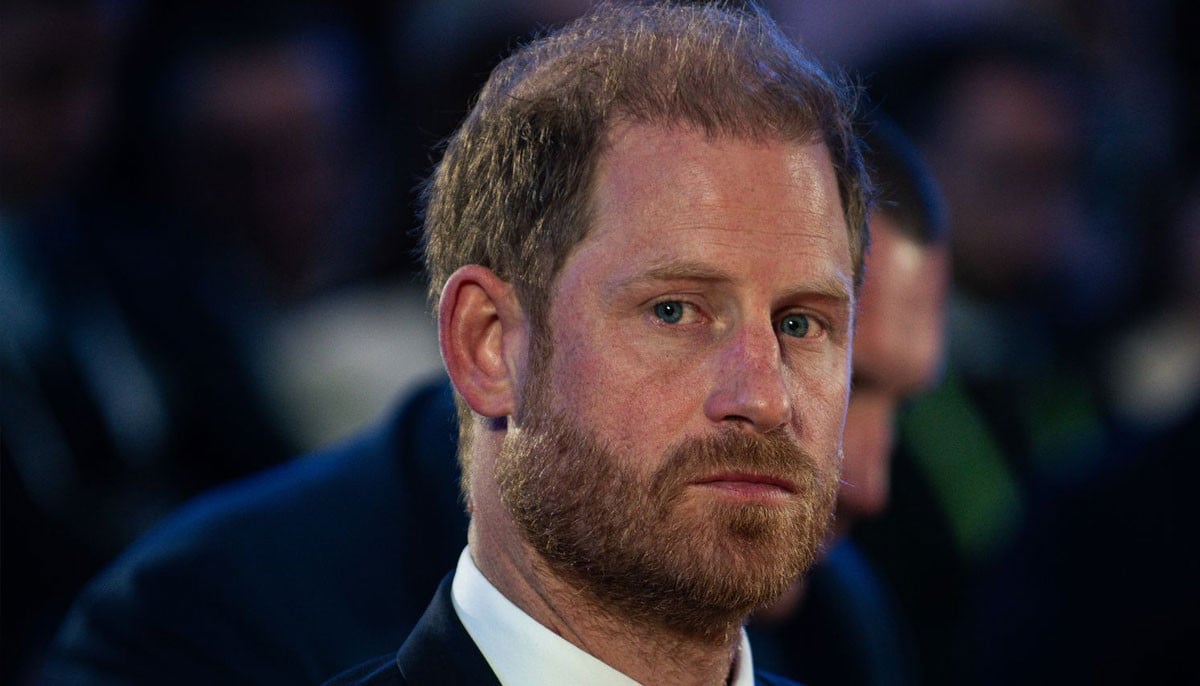
Prince Harry may have not realised the consequences of his words that could have caused some trouble for his father King Charles, who is en route to America for the much-anticipated State Visit for the UK.
It is a long-held tradition for the members of the royal families to maintain a diplomatic stance and not explicitly share their political views in public. Even though the Duke of Sussex is no longer a working member of the royal family, he remains the King’s second son, which means his words holds an impact.
Harry’s speech at the Kyiv Security Forum had sent a message to the United States to “honour its international treaty obligations” given its role in global security. Trump has dismissed the comments when they were brought up, stating that Harry “doesn’t speak for the royals”.
However, experts have urged Harry to practice prudence in sensitive matters and not insert himself in serious geopolitical matters.
“Prince Harry’s Ukraine commentary is a jaw-dropping display of a lack of self-perception that demands a reality check,” royal and foreign policy commentator Lee Cohen told Daily Express.
“Those tied to the Crown—working or otherwise—simply do not wade into partisan geopolitics. Yet here is a man who represents no government or institution, spotlighting himself amid a war, all while clinging to the royal associations that he rejected.”
The expert noted that Harry is turning into a “walking liability” for the royals and it could possibly force the Palace or Parliament to take the necessary action in order to “prevent further damage”.
- Araghchi ‘raised plan’ to defer nuclear talks in Islamabad meetings.
- Tells mediators no consensus how to address American demands.
- Ceasefire can be extended or converted into permanent end to war: proposal.
Iran, through Pakistani mediators, has offered a new proposal on reopening the Strait of Hormuz and ending the war, with nuclear negotiations postponed for a later stage, US media outlet Axios reported, citing an American official and two sources with knowledge of the matter.
Hopes of reviving peace efforts receded on Saturday when US President Donald Trump scrapped a visit to Islamabad by his envoys Steve Witkoff and Jared Kushner.
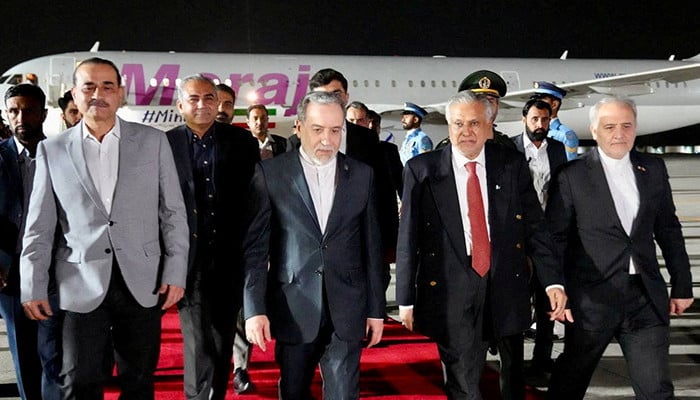
Iranian Foreign Minister Abbas Araqchi shuttled to and from mediators Pakistan and Oman on Sunday before flying to Russia, with the two sides still seemingly far apart on issues including Iran’s nuclear ambitions and access through the crucial Strait of Hormuz.
Trump said Iran could telephone if it wants to negotiate an end to their two-month war.
“If they want to talk, they can come to us, or they can call us. You know, there is a telephone. We have nice, secure lines,” Trump told “The Sunday Briefing” on Fox News.
“They know what has to be in the agreement. It’s very simple: They cannot have a nuclear weapon; otherwise, there’s no reason to meet,” Trump said.
Iran has long demanded Washington acknowledge its right to enrich uranium, which Tehran says it only seeks for peaceful purposes, but which Western powers say is aimed at building nuclear weapons.
Although a ceasefire has paused full‑scale fighting in the conflict, which began with US-Israeli strikes on Iran on February 28, no agreement has been reached on terms to end a war that has killed thousands, driven up oil prices, fuelled inflation and darkened the outlook for global growth.
Axios, while citing two sources with knowledge, reported that the Iranian foreign minister raised the plan to bypass the nuclear issue during his meetings in Islamabad.
According to one of the sources, Araghchi made it clear to the Pakistani, Egyptian, Turkish and Qatari mediators over the weekend that there’s no consensus inside the Iranian leadership about how to address the US demands.
Under the proposal, Axios reported, the immediate focus would be on reopening the strait and lifting the blockade before moving to broader negotiations.
As part of this framework, the existing ceasefire would either be extended for a prolonged period or converted into a permanent end to the war, the sources said.
The proposal envisages that negotiations on the nuclear issue would begin only at a later stage, after maritime access is restored and blockade-related concerns are addressed.
The White House has received the proposal, though it remains unclear whether Washington is prepared to consider or pursue the framework.
“These are sensitive diplomatic discussions and the US will not negotiate through the press. As the president has said, the United States holds the cards and will only make a deal that puts the American people first, never allowing Iran to have a nuclear weapon,” White House spokesperson Olivia Wales told Axios.
With his approval ratings falling, Trump faces domestic pressure to end the unpopular war. Iran’s leaders, though weakened militarily, have found leverage in negotiations with their ability to stop shipping in the strait, which normally carries a fifth of global oil shipments.
Tehran has largely closed the strait while Washington has imposed a blockade of Iranian ports.
US and Iran’s extensive disagreements
Disagreements between the US and Iran extend beyond Tehran’s nuclear programme and control of the strait.
Trump wants to limit Iran’s support for its regional proxies, including Hezbollah in Lebanon and Hamas in Gaza, and curb its ability to strike U.S. allies with ballistic missiles. Iran wants a lifting of sanctions and an end to Israeli attacks on Hezbollah.
In Lebanon, Israeli strikes killed 14 people and wounded 37 on Sunday, the health ministry said. The Israeli military warned residents to leave seven towns beyond the “buffer zone” it occupied before a ceasefire that has failed to fully halt hostilities.
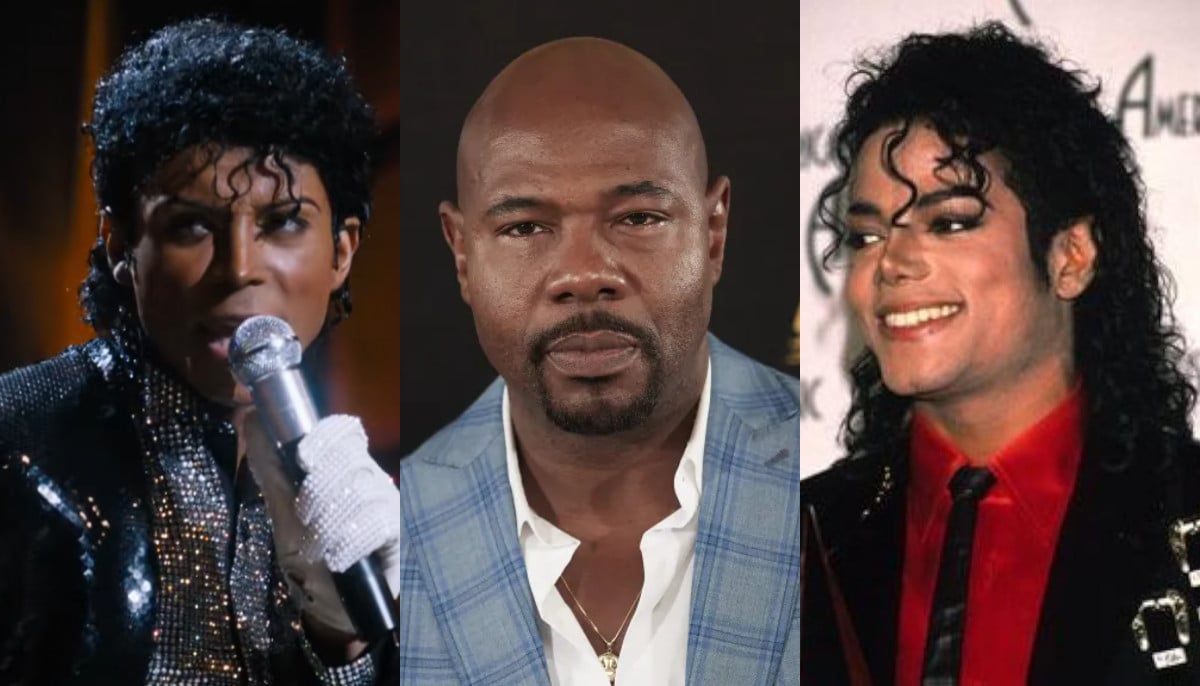
Antoine Fuqua has revealed that his only contact with Michael Jackson was a brief phone call, and that the King of Pop simply wanted to say hello and tell him he liked his work.
Speaking to Variety as his Michael biopic opened to $97 million in the US and $217.4 million worldwide, the best opening weekend of his career, Fuqua reflected on the personal connection, or lack of one, he had with his subject.
Asked whether he had ever met Jackson, the director was candid.
“No, just a phone call when I was being considered as a director for Remember the Time. I was in Italy, so I couldn’t be part of the bidding on that one. He was a quiet, sweet guy. It wasn’t so much an audition or anything like that, it was more him saying hello and how much he liked my work. It was like he was touching base with me. It wasn’t a long phone call.”
Fuqua came to the project through an unexpected route.
While working on Equalizer 3 with cinematographer Bob Richardson, he was shown a photograph of Richardson alongside a figure who bore a striking resemblance to Jackson.
It turned out to be Jaafar Jackson, the singer’s nephew, during a screen test.
“It blew me away,” Fuqua said. Producer Graham King subsequently flew out to meet him on the Amalfi Coast to discuss the film, and from there the director was on board.
The road to the finished film was not without significant complications.
The movie’s original ending featured Jackson accuser Jordan Chandler, whose settlement with the singer’s estate legally prevented him from being depicted on screen.
The discovery came after production had wrapped, forcing 20 days of reshoots at an additional cost of $50 million, bringing the film’s total net production cost to $200 million.
Fuqua had to pass on other projects to accommodate the extra shooting.
He spoke to Variety while travelling to Italy, where he is currently shooting Hannibal, a Netflix feature starring Denzel Washington.
Fuqua previously directed music videos for Toni Braxton, Stevie Wonder, Prince and Coolio, including the iconic Gangsta’s Paradise.


UNCTAD, Maritime and Port Authority of Singapore launch partnership

Strait of Hormuz disruption ‘systemic shock’ threatening SE Asia: ERIA

Anta: The Chinese sports brand taking on Nike and Adidas

-

 Sports1 week ago
WWE WrestleMania 42 Night 2: Live match results and analysis
-

 Sports1 week ago
NCAA men’s gymnastics championship: All-time winners list
-

 Fashion1 week ago
UK’s Sosandar returns to profitability amid robust FY26 performance
-
 Politics6 days ago
UK’s Starmer seeks to deflect blame over Mandelson appointment
-
 Entertainment7 days ago
Lee Anderson, Zarah Sultana kicked out of UK Parliament for calling PM ‘liar’
-

 Entertainment1 week ago
Ruby Rose old essay resurfaces detailing night of alleged Katy Perry assault
-

 Entertainment1 week ago
Nathalie Baye, low-key legend of French cinema, dies aged 77
-
 Business1 week ago
No fuel shortage: Govt assures 100% domestic LPG, PNG, CNG supply amid Hormuz energy crunch – The Times of India