

Business
Pakistan, Bahrain set sights on US$1b trade target | The Express Tribune

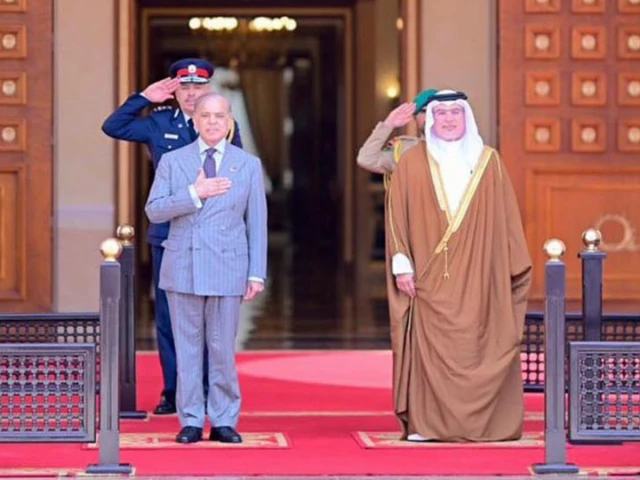
PM Shehbaz receives Bahrain’s highest state honour, the Order of Bahrain (First Class), during meeting with King Hamad
Prime Minister Shehbaz Sharif receives a guard of honour at Al-Qudaibiya Palace in Manama on November 26, 2025. Photo: APP
Prime Minister Shehbaz Sharif and Bahrain’s Crown Prince and Prime Minister Prince Salman bin Hamad Al Khalifa have agreed to raise Pakistan–Bahrain bilateral trade to US$1 billion within three years, setting one of the strongest economic goals between the two countries in recent years.
The commitment was made during a meeting at Qasr Al-Qudaibiya in Manama, where both leaders placed economic cooperation at the centre of their discussions. Current trade between the two nations stands at more than US$550 million, with both sides expressing readiness to accelerate growth through the nearly finalised Pakistan–GCC Free Trade Agreement and recent visa relaxations aimed at improving business mobility.
PM Shehbaz invited Bahraini investors to explore opportunities in food security, IT, construction, mining and minerals, renewable energy, health, and tourism. He also proposed enhanced port-to-port connectivity between Karachi or Gwadar and Khalifa bin Salman Port to facilitate smoother trade flows. The two leaders reviewed defence and security ties, agreeing to expand cooperation in training, cybersecurity, defence production, and information exchange.
Prime Minister Muhammad Shehbaz Sharif in delegation level talks with Bahrain’s leadership at the Al-Qudaibiya Palace. Photo: APP
The premier thanked Bahrain for its longstanding support to the more than 150,000-strong Pakistani community and reaffirmed Islamabad’s commitment to supplying more skilled workers. He also acknowledged Bahrain’s assistance in constructing King Hamad University in Islamabad and in facilitating the release and repatriation of Pakistani nationals.
PM Shehbaz also congratulated Bahrain on securing a two-year non-permanent seat on the UN Security Council for the 2026–27 term, expressing Pakistan’s readiness for close coordination during its tenure.
Both sides also exchanged views on developments in Gaza, expressing hope that recent steps toward stability would bring long-awaited relief to its people. The meeting concluded with optimism that the renewed dialogue would deliver tangible progress across strategic, economic, security, and people-to-people ties.
Earlier, upon his arrival at the palace, the premier was presented with a guard of honour.
Meeting with King Hamad
Later, the prime minister met with King Hamad bin Isa Al-Khalifa, and the two countries agreed to deepen cooperation across political, economic, defence, and cultural spheres.
Both leaders reaffirmed the importance of Pakistan and Bahrain’s longstanding defence partnership and agreed to further strengthen cooperation in training, logistics, manpower, and defence production.
Touching upon the economic cooperation, the premier underscored Pakistan’s intention to boost trade and investment, noting that bilateral commerce is set to expand once the Pakistan–GCC Free Trade Agreement—now in its final stages—is concluded.
They also exchanged views on developments in Gaza, agreeing that peace and stability for its people were long overdue.
The prime minister reaffirmed Pakistan’s commitment to strengthening bilateral ties anchored in shared faith and mutual respect. He thanked the monarch for Bahrain’s longstanding support, including the establishment of the King Hamad University for Nursing and Allied Medical Sciences in Islamabad, inaugurated in September.
PM Shehbaz welcomed recent high-level exchanges and expressed gratitude for Bahrain’s solidarity following recent terrorist attacks in Pakistan.
King Hamad informed the prime minister that Bahrain once had the privilege of being represented at a legal forum by Quaid-e-Azam Muhammad Ali Jinnah, noting that Pakistan’s founding father served as Bahrain’s lawyer for many years.
During the meeting, King Hamad conferred the Order of Bahrain (First Class) on PM Shehbaz— the kingdom’s highest award presented to heads of state and government.
Crown Prince and Prime Minister of Bahrain H.R.H. Salman bin Hamad Al Khalifa receives Prime Minister Muhammad Shehbaz Sharif at Bahrain International Airport in Manama.
(Manama: November 26, 2025) pic.twitter.com/NQw3HtxKMf
— Prime Minister’s Office (@PakPMO) November 26, 2025
Earlier in the day, upon landing at Bahrain International Airport, the premier was received by Crown Prince and Prime Minister Prince Salman bin Hamad Al Khalifa, Foreign Minister Abdullatif bin Rashid Alzayani, and senior Bahraini officials.
Deputy Prime Minister and Foreign Minister Senator Ishaq Dar, Interior Minister Mohsin Naqvi, Information Minister Attaullah Tarar, Minister of State Bilal Azhar Kayani, and senior officials are accompanying the prime minister on the visit.



Business
Top stocks to buy today: Stock recommendations for April 24, 2026 – check list – The Times of India

Stock market recommendations: Bharat Electronics, and Colgate-Palmolive (India) have been recommended as the top stocks to buy today (April 24, 2026) by Bajaj Broking Research. Take a look at the target prices and expected returns:Bharat ElectronicsBuy in the range of ₹ 440.00-450.00
The stock is in structural up trend forming higher high and higher low in all time frame signaling strength and continuation of the uptrend. The entire up move of the last 8 months is in a rising channel as can be seen in the chart highlighting sustained demand at an elevated level.On the smaller time frame, the stock is at the cusp of generating a breakout above the bullish Flag like formation as post a sharp up move in the first 3 weeks of April the stock went into a consolidation phase in the last four sessions. It is seen resuming up move and is at the cusp of generating a breakout above the bullish Flag formation highlighting continuation of the up move and offers fresh entry opportunity.We expect the stock to extend the up move and head towards 495 levels in the coming months being the confluence of the 123.6% external retracement of the previous decline 473 – 400 and the upper band of the rising channel of the last 8 months.Colgate-Palmolive (India)Buy in the range of 2120-2160
The share price of Colgate-Palmolive has generated a breakout above bullish Flag pattern signaling continuation of the up move and offers fresh entry opportunity.We expect the stock to head higher towards 2330 levels in the coming months being the measuring implication of the bullish flag breakout.The daily 14 periods RSI is in buy mode thus supports the positive bias in the stock.(Disclaimer: Recommendations and views on the stock market, other asset classes or personal finance management tips given by experts are their own. These opinions do not represent the views of The Times of India)
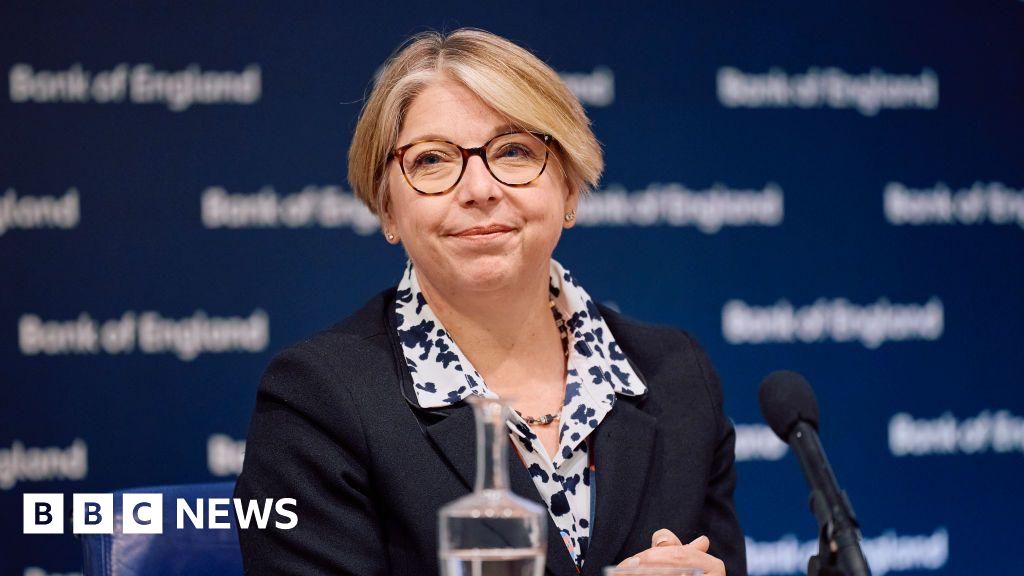
It is unusual for a senior figure at the Bank to be so forthright on market movements.
Source link

Consumer confidence has fallen for the third consecutive month amid household “jitters” over rapid price rises, figures show.
GfK’s long-running consumer confidence index fell four points to minus 25 in April, following falls of two points and three points in March and February respectively.
The deepening concern was driven by perceptions of the UK economy, with a six-point slide in confidence for the next 12 months to minus 43, its lowest level since February 2023.
Confidence in personal finances over the coming year fell five points to minus four – one point lower than this time last year.
The major purchase index – an indicator of confidence in buying big ticket items – held steady, albeit at minus 18 but one point better than last April.
The only measure to improve was the savings index – often an indication that households are concerned about their finances and looking to build contingency funds – which is up five points to 32.
Neil Bellamy, consumer insights director at GfK, said: “Consumers really do have the jitters now.
“It is a year since we last saw a monthly drop of this size, and we have to go back to October 2023 to find the last time consumer confidence was lower.
“Everyone is grappling with rapid price rises, especially at the fuel pumps, which are taking a dent out of household budgets, and people know further price hikes are coming.
“Consumer confidence is deteriorating sharply, with fuel prices and threats of more energy price increases acting as constant reminders of inflation.
“While the Gulf crisis is intensifying pressures, much of the current strain reflects earlier domestic cost increases.
“How long can all this disruption and pain continue?”


UK’s clothing exports down 7.6% to $293 mn in Jan-Feb
Top stocks to buy today: Stock recommendations for April 24, 2026 – check list – The Times of India

Mariska Hargitay expresses love for Christopher Meloni’s ‘Law & Order’ series

-

 Fashion1 week ago
France’s LVMH Q1 revenue falls 6%, shows resilience amid Iran war
-

 Entertainment1 week ago
Is Claude down? Here’s why users are seeing errors
-

 Tech1 week ago
The Deepfake Nudes Crisis in Schools Is Much Worse Than You Thought
-

 Sports1 week ago
PSL 11: Peshawar Zalmi win toss, opt to field first against Quetta Gladiators
-
 Business1 week ago
Standard Life buys rival in £2b deal to create savings giant
-

 Tech1 week ago
CYBERUK ’26: UK lagging on legal protections for cyber pros | Computer Weekly
-

 Fashion1 week ago
Raymond unveils luxury Chairman’s Collection Store in Mumbai
-
 Business1 week ago
PepsiCo earnings beat estimates as North American food business improves