

Business
Pakistan lines up $13b defence export orders | The Express Tribune


War-time credibility fuels defence export push as analysts see shift from marginal arms exporter to emerging supplier
Uqab , a Pakistani drone in IDEAS exhibition. PHOTO: EXPRESS TRIBUNE
KARACHI:
Standing on recently gained credibility following its conflict with India, Pakistan is positioning itself among emerging global defence exporters, as the country lines up potential defence export orders worth $13 billion, a scale that could materially alter its external account dynamics and industrial landscape over the medium term.
“Post the success of Bunyan-e-Marsoos, Pakistan has seen a massive boost to its diplomatic standing with geo-strategic deals and engagements; a key outcome which is emerging from these engagements is the defence deals and defence agreements,” noted KTrade Securities Research Analyst M Faran Khan in a report.
According to a macro research note by KTrade Securities, Pakistan’s defence sector is entering a phase of accelerated outward orientation, driven by rising geopolitical demand, the successful deployment of indigenous platforms, and expanding state-to-state defence engagements across the Middle East, Africa and Central Asia. The estimated $13 billion pipeline includes fighter aircraft, trainer jets, armoured vehicles, drones, naval platforms and ammunition. If materialised, this would be equivalent to more than 80% of Pakistan’s current foreign exchange reserves and around 3.7% of gross domestic product.
This prospective surge comes against a backdrop of historically modest defence exports. Data from the United Nations COMTRADE database, compiled by Trading Economics, shows that Pakistan’s exports of arms and ammunition, parts and accessories stood at $22.38 million in 2024. Over the past decade, annual exports in this category have largely remained in the low tens of millions of dollars, underscoring the step-change implied by the current pipeline of deals.
Analysts say the difference this time lies in scale, geopolitical timing and the maturity of Pakistan’s defence platforms. Flagship products such as the JF-17 Thunder Block III fighter aircraft, Super Mushshak trainer aircraft, Karakoram-8 (K-8) jets, armed and reconnaissance drones, armoured vehicles and naval vessels are increasingly being marketed as cost-effective alternatives for countries seeking to diversify suppliers amid rising global defence spending.
So far, Pakistan’s defence exports remain overwhelmingly state-led, with production concentrated in military-run or government-owned entities. These include the Pakistan Aeronautical Complex (PAC) at Kamra, Heavy Industries Taxila (HIT), Pakistan Ordnance Factories (POF) at Wah, and Karachi Shipyard & Engineering Works (KSEW). These organisations design, manufacture and export jets, tanks, drones, naval platforms and ammunition under government-to-government frameworks.
However, Farhan told The Express Tribune that Pakistan’s private sector is expected to gradually enter the defence value chain, initially as a subcontractor to military-led organisations.
“At the moment, the army-led organisations are producing the jets, tanks, drones and other sensitive equipment,” Farhan said. “But with time, Pakistan’s private sector will also get into this business as a subcontractor to these organisations, depending on the sensitivity of the equipment.”
He added that Pakistan could follow a model closer to that of the United States, where universities and research institutions play a role in research and development, particularly in software, electronics and advanced engineering, while private firms participate in hardware manufacturing, systems integration and services. “On American lines, universities can contribute to R&D for software and hardware, and then the private sector can also contribute along those lines,” he said.
The research suggests that such a transition would not only expand export capacity but also create recurring revenue streams through after-sales services, maintenance, repair and overhaul (MRO), training, spare parts and upgrades – areas that often generate long-term dollar inflows beyond initial equipment sales. The broader macroeconomic implications could be significant. Pakistan’s total goods and services exports currently stand near $37 billion annually, dominated by textiles and agriculture. A successful expansion of defence exports would help diversify the export base, reduce vulnerability to commodity cycles and ease pressure on the balance of payments.
Moreover, KTrade Securities believes a stronger defence manufacturing ecosystem could generate spillover benefits for civilian technology sectors, including avionics, robotics, artificial intelligence and advanced manufacturing, while supporting skilled employment and industrial upgrading.
While the $13 billion figure remains a pipeline estimate rather than realised exports, analysts say even partial execution would mark a structural shift for Pakistan, from a marginal arms exporter to a meaningful participant in the global defence market.

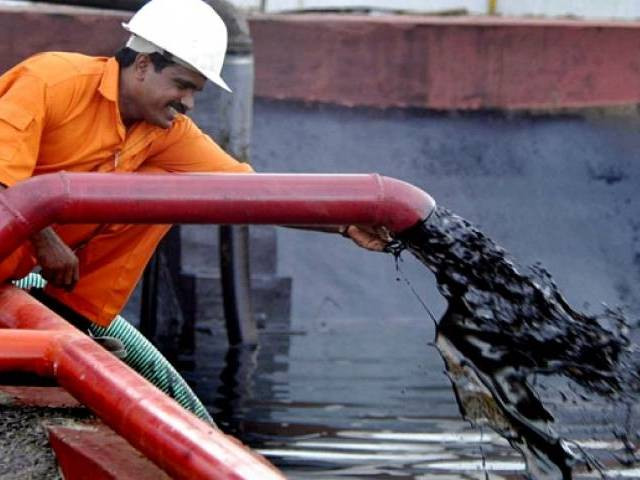




Labour MPs are among a group of more than 60 parliamentarians to have made public their opposition to the planned Rosebank oil field – with one of Sir Keir Starmer’s backbenchers urging the Government to rule against the development and take a stand “against Trump, Reform and their fossil fuel paymasters”.
Clive Lewis is one of more than 50 MPs at Westminster who have signed a pledge from campaign group Uplift to “oppose the Rosebank oil field” and instead “advocate for a properly funded just transition for oil and gas workers and communities”.
Urging the Government to reject the development, Norwich South MP Mr Lewis said: “We must stand our ground against Trump, Reform and their fossil fuel paymasters.
“Approving an enormous new oil field would mean caving in to their anti-climate, anti-renewables agenda that runs completely counter to our values and our long-term interests.”
Scottish Labour MP Chris Murray, another of the Labour MPs to have signed the pledge, said the decision on Rosebank was “an opportunity for the Government to change course”.
It comes as the UK Government continues to consider whether the development of the oil field can go ahead – with Labour now under mounting pressure after the loss of the Gorton and Denton by-election to the Greens on Thursday.
Rosebank, which lies about 80 miles west of Shetland, is the UK’s largest untapped field, containing up to an estimated 300 million barrels of oil.
Drilling there was approved by the Conservative government in 2023 but was then subject to a legal challenge in the wake of a Supreme Court ruling which said the emissions created from burning fossil fuels should be considered when granting permission for new sites.
Now the decision on whether it can proceed lies with Labour ministers – with some 16 Labour MPs having made plain their opposition to the development.
The group includes Mr Lewis, Mr Murray, former Labour shadow chancellor John McDonnell and Scottish Labour’s Brian Leishman.
Former Labour MPs Jeremy Corbyn and Diane Abbott have also signed the pledge, along with a number of Liberal Democrat and Green MPs, SNP MP Chris Law, Plaid Cymru’s Liz Saville Roberts and Paul Maskey of Sinn Fein.
In Scotland a number of Labour MSPs have signed the pledge, along with Green MSPs – including the party’s Scottish co-leader Ross Greer – and former SNP health secretary Michael Matheson.
While previous Scottish first ministers Nicola Sturgeon and Humza Yousaf made plain their opposition to Rosebank, First Minister John Swinney has insisted the Scottish Government takes a “case-by-case approach” to new oil and gas developments, stressing these should only proceed if found to be compatible with climate change targets.
Mr Lewis said opposing Rosebank would “show that a Labour Government will stand by the promises we made to the country”.
He added: “There are only so many times we can afford to make mistakes and then change course.
“With Rosebank, we have an opportunity to get it right the first time.”
Mr Murray, the Labour MP for Edinburgh East and Musselburgh, said many locals in his constituency were “deeply concerned about Rosebank and rightly so”.
He added: “Climate change is one of the reasons I came into politics, and opening new oil and gas fields is simply incompatible with our climate commitments.
“With the North Sea’s oil supply dwindling, Scotland’s energy sector must transition to clean energy, or workers risk being left behind.”
Scottish Labour MSP Mercedes Villalba, who has also signed the pledge, argued that “approving projects like Rosebank will lock us into a toxic dependence on volatile, conflict-ridden fossil fuels”.
This would create “another excuse to delay the urgent investment needed to create secure, well-paid jobs for Scotland’s workers”, she added.
Ms Villalba said: “In an increasingly uncertain world, where climate action is relegated in favour of fossil politics, the UK and Scotland must lead the way on the clean energy transition.”
Wera Hobhouse, Liberal Democrat MP for Bath, said people in her constituency and across the country “are already facing the consequences of an increasingly unstable climate”.
Highlighting the impact of flooding and “skyrocketing food prices”, she said that “climate impacts are now a daily reality”.
Ms Hobhouse said: “Extreme weather is damaging crops, putting pressure on farmers, and destroying our precious natural environment.
“We cannot ignore these warning signs.
“A massive new oil field like Rosebank would only make matters worse.
“The emissions would be enormous, locking us into decades more pollution when we should be cutting carbon and unlocking the benefits of cheap, renewable energy.”
Approving the Rosebank development would “make a mockery of Labour’s environmental promises”, she said.
A UK Government spokesperson said: “Our priority is to deliver a fair, orderly and prosperous transition in the North Sea in line with our climate and legal obligations, which drives our clean energy future of energy security, lower bills, and good long-term jobs.”

Discussions over what measures to implement to protect children’s wellbeing will last for three months.
Source link
Business
UAE stock markets close, trading halted by Abu Dhabi Securities Exchange and the Dubai Financial Market for two days amid Iran–US–Israel war fallout – The Times of India
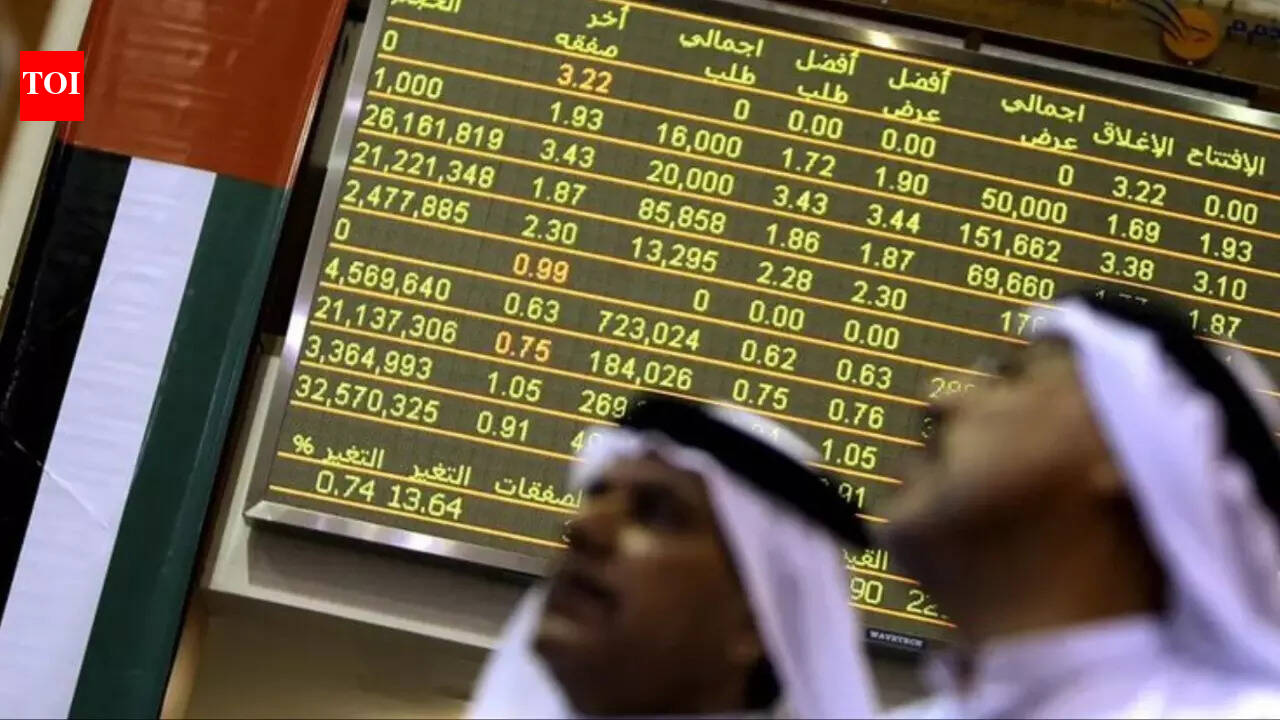
In an unprecedented economic response to escalating regional conflict, the United Arab Emirates has announced that its two major financial markets, the Abu Dhabi Securities Exchange (ADX) and the Dubai Financial Market (DFM), will remain closed on Monday, March 2 and Tuesday, March 3, 2026. The decision comes as the UAE reels from a series of retaliatory Iranian strikes following coordinated US and Israeli military actions against Iran, which have destabilised Gulf business sentiment and prompted sweeping security and economic precautions.The UAE Capital Markets Authority said that keeping the exchanges closed temporarily is part of its supervisory and regulatory mandate, providing authorities and market participants time to assess the impact of recent events on financial infrastructure and investor confidence. The halt affects equities, derivatives and trading in hundreds of billions of dollars in listed assets and is among the clearest signs yet of economic shockwaves from the regional crisis.
Why UAE stock markets are paused: Regional conflict among Iran–US–Israel disrupts confidence
The closures follow Iran’s retaliatory missile and drone strikes on Gulf cities and strategic targets, including airports and other infrastructure, after a joint US–Israel offensive. These attacks have not only led to safety measures such as airspace restrictions and travel advisories but also triggered widespread business disruption across the Gulf. Major airports in Dubai and Abu Dhabi have seen operations halted or altered and commercial hubs from ports to retail centres have felt the strain.
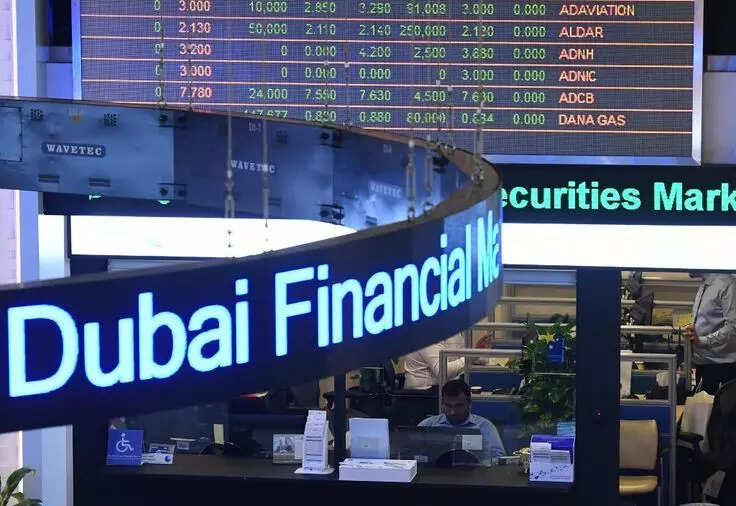
UAE Markets Shut Down: Is This Economic Capitulation to Regional War?
Financial markets are typically among the first economic indicators affected by geopolitical instability. When investors fear prolonged unrest, they often pull funds from equities and seek so-called “safe-haven” assets like gold, sovereign debt or commodities such as oil, especially when conflict threatens critical energy supply corridors like the Strait of Hormuz.
Regional market turmoil and knock-on effects in the Middle East amid Iran–US–Israel clashes
While the UAE exchanges are closed, other Gulf markets that remained open on Sunday experienced significant sell-offs as investors reacted to the turmoil:
- Saudi Arabia’s benchmark index saw sharp drops before partially recovering as investors weighed conflict risks against energy price gains.
- Muscat and other regional bourses also slid, reflecting broader risk-off sentiment.
- In Kuwait, authorities took the rare step of suspending trading indefinitely due to “exceptional circumstances” linked to the same regional tensions.
Financial markets are serving as a barometer of risk and economic confidence and the dramatic moves across the Gulf underscore how intertwined political stability is with economic performance in the region.
What the UAE’s stock market closure means for investors
For both domestic and international investors, the temporary shutdown of ADX and DFM has several implications. Liquidity and price discovery are paused, leaving billions of dollars in listed assets in limbo. Risk premiums on Gulf assets may rise, as traders reassess exposure during periods of heightened uncertainty. Investor sentiment is likely to remain fragile until there are visible signs of de-escalation or credible diplomatic resolutions.Economists note that halting trading does not eliminate market pressure, it simply delays it and when markets do reopen, there may be sharp moves as investors recalibrate positions based on new geopolitical and economic realities. The conflict has not just shaken stock markets, energy markets have also reacted. Reports from analysts indicate that crude oil prices have surged as fears of supply disruptions increase, with the Strait of Hormuz, a crucial passage for roughly 20% of global oil exports, under theoretical threat of closure.
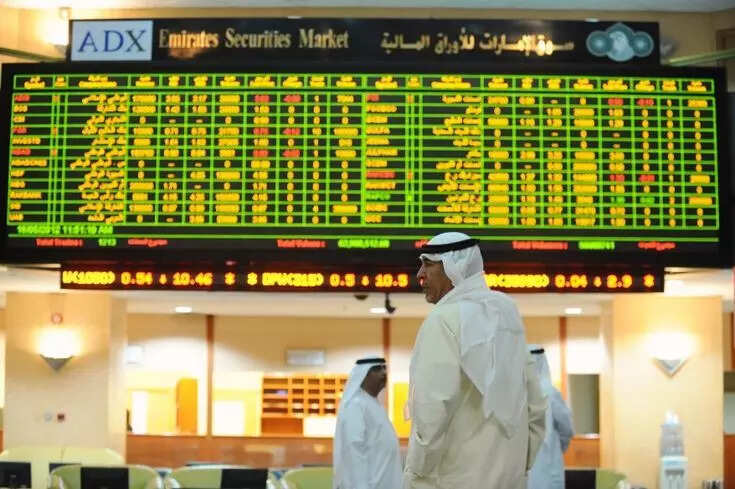
UAE Stock Markets Closed: What Does This Mean for Global Investors Amidst Escalating Conflict?
Higher oil prices can partially offset stock market pain in energy-exporting economies like the UAE but the overall economic impact remains complex. Other sectors, from tourism and hospitality to trade and logistics, have also felt immediate fallout: airport shutdowns have stranded travellers and corporate events and networking key to Ramadan business cycles have been postponed, compounding uncertainty.
UAE government messaging and future prospects
UAE authorities have stressed that public and economic safety remain top priorities. The temporary market closure is coupled with broad advisories across transportation, education and public services, such as airports issuing travel advisories and schools moving to remote learning, aimed at ensuring operational stability while the situation evolves. Officials have pledged to monitor conditions closely and communicate updates on any further market action. This includes potential rescheduling of reopening dates for ADX and DFM or additional measures to support investors once trading resumes.The UAE Capital Markets Authority ordered a two-day closure of the Abu Dhabi and Dubai stock markets on March 2–3, 2026, in response to escalating regional tensions. The pause follows retaliatory strikes by Iran after US and Israeli military action, which have disrupted markets, air travel and business operations across the Gulf. Gulf markets that remained open experienced sharp declines and volatility, reflecting investor risk aversion. Oil prices and safe-haven assets have climbed as geopolitical risk fuels global economic uncertainty. Authorities will continue to assess and communicate market developments as conditions evolve.


New Zealand’s apparel imports ease down to $101 mn in Jan 2026

Bangladesh Bank to back initiatives to revive closed factories

Deion Sanders mourns loss of Colorado quarterback Dominiq Ponder: ‘One of my favorites’

Pakistan carries out precision strikes on seven militant hideouts in Afghanistan

Eye-popping rise in one year: Betting on just gold and silver for long-term wealth creation? Think again! – The Times of India

These Cheap Noise-Cancelling Sony Headphones Are Even Cheaper Right Now

-
 Politics1 week ago
Pakistan carries out precision strikes on seven militant hideouts in Afghanistan
-
Business1 week ago
Eye-popping rise in one year: Betting on just gold and silver for long-term wealth creation? Think again! – The Times of India
-
 Tech1 week ago
These Cheap Noise-Cancelling Sony Headphones Are Even Cheaper Right Now
-

 Sports1 week ago
Kansas’ Darryn Peterson misses most of 2nd half with cramping
-

 Sports1 week ago
How James Milner broke Premier League’s appearances record
-

 Entertainment1 week ago
Saturday Sessions: Say She She performs "Under the Sun"
-
Sports1 week ago
Mike Eruzione and the ‘Miracle on Ice’ team are looking for some company
-

 Entertainment1 week ago
Viral monkey Punch makes IKEA toy global sensation: Here’s what it costs