

Business
Pakistan plans app-based fuel subsidy for low-income users amid energy crisis | The Express Tribune

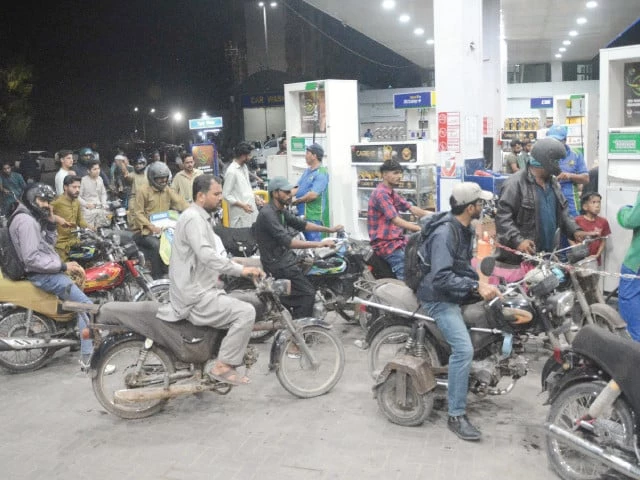
Govt to roll out quota system for two- and three-wheelers with digital vouchers and QR-based monitoring
As the city runs on fumes, motorcyclists line up at a petrol pump in Karachi, waiting their turn amid surge in fuel prices. Photo: Jalal Qureshi / Express
ISLAMABAD:
The government has decided to introduce a mobile application-based system to provide fuel subsidies to low-income consumers as it seeks to manage the ongoing energy crisis and conserve supplies.
Under the proposed mechanism, subsidised petrol distribution will be handled through a digital platform, allowing eligible users to obtain fuel through verified quotas. The Ministry of IT will procure 24,000 mobile phones for the project, while the National IT Board will determine pricing for the devices.
Oil marketing companies (OMCs) will purchase the phones and distribute them to petrol stations nationwide. Around 24,000 devices will be deployed across approximately 12,000 petrol pumps, with two designated nozzles at each outlet reserved for subsidised fuel.
The system is primarily aimed at supporting two- and three-wheelers. Consumers will receive digital vouchers through the mobile application, which has been developed and is in the final stages of testing. A QR code mechanism will be used to verify transactions, with a formal announcement expected soon.
Users will not be allowed to exceed a fixed monthly quota. Motorcycles are expected to receive between 20 and 30 litres of subsidised petrol per month, while a final decision on extending the scheme to vehicles up to 800cc is still pending.
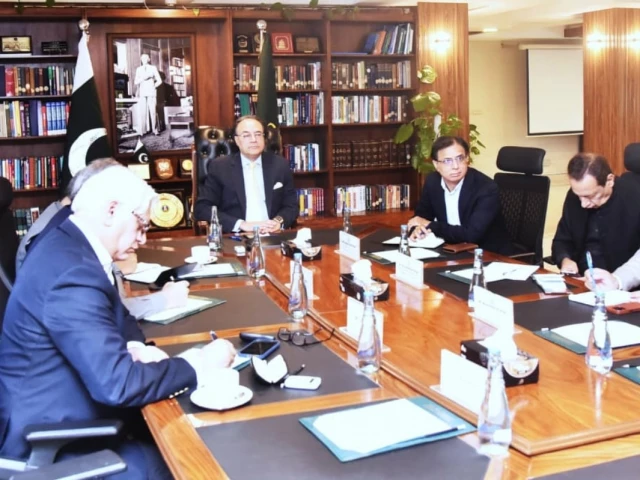
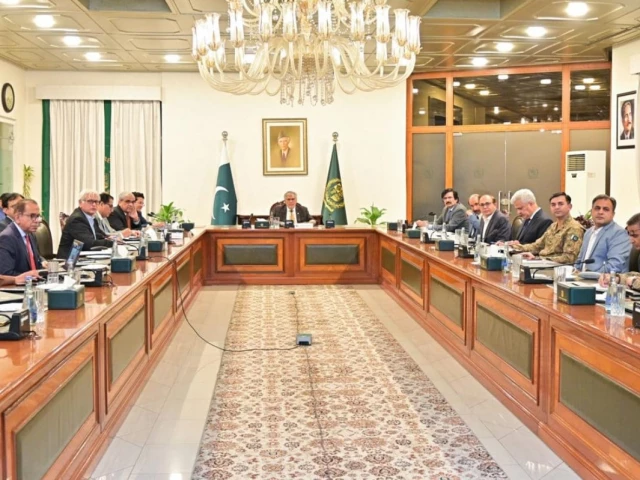
Officials said monitoring of petrol pumps across the country has already begun to ensure transparency and operational efficiency. The initiative follows a meeting held at the Oil and Gas Regulatory Authority (OGRA), attended by officials from the IT ministry, finance and petroleum divisions, where a quota-based fuel distribution plan was finalised.
Read: Mobile app-based fuel quota system on cards
During the meeting, participants were informed that the ministries of finance and foreign affairs are also engaged in parallel diplomatic efforts involving Iran and Saudi Arabia to manage broader energy supply challenges. Authorities said the digital system is being fast-tracked to maintain uniform implementation and prevent discrepancies across retail outlets.
The government said it had provided Rs69 billion in petrol and diesel subsidies over the past two weeks and now intends to shift towards targeted, direct support for two- and three-wheeler users.
Hardware distribution
Under the plan, each retail outlet must operate at least two dedicated mobile phones to run the subsidy system. The Ministry of IT is coordinating with manufacturers to supply specialised devices.
Initial procurement costs are estimated at Rs36,000 per unit, with retail pricing around Rs72,000. Petrol pumps will deposit funds into a designated government account, the details of which will be communicated by OGRA, to ensure immediate delivery of devices.
Quota mechanism and vouchers
Vehicle-based quotas will be linked to users through vehicle registration numbers and CNIC verification. Consumers will generate digital vouchers via the app, which retailers will scan or enter into their system.
The platform will automatically validate available quotas. For example, if a user requests 20 litres but only has 15 litres remaining, the system will allow dispensing only the eligible amount. Officials said the mechanism is modelled on the previously implemented Ramazan Package system.
Subsidies and pricing
Retailers will allocate specific dispensers for subsidised fuel distribution to two- and three-wheelers. Authorities have yet to decide whether four-wheelers will remain eligible for subsidies.
The government said it would ensure timely fuel pricing adjustments to protect retailers from licensing complications and sudden price increases, aiming to avoid disruptions similar to the 2020 fuel crisis.
OMCs have also been directed to submit details of a focal person for each retail outlet, including name, CNIC and contact number, despite OGRA already maintaining outlet records.
Implementation and oversight
Retailers have been instructed to immediately share focal person details for coordination. The Ministry of IT will provide demonstrations and video tutorials to assist operators in using the system.
Officials said an emergency dispensation mechanism has also been built into the framework to allow approvals through a designated process if required, as the government continues to face critical pressures on fuel supply chains.




Business
Noida International Airport inauguration: Delhi-NCR gets new airport – all you need to know – The Times of India
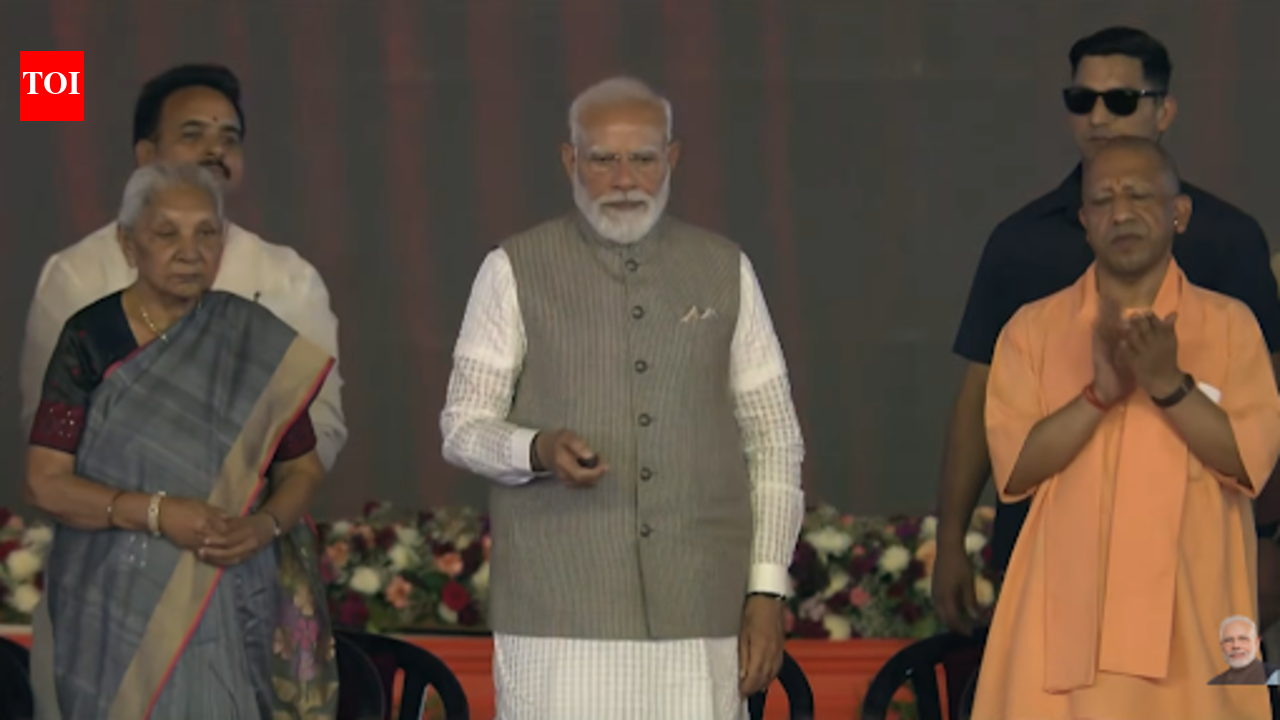
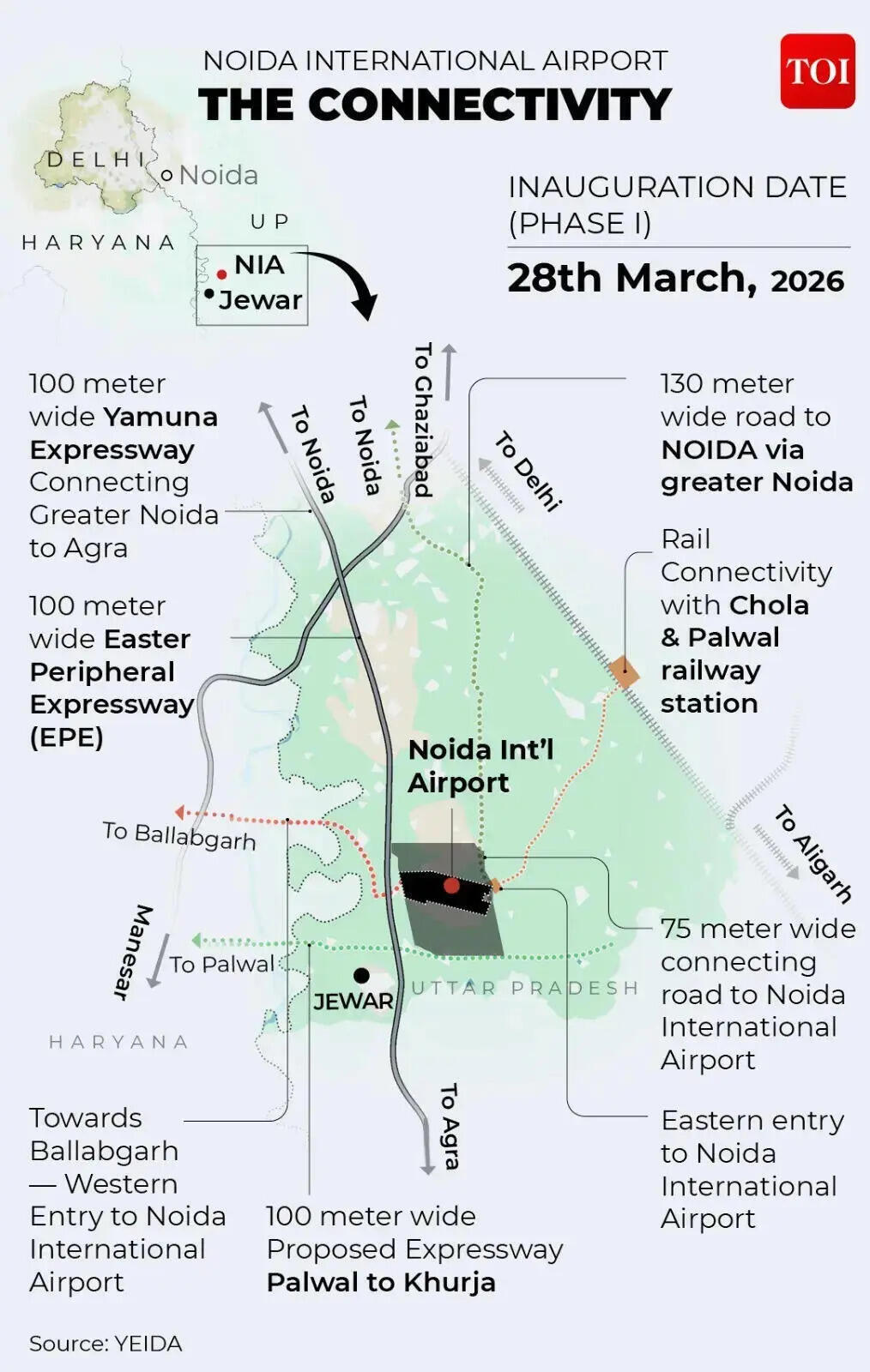
NEW DELHI: Prime Minister Narendra Modi on Saturday inaugurated Phase I of the Noida International Airport at Jewar in Uttar Pradesh, marking a significant milestone in India’s expanding aviation infrastructure.PM Modi was accompanied by Uttar Pradesh chief minister Yogi Adityanath and Governor Anandiben Patel.
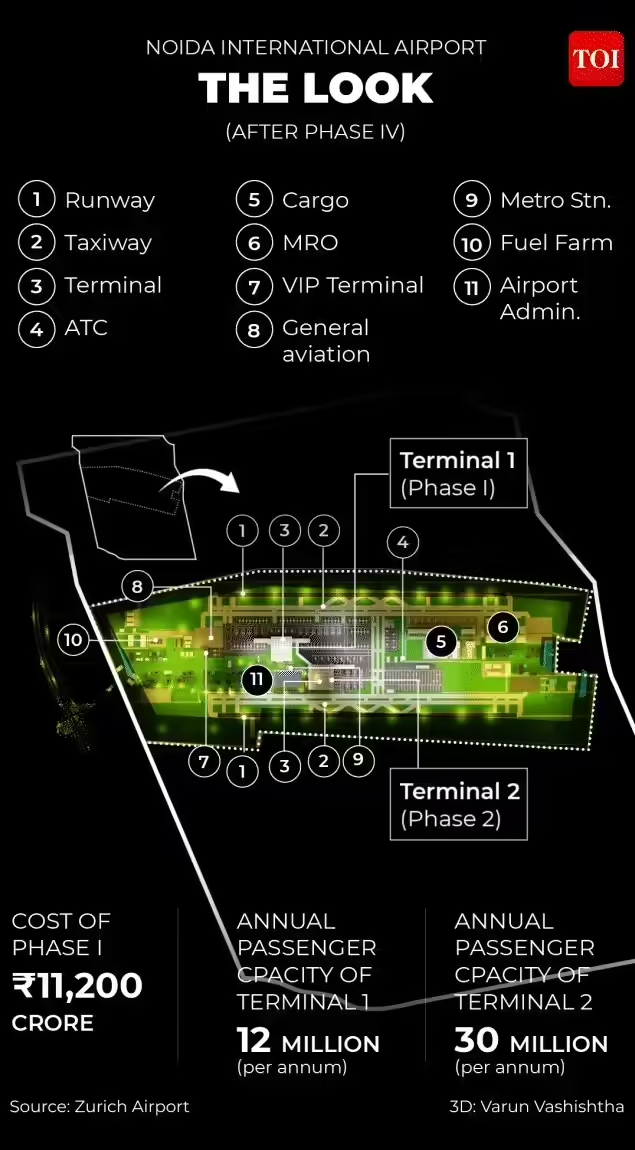
Developed at an investment of around Rs 11,200 crore under a Public–Private Partnership (PPP) model, the project is expected to enhance both regional and international connectivity for the National Capital Region (NCR).The airport is being positioned as a key addition to India’s aviation network, aimed at easing pressure on existing infrastructure while supporting the country’s ambition of becoming a global aviation hub.
Second international gateway for Delhi NCR
Noida International Airport has been developed as the second international gateway for Delhi NCR, complementing the existing Indira Gandhi International Airport, which currently handles the majority of the region’s air traffic.
.
With rising passenger demand and capacity constraints at IGI Airport, the new facility is expected to play a crucial role in distributing traffic more efficiently.Together, the two airports will function as an integrated aviation system, helping reduce congestion, improve connectivity, and enhance the region’s standing among leading global aviation hubs.
Phase I capacity and future expansion plans
Phase I of the airport is designed to handle 12 million passengers per annum (MPPA), providing immediate relief to the region’s growing air travel demand.The project has been planned with scalability in mind, with provisions to expand capacity to 70 million passengers annually in subsequent phases. This long-term vision reflects the government’s strategy to future-proof infrastructure and accommodate sustained growth in air travel.
Modern infrastructure and all-weather operations
The airport features a 3,900-metre runway capable of handling wide-body aircraft, making it suitable for both domestic and international long-haul operations.
.
Equipped with advanced navigation systems such as the Instrument Landing System (ILS) and modern airfield lighting, the facility is designed to support efficient, all-weather, round-the-clock operations. These features ensure operational reliability even under challenging weather conditions.
Cargo hub and logistics ecosystem
In addition to passenger services, the airport includes a comprehensive cargo ecosystem aimed at strengthening logistics and trade.The Multi-Modal Cargo Hub comprises an Integrated Cargo Terminal and dedicated logistics zones, with an initial handling capacity of over 2.5 lakh metric tonnes annually. This capacity is expected to expand significantly to around 18 lakh metric tonnes in the future, positioning the airport as a major cargo and logistics centre in North India.
Dedicated MRO facility to enhance efficiency
A key component of the airport’s infrastructure is a 40-acre Maintenance, Repair and Overhaul (MRO) facility.This dedicated facility is expected to improve operational efficiency by enabling airlines to service and maintain aircraft locally, reducing turnaround times and operational costs. It also strengthens India’s capabilities in aviation maintenance services.
Sustainability and future-ready design
Noida International Airport has been designed as a sustainable and future-ready infrastructure project, with a focus on achieving net-zero emissions.The project incorporates energy-efficient systems and environmentally responsible practices, aligning with India’s broader climate goals. The airport’s development reflects a growing emphasis on green infrastructure in large-scale projects.
Architecture inspired by Indian heritage
Blending modern infrastructure with cultural aesthetics, the airport’s architectural design draws inspiration from traditional Indian elements such as ghats and havelis.This approach aims to create a distinctive identity for the airport while offering passengers a sense of place rooted in Indian heritage.
Strategic location and multi-modal connectivity
Strategically located along the Yamuna Expressway in Gautam Buddha Nagar district, the airport is planned as a multi-modal transport hub.It will feature seamless integration with road, rail, metro and regional transit systems, ensuring smooth connectivity for passengers and cargo. This connectivity is expected to significantly improve accessibility for travellers across Delhi NCR and neighbouring regions.
Boost to India’s aviation ambitions
The inauguration of Phase I of Noida International Airport is being seen as a major step in strengthening India’s aviation ecosystem.By expanding capacity, improving connectivity, and integrating modern infrastructure with sustainability, the project is expected to play a key role in positioning Delhi NCR as a major global aviation hub while supporting economic growth and regional development
Business
Iran permits 2 Pakistani cargo ships to pass through Strait of Hormuz | The Express Tribune

Iran has permitted two Pakistani cargo ships to transit through the Strait of Hormuz, sources in the Ministry of Maritime Affairs confirmed on Saturday.
The vessels, Multan and P-Akili, which were previously held after Iranian forces took control of the strait — a key global oil supply route — have now crossed and are en route to Karachi. They are expected to dock at Karachi port on March 31, a source familiar with the matter said.
Multan is a general cargo ship, while P-Akili is carrying over 80 million litres of crude oil. Sources added that Iranian authorities not only allowed the vessels to pass but also provided an escort until they cleared the strait’s flashpoint line.
Read: Global poll says Iran war leaves US increasingly isolated internationally
This move comes amid ongoing mediation efforts by Islamabad, in coordination with Turkiye and Egypt, to curb the escalating conflict in the Middle East.
It is the second time Tehran has permitted a Pakistani ship to pass through the Strait of Hormuz since the conflict began on February 28. Previously, a Pakistani oil tanker transited the strait on March 16.
The Middle East region remains on high alert following the joint US-Israel offensive on Iran that began on February 28, which has resulted in over 1,900 deaths, including then-Supreme Leader Ali Khamenei.
Tehran has retaliated with drone and missile strikes targeting Israel, Jordan, Iraq, and Gulf countries hosting US military assets, causing casualties, infrastructure damage, and disruption to global markets and aviation.

Butter, chocolate, coffee and milk have all seen prices rocket. Tracing back through the story of one particular supermarket staple begins to explain why
Source link


NHL playoff watch: Guide to all 15 games on Showdown Saturday

I Tested Garmin Watches for a Decade While Hiking, Biking, and Climbing. Here’s What You Should Buy

Children hope for perks as David Beckham awarded knighthood

-
 Business1 week ago
Flipkart group CFO to leave co amid IPO plans – The Times of India
-
 Business1 week ago
Video: The Effects of High Oil Prices
-

 Fashion1 week ago
China’s textile & apparel exports surge 17% to $50 bn in Jan-Feb 2026
-

 Sports1 week ago
Rating Adidas’ 2026 World Cup away shirts: Argentina, Spain, Mexico and more
-

 Sports1 week ago
American Conference Commissioner Tim Pernetti thanks Trump for Army-Navy game executive order
-
Tech1 week ago
The Corsair 4000D RS PC Case Keeps Your System Cool
-

 Tech1 week ago
‘Uncanny Valley’: Nvidia’s ‘Super Bowl of AI,’ Tesla Disappoints, and Meta’s VR Metaverse ‘Shutdown’
-

 Tech1 week ago
Gamers Hate Nvidia’s DLSS 5. Developers Aren’t Crazy About It, Either