

Business
Pakistan plans to facilitate stranded ships | The Express Tribune

Will provide terminals, also working to rescue 50,000 containers of importers, exporters
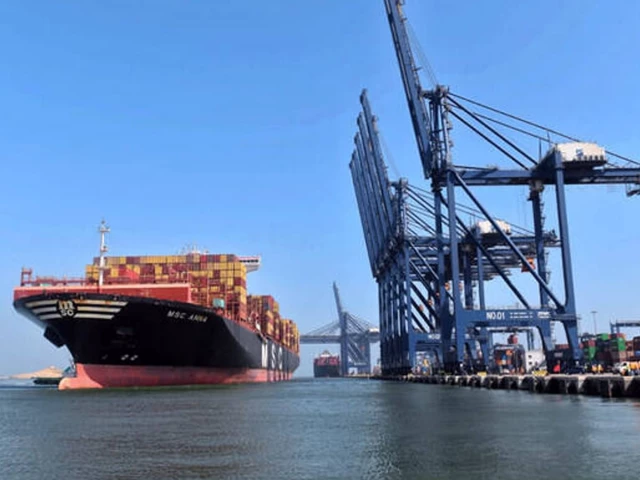
In this handout photo, taken and released by Karachi Port Trust, a container ship sits docked at the Karachi Port in Karachi on May 29, 2024. Photo: KPT
ISLAMABAD:
Pakistan has decided to offer off-dock and on-dock terminal facilities to vessels stranded in the sea following the US-Israel and Iran war.
At present, Pakistan has 23 shipping lines that offer off-dock and on-dock terminal services. Sources told The Express Tribune that 50,000 containers of importers and exporters had been stuck in the sea due to tensions in the Gulf region. The government is also working to rescue these containers.
According to sources, it is easy to provide on-dock terminal services to the arriving ships as scanning and other necessary systems and facilities are available there. However, it may be difficult to offer off-dock terminals, which are far away from terminals in the sea. “The Karachi Port Trust (KPT) has already provided a terminal to two ships that were stuck in the sea and one more vessel is also reaching,” sources said, adding that it was an opportunity for Pakistan to generate revenue as well.
Federal Minister for Maritime Affairs Muhammad Junaid Anwar Chaudhry on Thursday chaired a high-level meeting to assess the emerging logistical challenges facing Pakistan’s trade, particularly in the energy sector, amid geopolitical tensions in the region. An 11-member committee, constituted on the directives of Prime Minister Shehbaz Sharif to formulate a comprehensive response strategy aimed at safeguarding Pakistan’s maritime trade interests, has been tasked with submitting its recommendations within two days.
Speaking at the meeting, Junaid Anwar noted that Pakistan’s ports possess significant untapped potential to attract international shipping lines for transshipment operations, which could also ensure the long-term sustainability and growth of the country’s maritime sector.
The meeting reviewed potential risks and opportunities for the country’s maritime sector in light of the shifting global trade routes and disruptions in key international waterways.
The federal minister said the initiative reflected the government’s proactive approach to protecting Pakistan’s maritime interests while capitalising on the changing global trade dynamics. Meeting participants deliberated on the opportunities arising from the reported closure of major international shipping corridors and discussed measures to strengthen Pakistan’s position as a viable alternative transit and transshipment destination.
The committee also reviewed proposals for amendments to relevant rules and regulations, aimed at facilitating international transshipment operations through on-dock and off-dock terminals to enhance efficiency and ease of doing business. Special focus was placed on fully leveraging the potential of Gwadar Port as a regional transshipment hub and positioning it as an alternative in the face of regional instability.
Chairmen of Port Qasim Authority, Karachi Port Trust and Gwadar Port Authority also attended the meeting through zoom and briefed it on their operational readiness while highlighting the available capacity for container transshipment, bulk cargo handling and refueling services.
Members of the committee include Minister of State for Finance Bilal Azhar Kayani, Special Assistant to the Prime Minister on Maritime Affairs Vice Admiral (Retd) Iftikhar Ahmed Rao, secretaries of ministries of maritime affairs, commerce, and petroleum and natural resources, chairman of the Federal Board of Revenue, director general of National Logistics Corporation, member (Customs) FBR, additional secretary PM Office and senior technical adviser at the Ministry of Commerce.
Bilal Azhar Kayani, while sharing his insights, emphasised the need for the committee to present solid, practical and time-bound recommendations to effectively address the emerging challenges facing Pakistan’s maritime trade. At the conclusion, the minister said that with coordinated planning and timely policy decisions, Pakistan could transform its ports into key transshipment and logistics hubs, strengthen the country’s position in global maritime trade and ensure long-term economic sustainability.





German media firm Axel Springer has agreed to buy the Telegraph Media Group (TMG) for £575 million, scuppering efforts by the owner of the Daily Mail to snap up its UK newspaper rival.
It is the latest major twist in a roughly three-year ownership tussle for the politically influential newspaper group.
Daily Mail and General Trust (DMGT) had previously agreed a £500 million deal to buy The Telegraph last year.
However, Abu Dhabi-backed consortium RedBird IMI said it now plans to sell the business to the Berlin-based Politico owner.
Axel Springer and TMG said the deal will “preserve the integrity” of the brand and help provide a platform for growth.
The companies stressed their commitment to independent journalism in the UK and said they look forward to further discussions with the Department for Culture, Media and Sport (DCMS) and other stakeholders in the coming weeks.
Culture Secretary Lisa Nandy had launched an intervention and competition probe into the previous deal agreed with DMGT, amid concerns of the size of the newspaper market taken up through a merger deal.
Bosses at Axel Springer, which also owns the German newspaper Bild, said they will back an investment programme in TMG to expand the business to help it “become the leading centre-right media outlet in the English-speaking world”.
They also plan to expand the company’s footprint in the US market, potentially leveraging expertise from its Politico and Business Insider titles.
Axel Springer chief executive Mathias Dopfner said: “More than 20 years ago, we tried to acquire The Telegraph and did not succeed.
“Now our dream comes true.
“To be the owner of this institution of quality British journalism is a privilege and a duty.”
In a statement, RedBird IMI said the German business is partly well placed to buy the Telegraph due to the “straightforward regulatory path to ownership” involved in the deal.
“Our team is now working closely with the UK Government to obtain the necessary approvals to finalise this transaction,” the company added.
RedBird IMI is having to sell the Telegraph business after its own takeover move was blocked by the then-Tory government over foreign ownership concerns.
RedBird IMI, which was partly backed by US firm RedBird Capital but majority-owned by Sheikh Mansour bin Zayed Al Nahyan, vice president of the United Arab Emirates, originally agreed to buy the media firm and fellow title The Spectator in 2023.
The Spectator has since been sold to hedge fund tycoon Sir Paul Marshall’s OQS Ventures business for £100 million.
Lengthy talks were then held to find a new suitor after RedBird IMI was forced to sell, with New York Sun publisher Dovid Efune in exclusive discussions to take control.
These collapsed before DMGT struck an agreement with RedBird IMI.
Reports last month indicated that Axel Springer was considering backing a deal with Mr Efune.
On Friday, Axel Springer said it would “like to acknowledge” Mr Efune for “his essential support and assistance on this transaction”.
It is understood that Axel Springer will gain full ownership of TMG as part of the deal.
Last Updated:
The Maharashtra government presented a budget that seeks to balance economic expansion with social welfare, while laying the groundwork for the state’s long-term economic goals




According to Fadnavis, the state’s revenue deficit has consistently remained below 1% of the GSDP.
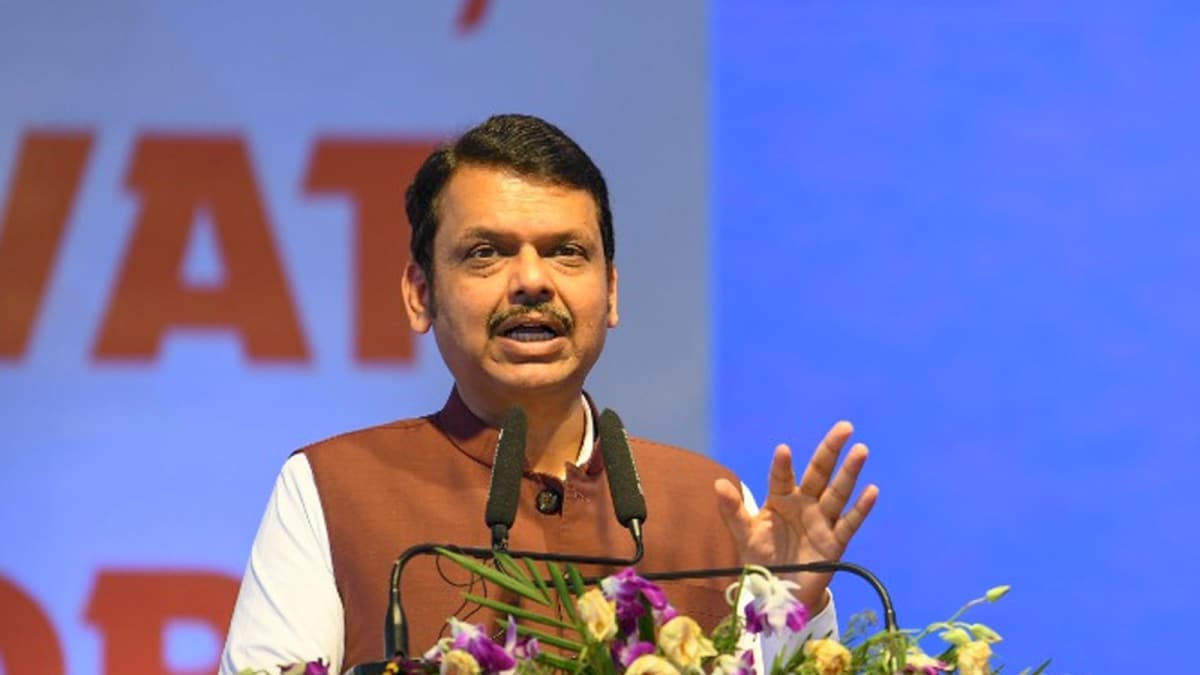
Maharashtra CM and Finance Minister Devendra Fadnavis on Friday, March 6, presented the state budget for 2026-27 in the Assembly, announcing a series of measures spanning agriculture, infrastructure, industry, urban development, health, and social welfare. The Maharashtra Budget 2026, with a total outlay of Rs 7.69 lakh crore, lays out an ambitious roadmap to accelerate the state’s economic growth while expanding welfare schemes for farmers and women.
From farm loan waivers and incentives for timely repayments to large-scale infrastructure projects and plans to reshape urban development across the state, the budget outlines the government’s vision of building a progressive, sustainable and inclusive Maharashtra.
The Maharashtra government has also set a long-term goal of helping the state economy move toward becoming a one trillion-dollar economy in the coming years and a $5 trillion economy by 2047.
There were also emotional moments in the Maharashtra Assembly as Fadnavis began presenting the budget. Members raised slogans of “Ajit Dada Amar Rahe”, paying tribute to former state finance minister Ajit Pawar, who died in an air crash in January. Fadnavis announced that a memorial will be built for the late NCP leader.
Relief for farmers: Loan waiver and incentives
One of the most significant announcements in the Maharashtra budget was a farm loan waiver scheme aimed at easing financial pressure on farmers. Under the Punyashlok Ahilyadevi Holkar Shetkari Karjmafi Yojana, crop loans of up to Rs 2 lakh taken until September 30, 2025 will be waived for eligible farmers. The government also announced a Rs 50,000 incentive for farmers who regularly repay their crop loans on time.
Alongside financial relief, the government also unveiled plans to strengthen the agricultural sector through technology and sustainability. Natural farming will be promoted across 5 lakh hectares, while value chains for 10-15 crops will be strengthened to help farmers access global markets.
Artificial intelligence (AI) and digital platforms will be introduced in farming practices, and AI innovation centres will be set up at four agricultural universities to support research and technological advancement in agriculture.
Women’s welfare schemes to continue
The government confirmed that the Mukhyamantri Majhi Ladki Bahin Yojana, launched in 2024, will continue with adequate funding. Under the scheme, eligible women from economically weaker sections receive Rs 1,500 per month as financial assistance. The government also plans to expand initiatives aimed at creating more “Lakhpati Didis”, with a target of developing 25 lakh new women entrepreneurs in 2026-27.
Major push for education, startups and health
In the education sector, the state government proposed the development of a large EduCity in Navi Mumbai, which will house six international universities. In addition, eight to ten educational cities will be developed across Maharashtra.
To boost entrepreneurship, the government plans to nurture 1.25 lakh entrepreneurs and strengthen 50,000 startups over the next five years, strengthening the state’s innovation ecosystem.
In healthcare, a Maharashtra Institute of Public Health will be established in Nagpur. The Mahatma Phule Jan Arogya Yojana will also be expanded to cover more treatments and hospitals. The government also announced a Rs 4,500 crore rural disease detection programme, supported by the Asian Development Bank, which will focus on early screening for cancer, diabetes, and heart disease in rural areas.
Water, irrigation and rural development
The government announced plans for river-linking projects and measures to improve water availability across the state. By 2047, the aim is to ensure 55 litres of water per person per day in rural areas and 135 litres per person per day in urban areas.
In rural infrastructure, villages with populations of more than 1,000 people will be connected by concrete roads, improving connectivity and accessibility.
Mumbai and urban development roadmap
A significant part of the budget focused on the development of the Mumbai Metropolitan Region (MMR) and the broader urbanisation strategy for Maharashtra. With projections suggesting that 70% of the state’s population may live in urban areas in the coming decades, the government has proposed large-scale expansion and digitisation of civic services.
One of the most ambitious plans is the development of “Fourth Mumbai” or Mumbai 4.0 at Vadhavan in Palghar, which will function as a major logistics and warehousing hub. The government is also planning “Third Mumbai” (Mumbai 3.0) in the Atal Setu area, which is expected to become another major urban centre.
To prevent the formation of new slums in Mumbai, the government will introduce a “No New Slum Framework” using GIS technology, and this model may later be extended to other cities across Maharashtra. The Slum Rehabilitation Authority will prepare a plan to redevelop about 20 lakh slum houses and construct 10 lakh affordable homes under various housing schemes.
Transport and infrastructure expansion
Metro rail projects in Mumbai and Pune will continue, and the government plans to expand the metro network to 1,200 kilometres in the coming years. Progress on the Mumbai-Ahmedabad bullet train project was also highlighted. The government aims to complete work on three stations up to Thane and Talasari by 2027, with separate development plans for areas around Dadar, Thane, and Virar bullet train stations.
Additional expressways and transport corridors are also planned to strengthen connectivity across the state.
New growth hubs and industrial expansion
To boost industrial growth and employment, the government plans to establish 18 mega industrial hubs across the state. In addition, MSME centres will be set up in every district, which the government estimates could help generate up to 50 lakh jobs.
A major steel hub is proposed in Gadchiroli, expected to attract significant investment and strengthen the state’s industrial base. With support from NITI Aayog, the government also plans to develop separate growth hubs in Pune, Nashik, Nagpur, and Chhatrapati Sambhajinagar, following the development model being implemented in the Mumbai Metropolitan Region.
Another project under consideration is the creation of a world-class stadium and innovation hub on 130 acres in Taloja.
Green energy and sustainability push
The government aims to achieve 50% green energy by 2029 and 65% by 2035. The plan includes large-scale tree plantation drives and rooftop solar initiatives to promote sustainability.
Budget figures and fiscal targets
For the financial year 2026-27, the state budget estimates:
- Revenue receipts: Rs 6,16,099 crore
- Revenue expenditure: Rs 6,56,651 crore
- Revenue deficit: Rs 40,552 crore
The fiscal deficit is estimated at Rs 1,50,491 crore, and the government said it has kept the fiscal deficit below 3% of the Gross State Domestic Product (GSDP). According to Fadnavis, the state’s revenue deficit has consistently remained below 1% of the GSDP.
The government also aims to expand the Mumbai Metropolitan Region’s economy from the current $140 billion to $300 billion, positioning it as a major global economic hub.
Through a combination of welfare schemes, large-scale infrastructure investments, and ambitious urban development plans, the Fadnavis government has presented a budget that seeks to balance economic expansion with social welfare, while laying the groundwork for Maharashtra’s long-term economic ambitions.
Maharashtra, India, India
March 06, 2026, 18:29 IST
Read More
Last Updated:
Recognising Bengaluru as both a global startup hub and a land of immense aspiration, the government has maintained an aggressive development grant of Rs 7,000 crore
Addressing the city’s burgeoning population of 1.40 crore, the government has formalised the Cauvery Phase VI project. File image
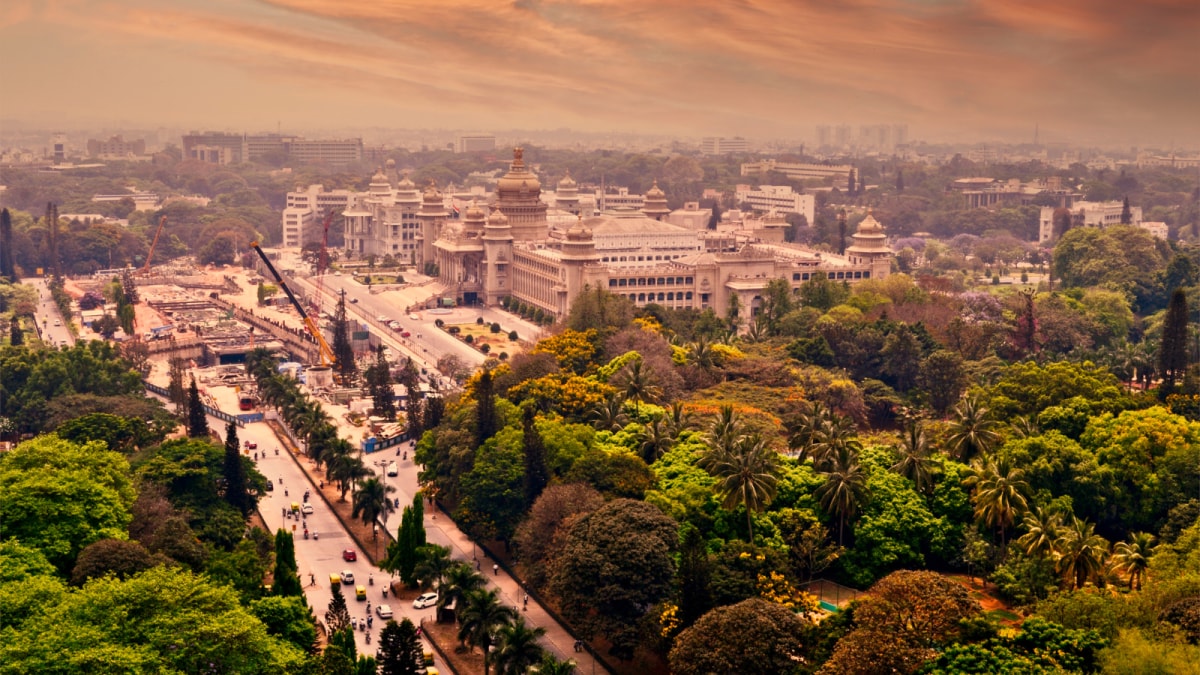
The Karnataka State Budget for 2026-27 has unveiled a transformative financial roadmap for Bengaluru, aimed at elevating the state capital into a “world-class liveable city.” Recognising the metropolis as both a global startup hub and a land of immense aspiration, the government has maintained an aggressive development grant of Rs 7,000 crore. This sustained investment seeks to address the twin challenges of urban sprawl and traffic congestion that have long shadowed the city’s rapid economic rise.
The Rs 40,000 Crore Subterranean Shift
In perhaps the most ambitious infrastructure proposal in the city’s history, the government has approved a 40 km tunnel road network. Designed to cut through the city’s densest areas, the network will feature north-south and east-west corridors at an estimated cost of Rs 40,000 crore.
The project will be executed under a Build-Own-Operate-Transfer (BOOT) model, with the first phase—a 17 km stretch of the North-South corridor—already moving toward implementation. Tenders for this initial phase have been invited at a cost of Rs 17,780 crore. This subterranean strategy is complemented by the Bengaluru Business Corridor Phase-1, a 73 km stretch connecting Tumakuru Road to Hosur Road, which the government aims to complete within four years.
Scaling Mass Transit and Pedestrian Access
“Namma Metro” continues its trajectory as India’s second-largest network. The budget proposes the completion of an additional 41 km of metro lines within the current financial year, a milestone expected to push daily ridership to 15 lakh commuters. Notably, the government highlighted a significant fiscal imbalance in the project’s funding, pointing out that the state has shouldered 88% (Rs 59,376 crore) of the total expenditure to date, compared to the central government’s 12% contribution.
To bridge the gap between mass transit and the “last mile”, a new 9 km pedestrian walkway will be constructed along the Outer Ring Road (ORR) metro viaduct. This Rs 160 crore initiative is a landmark partnership with the Outer Ring Road Companies Association, reflecting a new model of corporate-government collaboration in urban design.
Durability and Urban Aesthetics
The budget moves away from quick-fix road repairs towards long-term durability. Over the next three years, the government plans to white-top more than 450 km of roads at a cost of Rs 3,000 crore. The urban experience will be further enhanced through:
- The beautification of 175 major junctions.
- The construction of 100 new skywalks.
- The renovation of 500 km of footpaths using city corporation resources.
- An investment of Rs 450 crore to upgrade the Silk Board to KR Puram corridor into a global-standard thoroughfare.
Water Security and Environmental Resilience
Addressing the city’s burgeoning population of 1.40 crore, the government has formalised the Cauvery Phase VI project. Assisted by JICA, this Rs 6,939 crore initiative will secure an additional six TMC of drinking water. To mitigate the recurring threat of urban flooding, Rs 2,000 crore has been earmarked for storm water drain upgrades under a World Bank-assisted programme. The city’s long-term growth will be guided by the Revised Master Plan-2041, scheduled for completion by late 2027.
Sports and Cultural Landmarks
In a move to bolster Bengaluru’s status as a sporting and cultural capital, the budget announced two massive landmark projects:
Anekal Cricket Stadium: A new, state-of-the-art 80,000-seater cricket stadium will be built in Anekal, significantly expanding the city’s capacity for international sporting events.
Malleswaram Convention Centre: A world-class convention centre will be developed on land owned by the Mysore Lamp Works in Malleswaram under a Public-Private Partnership (PPP) model.
By combining deep-tunnel engineering with massive mass transit expansion and environmental safeguards, the 2026-27 budget represents a definitive attempt to future-proof Bengaluru against the pressures of its own success.
March 06, 2026, 18:00 IST
Read More


Pastors pray for Trump in Oval Office amid US-Israel war with Iran

Book excerpt: “Judge Stone” by Viola Davis & James Patterson

Princess Kate’s brother celebrates National Golden Retriever day at Crufts

Attock Cement’s acquisition approved | The Express Tribune

Policy easing drives Argentina’s garment import surge in 2025

India Us Trade Deal: Fresh look at India-US trade deal? May be ‘rebalanced’ if circumstances change, says Piyush Goyal – The Times of India

-
Business1 week ago
Attock Cement’s acquisition approved | The Express Tribune
-
 Fashion1 week ago
Policy easing drives Argentina’s garment import surge in 2025
-
Business1 week ago
India Us Trade Deal: Fresh look at India-US trade deal? May be ‘rebalanced’ if circumstances change, says Piyush Goyal – The Times of India
-

 Politics1 week ago
What are Iran’s ballistic missile capabilities?
-

 Politics1 week ago
US arrests ex-Air Force pilot for ‘training’ Chinese military
-

 Sports1 week ago
LPGA legend shares her feelings about US women’s Olympic wins: ‘Gets me really emotional’
-
 Business1 week ago
Greggs to reveal trading amid pressure from cost of living and weight loss drugs
-

 Sports1 week ago
Sri Lanka’s Shanaka says constant criticism has affected players’ mental health