

Business
Pakistan proposes direct feeder lines | The Express Tribune

ISLAMABAD:
Pakistan and Malaysia are exploring a new cooperation framework to expand maritime training and deepen port collaboration following a high-level meeting on Tuesday.
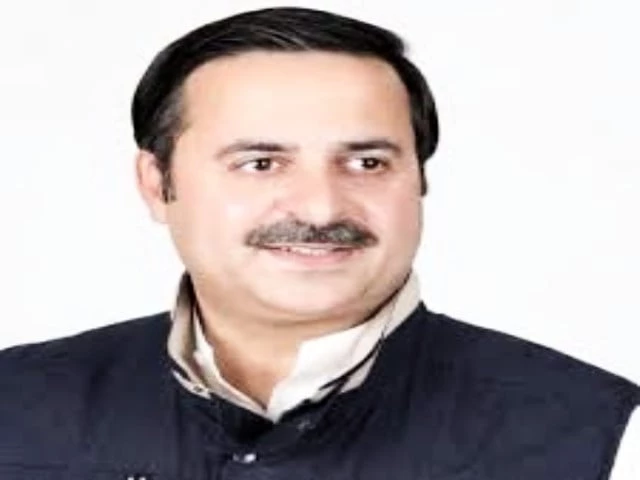
Malaysia’s Deputy Minister of Transport Hasbi bin Habibollah met Federal Minister for Maritime Affairs Muhammad Junaid Anwar Chaudhry on the sidelines of maritime engagements in the United Kingdom. Both sides reviewed ongoing cooperation and explored new avenues to strengthen collaboration in the maritime sector.
Chaudhry offered to sign a Memorandum of Understanding (MoU) aimed at enhancing seafarer training and facilitating the exchange of marine cadets. He noted that the proposed MoU would allow Pakistan to send its marine cadets to Malaysian academies, while Malaysia would, in turn, send its cadets to Pakistan for specialised training programmes.
“This exchange will contribute to the professional development of young seafarers and strengthen long-term cooperation,” the minister said.
He also offered Malaysia access to Pakistan’s expanding expertise in digital port solutions, including the Pakistan Single Window (PSW) platform, now fully operational at Karachi Port and Port Qasim. Islamabad has been promoting its digital trade infrastructure as a model for reducing cargo clearance time, improving transparency and enhancing overall trade facilitation.
Beyond training and digitalisation, Chaudhry pushed for deeper operational cooperation in trade routes. He proposed establishing direct feeder shipping lines between Pakistan and Malaysia, with onward connectivity to Indonesia, to cut transport durations and reduce freight costs.
The minister observed that the proposed feeder links could give a major boost to Pakistan’s rice exports to Southeast Asia, while simultaneously streamlining edible oil imports from Malaysia and Indonesia. He added that the proposal aligns with Pakistan’s broader strategy to strengthen maritime connectivity with Asean economies, where demand for Pakistani agricultural products has been steadily rising.
For Malaysia, the initiative offers an opportunity to broaden its maritime training network and enhance regional logistics integration as part of its transport-sector modernisation agenda.
Both sides agreed to hold further technical consultations in the coming weeks to finalise the scope of the MoU, define training modules and establish mechanisms for implementing the cadet-exchange programme.
Islamabad seeks IMO Council seat
Pakistan has reiterated its commitment to global maritime governance and announced its candidacy for the International Maritime Organisation (IMO) Council in Category C.
Addressing the opening session of the IMO Assembly in London, Minister for Maritime Affairs Muhammad Junaid Anwar Chaudhry on Tuesday emphasised Pakistan’s strategic importance, noting that its coastline of over 1,000 kilometres lies along some of the world’s most critical sea lanes connecting the Middle East, Central Asia, Africa and the Indian Ocean.
“Over the past year, Pakistan has implemented concrete initiatives in line with IMO conventions and global best practices, including port digitalisation, maritime safety enhancement, green port development and artificial intelligence-enabled port community systems,” he said.
The IMO, a United Nations agency with 193 member states, meets every two years where countries participate in its Council and Assembly to shape and influence global maritime policy. Chaudhry outlined further developments, including the upgrading of Pakistan Marine Academy, the establishment of Pakistan Maritime University, reforms in seafarer certification and enhanced training standards aligned with the Standards of Training, Certification and Watchkeeping (STCW) Convention.
Additional measures include strengthening vessel traffic management systems, improving marine pollution response capacity and expanding coastal monitoring in collaboration with national and international partners. “Pakistan is advancing its Maritime Vision 2047 and 2147,” the minister said and assured delegates that all planning aligns with IMO standards and the organisation’s global vision.
He highlighted Pakistan’s commitment to the IMO’s climate agenda, noting ongoing efforts for energy-efficient shipping, marine environmental protection and green ship recycling, particularly at Gaddani, where compliance with Hong Kong Convention is being strengthened.
The minister emphasised that Pakistan’s Category C candidature reflects its intention to contribute constructively to the global maritime community, pledging to promote fair access for developing maritime nations, strengthen support for seafarers’ welfare and training, advocate for climate cooperation for coastal and vulnerable island states, and advance the IMO’s mission of safe, secure and environmentally responsible shipping.
Category C seats in the IMO Council are elected by the Assembly and include 20 member states with special maritime interests or those who enhance regional balance. These members help guide IMO’s work and strategic direction, and play crucial roles in global maritime governance.
“History shows that real progress is made when nations choose to work together. Let this session be more than just another meeting. Let it become a turning point, a moment for cooperation, innovation and bold action,” he concluded, affirming that Pakistan is ready to move forward towards a maritime future that is safer, greener and more prosperous for all.


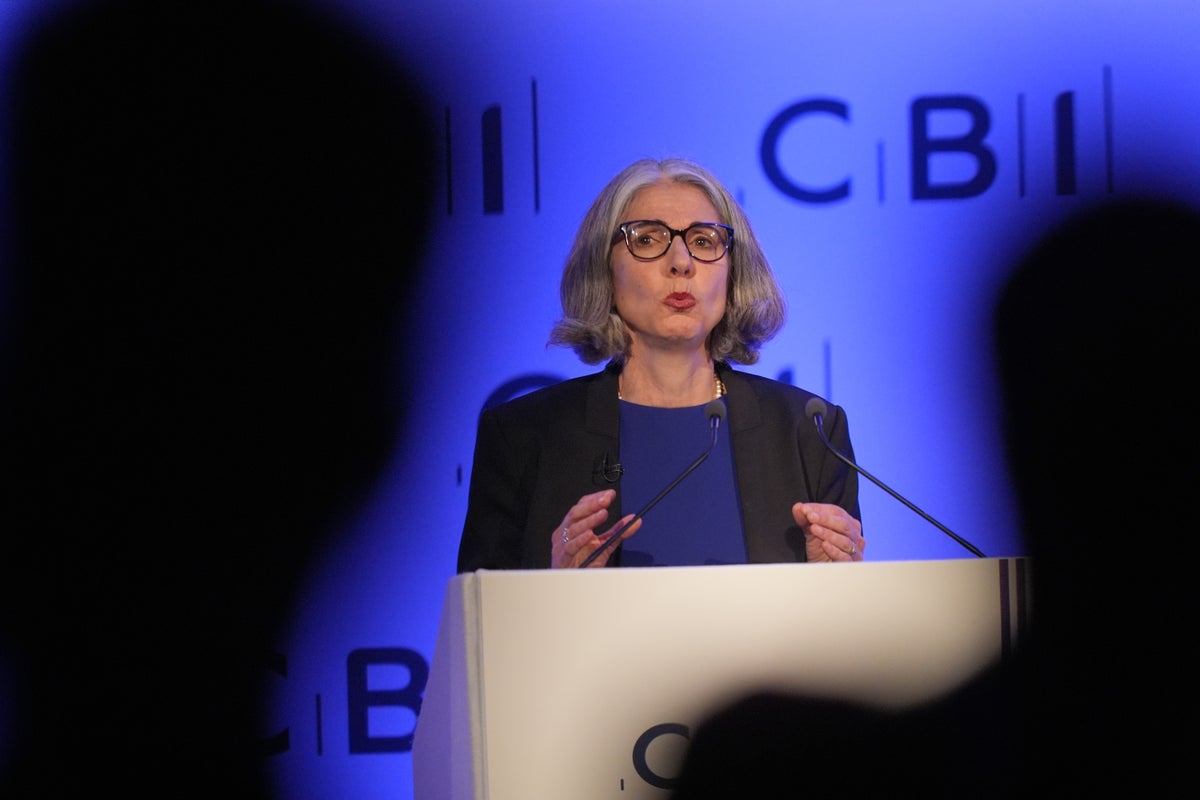
The UK must not “cut ourselves off” from trade opportunities in China despite security and business risks, the head of the Confederation for British Industry has warned.
CBI chief Rain Newton-Smith highlighted that British businesses see increased trade with Chinese firms as an opportunity to drive growth.
Her remarks came as business leaders were questioned by MPs on Parliament’s Business and Trade Select Committee regarding the UK’s economic relationship with China.
Last December, Prime Minister Sir Keir Starmer admitted China poses security threats to the UK but urged for greater business ties.
Ms Newton-Smith, chief executive of one of the UK’s largest business groups, was positive about the Government’s engagement with China.
“You can’t have a growth strategy without a strategy for China,” she said.
“China has the biggest contribution to global growth, is the third largest trading partner, and the world’s largest consumer market.
“The UK is second largest exporter of trade and services.
“We are mindful as all businesses are of security risks but it is really important that we have a strategy towards China.
“This Government has increased the economic engagement with China and including business within this does help us as a country.”
She added: “If we think about the future economy, there is a huge market in China and I think we mustn’t cut ourselves off from some of the opportunities there, even if in some areas there are difficult conversations and negotiations that need to be had.”
Peter Burnett, chief executive of the China-Britain Business Council, told the committee: “There are risks associated with technology advancement, AI, industrial development that they need to assess.
“Increasingly you will find them saying that they need to engage more in China to understand those risks and to develop some of the technologies along some of those risks themselves.”
Business
Trump says he’d be disappointed if Fed pick doesn’t cut rates; Warsh vows to be ‘independent actor’ – The Times of India
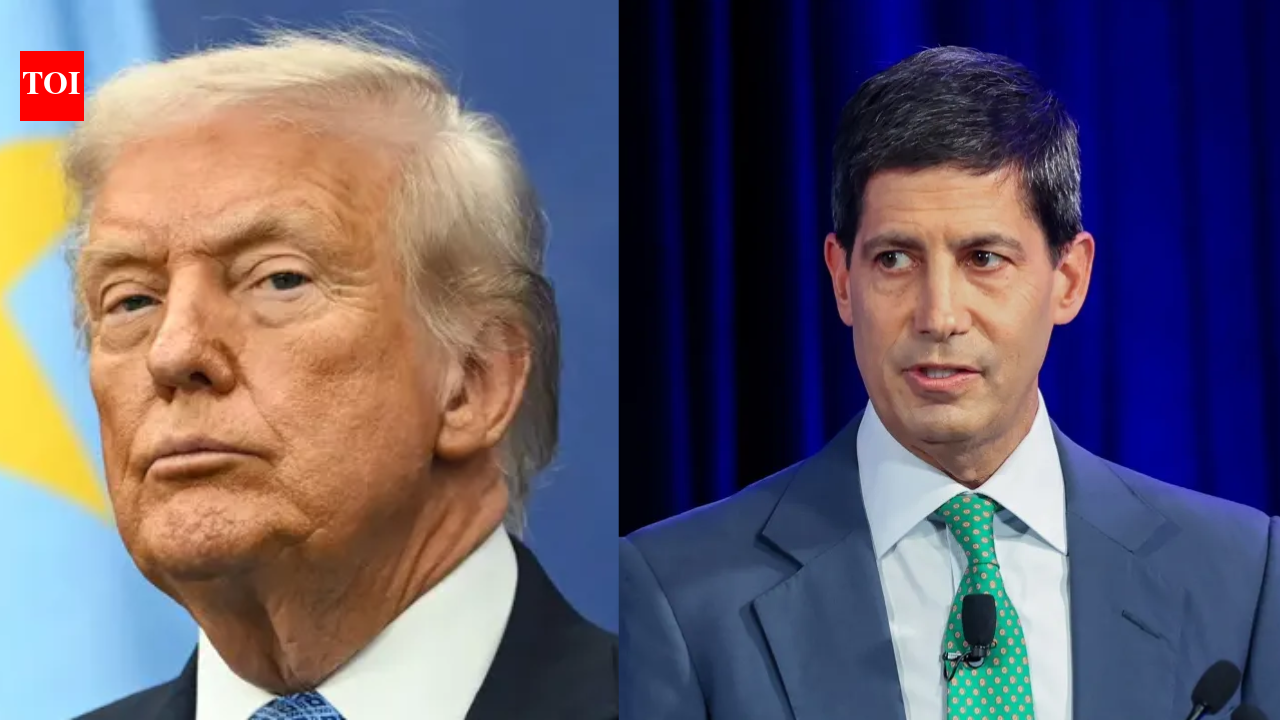
US President Donald Trump on Tuesday said he would be disappointed if his nominee for Federal Reserve chair, Kevin Warsh, does not cut interest rates right away after taking office if confirmed by the Senate. Trump, during an interview with CNBC’s “Squawk Box,” also said “we have to find out” about the construction costs of the new Federal Reserve building.Warsh, a former Federal Reserve official and financier, is currently facing Senate confirmation hearings where he has stressed his independence from political pressure.“The president never once asked me to commit to any particular interest rate decision, and nor would I agree to it if he had,” Kevin Warsh said under questioning by the Senate Banking Committee, as quoted by LA Times. “I will be an independent actor if confirmed as chair of the Federal Reserve.”Warsh told lawmakers that fighting inflation would be one of his main priorities if confirmed.“Congress tasked the Fed with the mission to ensure price stability, without excuse or equivocation, argument or anguish,” Warsh said. “Inflation is a choice, and the Fed must take responsibility for it.”The comments come as investors closely watch his confirmation hearing, with inflation remaining at 3.3% annually and global tensions, including the war in Iran pushing up gas prices, adding pressure on the economy. Higher inflation typically leads the Federal Reserve to keep interest rates steady or raise them rather than cut them, as rate changes affect mortgages, auto loans, and business borrowing.Democrats on the Senate Banking Committee accused Warsh of shifting his stance on interest rates over time, supporting higher rates under Democratic presidents and lower rates during Trump’s presidency.Warsh, if confirmed, would take over at a time when inflation pressures make it difficult for the Federal Reserve to cut rates, even as Trump continues to push for lower borrowing costs. Trump has repeatedly urged rate cuts and has long clashed with current Fed chair Jerome Powell over monetary policy. Powell has also been the subject of a Department of Justice criminal probe after refusing Trump’s requests for faster rate cuts. Trump told CNBC that he does not plan to pressure the Justice Department to end that probe.

The consultancy Teneo says airspace restrictions caused by the conflict have forced airlines to reroute many flights.
Source link


Ranking the Top 20 Players in the Men’s College Basketball Transfer Portal

NATO jets intercept Russian bombers over Baltic Sea

FIFA to put more World Cup tickets on sale for all games

-

 Fashion5 days ago
France’s LVMH Q1 revenue falls 6%, shows resilience amid Iran war
-

 Sports1 week ago
The case for Man United’s Fernandes as Premier League’s best
-

 Entertainment1 week ago
Palace left in shock as Prince William cancels grand ceremony
-

 Entertainment6 days ago
Is Claude down? Here’s why users are seeing errors
-
 Business1 week ago
UK could adopt EU single market rules under new legislation
-

 Fashion1 week ago
Energy emerges as biggest cost driver in textile margins
-
 Business1 week ago
Delta Air Lines unveils first new Delta One suite in premium cabin arms race
-

 Fashion1 week ago
Asia claims largest share of markets on Kearney FDI Confidence Index