

Business
Pakistan’s Trump outreach sparks India ire as US ties take unexpected turn: Financial Times

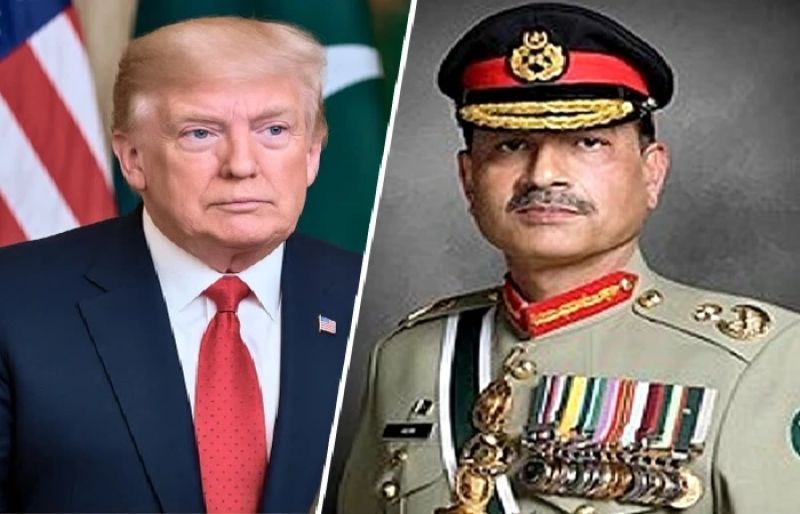

Pakistan’s recent charm offensive towards United States President Donald Trump has unsettled New Delhi, the Financial Times (FT) reported, detailing how Islamabad’s army chief, Field Marshal Asim Munir’s warm reception in Washington contrasts sharply with India’s cooling ties with the White House.
According to the report, Munir travelled to Florida last weekend for the retirement ceremony of US Central Command chief General Michael Kurilla, marking his second cordial encounter with top American military officials this summer.
In June, Munir held a two-hour private lunch with Trump in Washington, just weeks after Pakistan and India engaged in their deadliest military confrontation in decades.
Such treatment is unusual for a foreign military leader, the newspaper noted, especially given Trump’s earlier criticism of Pakistan as offering “nothing but lies and deceit” to Washington. Yet the relationship appears to be enjoying what analysts described as an “unexpected resurgence” under the Republican president.
The FT said India was left “seething” by Munir’s White House welcome, as Trump’s administration offered Islamabad comparatively lighter trade tariffs — 19% compared to a punitive 50% on New Delhi — and promised a deal to develop Pakistan’s “massive oil reserves”.
The shift in tone is credited to a targeted Pakistani strategy involving counterterrorism cooperation, business outreach to Trump associates, and deals in energy, critical minerals and cryptocurrency.
Pakistani officials believe urgency was required to repair ties with the US president and his allies, some of whom had previously backed sanctions against Munir over the jailing of former prime minister Imran Khan.
An early breakthrough came in March when Pakistan’s intelligence services handed over an Islamic State Khorasan operative accused of orchestrating a 2021 Kabul bombing that killed 180 people, including 13 US soldiers.
Trump publicly praised the move in his State of the Union address, using the occasion to also criticise India over tariffs.
The report also highlighted Pakistan’s embrace of “crypto diplomacy”, including an agreement between a Trump-backed cryptocurrency venture and Pakistan’s crypto council in April. Since then, Minister for Crypto and Blockchain Bilal bin Saqib has engaged in trade talks with Washington while promoting Pakistan’s digital asset potential to figures close to the US president.
Munir’s conduct during the May conflict with India also bolstered Islamabad’s credibility with Trump, according to Pakistani officials. They said the army chief balanced “strength and restraint” by downing several Indian jets without escalating further, with the US and Gulf states mediating a ceasefire.
“Trump needs success stories to proclaim and Pakistan is happy to give them to him,” said Husain Haqqani, a former Pakistan ambassador to the US now at the Hudson Institute, a think-tank in Washington.
By contrast, Indian Prime Minister Narendra Modi publicly rejected any suggestion of US mediation, asserting that the agreement with Pakistan came through existing bilateral military channels.
The FT noted that Pakistan is presenting itself to Washington as a back channel to rivals Iran and China, reminiscent of its role in US diplomacy in the 1970s that facilitated Richard Nixon’s opening of US relations with China.
While Islamabad has criticised some American military actions, like strikes against Iran, it has also cast itself as a mediator between the US and its foes.
In late July, Munir flew to Beijing, where he toured the headquarters of the People’s Liberation Army and reassured China’s foreign minister Wang Yi over the safety of Chinese nationals in Pakistan.
“Pakistan is a rare country that is friends with China, Iran, the Gulf states, to a lesser extent, Russia, and now, again, the US,” said Marvin Weinbaum, a senior fellow at the Middle East Institute in Washington. “The US sees Munir as someone who can play a useful strategic role, and the Pakistanis keep their lines open to everyone but know to pull back when one relationship is clashing with another.”
For India, the burgeoning Trump–Pakistan relationship has proved an irritant, particularly given its failure to avert steep tariffs despite its larger economy. Indian officials expressed frustration at what they see as Washington rewarding a military-ruled neighbour for striking quick business deals.
Analysts cautioned, however, that Trump’s goodwill could prove volatile. According to the FT, Pakistan’s natural resource wealth remains largely unproven, its economy depends on a $7 billion IMF bailout, and recognition of Israel — a possible US expectation — would be politically difficult in Islamabad.
Haqqani told the newspaper that Trump is “playing the Pakistan card” to gain leverage over India. Former prime minister Shahid Khaqan Abbasi warned that while the outreach has yielded short-term gains, Islamabad must protect “both its interests and its dignity” in the unpredictable relationship.

One petrol retailer says he is experiencing about five drive-offs a week at each forecourt, costing him thousands.
Source link
Business
Billions to be paid! US starts refund process for Trump tariffs: Can Indian exporters claim? – The Times of India
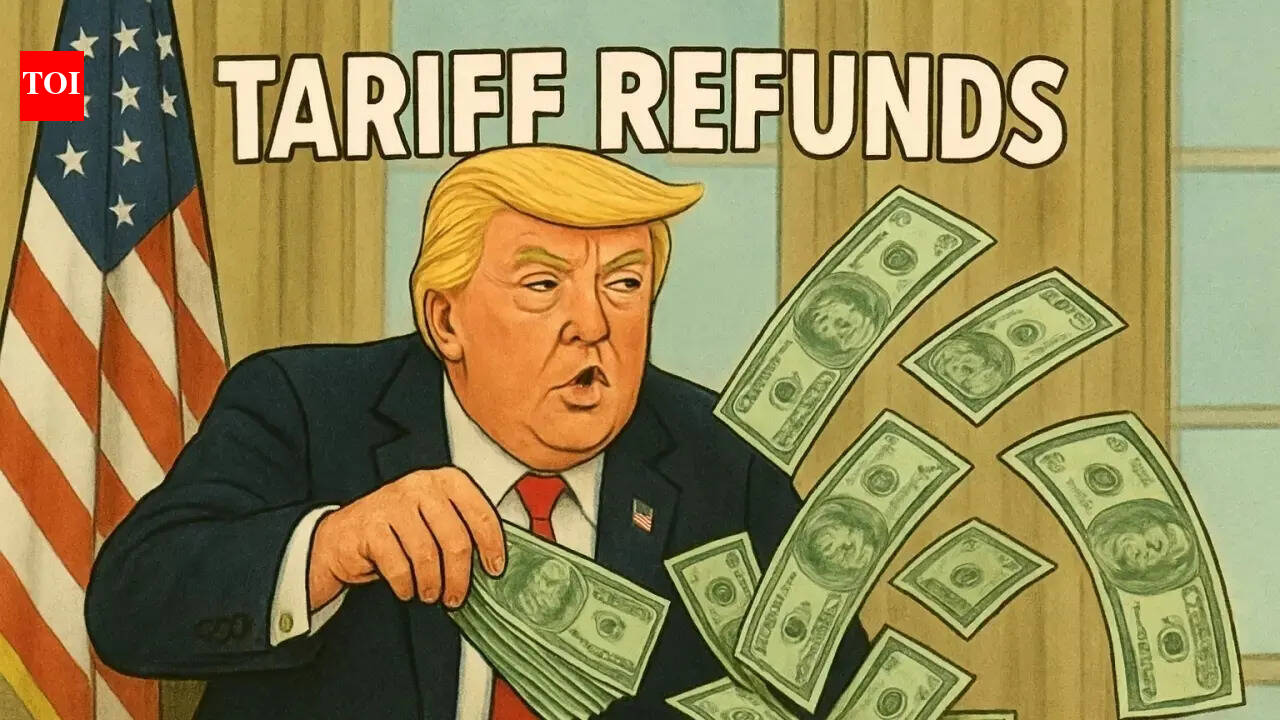
The US government has rolled out a system to facilitate refunds of over $166 billion from tariffs introduced by Donald Trump and later invalidated by the US Supreme Court. In February, the court struck down a broad set of reciprocal tariffs, delivering a significant setback to a central pillar of Trump’s economic agenda and paving the way for repayments.On Monday, US Customs and Border Protection announced that the first phase of its refund-processing platform is now operational, allowing importers and customs brokers to begin filing claims to recover the duties they had paid.The agency had earlier estimated in March that more than 330,000 importers may qualify for reimbursements on duties or deposits linked to over 53 million shipments. In its initial rollout, the platform covers about $127 billion in duty payments eligible for electronic refunds.
Tariff refunds What US Customs and Border Protection has said
The process to return reciprocal tariff payments starts on April 20 through a newly launched online platform, CAPE (Consolidated Administration and Processing of Entries), operated by US Customs and Border Protection.This move follows a February 20, 2026 judgment by the US Supreme Court, which ruled that tariffs introduced by Donald Trump were unlawful. The court found that these duties had been imposed under the International Emergency Economic Powers Act without adequate legal backing.Also Read | Iran has closed Strait of Hormuz completely: What does this mean for India’s crude oil, LPG, LNG supplies?The tariffs impacted a wide range of exports from countries including India. To receive repayments, importers in the US are required to submit claims which include shipment details, applicable tariff classifications and proof of payment. Once approved, these refunds along with interest are expected to be processed within 60 to 90 days. Eligibility is limited to those who originally paid the tariffs, primarily US importers and businesses.The total amount to be refunded is estimated at around $166 billion, with nearly $12 billion tied to Indian goods.The tariff structure began at 10% on April 2, 2025, before escalating quickly. Duties on Indian goods increased to 25% by August 7, 2025, and further to 50% by August 28, remaining at that level until early February 2026. On February 6, 2026, rates were lowered to 18% following negotiations. However, the Supreme Court’s ruling later that month nullified the entire regime, effectively rendering the tariffs void and paving the way for refunds.
What it means for India
Exporters and end consumers are not permitted to file claims directly, although some companies, such as FedEx, may opt to pass on the refunded amounts at their discretion.According to Global Trade Research Initiative (GTRI), around 53% of India’s shipments to the US, which largely comprises textiles and apparel, were subject to higher tariffs. This makes them the largest contributors to the refund pool. Of the nearly $12 billion tied to Indian exports, textiles and apparel are estimated to account for around $4 billion, followed by engineering goods with a similar share and chemicals contributing about $2 billion, while other sectors make up the remainder.However, what is important to understand is that these refunds will not flow directly to Indian exporters. The payments are meant only for US importers who bore the tariff burden.Also Read | Explained: On way to 4th largest, how India slipped to 6th rank & what it means for 3rd largest economy dream“Payments go only to US importers, and exporters have no legal right to claim them. Indian exporters, therefore, have no direct legal route to claim refunds,” explains Ajay Srivastava, founder of GTRI.Hence, any potential recovery of these refunds will depend on commercial discussions. Exporters will need to actively engage with their US counterparts to negotiate a share of the refunded duties, particularly in cases where earlier pricing factored in tariff costs. GTRI explains that this can be done by reopening contracts, adding rebate-sharing clauses, asking for price revisions or credit notes, and using invoices and tariff data to show how costs were absorbed. “Exporters with stronger bargaining power, especially in textiles and engineering goods, may secure better terms in future orders,” the think tank says.Industry bodies such as the Apparel Export Promotion Council, Engineering Export Promotion Council of India and Chemexcil can also assist exporters with guidance on contract renegotiation and sector-specific approaches, it adds.
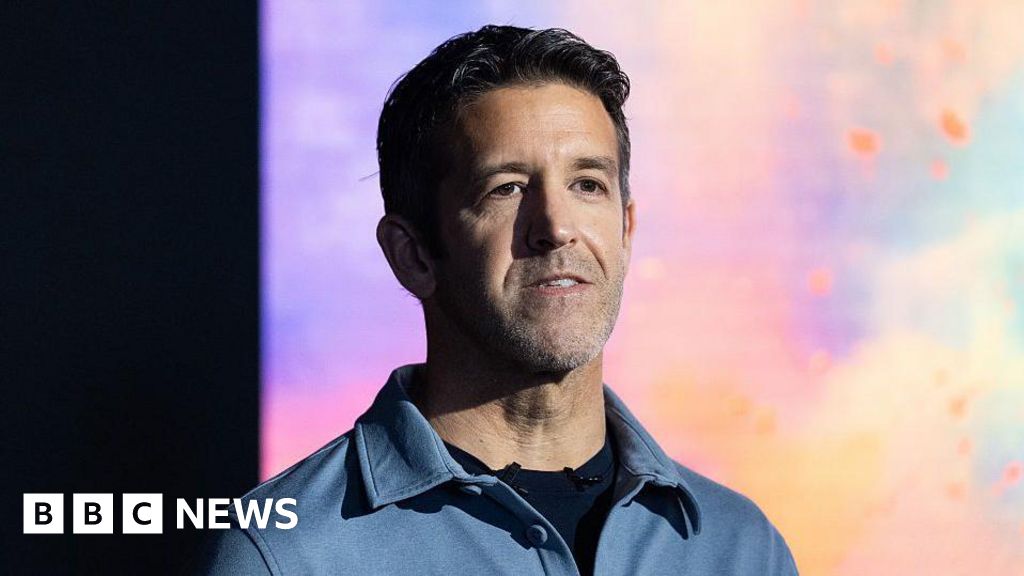
John Ternus will take over running the technology giant as Cook steps up to become executive chairman.
Source link

Spike in petrol thefts after Iran war pushed up fuel prices

War-linked energy shock pushing inflation higher in Europe: IMF expert

Scam messages offering ships safe transit through Hormuz, warns security firm

-

 Fashion5 days ago
France’s LVMH Q1 revenue falls 6%, shows resilience amid Iran war
-

 Sports1 week ago
The case for Man United’s Fernandes as Premier League’s best
-

 Entertainment1 week ago
Palace left in shock as Prince William cancels grand ceremony
-
 Business1 week ago
UK could adopt EU single market rules under new legislation
-

 Entertainment6 days ago
Is Claude down? Here’s why users are seeing errors
-

 Fashion1 week ago
Energy emerges as biggest cost driver in textile margins
-
 Business1 week ago
Delta Air Lines unveils first new Delta One suite in premium cabin arms race
-

 Tech1 week ago
A Lot of Shops Won’t Fix Electric Bikes. Here’s Why