

Business
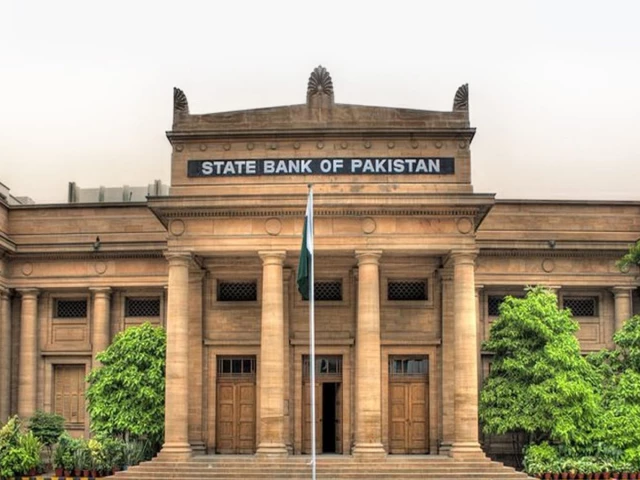
Petrol price | The Express Tribune

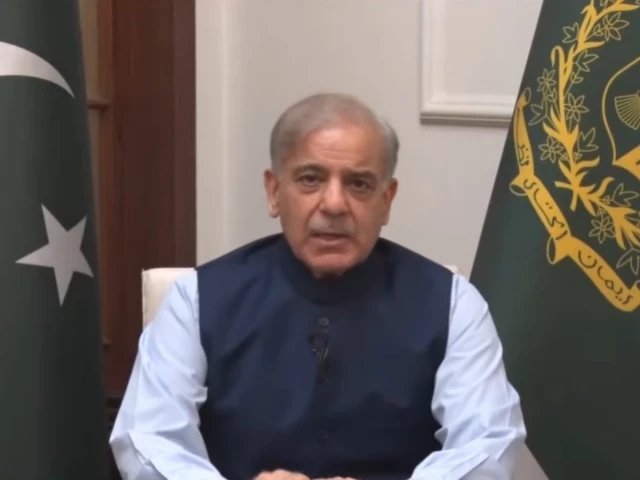
Prime Minister Shehbaz Sharif speaks in a video address. — SCREENGRAB
ISLAMABAD:
Prime Minister Shehbaz Sharif said on Friday night, the eve of Eidul Fitr, that he had rejected advice to further raise fuel prices and the federal government would absorb the burden itself.
Addressing the nation, he felicitated the nation on the occasion of Eid.
“In the context of the current situation, this Eid specifically demands from us humanity, national unity and collective responsibility. I think the real happiness of Eid is fulfilled when we share it with the needy and deserving around us and extend them the hand of kindness.”
He said the world was undergoing an “unusual test”, adding that continuous effort and empathy would be the guiding beacons that would lead the people out of the current crisis.
“The war in our region has not only shaken the international economy and peace but also badly affected the common man’s daily life.”
The premier said that attacks on the energy infrastructure of Gulf states had made the situation further dangerous. “The concern is increasing with every passing moment that this crisis could become even more severe and longer,” he added.
The prime minister said oil prices in the international markets were sky-high and had increased tremendously in a short span to reach historic levels.
“If the situation keeps deteriorating like this, the possibility of further increase cannot be ruled out.”
PM Shehbaz said the prices were affecting the global community, leading to the birth of a “new inflationary storm”. The prime minister added that he was aware of the impact a previous Rs55 fuel price increase had on the people, saying that many faced difficulties in fulfilling their household needs.
He thanked the nation for exhibiting patience, steadfastness and understanding of the situation. The premier added that there had been a considerable increase in the fuel price in international markets, against which he was advised to raise prices again, but he had rejected it “because I knew that the previous increase had already become a heavy burden on your ability to bear”.
PM Shehbaz said that a further increase in such a situation would have strongly affected the common man’s life, adding that he thus decided that the government would absorb the resulting Rs24 billion burden itself.
“We made the necessary cuts in our budget for this and limited development expenditure,” he said.
The prime minister said prices had increased considerably once again in the beginning of the current week and he was again advised to raise fuel prices. However, he added that he had decided not to do so under a sense of responsibility and on account of the imminent Eidul Fitr.
PM Shehbaz said the government would again bear the expense of around Rs45b for the past week. “In my view, the greatest priority is ensuring the protection of the most destitute segment and saving it as much as possible from the burden of increasing prices.”
He said so far, the government had spent an amount of Rs69b to prevent a Rs127 per litre increase in the petrol price and Rs252 per litre in that of high-speed diesel.
However, he added that it was not a solution that could last for long, saying the government would absorb the burden as much as possible to protect the nation and provide relief to the poor.
The prime minister said while the measures had supported the needy, some well-to-do segments had unduly benefited from it. “To stop this unjust practice, I have directed ministries to devise a fair mechanism which ensures that government relief is limited only to those who are deserving of it,” he added.
The government was expected to absorb the impact of an increase in oil prices of up to Rs49 per litre amid a sharp surge driven by tensions in the Gulf region.
According to calculations, the price of high-speed diesel had increased by Rs49 per litre, while diesel prices had risen by Rs29 per litre. However, the government may absorb this impact through price differential claims.
During the last week, the federal government hiked the prices of kerosene oil and light diesel oil (LDO). However, it decided to freeze petrol and high-speed diesel prices by maintaining the petroleum levy and providing a subsidy to absorb rising costs.
Two weeks ago, the government sharply increased diesel and petrol prices by Rs55 per litre or 20% — due to the ongoing US-Israel and Iran war, which has disrupted supply chains and pushed crude oil prices to two years’ highest level.
The increase in petrol prices was more than the surge in the international market, as the government chose to collect more money than required from motorcyclists and car owners to subsidise the use of diesel, mostly by the public transport and the agriculture sector.
However, Prime Minister Shehbaz Sharif decided not to increase the prices of petroleum products last week, honouring his promise to the public despite a further rise in international oil prices.
The Committee to Monitor Petrol Prices was informed on Monday that the country had adequate fuel availability for March and coverage was available until mid-April based on current cargo planning and supply arrangements, with efforts underway to extend it further towards the end of next month.
The committee members undertook a comprehensive review of petroleum product stock positions across the country and were briefed in detail on the current national inventory of crude oil and refined petroleum products, ongoing import arrangements and supply chain logistics.
Earlier, Petroleum Secretary Hamed Yaqoob Sheikh said the country currently had diesel reserves sufficient for 21 days and petrol stocks for 27 days.
The petroleum secretary briefed the Senate Standing Committee on Petroleum on the country’s fuel reserves and the impact of rising tensions in the Middle East on global energy supplies.
Sheikh said the country also had liquefied petroleum gas (LPG) reserves for nine days and JP-1 aviation fuel stocks for 14 days. The petroleum secretary said that around 70% of Pakistan’s petroleum supplies came from the Middle East and the ongoing regional tensions had disrupted shipments, with vessel movement currently affected.



Household energy bills could jump by £332 a year in July as recent sharp increases in wholesale prices are set to feed through into Ofgem’s price cap, according to the latest forecasts.
Analysts Cornwall Insight said forecasts for the watchdog’s price cap from July to September had surged to £1,973 a year for a typical dual fuel households – an increase of £332 or 20% on April’s cap.
This marks a significant step up on its forecast from just over two weeks ago, when it had predicted a 10% increase from July.
The independent energy consultants are updating their forecasts every week while the US-Israel war with Iran escalates and the energy market is volatile.
Cornwall said household energy bills over the summer look set to be higher than it had anticipated prior to the escalation of conflict in the Middle East, which has sent wholesale gas and oil prices soaring.
Even if wholesale prices quickly returned to pre-conflict levels, some of the recent volatility will be baked into the next price cap, which covers July to September, it said.
However, the figure is likely to change and the size of the increase to the next price cap will depend on how long gas prices stayed elevated and how long the period of disruption continues.
Ofgem’s price cap is based on average wholesale prices over a three-month period.
A spokesman for the Government’s Department for Energy Security and Net Zero said Cornwall’s forecasts are “highly speculative”, adding: “Using wholesale price fluctuations to predict what will happen in the next few months is not reliable.
“Tackling the affordability crisis is the Government’s number one priority. That is why we are acting to bring bills down now and for the long term.”
The price most households pay for energy will fall by 7% from April 1, or £117 a year, driven by the Government’s promise to cut bills by an average of £150 by removing green subsidies.
However, gas prices have been climbing in recent weeks, and this could feed through into future electricity prices and how much it costs to heat people’s homes.
On Thursday, UK natural gas prices reached a three-year high after jumping by around 25% during the day. Prices had eased back a little on Friday.
The latest spike was driven by attacks on energy facilities in Iran and Qatar, stoking fears about longer-term damage and disruption to gas supplies.
Shell said one of its key gas plants was damaged in the strike on Qatar, which is used to make things like fuel for transport and ingredients for plastics and cosmetics.
Qatar’s state-backed energy company Qatar Energy has halted production of liquified natural gas (LNG) at its site since the beginning of March.
Meanwhile, the UK’s competition watchdog is looking into concerns that households relying on heating oil are facing sudden price increases on the back of the conflict.
Home heating oil, which is used by around 1.5 million households in the UK – primarily in Northern Ireland, is not covered by Ofgem’s price cap, which currently fixes prices until the end of June.
The Competition and Markets Authority (CMA) said on Friday that it had launched a market study into the supply of heating oil to see how it was impacting consumers and whether it needs to intervene.
Business
Core sector output slows to 2.3% in February; crude, gas and refinery drag weighs on momentum – The Times of India

Growth in India’s eight core infrastructure industries eased to 2.3 per cent in February, down from 3.4 per cent in the same month last year, reflecting weakness in energy-linked segments even as output expanded in several manufacturing-oriented sectors.According to official data, production of crude oil, natural gas and petroleum refinery products declined during the month, moderating the overall expansion in the core sector basket. The eight industries together account for 40.27 per cent of the weight in the Index of Industrial Production (IIP).The combined Index of Eight Core Industries (ICI) rose 2.3 per cent (provisional) year-on-year in February 2026, the Ministry of Commerce and Industry said in a release, noting that cement, steel, fertilisers, coal and electricity recorded positive growth during the month.During April–February of FY26, cumulative growth in core infrastructure output stood at 2.9 per cent, compared with 4.4 per cent in the corresponding period of the previous financial year, indicating a broader slowdown in momentum.“The final growth rate of Index of Eight Core Industries for January 2026 was observed at 4.7 per cent. The cumulative growth rate of ICI during April to February, 2025-26 is 2.9 per cent (provisional) as compared to the corresponding period of last year,” the release said.Coal production — carrying a 10.33 per cent weight — increased 2.3 per cent in February over the same month last year. However, its cumulative index remained unchanged at 185.8 during April–February FY26.Crude oil output (8.98 per cent weight) declined 5.2 per cent year-on-year in February, while the cumulative index contracted 2.5 per cent over the April–February period.Similarly, natural gas production (6.88 per cent weight) fell 5.0 per cent during the month, with its cumulative index slipping 3.5 per cent compared with the year-ago period.Production of petroleum refinery products (28.04 per cent weight) declined 1.0 per cent in February and remained marginally lower — by 0.1 per cent cumulatively — during the first eleven months of the fiscal.Among the growth drivers, fertiliser output (2.63 per cent weight) rose 3.4 per cent year-on-year in February and recorded 2.0 per cent cumulative growth during April–February.Steel production — with a 17.92 per cent weight — posted a strong 7.2 per cent increase in February, while cumulative growth stood at 9.7 per cent.Cement output (5.37 per cent weight) expanded 9.3 per cent during the month and recorded 9.2 per cent growth cumulatively over the fiscal period under review.Electricity generation (19.85 per cent weight) increased 0.5 per cent year-on-year in February and registered 0.9 per cent cumulative growth during April–February.The data indicates that while construction-linked and industrial segments continue to lend support, the contraction in energy-related sectors remains a key drag on overall core infrastructure output.(With inputs from Agencies)
Business
Govt clears Rs 20,000 crore credit guarantee scheme for MFIs; funding access in focus – The Times of India

The government has approved a limited-period Rs 20,000-crore credit guarantee scheme aimed at easing fund flow constraints faced by microfinance institutions (MFIs), according to a PTI report.The Credit Guarantee Scheme for Microfinance Institutions-2.0 (CGSMFI-2.0) will cover loans disbursed by member lending institutions (MLIs), including banks and other lenders, to non-banking finance company-MFIs and MFIs till the end of June, government-run National Credit Guarantee Trustee Company (NCGTC) said in a circular.MFIs, which largely cater to borrowers at the bottom of the economic pyramid, have been facing challenging conditions due to a rise in non-performing assets (NPAs), making lenders cautious about extending fresh exposure.According to the circular, MLIs will extend funding to MFIs or NBFC-MFIs based on their internal assessment for onward lending to eligible small borrowers. Certain conditions have also been prescribed on lending rates.To qualify for benefits under the scheme, the interest rate on loans sanctioned by MLIs to NBFC-MFIs/MFIs will be capped at the External Benchmark Lending Rate (EBLR) or the one-year marginal cost of funds-based lending rate plus two per cent.In addition, MFIs will have to lend to small borrowers at a cost at least one per cent below the average lending rate charged during the previous six months.The scheme also stipulates a maximum loan tenure of three years, including a one-year moratorium followed by a two-year repayment period. Further, MLIs are required to ensure that at least five per cent of the total loan amount under the scheme is sanctioned to small MFIs with assets under management (AUM) of less than Rs 500 crore, while 10 per cent should be allocated to mid-sized institutions with AUM between Rs 500 crore and Rs 2,000 crore.“The maximum amount of loan which can be sanctioned by MLIs to NBFC- MFIs/MFIs shall be capped at 20 per cent of AUM of respective NBFC-MFI/MFI subject to a maximum of Rs 100 crore to small size, Rs 200 crore to medium size and Rs 300 crore to large size NBFC-MFIs/MFIs,” the circular said.Microfinance Institutions Network (MFIN), the industry’s self-regulatory body, welcomed the measure, calling it a timely intervention that could help improve liquidity conditions.“The sector has demonstrated strong improvement in credit quality and adherence to responsible lending practices. The key constraint has been the availability of bank funding,” MFIN chief executive and director Alok Misra said.


How to watch 2026 NCAA swimming and diving championships

Markle Markle apologises for hijacking a bathroom TikTok video

Men’s March Madness Friday takeaways

Stock market crash today (March 12, 2026): Nifty50 opens below 23,600; BSE Sensex down over 900 points on continuing US-Iran war – The Times of India
US issues 30-day waiver for Russian oil shipments stranded at sea | The Express Tribune

Chinese firm to invest $15.34 million in garment factory at BEPZA

-
Business1 week ago
Stock market crash today (March 12, 2026): Nifty50 opens below 23,600; BSE Sensex down over 900 points on continuing US-Iran war – The Times of India
-
Business1 week ago
US issues 30-day waiver for Russian oil shipments stranded at sea | The Express Tribune
-
 Fashion1 week ago
Chinese firm to invest $15.34 million in garment factory at BEPZA
-
 Fashion1 week ago
US unemployment rate 4.4% in Feb 2026, LFPR 62%: BLS
-

 Tech1 week ago
Tech Traveler’s Guide to Dumbo: Where to Stay, Eat, and Recharge
-

 Tech6 days ago
Tips and Advice for Buying Used or Refurbished Electronics
-
 Business1 week ago
Oil holds above $100 as tensions escalates between Iran, US and Israel – SUCH TV
-

 Sports1 week ago
Bilas’ All-America teams: My top 20 men’s college basketball players of 2025-26