

Business
Petrol pumps may shut within days as dealers warn of supply cuts | The Express Tribune

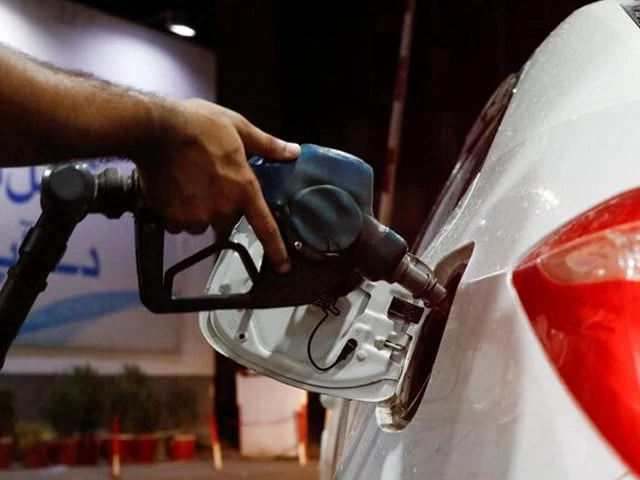
PPDA warns petrol pumps may shut as diesel supply falls to 20%, petrol by 50% due to hoarding, sharp price increases
LAHORE:
Leaders of the Pakistan Petroleum Dealers Association (PPDA) sounded the alarm on Thursday, alleging that petroleum companies have reduced supply and warned that petrol pumps may begin shutting down within the next few days if supply is not restored.
Speaking at a press conference at the Lahore Press Club, the association’s Central Secretary General Chaudhry Irfan Elahi said the situation had become alarming due to declining fuel deliveries. “Diesel supply has dropped to just 20%,” he said, adding that petrol supplies had also been significantly reduced.
Elahi also claimed that fuel prices were rising sharply due to the disruption, with diesel prices increasing by Rs17 and petrol prices up to Rs35.
Central Punjab President Nauman Majeed said that petrol supply has also been reduced by 50%. He alleged that some private companies had begun hoarding petroleum products.
Lahore President Jehanzaib Malik urged the government to ensure adequate fuel supplies to petrol pumps.“Our demand is that supply should be provided according to our requirements,” Malik said, adding, “Oil marketing companies have stopped supply.”
Read: Iran war: Pak plans to import oil via Red Sea
He also criticised government inspections focusing on petrol stations rather than supply depots. Malik said dealers did not want the public to suffer due to fuel shortages. “We do not want a shortage that creates difficulties for the public,” he said.
Referring to the regional situation, he added that due to the war, the situation has deteriorated, and requested that stakeholders be taken into confidence.
“If the government does not restore supply, petrol pumps will start shutting down from Monday,” he said, adding, “Companies have stopped the supply of petroleum products to push for an increase in prices.”
A day earlier, the All Pakistan Petrol Pump Owners Association addressed a letter to Prime Minister Shehbaz Sharif, raising concerns over a potential petroleum shortage as delays in fuel supply occur. According to the letter, oil marketing companies have reportedly implemented a quota system amid the ongoing Middle East crisis.
“They are either not providing the product or have limited it to such an extent that we hardly fulfil the need of the public, or fuel stations get dry,” they warned. They urged the government to intervene immediately and ensure that oil companies consult with stakeholders before imposing any restrictions.
The association also called for urgent measures to improve the supply of petroleum products and prevent disruption to consumers.
Oil for 28 days
The Oil and Gas Regulatory Authority has said that they have high stocks of oil to meet 28 days of consumption requirement of the country, following pre-emptive measures to import surplus fuel.
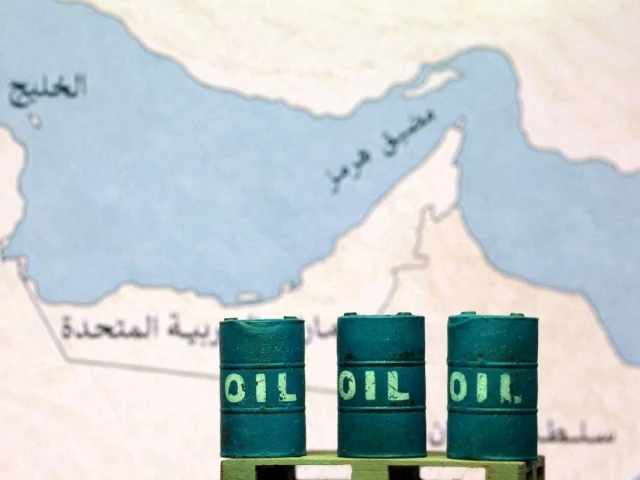
Owing to the US-Israel attack on Iran, however, two cargoes of crude oil have been stuck after the closure of the Strait of Hormuz. This channel is 21 miles (33 km) wide and a fifth of the world’s oil passes through it.
The Strait of Hormuz was used to ship an average of 20 million barrels of crude, condensate and fuel per day last year. OPEC members like Saudi Arabia, Iran, the United Arab Emirates, Kuwait and Iraq depend on this shipping lane to export most of their crude, mainly to Asia. “We have ample stocks of petrol and diesel to meet the country’s requirement,” officials said, adding that the country could meet the fuel needs of consumers for 28 days.
However, reports have emerged that the government has planned to import oil through the Red Sea from Saudi Arabia and the United Arab Emirates (UAE) due to the closure of the Strait of Hormuz, while also shifting to a weekly oil price review mechanism.
Sources told The Express Tribune that the government is currently working on various measures to ensure an uninterrupted oil supply amid US-Israel war against Iran.
Pakistan imports around one million barrels of oil on a monthly basis, with Saudi Arabia being a key oil exporter to the country. The UAE also exports oil to Pakistan.
Sources said that UAE-based firm ADNOC and Saudi Aramco will supply oil to Pakistan by bypassing the Strait of Hormuz. One refinery has already imported a few shipments through the Red Sea. A couple of oil vessels have reached Pakistan, while others are en route.
Finance minister unveils fuel conservation plan
Finance Minister Muhammad Aurangzeb on Wednesday formally announced to introduce energy conservation measures to deal with disruption in import of fuels, as the government considers closing higher education institutions and weekly setting fuel prices to deal with the evolving situation.
However, the finance minister said that the country has sufficient stocks of fuels for this month in addition to 10 days’ equal crude oil reserves, emphasising there was no cause for immediate concern.
The minister further added that Pakistan has about 28 days’ equal stocks of petrol and diesel and 10 days of crude oil. There are also LPG stocks equal to 15 days of the country’s requirements, and we are closely monitoring the situation, said Aurangzeb, who is also the Chairman of the prime minister’s Committee to Monitor Petrol Prices in the wake of the emerging situation in the region, which was constituted by the prime minister and met for the third time on Wednesday.
He, however, said that the LNG cargoes have stuck up from Qatar and the government was closely monitoring the situation.
According to a handout issued by the finance ministry, the petrol committee members reviewed energy conservation measures as part of broader contingency planning aimed at managing demand efficiently while maintaining orderly market conditions.
The committee emphasised that while supply conditions remain stable, prudent energy use and conservation at all levels would help strengthen national preparedness should international uncertainties persist, said the finance ministry.
Strait of Hormuz
Vessels have been receiving VHF transmission from Iran’s Revolutionary Guards saying “no ship is allowed to pass the Strait of Hormuz”. The Revolutionary Guards said Iranian forces had “complete control” of the Strait of Hormuz, a vital route for world oil and gas supplies, and any vessels seeking to pass risked damage from missiles or stray drones.
Strait of Hormuz also dubbed as energy corridor as millions of barrels of oil move from one part to another from here. PHOTO: REUTERS
The strait is the world’s most vital oil export route, which connects the biggest Gulf oil producers, such as Saudi Arabia, Iran, Iraq and the UAE, with the Gulf of Oman and the Arabian Sea.
Some 20% of global oil, including from producers Saudi Arabia, the United Arab Emirates, Iraq, Kuwait and Iran, passes through Hormuz along with large volumes of liquefied natural gas from Qatar.
Tehran has for years threatened to block the narrow waterway in retaliation for any attack on the Islamic Republic.
Fourteen LNG tankers have shown signs of slowing down, U-turning or stopping in or around the Strait, said Laura Page from consultancy Kpler, who added the number will likely rise, posing risks to Qatari LNG exports.





One petrol retailer says he is experiencing about five drive-offs a week at each forecourt, costing him thousands.
Source link
Business
Billions to be paid! US starts refund process for Trump tariffs: Can Indian exporters claim? – The Times of India
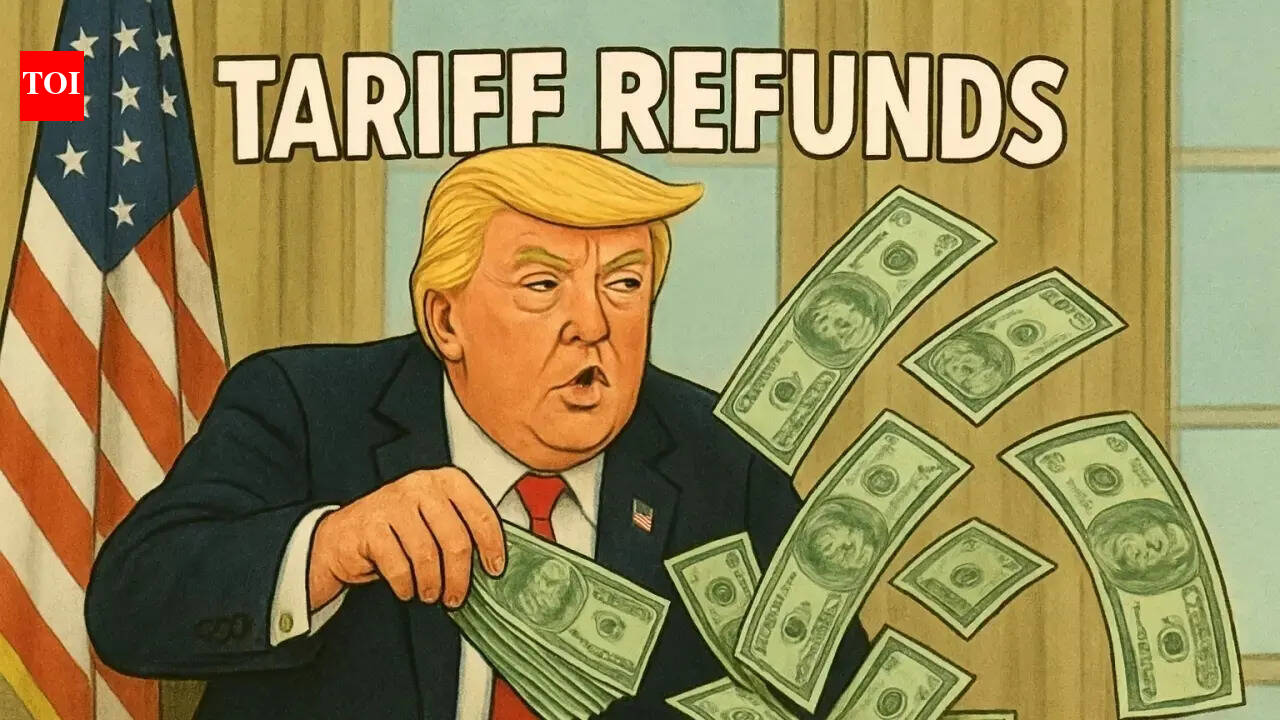
The US government has rolled out a system to facilitate refunds of over $166 billion from tariffs introduced by Donald Trump and later invalidated by the US Supreme Court. In February, the court struck down a broad set of reciprocal tariffs, delivering a significant setback to a central pillar of Trump’s economic agenda and paving the way for repayments.On Monday, US Customs and Border Protection announced that the first phase of its refund-processing platform is now operational, allowing importers and customs brokers to begin filing claims to recover the duties they had paid.The agency had earlier estimated in March that more than 330,000 importers may qualify for reimbursements on duties or deposits linked to over 53 million shipments. In its initial rollout, the platform covers about $127 billion in duty payments eligible for electronic refunds.
Tariff refunds What US Customs and Border Protection has said
The process to return reciprocal tariff payments starts on April 20 through a newly launched online platform, CAPE (Consolidated Administration and Processing of Entries), operated by US Customs and Border Protection.This move follows a February 20, 2026 judgment by the US Supreme Court, which ruled that tariffs introduced by Donald Trump were unlawful. The court found that these duties had been imposed under the International Emergency Economic Powers Act without adequate legal backing.Also Read | Iran has closed Strait of Hormuz completely: What does this mean for India’s crude oil, LPG, LNG supplies?The tariffs impacted a wide range of exports from countries including India. To receive repayments, importers in the US are required to submit claims which include shipment details, applicable tariff classifications and proof of payment. Once approved, these refunds along with interest are expected to be processed within 60 to 90 days. Eligibility is limited to those who originally paid the tariffs, primarily US importers and businesses.The total amount to be refunded is estimated at around $166 billion, with nearly $12 billion tied to Indian goods.The tariff structure began at 10% on April 2, 2025, before escalating quickly. Duties on Indian goods increased to 25% by August 7, 2025, and further to 50% by August 28, remaining at that level until early February 2026. On February 6, 2026, rates were lowered to 18% following negotiations. However, the Supreme Court’s ruling later that month nullified the entire regime, effectively rendering the tariffs void and paving the way for refunds.
What it means for India
Exporters and end consumers are not permitted to file claims directly, although some companies, such as FedEx, may opt to pass on the refunded amounts at their discretion.According to Global Trade Research Initiative (GTRI), around 53% of India’s shipments to the US, which largely comprises textiles and apparel, were subject to higher tariffs. This makes them the largest contributors to the refund pool. Of the nearly $12 billion tied to Indian exports, textiles and apparel are estimated to account for around $4 billion, followed by engineering goods with a similar share and chemicals contributing about $2 billion, while other sectors make up the remainder.However, what is important to understand is that these refunds will not flow directly to Indian exporters. The payments are meant only for US importers who bore the tariff burden.Also Read | Explained: On way to 4th largest, how India slipped to 6th rank & what it means for 3rd largest economy dream“Payments go only to US importers, and exporters have no legal right to claim them. Indian exporters, therefore, have no direct legal route to claim refunds,” explains Ajay Srivastava, founder of GTRI.Hence, any potential recovery of these refunds will depend on commercial discussions. Exporters will need to actively engage with their US counterparts to negotiate a share of the refunded duties, particularly in cases where earlier pricing factored in tariff costs. GTRI explains that this can be done by reopening contracts, adding rebate-sharing clauses, asking for price revisions or credit notes, and using invoices and tariff data to show how costs were absorbed. “Exporters with stronger bargaining power, especially in textiles and engineering goods, may secure better terms in future orders,” the think tank says.Industry bodies such as the Apparel Export Promotion Council, Engineering Export Promotion Council of India and Chemexcil can also assist exporters with guidance on contract renegotiation and sector-specific approaches, it adds.

John Ternus will take over running the technology giant as Cook steps up to become executive chairman.
Source link


How to Watch the Lyrids Meteor Shower at Its Peak
Spike in petrol thefts after Iran war pushed up fuel prices

War-linked energy shock pushing inflation higher in Europe: IMF expert

-

 Fashion5 days ago
France’s LVMH Q1 revenue falls 6%, shows resilience amid Iran war
-

 Sports1 week ago
The case for Man United’s Fernandes as Premier League’s best
-

 Entertainment1 week ago
Palace left in shock as Prince William cancels grand ceremony
-
 Business1 week ago
UK could adopt EU single market rules under new legislation
-

 Entertainment6 days ago
Is Claude down? Here’s why users are seeing errors
-

 Fashion1 week ago
Energy emerges as biggest cost driver in textile margins
-
 Business1 week ago
Delta Air Lines unveils first new Delta One suite in premium cabin arms race
-

 Tech1 week ago
A Lot of Shops Won’t Fix Electric Bikes. Here’s Why