

Business
Planning a car trip to snow-covered mountains? Tips to avoid tyre skidding and drive safely on black ice

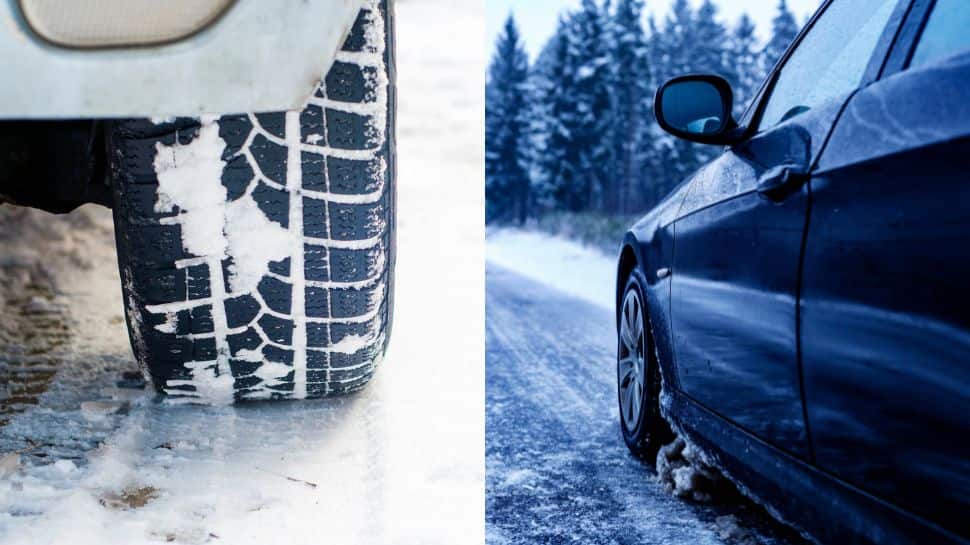
Safe driving tips: Black ice is one of the most dangerous winter road hazards during snowfall seasons. It is a thin, transparent layer of ice that blends with the road surface, making it hard for drivers to see. During snowfall and freezing temperatures, black ice can form quickly and lead to a sudden loss of control. Road safety experts advise drivers to stay alert and follow simple precautions to reduce risks.
Black ice usually forms when temperatures go around freezing and moisture freezes on road surfaces. It is commonly found on bridges, flyovers, shaded areas, tunnels, and curves, as these sections cool faster than regular roads. Early mornings and late nights are especially risky, as the ice may not have melted. Here are some tips that could help you drive safely on black ice:
Slow down and drive smoothly: The most important rule you should follow when driving on black ice is to reduce speed. Sudden acceleration, braking, or sharp turns can cause tyres to lose grip. Maintain a steady speed and keep movements smooth. Driving slower gives tyres more time to respond and helps prevent skidding.
Keep distance: On icy roads, braking distances increase significantly. Drivers should keep at least double the normal distance from the vehicle ahead. This extra space allows more time to react if the vehicle in front slows down or loses control.
Avoid sudden braking: If you suspect black ice, avoid suddenly applying the brakes. If your vehicle has ABS (Anti-lock Braking System), apply steady pressure and let the system work. For vehicles without ABS, gently apply the brakes to avoid wheel lock-up. Sudden braking can cause the car to skid.
(Also Read: New traffic rule alert: Your five mistakes can cost you your driving licence – Details)
If your vehicle starts to skid, do not panic. Ease off the accelerator and steer gently in the direction you want the front of the car to go. Avoid overcorrecting, as this could make the skid worse.
Use low-beam headlights: Always use low-beam headlights during snowfall or foggy conditions to improve visibility. Winter tyres or all-season tyres with good tread offer better grip on icy roads. Check tyre pressure regularly, as cold temperatures can reduce it.
Avoid cruise control: Do not use cruise control on icy roads. Drivers need full control of speed at all times. Stay alert for shiny or wet-looking patches on the road, which may indicate black ice.
Experts also suggest checking weather and road condition updates before travelling. If conditions are severe, you can change your route or delay your journey.






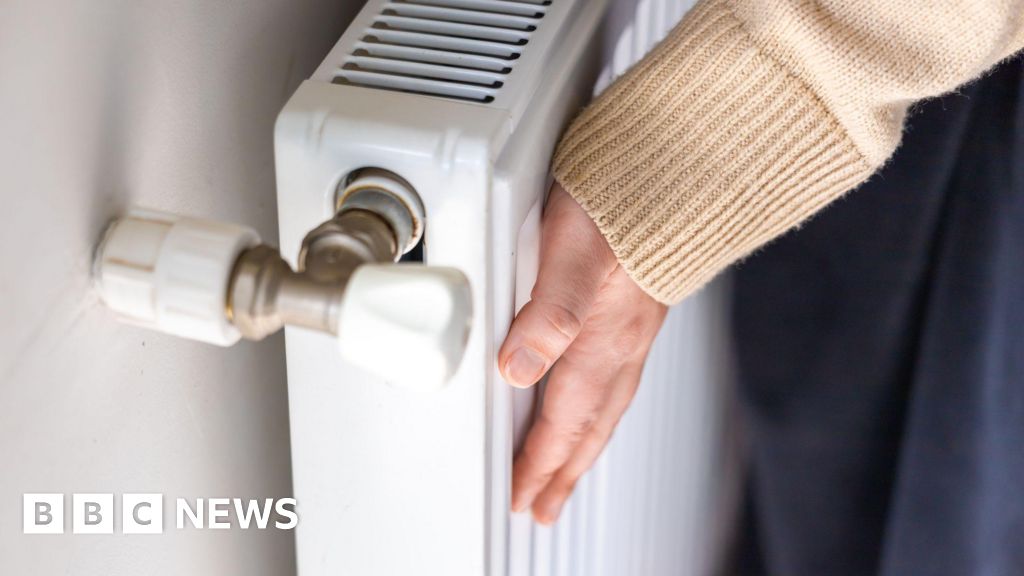
The government has been urged to take quick action to help the 1.7 million homes that still use heating oil and have seen prices double due to the US attacks on Iran.
These are often people in rural areas, who have seen prices for their fuel jump in some cases from 62p a litre before the war to perhaps £1.73 now.
Suppliers have been accused of delivering supplies without a price being quoted, leaving consumers in for a nasty shock when the bill arrives.
Conservative net zero minister Clare Coutinho wants the Competition and Markets Authority (CMA) to probe the suppliers and order them to be fairer to consumers.
Speaking on the BBC Today programme this morning, Ms Coutinho said: “Heating oil is being delivered without a price being quoted. We have called on the CMA to investigate these practices. We want more transparency and fair practices for consumers.”
Chancellor Rachel Reeves says she has asked the CMA to be “vigilant”, but Ms Coutinho accused the government of being “slow off the mark”.
“I hope this is something we can work on together. It is people who are vulnerable and in rural communities who have no other choice,” she added.
All energy costs are rising as fears grow of a supply squeeze. But heating oil seems to be the energy supply that is being most badly hit. There are about 120 heating oil suppliers, much smaller firms than the large energy conglomerates that supply electricity and gas to most of the population.
Emma Simpson, chief executive of Rural Action Derbyshire, a charity that runs an oil-buying scheme, said: “People who rely on heating oil are facing a sudden and frightening surge in cost. We may be heading into spring, but anyone running low on oil right now doesn’t have the luxury of waiting for prices to fall.”
She added: “For some, the decision to order or not will come down to whether they can realistically afford it, and that is a really hard position to be in.”
There were wild swings in both the oil and equity markets on Monday. But on Tuesday, oil prices fell sharply and stock markets bounced back as US president Donald Trump said the US-Israel war with Iran could be over soon.
The price of Brent crude was more than 8 per cent lower at just under $91 dollars a barrel, retreating from near-four year highs above $100 a barrel in volatile trading on Monday.
Markets responded by recovering some of the recent ground lost in the sell-off, with the FTSE 100 Index up 1.6% soon after opening, up 165.3 at 10,414.8.
Lindsay James, investment strategist at Quilter, said: “Markets are attempting to stabilise after an extraordinary round trip in oil prices that saw prices collapse from an intraday high of nearly $120 a barrel back towards the low $90s, helped in part by President Trump signalling that the war with Iran could be ‘very complete, pretty much’.
“Equities in the US responded in turn with modest gains while Treasury yields reversed, ending the day fractionally lower.”
Matt Britzman, senior equity analyst at Hargreaves Lansdown, said: “Global equity markets are still taking their cues from oil this morning – but the tone has notably improved after yesterday’s wild swings.
“What initially looked like a one-way surge in energy costs and the inflation headaches that come with it has started to stabilise, offering some much-needed breathing room.”

SYDNEY: Global airlines have begun increasing ticket prices as jet fuel costs surge following the escalating conflict in the Middle East, with carriers warning that further fare hikes may follow if oil prices remain high.
Air New Zealand confirmed it has raised fares across its network, becoming one of the first airlines to introduce broad price increases since the war between the United States, Israel and Iran began.
Fuel Prices Driving Fare Hikes
Airlines say jet fuel prices, previously around $85–$90 per barrel, have surged to between $150 and $200 per barrel in recent days.
Due to rising costs, Air New Zealand announced the following increases:
NZ$10 increase on domestic flights
NZ$20 increase on short-haul international routes
NZ$90 increase on long-haul flights
The airline also said it has suspended its financial outlook for 2026 because of uncertainty surrounding the ongoing conflict.
Airlines Warn of Further Increases
The carrier warned that if the conflict continues and fuel prices remain elevated, additional pricing adjustments and schedule changes may become necessary.
Other airlines are also feeling the pressure. Vietnam Airlines has requested the government remove environmental taxes on jet fuel as operating costs have reportedly risen by 60% to 70%.
Airline Shares Stabilise
Airline stocks, which initially fell sharply due to the crisis, showed signs of stabilising after Donald Trump suggested the conflict could end soon.
Following the comments:
Air New Zealand shares rose 2%
Korean Air gained 8%
Qantas increased 1.5%
Cathay Pacific climbed more than 4%
Travel Industry Faces Pressure
Fuel typically represents 20% to 25% of airline operating costs, making it the second-largest expense after labour.
Higher oil prices and airspace closures in the Middle East are already forcing airlines to reroute flights, increasing travel times and ticket prices on some routes.
Tourism industries are also feeling the impact. Thailand’s tourism ministry warned that if the conflict lasts more than eight weeks, the country could lose nearly 600,000 tourists and $1.29 billion in tourism revenue.
Experts say prolonged instability in the region could significantly affect global travel demand and airline profitability.
Business
Sensex, Nifty 50 Stock Market Today Live Updates: Sensex Up 360 Points, Nifty Above 24,100; India VIX Falls Over 15%
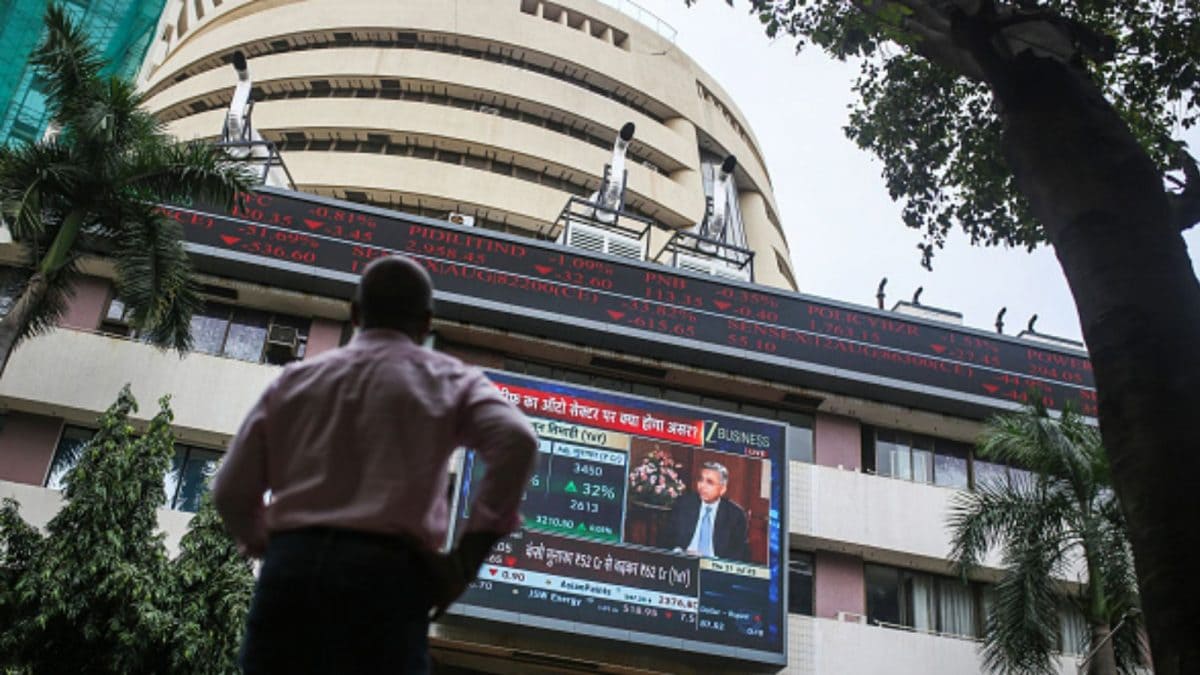
The Nifty50 and the Sensex rebounded from a two-day slump, tracking gains in global equities as Brent crude price eased after US President Donald Trump signaled an end to war. As of 9:17 AM, the Nifty50 was trading 0.58 per cent or 143.35 points higher at 24,167.40, and the Sensex was trading 0.62 per cent or 491.68 points higher at 78,030.20.
Global Cues
South Korea’s Kospi jumped over 6 per cent to lead the recovery rally in the region, and Japan’s Nikkei 225 rose over 5 per cent.
Meanwhile, US stock futures declined after the US President Donald Trump signalled that the war with Iran may come to an end soon. He also warned that Iran would be hit 20 times harder if the country blocks oil supply from the Strait of Hormuz.
The Dow Jones Industrial Average and S&P 500 futures were trading 0.22 per cent and 0.25 per cent down, respectively.
Overnight, the Dow Jones Industrial Average and S&P 500 indices ended 0.5 per cent and 0.83 per cent higher, respectively.
Brent crude prices declined 11 per cent to $88.05 per barrel on Tuesday so far following Trump’s remarks. It was trading 10.37 per cent down at $88.70 per barrel as of 7:20 AM, according to data on Bloomberg.
Gold and silver futures rose on Tuesday as the dollar index declined on hopes for easing US-Iran tensions in the near future. Gold and Silver futures were trading 1.55 per cent and 6.06 per cent higher, respectively.


Vietnam’s CPI up 1.14% MoM in Feb; IIP up 10.4% YoY in Jan-Feb 2026
Watchdog urged to clamp down on heating oil prices after 1.7m hit by soaring bills

Bangladesh Brand Forum, BGMEA sign MoU to transform RMG sector

-

 Politics3 days ago
India let Iran warship dock the day US sank another off Sri Lanka, say officials
-

 Sports3 days ago
Pakistan set for FIH Pro League debut | The Express Tribune
-

 Entertainment3 days ago
Harry Styles kicks off new era with ‘One Night Only’ comeback show
-
 Business1 week ago
Labour parliamentarians urge UK Government to oppose Rosebank oil field
-
 Business3 days ago
Home heating oil: ‘Most of my pension has gone on home heating oil’
-
 Business3 days ago
Restaurant group changes name after bid to buys pubs across the UK
-

 Tech1 week ago
The 5 Big ‘Known Unknowns’ of Donald Trump’s New War With Iran
-

 Sports1 week ago
USA vs. Argentina (Mar 1, 2026) Live Score – ESPN