Connect with us

Business

PM Modi Likely To Launch New Trains Linking Aizawl With Delhi, Kolkata And Guwahati

Published

on

PM Modi Likely To Launch New Trains Linking Aizawl With Delhi, Kolkata And Guwahati
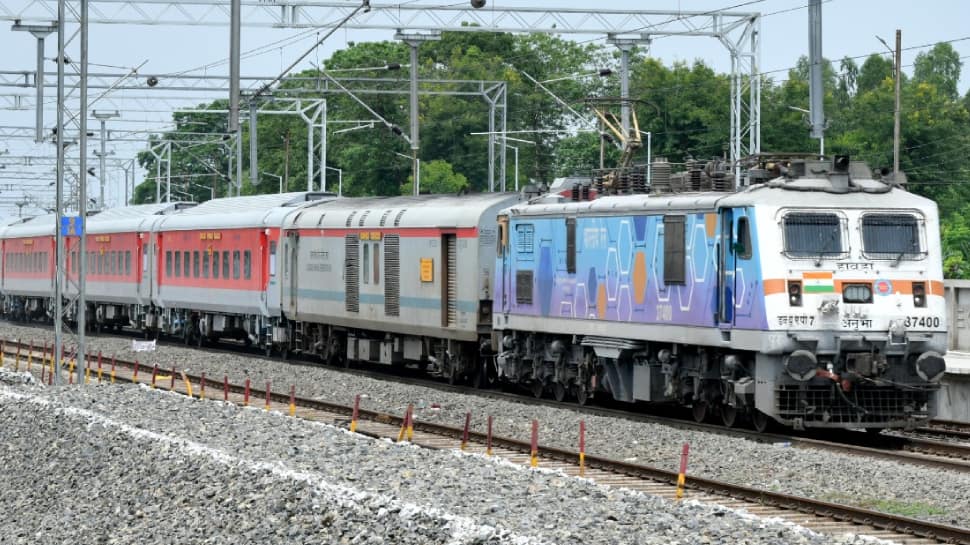

Guwahati/Aizawl: After the expected inauguration of the Bairabi–Sairang new railway project on September 13 by Prime Minister Narendra Modi, the Indian Railways is set to introduce three pairs of new train services connecting the Mizoram capital Aizawl with the national capital, Guwahati and Kolkata, officials said on Thursday. 

The Northeast Frontier Railway (NFR) Chief Public Relations Officer (CPRO) Kapinjal Kishore Sharma said that Indian Railways is pleased to announce the introduction of three new pairs of train services from the newly built Sairang station in Aizawl.

A senior Mizoram government official said that the Prime Minister accompanied by state Chief Minister Lalduhoma and a few Central Ministers would flag off the three new trains after the inauguration of the Bairabi–Sairang new railway project on Saturday.

Add Zee News as a Preferred Source


The NFR CPRO said that these trains would greatly enhance rail connectivity between the state capital of Mizoram with important destinations across the country.

The inaugural runs of all three pairs of trains will take place on September 13 (Saturday), followed by the commencement of regular services on the notified dates.

The three trains are Sairang-Anand Vihar (Delhi) Rajdhani Express (weekly), Kolkata-Sairang-Kolkata Express (tri-weekly) and Guwahati-Sairang-Guwahati Express (daily).

The Sairang-Anand Vihar Rajdhani Express will run via Badarpur junction, Guwahati, New Jalpaiguri, Malda Town, Bhagalpur during its journeys while the Sairang-Kolkata Express (tri-weekly) trains will run via Badarpur junction, Guwahati, Goalpara Town, Golakganj, New Jalpaiguri, Malda Town to reach its destinations in Kolkata.

The details of stoppages and timings of these trains are available at IRCTC website and are also being notified in social media platforms of Northeast Frontier Railway, Sharma said and requested the passengers to verify the details before undertaking their journey.

The 51.38 km Bairabi (near Assam’s Hailakandi district)-Sairang (near Aizawl city) railway project will make Aizawl the fourth capital city in the Northeast region to be connected by railways after Guwahati, Agartala and Itanagar.

Senior officials of Northeast Frontier Railway (NFR), led by General Manager (Construction) Arun Kumar Chaudhary, are making hectic preparations to give final touches to the railway project and arrangements for the inauguration.

Union Ministers and senior officials of several ministries, including the Development of North Eastern Region (DoNER), Tribal Affairs, Road Transport and Highways, would be present at the events.

The NFR CPRO earlier said that the 51.38-km-long Bairabi-Sairang new line railway project is considered an engineering marvel of Indian Railways, built at an estimated cost of Rs 8,071 crore.

The project consists of 48 tunnels, 55 major bridges and 87 minor bridges and includes tunnels with a total length of 12,853 metres, with the longest tunnel (Tunnel No. 3) spanning about two km.

The height of bridge number 196 is 114 metres, which is 42 metres taller than the Qutub Minar, the CPRO added.

The project also includes five Road Over Bridges and six Road Under Bridges. This new line project also includes construction of four new stations — Hortoki, Kawnpui, Mualkhang and Sairang.

Despite the challenging terrain, the NFR has accomplished remarkable work in extending rail connectivity to Aizawl, overcoming significant geographical and engineering hurdles to make this long-awaited project a reality, CPRO Sharma said.

Mizoram Chief Minister Lalduhoma on September 9 held a meeting with senior officials to review preparations for the visit of Prime Minister Narendra Modi to inaugurate the Bairabi–Sairang new railway project on September 13.

An official of the Chief Minister’s Office said that the Prime Minister would also likely address a public gathering at the Assam Rifles ground on September 13 and the public meeting would be organised in connection with the inauguration of the Bairabi–Sairang new railway project.

However, the Prime Minister’s final schedule of Mizoram visit has not yet been announced by the PMO.

From Aizawl, the Prime Minister is likely to visit Manipur capital Imphal and tribal inhabited Churachandpur and address the gatherings in both the places.

Security and other necessary arrangements are in full swing both in Imphal and Churachandpur.



Source link

Business

‘Very successful emerging economy’: UN chief António Guterres hails India as AI Impact Summit host – The Times of India

Published

on

‘Very successful emerging economy’: UN chief António Guterres hails India as AI Impact Summit host – The Times of India


UN Secretary-General Antonio Guterres (File pic)

UN Secretary-General Antonio Guterres on Saturday endorsed India as the perfect host for the AI Impact Summit 2026 starting Sunday, praising the nation’s growing global influence and successful economy. The first-ever AI summit in the Global South will be held from February 16-20, bringing together world leaders, tech CEOs, and policymakers to discuss artificial intelligence’s future while ensuring its benefits reach everyone globally.In an exclusive interview with PTI, Guterres strongly backed India’s initiative, saying “I strongly congratulate India for organising this Summit. It’s absolutely essential that AI develops itself to the benefit of everybody, everywhere and that countries in the Global South are part of the benefits of AI.”

India’s AI Rise Gets Global Push As UN Chief Praises Leadership, Nvidia CEO Predicts Job Surge

The UN chief warned against AI becoming a privilege of developed nations or limited to superpowers like the US and China. He emphasized that AI must serve as “a universal instrument for the benefit of humankind.”Speaking about India’s role in global affairs, Guterres praised the country’s position as a key emerging economy. He highlighted recent developments like India’s trade agreement with the European Union as positive steps toward true global multipolarity. “The role of India, (which) is today a very successful emerging economy that is having a bigger and bigger role in not only the global economy but in its influence in global affairs, India is the right place to have this Summit and to make sure that AI (is) being discussed in depth, in all its enormous potential and also in all its risks, but that AI belongs to the whole world and not only to a few,” he said.Further praising India, he added, “I see India in the centre of those emerging economies, and this is something I would be delighted to discuss with Prime Minister Modi because I have a lot of hope for the role that India can play in shaping this multipolar world.”The UN chief expressed his “frustration” with the Security Council’s ineffectiveness and called for fundamental reforms to better represent today’s world, referring to India playing a central role in shaping a multipolar world order.“There are two things we need to avoid in the world. We need to avoid the system in which there is total hegemony by only one power or a system in which the world is divided between two superpowers,” Guterres also said.Guterres also shared his personal appreciation for India, describing his fascination with the country’s rich history and cultural influence. He mentioned how he’s currently reading about India’s historical impact on various regions, from China to Southeast Asia and even the Mediterranean during the Roman Empire.The summit will see presence from various world leaders, including French President Emmanuel Macron, Brazilian President Luiz Inacio Lula da Silva, and tech leaders like Google CEO Sundar Pichai, Adobe CEO Shantanu Narayen, and Anthropic CEO Dario Amodei.The summit will also feature other UN leaders, including Human Rights Commissioner Volker Turk and Technology Envoy Amandeep Singh Gill, focusing on the summit’s core themes of ‘People, Planet and Progress’.


Source link

Continue Reading

Business

Strategic sovereignty a guiding imperative in reshaping global economy, say CEOs – The Times of India

Published

on

Strategic sovereignty a guiding imperative in reshaping global economy, say CEOs – The Times of India


NEW DELHI: In a rapidly reshaping global economy, strategic sovereignty has emerged as a guiding imperative, as nations navigate global supply chains while safeguarding critical capabilities in an increasingly fragmented world, global business leaders said. During a panel discussion, KPMG India CEO Yezdi Nagporewalla, global leaders across new age economy, technology and defence, financial inclusion, and consumer sectors, discussed the challenges and opportunities of operating in a fragmented global economy.Highlighting the core of strategic sovereignty in a world of global supply chains, General Atomics Global Corporation CEO Vivek Lall, chief executive of, said, “It is about reducing vulnerability to geopolitical choke points, whether in energy, technology, manufacturing, logistics, or data. Strengthening domestic capabilities while building trusted international partnerships is critical, and it is equally important to develop resilience against any potential choke points. As the global community moves forward, the underlying theme is going to be human resource training and human resource knowledge, capabilities. This is often underemphasized, but at the root of strategic sovereignty is a strong focus on human resource development.”Talking about how strategic sovereignty is reshaping the flow of global capital, Kishore Moorjani CEO – Alternatives, Private Funds CapitaLand Investment said, “Perhaps there’s no better place to see that in action than in India. When the country began liberalising over 30 years ago, it was hungry for capital and attracted significant foreign institutional investment. While FII capital is important, it can be fickle. Today, the situation has reversed: capital is chasing India… We respect the sovereignty of the markets we operate in and align our investments accordingly. We come to build India, not just trade.”Discussing the role of financial institutions in building national resilience, Mary Ellen Iskenderian, president & CEO of Women’s World Banking, said, “True economic resilience depends on inclusive access to savings, credit, insurance, and digital payments. Financial inclusion strengthens households and communities, particularly in the face of climate shocks and economic volatility, reinforcing national stability from the ground up.On the question of how consumer brands maintain core identity while navigating local cultures, regulations, and consumer expectations, Mike Jatania, CEO and chairman The Body Shop & co-founder of Aurea, said: “For brands operating across borders, maintaining identity while respecting national priorities is essential. If your brand has a clear purpose and core values, it can adapt locally without losing its identity. Purpose, transparency, and trust are economic currency.”


Source link

Continue Reading

Business

PSX sheds 2.5% on weak earnings, Reko Diq | The Express Tribune

Published

on

PSX sheds 2.5% on weak earnings, Reko Diq | The Express Tribune


KARACHI:

Pakistan’s stock market remained under heavy pressure during the week ended February 13 as the benchmark KSE-100 index plunged 4,526 points, or 2.46% week-on-week, to close at 179,604 amid heightened volatility, weak corporate earnings, and investor concerns surrounding developments related to the Reko Diq mining project.

Market sentiment remained fragile due to persistent selling across major sectors, while analysts also linked the downturn to rising political and security tensions, which weighed on risk appetite and triggered cautious trading activity throughout the week.

On a day-on-day basis, the Pakistan Stock Exchange (PSX) started the week with a big loss, when the KSE-100 dived 1,789 points (-0.97%) to settle at 182,340. On Tuesday, the bourse experienced a consolidation phase as the index closed at 182,154, down 187 points (-0.10%).

However, the market staged a rebound from its intra-day low near 182,000 on Wednesday, settling at 183,049, up 896 points in a largely range-bound session. The second last day of the week witnessed a negative session, which erased 2,537 points (-1.39%) and closed at 180,513. The PSX extended its losses on Friday, with the KSE-100 declining by 909 points (-0.50%) at 179,604, breaching the key psychological support level of 180,000.

Arif Habib Limited (AHL), in its weekly commentary, noted that the KSE-100 remained bearish throughout the week, losing 4,526 points (-2.46% WoW) and ending at 179,604. The bearish trend was observed due to selling pressure, some lower-than-expected corporate results and high volatility stemming from concerns related to Reko Diq. During the week, Moody’s revised Pakistan’s banking system outlook from positive to stable, which indicated that while macroeconomic indicators had shown improvement, the recovery in the operating environment continued to be gradual.

Moreover, remittances from overseas Pakistanis increased by 15% year-on-year to $3.5 billion during January 2026 compared to $3 billion in January 2025. On a month-on-month basis, remittances decreased by 4%. Auto sales increased to 23.1k units, up by 74% MoM in Jan’26, while on a YoY basis, it rose by 35%.

In the MSCI Index review for Feb’26, Abbott Laboratories was deleted from the MSCI FM Standard Pakistan Index, while Security Papers and Zarea Ltd were included, and Lalpir Power was deleted from the MSCI Small Cap Index, AHL said.

Gas production was down by 7.8% WoW to 2,798 million cubic feet per day, while oil production fell significantly by 11.7% WoW to 59,121 barrels per day during the first week of Feb’26. The central government debt rose by 1.3% MoM to Rs78.5 trillion (+9.6% YoY) as of Dec’25 compared with Rs71.6 trillion in Dec’24. Meanwhile, the State Bank-held reserves increased by $20.6 million to $16.18 billion, with import cover now standing at 2.53 months, AHL added.

Wadee Zaman of JS Global said the KSE-100 index remained under pressure during the week, declining 4,526 points (-2.5%) WoW amid cautious investor sentiment driven by rising political tensions and security concerns in Balochistan, creating uncertainty around the Reko Diq mining project.

On the macro front, an IMF mission is expected later this month to start discussions for the third review under the $7 billion Extended Fund Facility. Pakistan has met three out of five major conditions so far.

Remittances for Jan’26 stood at $3.46 billion, up 15.4% YoY, taking 7MFY26 inflows to $23.2 billion, up 11% YoY. In the MSCI review, Pakistan saw two additions and two deletions across the Frontier Market and Small Cap indices, effective February 27.

On the fiscal side, PSDP spending reached Rs273 billion in 7MFY26, reflecting only 27% utilisation out of the FY26 allocation of Rs1 trillion, while the Finance Division reported a primary surplus of Rs4.1 trillion in 1HFY26, equivalent to 3.2% of GDP.

On the sectoral front, Moody’s revised Pakistan’s banking sector outlook to stable from positive, citing a gradual recovery. Meanwhile, four-wheeler auto sales surged 38% YoY to 23k units in Jan’26, marking a 43-month high and taking 7MFY26 growth to 43% YoY.


Source link

Continue Reading

Trending