

Politics
President Trump upbeat after US-Iran dialogue in Oman

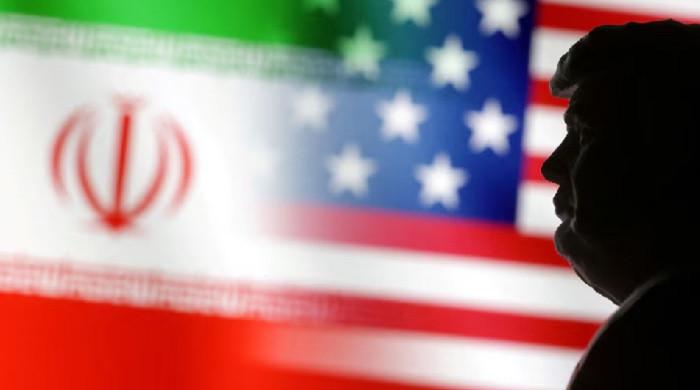
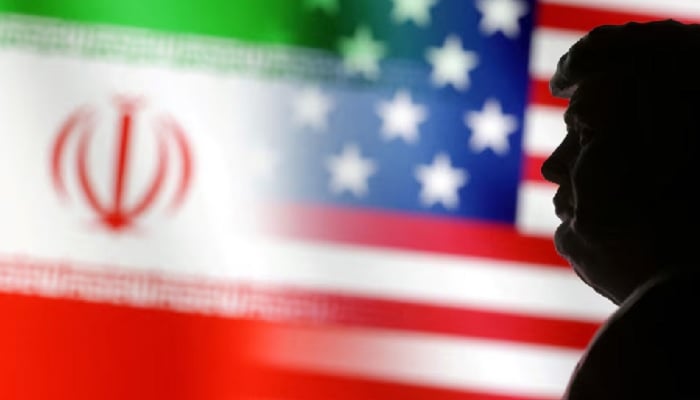
- US Navy buildup near Iran raises regional tensions.
- Iran leadership in Tehran wants sanctions lifted.
- Says it will show flexibility on uranium enrichment.
US President Donald Trump on Friday said Washington had held “very good talks” on Iran, after the two sides held an indirect dialogue in Oman that could avert an escalation of tensions.
“We likewise had very good talks on Iran, Iran looks like it wants to make a deal very badly,” Trump said to reporters on board Air Force One en route to his Mar-a-Lago resort in Florida for the weekend.
“We’re going to meet again early next week,” he added.
Asked how long he was willing to wait for a deal on Iran, Trump said, “Well, you have to get in position. We have plenty of time.”
Earlier, Iran’s top diplomat said that nuclear talks with the US mediated by Oman were off to a “good start” and set to continue, in remarks that could help allay concern that failure to reach a deal might nudge the Middle East closer to war.
But Foreign Minister Abbas Araqchi said after the talks in the Omani capital Muscat, which involved him, US special envoy Steve Witkoff and President Trump’s son-in-law Jared Kushner, that “any dialogue requires refraining from threats and pressure. (Tehran) only discusses its nuclear issue … We do not discuss any other issue with the US.”
While both sides have indicated readiness to revive diplomacy over Tehran’s long-running nuclear dispute with the West, Washington wanted to expand the talks to cover Iran’s ballistic missiles, support for armed groups around the region and “treatment of their own people,” US Secretary of State Marco Rubio said on Wednesday.
A regional diplomat briefed by Tehran on the talks told Reuters Iran insisted on its “right to enrich uranium” during the negotiations with the US, adding that Tehran’s missile capabilities were not raised in the discussions.
Iranian officials have repeatedly ruled out putting Iran’s missiles – one of the largest such arsenals in the Middle East – up for discussion, and have said Tehran wants recognition of its right to enrich uranium.
Trump ratcheted up the pressure on Iran on Friday with an executive order imposing a 25% tariff on imports from any country that “directly or indirectly” purchases goods from Iran, following through on a threat he made last month.
The White House has said the measure is intended to deter third countries from maintaining commercial ties with Iran, particularly in energy, metals and petrochemicals, sectors that remain key sources of revenue for the Iranian government.
Tehran open to discussing enrichment level: source
While Iran ruled out Washington’s demand for no enrichment on its soil, the diplomat who asked not to be named said Tehran showed openness to discussing the “level and purity” of enrichment or alternative arrangements, including a potential regional consortium.
In return, Iran had several demands, such as “efficient and immediate sanctions relief, including banking and oil, and the moving of US military assets away from Iran.”
For Washington, carrying out enrichment – a possible pathway to nuclear bombs – inside Iran is a red line. Tehran has long denied any intent to weaponise nuclear fuel production.
However, the diplomat said, Tehran believed the US negotiators “seemed to understand Iran’s stance on the enrichment.”
Araqchi earlier told Iran’s state TV that “It was a good start to the negotiations.”
“And there is an understanding on continuing the talks. Coordination on how to proceed will be decided in the capitals,” Araqchi said. “If this process continues, I think we will reach a good framework for an understanding.”
Talks were ‘very serious’, says Oman
Mediator Badr al-Busaidi, Oman’s foreign minister, said the talks had been “very serious,” with results to be considered carefully in Tehran and Washington. The goal was to reconvene in due course.
Despite the talks, the United States announced on Friday it was sanctioning 15 entities and 14 shadow-fleet vessels connected to illicit trade in Iranian petroleum, petroleum products and petrochemical products, the latest US economic measures targeting Tehran and trade with it.
Iran’s leadership remains deeply worried that Trump may carry out his threats to strike Iran after a US naval buildup in the seas in the region.
Last June, the US struck Iranian nuclear targets, joining in the final stages of a 12-day Israeli bombing campaign. Tehran has since said it has halted uranium enrichment activity.
The naval buildup, which Trump has called a massive “armada,” has followed a bloody government crackdown on nationwide protests in Iran last month, heightening tensions between Washington and Tehran.
Trump has said “bad things” will probably happen if a deal cannot be reached, increasing pressure on the Islamic Republic in a standoff that has led to mutual threats of air strikes.
Fears of conflict
World powers and regional states fear that a breakdown in the negotiations would ignite another conflict between the US and Iran that could spill over to the rest of the oil-producing region.
Iran has vowed a harsh response to any strike and has cautioned neighbouring Gulf Arab countries that host US bases that they could be in the firing line if they were involved in an attack.
In a show of defiance, Iranian state TV said hours before the talks that “one of the country’s most advanced long-range ballistic missiles, the Khorramshahr-4,” had been deployed at one of the Revolutionary Guard’s underground “missile cities.”
- Witness credibility looms large in the case.
- Two of three trial convictions have been overturned.
- Cocaine importation conspiracy among Maduro’s charges.
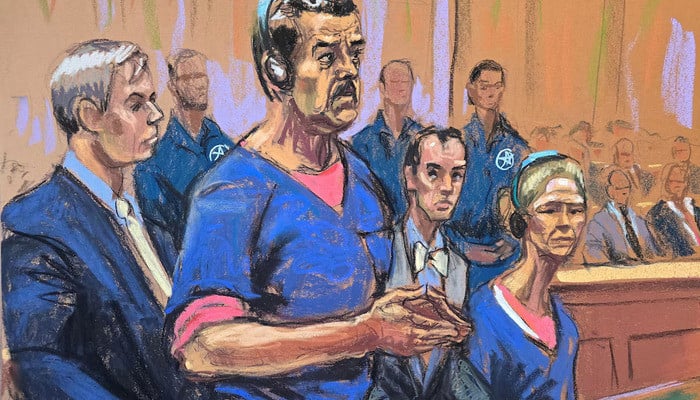
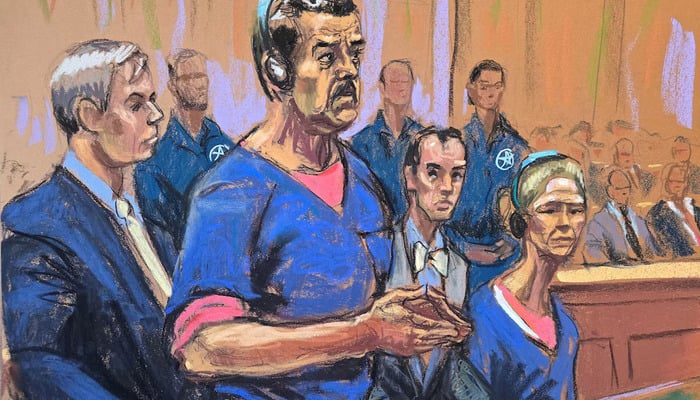
Ousted Venezuelan President Nicolás Maduro returns to a US court on Thursday on criminal charges including narcoterrorism, a statute that has rarely been tested at trial and has a limited record of success.
Maduro, 63, led Venezuela from 2013 through his capture in Caracas by US special forces on January 3. He pleaded not guilty on January 5 to all US charges against him.
The 2006 statute at issue, enacted to target drug trafficking tied to activities the United States considers terrorism, has produced just four trial convictions, a Reuters review of federal court records shows — and two were later overturned over issues stemming from witness credibility.
The mixed record highlights what could be a central challenge for prosecutors in the Maduro case: persuading jurors that evidence from cooperating insiders credibly establishes a knowing link between alleged drug crimes and terrorism.
“The lesson of these two cases is not that the narcoterrorism statute is unworkable,” said Alamdar Hamdani, a partner at law firm Bracewell and former US Attorney in Houston.
“It is that the statute’s most demanding element — proving the defendant’s knowledge of the terrorism nexus — requires a quality of evidence and a standard of prosecutorial diligence that leaves no room for institutional gaps, name-spelling errors, or uncritical acceptance of what your witnesses tell you,” he said.
Prosecutors have yet to disclose who will testify against Maduro. But one former Venezuelan general indicted alongside Maduro has told Reuters he is willing to cooperate.
Maduro accused of helping Colombian rebels
Congress created the narcoterrorism statute 20 years ago to target drug traffickers who finance activities the United States considers terrorism. Since then, 83 people, including Maduro, have been charged with violating it. Thirty-one pleaded guilty to narcoterrorism or lesser charges, eight are awaiting trial, and dozens are not in US custody, according to the review.
The conviction reversals do not affect Maduro’s case, and defendants in those cases faced additional charges that were not overturned. Maduro also faces three other counts, including cocaine importation conspiracy.
Maduro, a socialist, is accused of leading a conspiracy in which officials in his government helped move cocaine through Venezuela in collaboration with traffickers including the Revolutionary Armed Forces of Colombia (FARC), which the US labeled a terrorist organisation from 1997 to 2021. Maduro and his fellow indicted officials have always denied wrongdoing, saying the US charges are part of an imperialist conspiracy to harm Venezuela.
His lawyer, Barry Pollack, did not respond to requests for comment about the narcoterrorism law’s trial record or possible witnesses against Maduro.
A spokesman for the Manhattan US Attorney’s office declined to comment on the same subjects.
Law defines terrorism broadly
Narcoterrorism carries a 20-year mandatory minimum sentence, twice the minimum penalty for ordinary drug trafficking. Both can result in life imprisonment.
The narcoterrorism law defines terrorism as premeditated, politically motivated violence against non-combatants.
“If you take the legal definition of terrorism and terrorist activity, you can paint a pretty broad brush with the kind of activity we’re talking about,” said Shane Stansbury, a professor at Duke University School of Law and former federal prosecutor.
To convict Maduro, prosecutors must show that he knew the drug trafficking he allegedly facilitated resulted in a financial benefit for a group that engaged in activities the United States considered terrorism, even if he had other aims.
“It doesn’t have to be the motivation,” said Artie McConnell, a former federal prosecutor and current partner at law firm BakerHostetler.
In the first narcoterrorism trial in 2008, an Afghan man with alleged ties to the Taliban was convicted of helping a Drug Enforcement Administration informant buy opium and heroin. But in 2021, a judge threw out the narcoterrorism count after an appeals court ruled his lawyer failed to adequately challenge the only witness tying him to the Taliban.
In another case, a jury deadlocked in the 2011 trial of an accused Afghan trafficker. He was convicted at a second trial in 2012, but the narcoterrorism count was thrown out in 2015 after prosecutors acknowledged that a US government agency considered the cooperating witness who linked him to the Taliban a “fabricator.”
The 2015 narcoterrorism trial conviction of a Colombian man for trying to ship cocaine for the FARC and attempting to buy weapons for the group has been upheld.
A fourth narcoterrorism trial resulted in a guilty verdict earlier this week.
Case could rely on cooperating witnesses
Legal experts say the government’s case against Maduro could include testimony from two former Venezuelan generals indicted alongside him in 2020: Cliver Alcalá and Hugo Carvajal. Both have pleaded guilty to charges linked to their dealings with the FARC, but neither agreed to cooperate at the time of their pleas.
In a telephone interview from federal prison in Cumberland, Maryland, Alcalá said he was willing to cooperate. But he said prosecutors had previously insisted that he admit to involvement in drug trafficking, which he denies, as a condition for cooperation.
“I cannot, in order to reduce my sentence, declare myself to be a drug trafficker when I am not,” he said.
Alcalá retired from Venezuela’s military shortly after Maduro took office in 2013. He later became an outspoken critic of Maduro’s government.
Asked whether the charges against Maduro were true, Alcalá said he thought there was “some basis” and said he believed Maduro had ties to a drug trafficker jailed in Caracas. He did not offer specifics.
Alcalá, 64, is serving a nearly 22-year prison sentence after pleading guilty in 2023 to providing material support to the FARC. In court, he admitted supplying the group with weapons — which he says he did under orders from former Venezuelan President Hugo Chavez — but denied helping traffickers move cocaine.
Carvajal’s sentencing is scheduled for April 16. His lawyer declined to comment on whether he would cooperate with prosecutors.
- Bus overturned, sank nearly 30 feet into the river, say police.
- Officials fear more passengers may still be missing from river.
- Accidents claim hundreds of lives annually in Bangladesh.
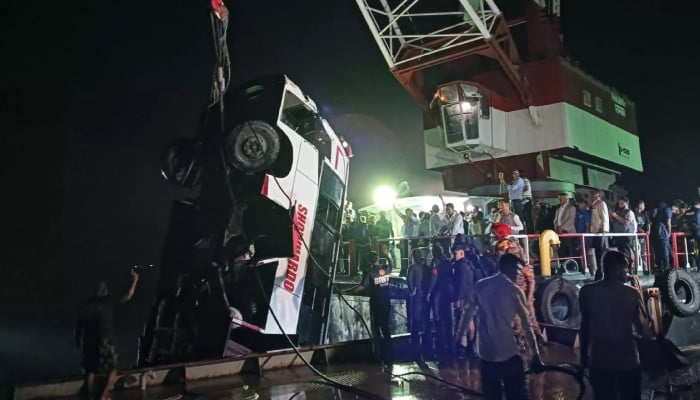
DHAKA: At least 24 people died after a passenger bus carrying around 40 passengers plunged into the Padma River while attempting to board a ferry in Bangladesh, officials said on Thursday.
The accident occurred on Wednesday when the bus lost control approaching a ferry at Daulatdia in Rajbari district, about 100 km (62 miles) from Dhaka.
The bus overturned and sank nearly 30 feet into the river, according to police, the Fire Service, and Civil Defence.
Rescuers recovered 22 bodies from inside the submerged bus, including six men, 11 women, and five children, Fire Service official Talha Bin Zasim said.
Twenty-four people have been confirmed dead so far, including two women who died after being rescued, he said.
Four fire service units and 10 divers were leading the search and rescue efforts, supported by the army, police, coast guard, and local authorities.
Officials fear more passengers may still be missing. Hundreds of people die each year in road and ferry accidents in Bangladesh.
“We do not intend to negotiate,” Araghchi told state TV. “We seek an end to the war on our own terms.”
US President Donald Trump is ready to “unleash hell” if Iran does not accept a deal to end the nearly four-week Middle East war, the White House warned Wednesday, but a defiant Tehran said it did not intend to negotiate.
The ramped-up rhetoric dashed hopes of any imminent de-escalation as violence on the ground showed no sign of abating, with Iran, Israel, Lebanon, Bahrain, Kuwait, Jordan and Saudi Arabia all coming under fire.
Trump insisted later Wednesday that Iran was taking part in peace talks, but Tehran is denying it because their negotiators fear being killed by their own side.
“They are negotiating, by the way, and they want to make a deal so badly,” Trump told a dinner for Republican members of Congress.
“But they’re afraid to say it, because they figure they’ll be killed by their own people,” he said. “They’re also afraid they’ll be killed by us.”
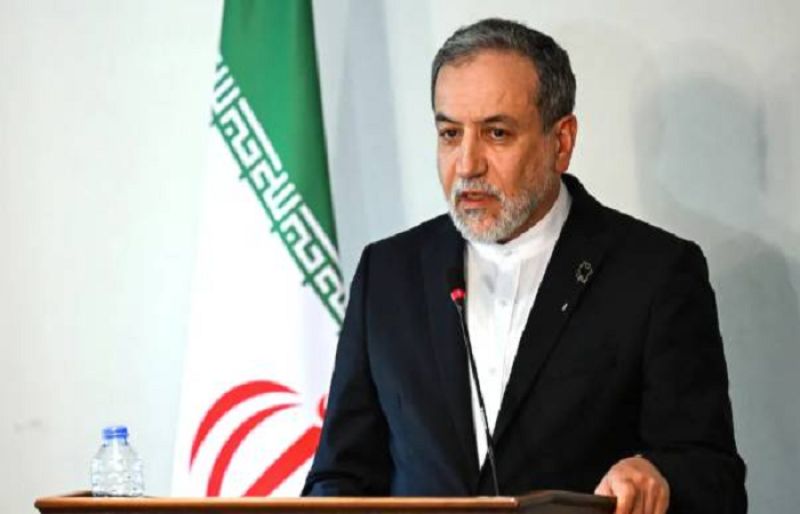
Iranian Foreign Minister Abbas Araghchi denied that Iran was negotiating with the United States, saying an exchange of messages through “friendly countries” did not equate to talks with Washington. “We do not intend to negotiate,” Araghchi told state TV. “We seek an end to the war on our own terms.”
In Pakistan, officials said Islamabad had conveyed to Tehran a 15-point American plan to stop the fighting that began on February 28.
Iran’ state-controlled Press TV cited an unidentified official as saying Tehran had “responded negatively” to the plan and the war would end only on Tehran’s terms, which include guarantees against future attacks.
– ‘Unleash hell’ –
White House Press Secretary Karoline Leavitt said talks had been “productive” but declined to say whom the United States was dealing with in Tehran following the assassination of supreme leader Ali Khamenei.
His son and successor Mojtaba Khamenei has not been seen in public.
“If Iran fails to accept the reality of the current moment… Trump will ensure they are hit harder than they have ever been hit before,” Leavitt said. “President Trump does not bluff and he is prepared to unleash hell.”
With thousands more US troops reportedly headed to the Middle East, Iran also threatened to open a new front by targeting Red Sea shipping should the United States launch a ground invasion.
Iran’s military said cruise missiles fired at the USS Abraham Lincoln carrier group had “forced it to change its position” and warned of “powerful strikes” when the fleet comes into range.
Admiral Brad Cooper, head of US Central Command, said the United States had hit two-thirds of Iran’s production facilities for missiles and drones, and drone and missile launch rates were down by 90 percent.
In a video on X, Cooper also estimated that 92 percent of the Iranian navy’s largest vessels had been damaged or destroyed.
“They’ve now lost the ability to meaningfully project naval power and influence around the region and around the world,” he said.
UN Secretary-General Antonio Guterres said the war was “out of control” and had “gone too far.”
– Iranian conditions –
According to The New York Times, the 15-point US plan touches on Iran’s contested nuclear and missile programmes as well as “maritime routes.”
Tehran has largely blocked the vital Strait of Hormuz oil route in retaliation for the US-Israeli attacks, pushing up global energy prices.
The Iranian official quoted by Press TV said Tehran had put forward its own five conditions for hostilities to end.
They include a robust mechanism guaranteeing that neither Israel nor the United States will resume the war, and compensation for war damages.
Iran’s conditions also include a cessation of hostilities on all regional fronts and against all “resistance groups,” a reference to the Tehran-backed Lebanese group Hezbollah that has been under attack from Israel.
Tehran also wants international recognition and guarantees of Iran’s rights to exercise its sovereignty over the Strait of Hormuz.
In the event of a US ground invasion, Iran would also block the Bab al-Mandeb Strait, which connects the Indian Ocean to the Red Sea and the Suez Canal, an unidentified military official told local media.
Iran supports and arms the Houthi rebel group in Yemen, which greatly reduced Red Sea traffic in October 2023 when it began attacking vessels in retaliation for Israel’s bombardment of Gaza.
– “Closed only to enemies’ –
While striking targets in Iran on Wednesday, Israel also kept up its campaign against Hezbollah in Lebanon, with planes pounding the southern suburbs of Beirut.
Israeli Prime Minister Benjamin Netanyahu said his forces were “expanding” a “buffer zone” in Lebanon, while Hezbollah chief Naim Qassem said negotiating with Israel under fire would amount to “surrender” for Lebanon.
Lebanon was pulled into the war when Hezbollah began firing rockets into Israel on March 2 to avenge the killing of Ayatollah Khamenei.
According to Lebanese authorities, more than 1,000 people have been killed and upwards of one million people displaced in over three weeks of Israeli strikes.
With the war sending energy prices soaring, fuelling fears of higher inflation and weaker global growth, markets remained focused on the Strait of Hormuz, through which one-fifth of the world’s oil usually passes.
Araghchi said the strait was “closed only to enemies,” adding that “There is no reason to allow the ships of our enemies and their allies to pass.”
Stock markets rallied and oil prices had tumbled on initial reports of potential negotiations, but on Wednesday the Brent crude benchmark crept back above $100 a barrel.
– US targets missile capacities –
The United States has hit two-thirds of Iran’s production facilities for missiles and drones, and a similar proportion of its naval production, a top officer said.
Admiral Brad Cooper, head of Central Command, also estimated that Iran’s drone and missile launch rates were down by 90 percent, and “we’ve also removed the regime’s ability to rebuild them.”
– Kuwait arrests six over Hezbollah ‘assassinations’ –
Kuwait arrested six people allegedly linked to the Iran-backed Hezbollah group in Lebanon who were planning “assassinations” in the Gulf state, the interior ministry said.
– ‘Enemies preparing to occupy’ Iran island –
Iran’s powerful parliament speaker warned of the possible invasion of an Iranian island with the support of an unnamed regional country.
“Based on some intelligence reports, Iran’s enemies are preparing to occupy one of the Iranian islands with support from one of the regional states,” Mohammad Bagher Ghalibaf posted on X.
– Gulf issues Iraq demand –
Several Gulf countries, as well as Jordan, demanded in a joint statement that Iraq act immediately to stop attacks from its territory by armed pro-Iran groups.
The statement was signed by Saudi Arabia, the United Arab Emirates, Qatar, Kuwait, Bahrain and Jordan.
– US rejects Iran talks rejection –
The United States and Iran are still engaged in peace talks, the White House said, despite Iranian state media saying Tehran had rejected Washington’s plan to end the war.
“Talks continue. They are productive,” Press Secretary Karoline Leavitt said when asked about the Iranian report, adding that there were “elements of truth” to media reports on the details of a 15-point US plan setting out demands on Tehran.
– Hormuz ‘toll booth’ legally risky –
Maritime trackers reported that a handful of vessels are still crossing daily through the Strait of Hormuz, which is guarded by Iran’s Revolutionary Guard Corps (IRGC), with most of them leaving the Gulf.
Shipping journal Lloyd’s List reported that the handful of vessels crossing daily through the strait were taking a new Iranian-approved route dubbed the “Tehran Toll Booth”.
At least one vetted vessel paid $2 million to use the corridor around Larak Island just off Iran’s coast, Lloyd’s reported.


Ukrainian apparel imports rise 6.39% amid sharp structural shift

India’s voluntary carbon market gains ground as net-zero goals drive ecosystem buildup – The Times of India

This Speaker I Tried From Soundboks Can Handle a Real Party

-

 Fashion1 week ago
Sales at US apparel, clothing accessories stores up 4% YoY in Jan 2026
-
 Tech1 week ago
Justice Department Says Anthropic Can’t Be Trusted With Warfighting Systems
-

 Entertainment1 week ago
Val Kilmer revived 1 year after death through AI
-

 Sports1 week ago
March Madness 2026 – How to watch in SA, start time, schedule, TV channel for NCAA championship basketball tournament
-
 Business1 week ago
Brits cashing in jewellery as gold price hits record high
-
 Business1 week ago
Stocks and pound rise as US rate call approaches
-
 Politics1 week ago
Iran strikes Tel Aviv with cluster-warhead missiles in retaliation of Larijani’s martyrdom
-

 Fashion1 week ago
Spain’s Inditex FY25 sales rise 3.2% to $46.28 bn amid strong demand