

Business
Pressure mounts on American Airlines CEO as carrier lags rivals


A snow removal machine is seen working while a Boeing 737 American Airlines passenger aircraft is parked at gate on the tarmac of LaGuardia airport in New York on January 25, 2026.
Charly Triballeau | Afp | Getty Images
American Airlines‘ promised turnaround is off to a rocky start this year.
Pilot and flight attendant unions have called CEO Robert Isom’s leadership into question as the airline’s performance has trailed its rivals by a wide margin, a trend that has translated to lower profit-sharing for American’s more than 130,000 employees. Adding to employee frustration, the airline struggled to recover from major winter storms in recent weeks and crews were left stranded — some without a place to sleep beside the airport.
Late Friday, the pilots’ union wrote to the airline’s board, seeking a meeting to discuss the carrier’s financial and operational challenges.
“Our airline is on an underperforming path and has failed to define an identity or a strategy to correct course,” the board of directors of the Allied Pilots Association wrote. The union called for “leaders who are willing, equipped, and empowered to get the house in order.”
Isom replied on Saturday that as board member and chief executive it is “most appropriate” to meet as soon as possible.
“The Board and I are aligned with you in the desire to make American the strongest airline possible in every respect,” he wrote.
American made $111 million last year, an amount eclipsed by profits from Delta Air Lines and United Airlines, which brought in $5 billion and more than $3.3 billion, respectively, even though American flew similar capacity in 2025.
“I know that it is a meager profit-sharing, a very small profit-sharing pool this year. Again, when you break even, that’s the kind of profit-sharing you have,” Isom told employees after releasing earnings results on Jan. 27, according to a recording of the event that was reviewed by CNBC. “I’m disappointed in that.”
‘2026 can’t just feel different’
American is trying to catch up to rivals with premium products that bring in higher fares, a bright spot in the industry as coach cabin revenue growth has been elusive. It has also worked to reverse the damage from a failed direct-to-traveler business-travel strategy, whose architect American ousted in May 2024.
2026 is crucial for the carrier.
The Fort Worth, Texas-based airline issued an upbeat outlook for the year on Jan. 27, and Isom told crews that he was optimistic about improvement this year. He also noted that many staff, like flight attendants, make more than their counterparts at United, where cabin crews and other employees are in contract negotiations.
Isom is leading what he has pitched as a major transformation of American. The strategy includes improving customer service, the network and revenue management.
This week, he took his message to about 6,000 leaders at a conference the airline held at Globe Life Field in Arlington, Texas.
“We’ve had conversations as a senior leadership team about how we can’t pass up any opportunity … how we need to hold ourselves accountable,” Isom said at the event, according to a transcript which was seen by CNBC. “It starts with us at the top, but it’s all of us here today and how you lead your teams. 2026 can’t just feel different. It has to be different.”
American issued its 2026 outlook as it was juggling the aftermath of a late January winter storm that walloped much of the U.S. with snow, ice and sleet and preparing for another storm that ended up hitting its major hub of Charlotte, North Carolina, while competitors dug out faster.
The financial results, coupled with the slow storm recovery, drew anger from both pilot and flight attendant union leaders, which together represent about 40,000 crew members.
This week, two American Airlines flight operations leaders met with the union to discuss recent problems, and the union told members, “Our pilots will not accept platitudes, empty words, and the absence of decisive action any longer.”
Association of Professional Flight Attendants President Julie Hedrick said on Jan. 27 that Isom, who became CEO in 2022, “is missing the human factor” and that “many of us have been here for a very long time, and we don’t see an ending that puts us in a better place.”
Isom acknowledged the trouble American’s crew members faced during the late January storm that paralyzed a large swath of the United States and called the weather “probably the most impactful” during his decades-long tenure at the airline.
Robert Isom, chief executive officer of American Airlines Group Inc., speaks during a Bloomberg Television interview in New York, US, on Wednesday, Dec. 10, 2025.
Christian Monterrosa | Bloomberg | Getty Images
Tale of two Texas airlines
American had an especially difficult 2025, which started with the collision of an Army Black Hawk helicopter into one of the carrier’s regional jets that was arriving at Washington, D.C.’s Ronald Reagan Washington National Airport, killing all 67 people on both flights. The airline and its rivals were also hit by the U.S. government shutdown late last year.
“We’re off to a fast start based on the booking trends we’ve observed in January, all-time records for the first three weeks of the year,” Isom told analysts on the Jan. 27 earnings call.
But investors also want to the airline to prove its progress.
American’s stock is roughly flat this year. Its competitor, 20 miles away in Dallas, Southwest Airlines, is also trying to remake itself, and its stock is up more than 30% in 2026. Shares of United and Delta are up more than 3% and more than 8%, respectively, for the year.
Southwest’s forecast that it could quadruple earnings this year has had investors in a bullish frenzy. That carrier recently sealed the biggest transformation in its nearly 55 years of flying (to some travelers’ chagrin): assigning seats for the first time, adding its first-ever bag fees, and rolling out basic economy tickets and other changes. Investors’ confidence boosted Southwest’s stock to a nearly four-year high last month after it reported results.
All U.S. carriers are investing heavily in higher-end travel over standard coach, and even Southwest is considering opening its first airport lounge, its CEO told CNBC last year.
American is likewise revamping its wide-body planes with larger, single business-class cabins, putting in a three-class cabin on new Airbus narrow-bodies and expanding its airport lounges. The airline has also refreshed its food and beverage options, including offering Lavazza coffee and Champagne Bollinger. For its 100th anniversary this spring, it’s also adding caviar and beef Wellington for long-haul premium cabins.
Isom has said he expects half of American’s revenue to come from “premium offerings” toward the end of the decade.
Fight over Chicago
Several planes wait in line to taxi down a runway after a winter snow storm affected the area at O’Hare International airport on Nov. 30, 2025 in Chicago, Illinois.
Jim Vondruska | Getty Images
One major battle for American is at Chicago O’Hare International Airport, where United CEO Scott Kirby, whom American fired in 2016, has vowed to keep his old employer at bay.
Both carriers are ramping up their schedules there next summer. Deutsche Bank estimated in a note Monday that United generates about $10 billion in revenue at O’Hare and that American generates more than $5 billion.
Around the time American reported earnings, United posted a digital billboard in Chicago that read “More on time, less canceled flights. Aadvantage, United,” using the same spelling as American’s AAdvantage loyalty program. Bankrupt Spirit Airlines is also seeking to transfer two gates at Chicago O’Hare to United for $30 million, which would give United more ground at the airport.
But from Chicago to Charlotte, questions still remain for American.
“It’s unclear if the current strategy will close the margin gap to its peers,” Melius Research airline analyst Conor Cunningham said about American. “It will take a lot of time to execute. You can’t just turn premium revenue on.”
Cunningham added, “It took Delta over a decade to cultivate a premium image,” pointing to the U.S. profit leaders’ transformation.






Two ads promoting British beef and milk have been banned after television presenter and environmental campaigner Chris Packham complained that they misled consumers about the products’ carbon footprints.
Both ads for the Agriculture and Horticulture Development Board’s (AHDB) Let’s Eat Balanced campaign used the carbon footprint of British beef and milk to promote the products, firstly stating: “British beef not only tastes great, but has a carbon footprint that’s half the global average*.”
The asterisk linked to text that stated: “Full lifecycle emissions of CO2 eq (carbon dioxide equivalent) per kg of beef.”
The ad for milk stated: “British milk not only tastes good, but is also produced to world-class standards, and has a carbon footprint a third lower than the global average.”
Packham complained to the Advertising Standards Authority (ASA) that the ads, and specifically the carbon footprint claims, were misleading as they did not reflect the full environmental impact of British meat and dairy.
The AHDB said the ads’ mention of carbon emissions would be understood in relation to the environmental impact of beef and milk that occurred between the “cradle-to-retail” stages.
But the ASA said the average consumer “being reasonably well-informed, observant and circumspect” would understand the claims to apply beyond the retail stage and include actions such as cooking and wastage.
The ASA said: “While we acknowledged the potential difficulties in producing post-retail emissions data, the claims in the ads suggested those emissions were included and we therefore expected the evidence provided to also include them.
“We therefore concluded that the evidence presented was insufficient to support the full life-cycle claims in the ads, which was how the average consumer was likely to interpret them.
“We reminded AHDB that environmental claims should be based on the full life cycle unless the ad stated otherwise.”
AHDB’s director of communications and market development, Will Jackson, said: “Let’s Eat Balanced is doing what it was designed to do, providing clear, factual, evidence-led information about British food, nutrition and farming standards.
“Since the investigation began, we have conducted independent consumer research which found that the majority of respondents interpreted these adverts as relating to the production phase only, from farm to retail.
“This research provides important insight into consumer understanding and supports our belief that consumers were not misled by the information we shared in these two specific adverts.”

BENGALURU: India’s Gen Z workforce is embracing what experts describe as “portfolio careers” – balancing multiple professional identities and income streams simultaneously. New research from LinkedIn shows that 75% of Gen Z entrepreneurs in India now manage multiple income streams, significantly higher than the 62% among Gen X entrepreneurs. The findings point to a growing preference among younger professionals for flexibility, autonomy and diversified sources of income. “We’re also seeing the rise of the ‘portfolio era’, with more professionals creating multiple income streams and redefining what a career can look like. This shift is making entrepreneurship more accessible than ever before,” said LinkedIn India country manager Kumaresh Pattabiraman.Rather than depending on a single full-time role, many professionals are simultaneously building businesses, freelancing, consulting, creating online content and monetising specialised skills through digital platforms. The trend comes amid a broader rise in entrepreneurial activity in India. LinkedIn recorded a 104% year-on-year increase in members adding “Founder” to their profiles – the highest growth among all global markets.AI is also emerging as a major enabler of this shift. The report found that 85% of Gen Z entrepreneurs consider AI and digital tools important to their business operations.

Sam Altman said Elon Musk tried many times for total control of OpenAI, which he’s now suing.
Source link


Will LeBron James retire after current season?

South Korea reviews phased support for Strait of Hormuz security efforts

New Jersey Gov. Mikie Sherrill announces another NJ Transit World Cup ticket cut days after first reduction

-

 Tech1 week ago
DHS Demanded Google Surrender Data on Canadian’s Activity, Location Over Anti-ICE Posts
-
 Business1 week ago
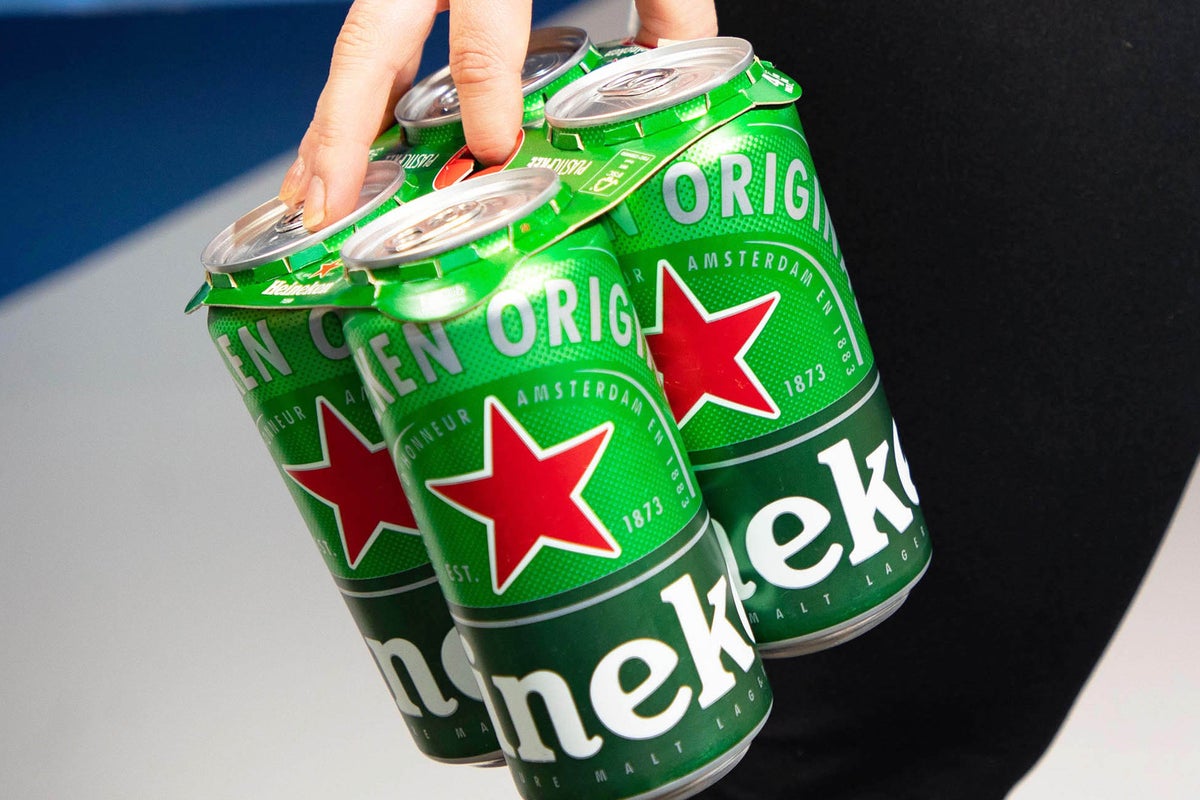
Heineken plans huge investment in hundreds of UK pubs ahead of World Cup
-

 Tech5 days ago
A new frontier: Identity stack evolves for agentic systems | Computer Weekly
-

 Tech4 days ago
‘Orbs,’ ‘Saucers,’ and ‘Flashes’ on the Moon: Pentagon Drops New UFO Files
-

 Sports5 days ago
Shaheen Afridi achieves landmark feat during opening Test against Bangladesh
-
 Business1 week ago
India among most resilient large EMs, better placed for future global shocks; policy reforms & strong buffers help: Moody’s – The Times of India
-

 Tech5 days ago
What Microsoft Executives Really Thought About OpenAI in 2018
-

 Fashion5 days ago
New orders in German manufacturing up 5% MoM in Mar 2026: Destatis