

Business
Privatisation of state enterprises | The Express Tribune

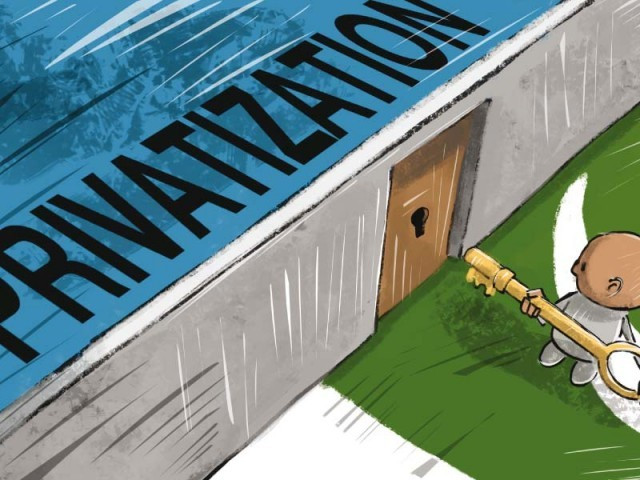
Answer to dilemma is sure-fire sale of bankrupt SOEs in unchaotic and transparent manner
BRUSSELS:
Rule number one is that the role of government is to govern and not run a business. State-owned enterprises (SOEs) have been a huge drain on Pakistan’s fiscal solvency since decades. Staggering losses over the years and the accumulated liabilities absorbed by the national exchequer (read: taxpayers) through subsidies, guarantees and debt have suffocated Pakistan.
Total SOEs’ liabilities have climbed to Rs9.6 trillion, roughly half of the annual federal budget. Unfunded pension obligations alone stand at Rs2 trillion. Out of the Rs13 trillion collected in federal taxes, about Rs2.1 trillion was redirected towards SOEs in 2025 just to keep them afloat. With mounting losses and negative equity of these white elephants, a comprehensive plan for wholesale privatisation of SOEs needs to be developed and, more importantly, implemented on an urgent basis. Yet the current government, like those before it, keep procrastinating the urgent need to privatise these entities.
So, the question to ask is why? The most obvious answer is “retaining control” not for economic rationalisation but for political control. It is the political leadership and state bureaucracy that “throw a monkey wrench” into any plans for privatisation.
Their combined objective is not to increase their economic value but to use them as tools to maintain a patronage system to reward loyalists to SOE boards that exist in name but lack authority, a management that has never run a private business, a bloated employment with excess wages and benefits.
The subordination of economic efficiency to their self-interests inevitably means an incentive to “drag their feet” and/or backtrack on reforms. Bureaucratic inertia and political reluctance, coupled with resistance from vested interests, continues to stall meaningful change, adding to the burden of taxpayers.
The annual report on the federal SOEs (2024-2025) by the Central Monitoring Unit (CMU) in the Ministry of Finance highlights the deep-rooted problems of the public sector to the poor leadership that is unable to run it as a viable commercial enterprise. The CMU recommendations – stronger boards, timely audits, better disclosure and performance-based accountability – are not new.
The CMU fails to understand the nature of business. SOEs cannot function as a sustainable business, any effort to restructure with half measures or cosmetic changes will only give the same results and be an arduous exercise in futility. Private sector businesses with their boards, management and employees are beholden and answerable to their shareholders. Financial health of these companies are annually scrutinised to improve performance and increase economic value.
SOEs on the other hand are beholden and answerable to politicians and bureaucrats, who care less about financial health because it’s not their money on the line, it’s the taxpayers’ money and it is they who “bear the brunt” of these massive losses.
So, what’s the answer to this dilemma? Nothing but a sure-fire sale of these bankrupt SOEs must be done urgently in an unchaotic and transparent manner. Questionable opaque methods of transferring the assets of struggling or bankrupt SOEs to private entities, foreign or domestic, must be avoided. The exit of these SOEs will create opportunities for the private sector to eclipse the state sector as the most important engine of growth, productivity, and job creation in finance, energy, utilities, transport, manufacturing and mining.
Revenues from the privatisation sales will go a long way to help Pakistan’s fiscal quandary, but even more. So the removal of these businesses from Pakistan’s ownership ledgers eases the headache for the government to oversee their operations so that it can focus on governance and utilise a significant portion of public resources on development, education and healthcare rather than keeping these loss-making state entities alive.
The writer is a philanthropist and an economist based in Belgium





A hallmark of President Trump’s second term has been his penchant for negotiating economic deals with countries that pledge to invest trillions of dollars in the United States
“It’s now pouring in from all parts of the world,” Mr. Trump said during a speech last fall in which he boasted of nearly $20 trillion of foreign investment.
The meetings this week between Mr. Trump and China’s leader, Xi Jinping, in Beijing are expected to include talks over purchases of American farm products and planes and the possibility of expanding access for American companies into China’s vast consumer market.
There has also been speculation that Mr. Trump and his advisers are seeking a major investment from China. But such a pledge could be complicated by deep distrust in the United States toward Chinese firms, which many workers blame for the hollowing out of American manufacturing.
Treasury Secretary Scott Bessent acknowledged the challenge in an interview on CNBC on Thursday, explaining that the United States and China were working to develop an investment board that would determine what sectors were acceptable for Chinese investment. That would essentially provide China with guidance on how to invest in the United States without its transactions being blocked by the Committee on Foreign Investment, an interagency group that reviews foreign investment and is led by Mr. Bessent.
“Look, there are plenty of things that the Chinese could invest in in the U.S.,” said Mr. Bessent, who is in Beijing with Mr. Trump.
Chinese investment in the United States has declined sharply in recent years amid tougher investment screening standards nationally and at the state level.
That sentiment could ultimately clash with Mr. Trump’s transactional instincts and his desire to return home with a big-ticket win.
“If Trump were to be committed to a major investment deal with China, there’s still a challenge of implementation,” said Kyle Jaros, an expert on U.S.-China ties at the University of Notre Dame. “It would take real follow-through to overcome a lot of the political and regulatory barriers that are in place right now.”
According to a report published last month by the research firm Rhodium Group, less than $3 billion of Chinese investment in the United States was announced in 2025. That was the lowest on record, with investment peaking at around $45 billion in 2016.
The United States has imposed tight restrictions on Chinese investment out of national security concerns, making it difficult for Chinese firms to build factories near military facilities. Some states also have enacted restrictions on Chinese purchases of real estate and farmland.
China’s clean energy technology, such as electric vehicles and batteries, has also faced challenges in the United States because of political backlash. There was a surge of Chinese investment in those sectors after clean energy and tax legislation was passed under the Biden administration in 2022, but according to Rhodium, more than half of those investments have been canceled, paused or delayed.
A $2.4 billion electric vehicle battery factory that the Chinese company Gotion was building in Michigan was canceled last year after the community there protested and mounted legal challenges to stop the project.
Other types of Chinese investment have also stirred controversy. That includes the recent purchase by Nongfu Spring, a Chinese bottled water company, of a warehouse in New Hampshire that it wants to turn into a bottling facility. The purchase was reviewed last year by the state’s attorney general.
After the inquiry found that there was no wrongdoing associated with the transaction, Gov. Kelly Ayotte of New Hampshire issued executive orders to block China, Russia and Iran from getting access to data or purchasing land or property in the state. “Foreign adversaries like China should not be doing business in New Hampshire,” said Ms. Ayotte, a Republican.
There continues to be deep skepticism within the U.S. automobile industry about competition from China. Last month, a group of American steel associations sent a letter to top Trump administration officials urging them to keep Chinese car manufacturers out of the United States.
“As representatives of our nation’s manufacturing sector, we urge you to ensure American competitiveness by not surrendering access to the U.S. auto market to the Chinese Communist Party,” they wrote. “Additionally, allowing Chinese companies and Chinese autos into the U.S. would create consequential, unacceptable national security risks.”
Agriculture also remains a contentious issue. The chairman of the House select committee on China, Representative John Moolenaar, a Republican from Michigan, introduced new legislation this month that would ban China from acquiring U.S. farmland.
“Food security is national security, and we cannot allow foreign adversaries like China to buy up American farmland near our most sensitive military and critical infrastructure sites,” Mr. Moolenaar said.
The bipartisan bill would create a requirement for the federal government to review Chinese deals involving ports and telecommunications infrastructure. It would also apply to purchases made by investors from Russia, Iran and North Korea
Michael Pillsbury, a China scholar who has served as an outside adviser to the Trump administration, said that the president’s advisers were concerned about Chinese investments in sensitive sectors such as semiconductors, artificial intelligence, biotechnology, aerospace and critical minerals. It has been a challenge, he said, to come up with a “white list” of sectors that could be considered safe.
“The red lines have moved back and forth as the nature of technology has changed,” Mr. Pillsbury said.
He added that while Mr. Trump is eager to announce a $1 trillion Chinese investment pledge, he is mindful not to incite political backlash.
“I think there’s been an effort by the administration to avoid getting into a fight with the China hawks,” Mr. Pillsbury added.
Ahead of Mr. Trump’s trip to China, a White House official downplayed the idea that the administration was seeking to create a new $1 trillion Chinese investment program. The White House continues to be focused on pushing China to increase its purchases of American farm goods, which it boycotted for much of last year when trade tensions flared.
Despite the anticipation of a Chinese investment pledge, the details and follow-through will be important.
While Mr. Trump has said that foreign investments have topped $20 trillion, according to the White House’s own investment tracker, U.S. and foreign investment pledges made during Mr. Trump’s second term total $10.6 trillion. Foreign leaders appear to have learned that they can win favor with Mr. Trump by promising whopping investment pledges that they might not fulfill.
“The devil is in the details,” said Philip Ludvigson, a partner in King & Spalding who specializes in national security risks and foreign investment, “about not only where the investment goes but also whether it happens at all.”

Ed Cullen says his mum had an unattended cremation which saved money but was “devastating” for him.
Source link
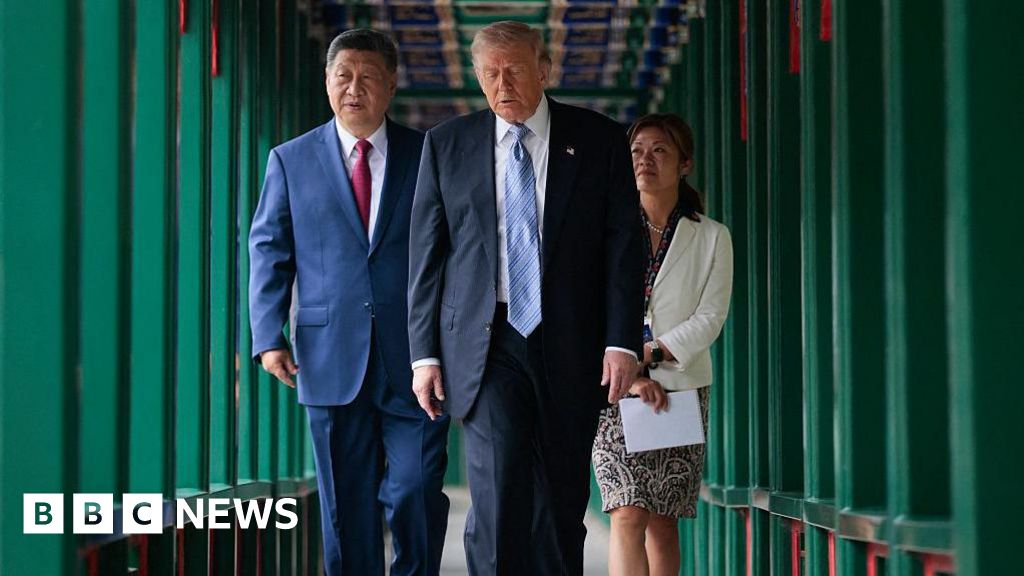
There were plenty of choreographed ceremonies but no sweeping trade breakthrough as Trump met Xi in Beijing.
Source link


Bangladesh RMG sector to adopt blockchain-based transparency & DPP

Indian magnate Adani agrees multi-million-dollar penalty in US court case

Australian wool prices slip as fine merino demand weakens

-

 Tech7 days ago
A new frontier: Identity stack evolves for agentic systems | Computer Weekly
-

 Tech7 days ago
‘Orbs,’ ‘Saucers,’ and ‘Flashes’ on the Moon: Pentagon Drops New UFO Files
-

 Fashion7 days ago
New orders in German manufacturing up 5% MoM in Mar 2026: Destatis
-

 Tech7 days ago
Nick Bostrom Has a Plan for Humanity’s ‘Big Retirement’
-

 Tech1 week ago
What Microsoft Executives Really Thought About OpenAI in 2018
-

 Sports7 days ago
Shaheen Afridi achieves landmark feat during opening Test against Bangladesh
-

 Fashion7 days ago
US’ Carter’s taps retail veteran Sharon Price John as new CEO
-

 Entertainment7 days ago
Rihanna embraces new tattoo given by children