

Business
PSX surges over 3,000 points in early trading | The Express Tribune

KARACHI:
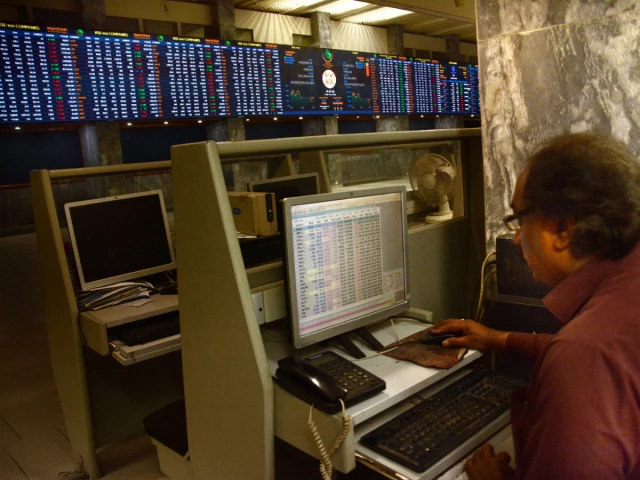
The Pakistan Stock Exchange (PSX) witnessed strong bullish activity on Thursday, with the benchmark KSE-100 Index climbing over 3,000 points in mid-day trading.
As of the latest update, the KSE-100 Index stood at 168,082.21, reflecting a robust gain of 3,250.79 points or 1.97% from Wednesday’s closing of 164,831.42. The index touched an intraday high of 168,128.35 and a low of 166,638.56, showcasing sustained buying interest throughout the morning session.
Market breadth remained positive with heavy trading volumes. Volumes reached 157.98 million shares. Investors appeared confident, driving selective buying across key sectors including banking, oil & gas, and power stocks.
Read: PSX soars 1,935 points as ME fears subside
Analysts attributed the rally to improving investor sentiment amid expectations of positive economic indicators, and renewed foreign interest in Pakistani equities. The market opened on a strong note and maintained upward momentum, with the index consistently trading above the 167,000 level after crossing it early in the session.
Market participants are closely watching upcoming corporate earnings and macroeconomic data releases that could further influence the trajectory. Brokerages remain cautiously optimistic, noting that a decisive close above the 168,000 psychological mark could open doors for further gains in the coming sessions.
The rally comes after a period of consolidation, signaling renewed confidence in Pakistan’s capital market








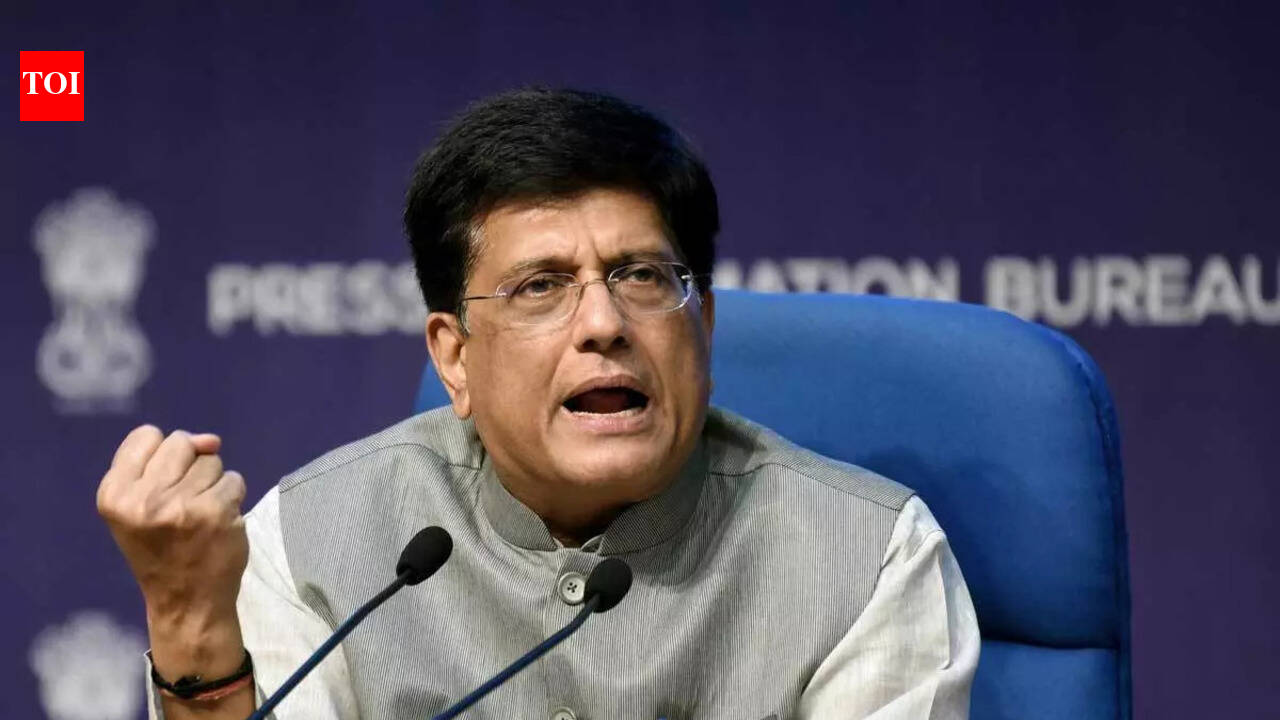
Union commerce and industry minister Piyush Goyal on Thursday addressed concerns around the rupee’s decline, the widening current account deficit (CAD), and shared updates on the progress of the proposed US-India trade deal.Goyal said the Centre was actively considering several measures to contain further pressure on the CAD, while stressing that different arms of the government were working in coordination to navigate challenging global economic conditions.“We are monitoring the situation. All the various arms of government are working as a team. Several steps are under consideration. The situation is globally quite challenging, but we have the confidence and the courage of conviction that we’ll come out winners even in this challenging time…” Goyal said.According to RBI data released on March 2, India’s current account deficit widened to $13.2 billion, or 1.3% of GDP, in the December quarter, compared with $11.3 billion in the same period a year earlier. The increase was mainly attributed to a wider trade deficit following lower exports to the US.At the same time, the CAD for the April-December 2025 period narrowed to $30.1 billion, or 1% of GDP, from $36.6 billion, or 1.3% of GDP, during the corresponding period of the previous year.The current account deficit reflects the gap between a country’s imports and exports of goods and services, along with other external payments and receipts.When asked whether the government was considering steps to curb non-essential imports, Goyal said there were currently no such plans. However, he said citizens had been encouraged to reduce spending on products dependent on imports.“No such plans of that sort right now, but we have of course made an appeal to all the citizens of India to be more conscious about their spending on products which are import dependent and it’s just very natural that every Indian who trusts Prime Minister Modi has taken cognisance of that and is helping the country in every smaller big way with their own actions. I’m really proud of every Indian who has taken Prime Minister Modi’s appeal to heart and is contributing to nationbuilding...” he said.Goyal also pointed to continued investment commitments from the United States, particularly in the technology sector.“US commitment upwards $60 billion in last six months looking at Amazon, Google data centre investment pledge; US-India truly working as natural partners, complement each other,” he said.On the timeline for discussions around the trade deal announced earlier, the minister said the process would continue as scheduled.“When we launched itself, if you recall, we had said that the first round of talks will happen in the second half of 2026. We will have it as scheduled.”Earlier, a senior United States official said that Washington and New Delhi were making progress towards a finalised trade deal as the two sides held fresh negotiations in the American capital.“The Trump administration and India continue to have positive and productive discussions towards a finalised trade deal,” the official told ANI in response to a question on the current status of the ongoing trade talks between the two countries in Washington, DC.Indian delegates have been arriving in Washington for the latest round of negotiations. Another official familiar with the discussions, speaking on condition of anonymity, said the two sides were close to wrapping up an agreement, with most substantive issues already resolved.
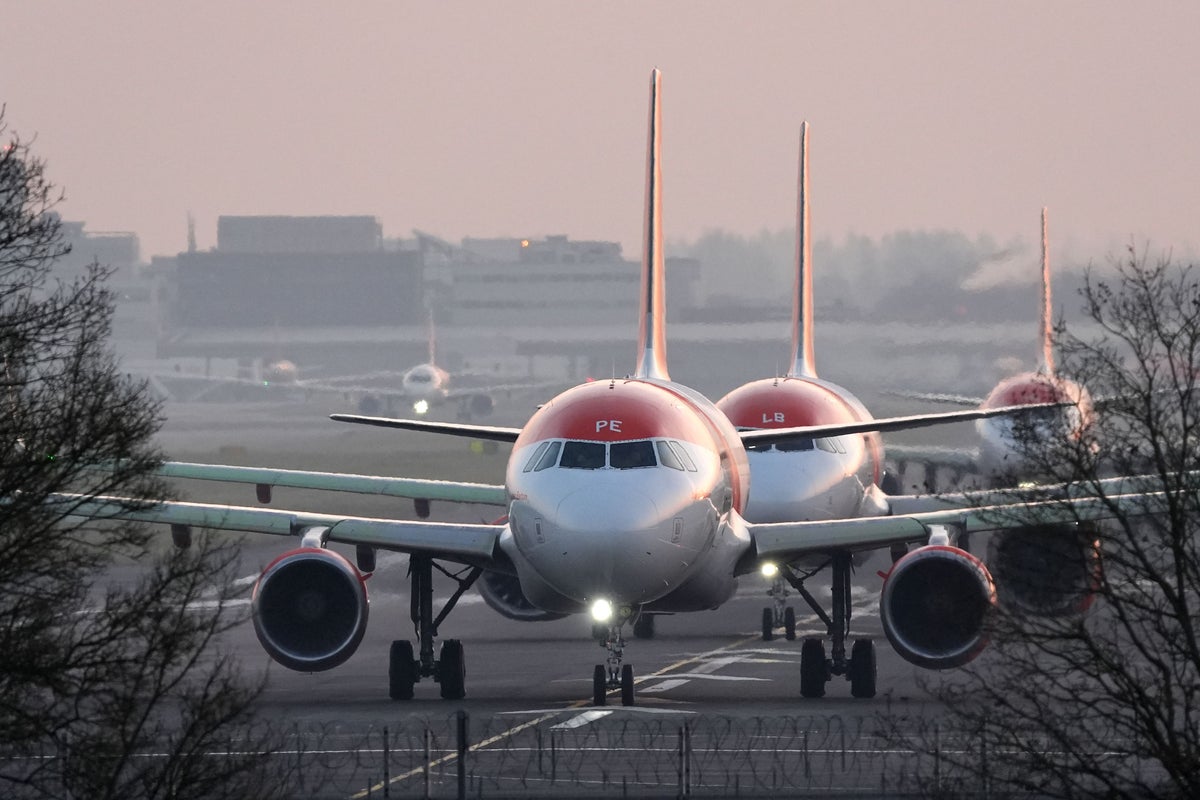
EasyJet’s boss said the airline is “not seeing any disruption to fuel supply” as he urged passengers to “book with confidence”.
Chief executive Kenton Jarvis made the comments amid concerns that UK holidaymakers could see their flights cancelled because of fuel shortages caused by the Iran oil crisis.
Some airlines have cut schedules in recent weeks amid a spike in jet fuel prices, attributed to Iran’s stranglehold on tankers passing through the Strait of Hormuz.
But the impact on flights to and from the UK has so far been limited.
EasyJet said it intends to “operate the full summer schedule on sale” and it has “normal supply visibility” for the next four weeks.
Mr Jarvis commented: “EasyJet is not seeing any disruption to fuel supply.
“We continue to operate normally and our customers should book with confidence, taking advantage of our great value fares.”
Asked about the issue in an interview on BBC Radio 4’s Today programme, he said: “We stay in very close contact with our fuel suppliers, airports, governments, and they are equally raising no issues looking forward.
“What is true is obviously there’s a lot less oil coming from the Gulf region, but fuel suppliers have successfully diversified, with production increased in Norway, in West Africa, in the Americas, and refining capacity for jet fuel has also increased substantially outside of the Gulf region.”
He added: “I would absolutely say don’t panic about it. At easyJet, we fully intend to fly the summer schedule that we have on sale, and we also have a ‘book with confidence’ promise that we will not put fuel surcharges on, so once you’ve booked, that will be the price you pay.”
EasyJet reported that bookings for summer flights are lower than the same point last year because of uncertainty caused by the conflict in the Middle East.
The airline said it has sold 58% of its seats for the six months to the end of September, down two percentage points from a year ago.
But short-notice bookings in the month of departure are up year-on-year.
The group reported a half-year pre-tax loss of £552 million, which is in line with the range it gave in a trading update in April.
That is compared with a loss of £401 million a year ago.
EasyJet warned that its finances up to the end of September will be impacted by the war, which is causing higher fuel costs and “near-term uncertainty around customer demand”.
The group said last month the conflict cost it about £25 million in higher jet fuel prices in March.
Mr Jarvis said: “Despite conflict in the Middle East creating near-term uncertainty, easyJet is well placed to manage the current environment, supported by one of the strongest investment-grade balance sheets in European aviation.”

Customers shop at a Walmart store on May 13, 2026 in Chicago, Illinois.
Scott Olson | Getty Images
With all eyes on the health of the U.S. consumer, Walmart‘s fiscal first-quarter earnings report Thursday morning may offer Wall Street some of the best clues yet.
The big box retailer is expected to report another quarter of growing sales and profits, but its commentary on consumer spending – if it’s seeing any pressure and where – could offer investors a view into the strength of the U.S. economy.
Here’s what analysts expect Walmart to report for the quarter, according to consensus estimates from LSEG:
- Earnings per share: 66 cents per share
- Revenue: $175 billion
In the three months since Walmart last reported earnings, there’s a new conflict in the Middle East, gas prices have soared and consumer sentiment has plummeted, falling to a fresh record low in May. The flurry of bad news comes on top of years of sticky inflation, higher interest rates and a global trade war that’s pushed prices even higher.
Walmart has long been among the best positioned to weather just about any economic storm, but given the wide consumer segments it caters to, it’s uniquely positioned to see whether and where cracks in the economy are forming.
Long a value play among lower-income shoppers, Walmart in recent years has been winning over more high-income consumers, which has helped fuel its growth and insulate it from economic shocks that have hit lower earners more acutely.
When reporting earnings on Thursday morning, investors will want to know: Are higher-income shoppers still as resilient as they’ve been, or are higher gas prices having an impact? How much more pressure is the lower income shopper facing?
If consumers start pulling back, leading to a greater concentration of lower-margin groceries over higher-margin discretionary goods, Walmart’s additional revenue streams are expected to help offset those pressures. Its advertising and marketplace businesses are both high-margin revenue streams that have helped Walmart keep prices low and maintain profits.
So far this earnings season, major companies have largely said consumer spending has held up in the face of higher gas prices. But that resilience also came amid higher tax returns, which Target said on Wednesday may have fueled some of the growth it saw during the first quarter.
“We believe this year’s higher tax refunds were a source of upside to consumer spending in Q1, and that benefit will be fading over the rest of the year,” finance chief Jim Lee said on a call with analysts. “While consumers have proven to be resilient so far, sentiment has been declining recently. And we’re keeping a close eye on their spending behavior.”
Investors will want to know if Walmart has seen a similar trend and what that could mean for the duration of the fiscal year and the economy at large.

Rupee, CAD under watch, US trade talks on track: Goyal says India will ‘come out winner’

Prince William receives unexpected request as royal faces expensive bill

EU Commission clears $1.5-bn German aid to produce renewable hydrogen

-

 Entertainment1 week ago
Conan O’Brien hat tricks as Oscar host
-

 Fashion1 week ago
Italy’s Zegna Group’s Q1 growth boosted by strong organic performance
-
 Business1 week ago
Pound wobbles and bonds suffer as Starmer battles on
-

 Fashion1 week ago
US T&A exports decline 10% to $5 bn on softer regional demand
-

 Sports1 week ago
2025-26 NBA Title Odds: Thunder, Spurs Favored; Knicks Rising
-

 Entertainment5 days ago
Where Pete Davidson, Elsie Hewitt stand after breakup: Details revealed
-
 Business1 week ago
Tui issues update on summer jet fuel shortage fears
-
 Business7 days ago
Jersey Election 2026: Cost of living concern in St Helier Central