

Tech
Qatar Airways claims Starlink in-flight connectivity benchmark | Computer Weekly


In the latest airline connectivity win for the SpaceX-owned connectivity provider, and hot on the heels of arch-rival Emirates making a similar announcement, Qatar Airways has accelerated its Starlink installation.
Qatar Airways currently flies to more than 170 destinations worldwide, connecting through its Doha hub, Hamad International Airport. It was also the first airline in the Middle East to be certified to the highest level of IATA’s Environmental Assessment (IEnvA) programme, based on recognised environmental management system principles (such as ISO 14001).
Qatar Airways claims to be the operator of the largest number of Starlink-equipped widebody aircraft and the only carrier in the MENA region currently offering Starlink in-flight connectivity. It has described the expansion as “reaffirming its position as the world’s leading airline for innovation, reliability and unmatched passenger experience.”
The airline sees the deal as a major milestone in its Starlink roll-out, equipping over 100 widebody aircraft with the fastest Wi-Fi in the sky.
It also regards the move as an achievement representing one of the most rapid and ambitious Starlink installation programmes in the aviation industry, that furthermore is being implemented ahead of the initially expected schedule to bring the service to passengers even sooner.
Since its launch of the world’s first Starlink-equipped Boeing 777 in October 2024, meaning it has more than half of its widebody fleet now Starlink-connected, Qatar Airways has operated over 30,000 flights across six continents with gate-to-gate connectivity. This includes key destinations across Africa, Asia, Australia, Europe and the Americas.
To date, Qatar Airways has completed the roll-out programme for its Boeing 777 fleet, and is rapidly finalising the Starlink roll-out across its Airbus A350 aircraft, also set to be completed ahead of schedule.
Qatar Airways believes its new connectivity service is “game-changing”, and transforming the onboard experience for both business and leisure travellers by enabling streaming, gaming and working at 35,000 feet.
“Qatar Airways continues to lead the industry by setting new benchmarks with action, and not just intent,” said Qatar Airways group chief executive officer Mohammed Al-Meer. “We have expedited our Starlink roll-out, which is now advancing ahead of schedule as Qatar Airways brings the best travel experience to our passengers as an immediate priority, not a future ambition.
“Equipping over 100 widebody aircraft since the launch of our first Starlink-equipped flight in October 2024 reflects this commitment,” he said. “We now operate up to 200 daily Starlink-connected flights to key destinations to ensure our passengers stay seamlessly connected with speeds faster than many home Wi-Fi services. Whether working, streaming movies and sports, or staying in touch with friends and family, staying connected at 35,000 feet has never been more convenient.”
The increased deployment of Starlink connectivity comes after the airline announced it had rolled out SITA’s next-generation software-defined wide-area network to keep global outstations connected, secure and resilient.
This installation was made to address the dual challenges that modern airlines face through rising passenger volumes and increasingly complex digital operations, resulting in legacy networks being stretched to unprecedented levels of tolerance.

Looking for a wallet-friendly gaming headset with big feature support? The Corsair Void Wireless V2 is currently marked down to just $80 at both Best Buy and Amazon, a healthy $50 discount from its usual retail price. This lightweight yet capable gaming headset was already a great buy before the discount, with wide compatibility and a comfortable design built for long grinds.
It’s one of the more comfortable gaming headsets I’ve had the opportunity to review, thanks to a combination of its super lightweight build and breathable mesh ear cups, and it even fits my oversized noggin. Because there’s no active noise canceling, it has a much more open and natural sound profile, which is nice for anyone who needs to remain aware of their surroundings while deep in a round of Arc Raiders.
One of the big selling points is Dolby Atmos, a spatial audio implementation that’s fairly uncommon at this price point, and basically unheard of at the marked down price. It’s only supported in a handful of games, but even without it the headset has great spatial audio support that I found particularly good for games like Satisfactory, where it’s more of an immersive addition than a mechanical benefit.
Where a lot of headsets will lock you down to one or two consoles, the Corsair Void Wireless V2 is happy to work with a wide variety of systems, thanks to both Bluetooth and low-latency 2.4 GHz via the USB dongle. That means you can game on PC, PlayStation 4 and PlayStation 5, Nintendo Switch, and even iOS/Android for mobile gaming. With a claimed battery life of up to 70 hours in ideal conditions, you won’t need to worry about charging often, although I’m not sure the mesh ear cups would be great for a long flight.
While the Corsair Void Wireless V2 is featured in our best gaming headsets roundup, other headsets undercut it at the same price point. With the discount, I’m very happy to recommend the Corsair over some of the other picks, particularly if you have a bigger head or prefer a less isolating experience than what some of the other headsets provide.
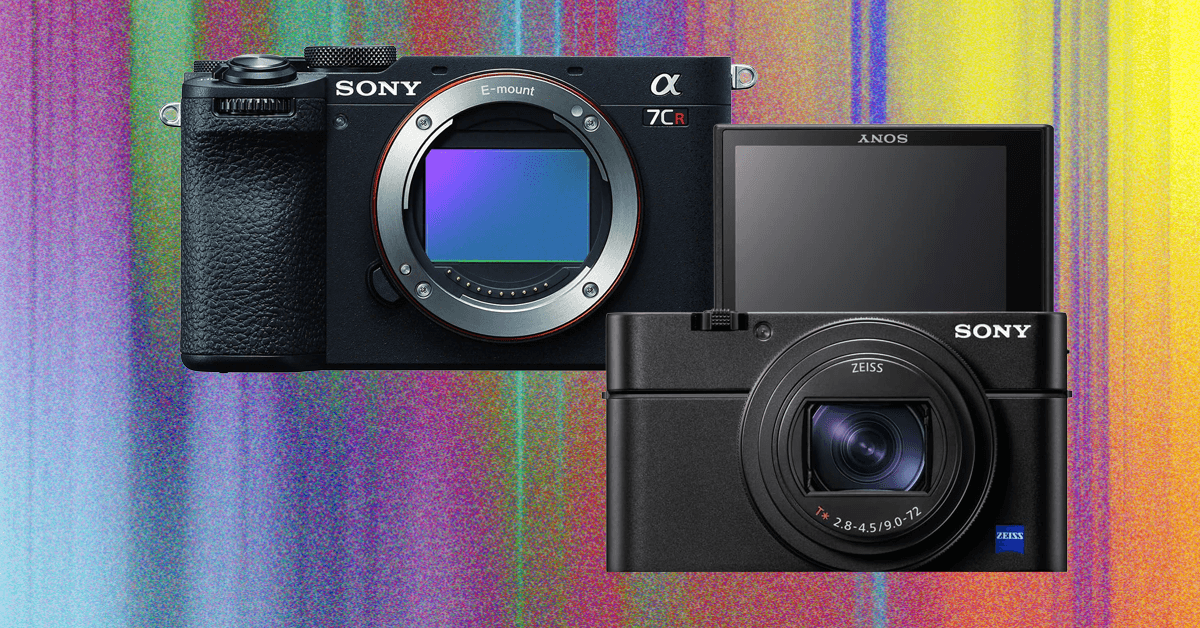
If I were buying a camera today, this is the body I would get, travel or otherwise. The A7C R is one of the smallest full-frame, interchangeable-lens cameras on the market. This is why it’s our top pick for travelers in our guide to the Best Mirrorless Cameras. The 61-MP sensor offers amazing detail and very good dynamic range (14.7 EV). The super fast autofocus system is among the best you’ll find in mirrorless camera, and there’s great subject tracking as well, making it perfect for shooting fast-moving scenes on the go.
While Sony’s R series cameras are mainly for high resolution still images, the video specs here are solid enough for the casual video user, with support for 4K/60 fps video in full-frame mode (1.2X crop) or oversampled 4K/30 fps video. Both support 10-bit 4:2 color depth, various Log formats, and even 16-bit RAW output to an external recorder.
My main gripe about the A7C R is the same as it was in my initial review. The viewfinder is cramped and low-resolution (2.36 million dots). It’s not a deal breaker for me, but it’s something to keep in mind and good reason to rent a camera before you invest.
The big question with this camera is, which lens do you pair it with for travel? There’s a compelling argument to be made for the Sony FE 24-105-mm f/4 G ($1,398), which gives you everything from wide to portrait with a little bit of extra reach as well. Another great option if you like primes is the Sony 40-mm f2.5 G ($798), which makes for a compact kit, and 40-mm is a surprisingly great focal length for travel in my experience.
★ Alternative: At $2,198, Sony’s A7C II (note, no R) is a bit cheaper. It uses Sony’s smaller 33-MP sensor but is otherwise very close in size and capabilities, with considerably more video chops than the A7C R. If you want to make videos as well as stills, the A7C II is a better choice.

Midway through a decade that is coming to be defined by the runaway acceleration of technological change, the threat of ransomware attacks seems to be dropping down the agenda in boardrooms around the world, with C-suite executives more concerned about growing risks arising from artificial intelligence (AI) vulnerabilities, cyber-enabled fraud and phishing attacks, disruption to supply chains, and exploitation of software vulnerabilities.
This is according to the fifth annual World Economic Forum (WEF) Global cybersecurity outlook report, based on a survey of 804 participants from 92 countries, including 316 chief information security officers (CISOs), 105 CEOs and 123 other C-suite executives such as chief risk or technology officers, conducted between August and September 2025, as well as workshop discussions and short polls conducted around the forum’s Global Future Councils and Cybersecurity meeting.
A total of 87% of these respondents believed risks from AI increased in the past year, compared with 13% who were neutral on the subject. Approximately 77% saw risks from fraud and phishing on the rise; 66% talked about supply chain disruption; and 58% identified vulnerability exploitation as a growing threat.
However, when it came to ransomware, just 54% saw rising risk levels, compared with 39% who expressed a neutral opinion, while the remainder of the respondents, approximately 7%, said the risk from ransomware actually decreased in 2025.
“Cyber security risk in 2026 is accelerating, fuelled by advances in AI, deepening geopolitical fragmentation and the complexity of supply chains,” wrote WEF managing director Jeremy Jurgens in the report’s preamble.
“These shifts are compounded by the enduring sovereignty dilemma and widespread cyber inequity, two factors that expose systemic vulnerabilities. The result is a threat environment where the speed and scale of attacks are testing the limits of traditional defences.”
AI risk factors
Digging deeper into some of the risk factors arising from AI, the C-suite said that data leaks, followed by advancing adversarial capabilities, were the most pressing concerns, followed by the technical security of AI systems, increasingly complex governance, legal risks around intellectual property and liability, and software supply chain and code development concerns.
Notably, the top two concerns swapped places in the 2026 report compared with last year – with 34% most concerned about data exposure this year compared with 22% in 2025, while the percentage of those most concerned about adversarial capabilities fell from 47% last year to 29% this year.
This likely reflects a changing, potentially maturing, attitude to AI risk, and the WEF said it was looking to a “turning point” in the AI risk landscape this year.
It said that even though the AI arms race between defenders and attackers shows no signs of slowing, attention is pivoting from “offensive innovation” towards less noisy – but arguably more dangerous – factors.
Some of the other data points in the report also appear to bear this out, with C-suite executives doubling down on structured processes and governance models to better manage AI.
Quoted in the report, Josephine Teo, Singapore’s minister for digital development and information and minister-in-charge of the country’s Cyber Security Agency and Smart Nation Group, said: “Developments in AI are reshaping multiple domains, including cyber security. Implemented well, these technologies can assist and support human operators in detecting, defending and responding to cyber threats.
“However, they can also pose serious risks such as data leaks, cyber attacks and online harms if they malfunction, or are misused.”
Teo urged a more forward-looking, practical and collaborative approach to the safe development and use of rapidly evolving tech such as AI.
“The risks transcend borders, and the challenge is to maximise AI’s benefits, including to strengthen our cyber resilience, while minimising its risks,” she said.
Ransomware still a live threat
However, despite the headline risks detailed in the WEF’s report, the ransomware threat has not gone away – as demonstrated by many of the most well-documented cyber attacks to have taken place in 2025, most of which were still ultimately driven by extortion.
Indeed, among those who identified as CISOs, ransomware remained the leading risk concern. While CEOs concern themselves more with broader business impacts of cyber crime, CISOs are understandably consumed by the operational disruption a successful ransomware attack can cause.
This may go some way to explaining the elevated concerns over cyber fraud revealed by the WEF’s data.
A total of 77% of respondents said they had seen an increase in cyber-enabled fraud and phishing, and 72% revealed that either they themselves or someone in their professional or personal networks had been affected by it – the most common forms of attack reported were phishing, payment fraud and identity theft.

Brooks Koepka returns to PGA Tour weeks after LIV Golf departure

Snag a Feature-Packed Gaming Headset for Under $100

Did fans miss signs? Real Story behind Kristy, Desmond Scott divorce after 14 years of marriage

-

 Politics5 days ago
UK says provided assistance in US-led tanker seizure
-

 Entertainment1 week ago
Minnesota Governor Tim Walz to drop out of 2026 race, official confirmation expected soon
-

 Entertainment5 days ago
Does new US food pyramid put too much steak on your plate?
-

 Sports1 week ago
VAR review: Why was Wirtz onside in Premier League, offside in Europe?
-

 Entertainment5 days ago
Why did Nick Reiner’s lawyer Alan Jackson withdraw from case?
-
 Business1 week ago
8th Pay Commission: From Policy Review, Cabinet Approval To Implementation –Key Stages Explained
-
 Business5 days ago
Trump moves to ban home purchases by institutional investors
-

 Sports1 week ago
FACI invites applications for 2026 chess development project | The Express Tribune