

Business
Rachel Reeves says she is looking at tax rises ahead of Budget

Paul SeddonPolitical reporter ,
Joshua NevettPolitical reporter and
Henry ZeffmanChief political correspondent
 BBC
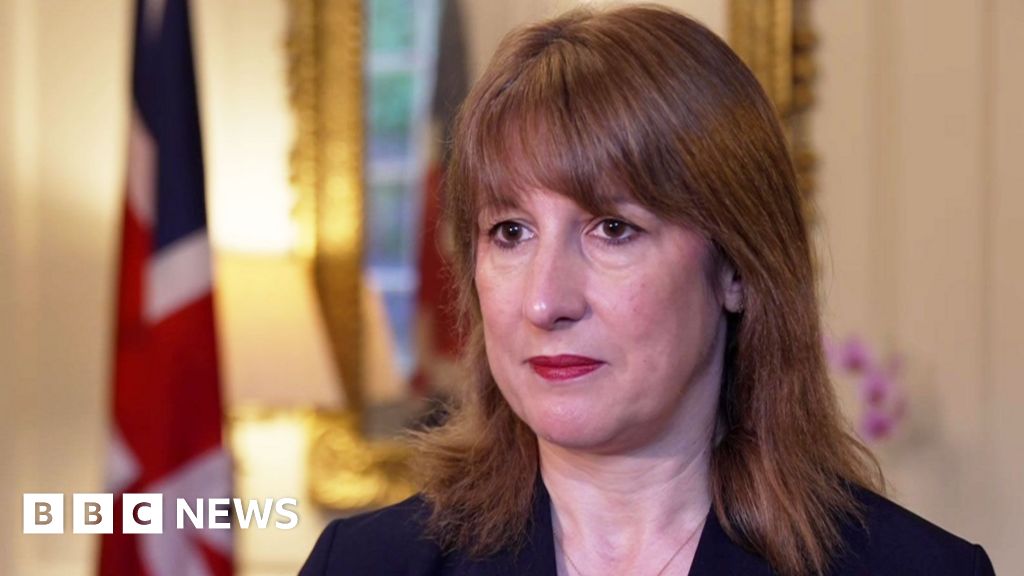
BBCRachel Reeves has said she is looking at “further measures on tax” ahead of next month’s Budget, in the clearest sign yet that tax hikes are on the way.
The chancellor also said she was considering further measures on public spending, in a bid to put the UK’s finances on a firmer footing.
Speaking to broadcasters ahead of an international finance summit in the US, she added that she would “continue to prioritise economic and fiscal stability”.
The chancellor is widely expected to raise taxes at the Budget on 26 November, after gloomy economic forecasts and a series of U-turns on welfare cuts made it harder for her to meet her own tax and spending rules.
Reeves announced tax rises worth £40bn a year at her first Budget last November, including hikes to payroll taxes paid by employers, and insisted she would not have to repeat the move in subsequent years.
But the chancellor is now facing the prospect of another repair job to the public finances, after rises to borrowing costs since then and expected downgrades to the productivity of the UK economy.
Some analysts have estimated Reeves will have to raise taxes or cut spending by around £20bn to meet her “non negotiable” financial rules.
These rules mean her plans must be projected to get government debt falling as a share of national income by 2029-30, and day-to-day government costs must be paid for by tax income rather than borrowing.
Speaking to broadcasters in Washington DC ahead of the the International Monetary Fund (IMF) annual meeting, the chancellor said: “I’ve always been very clear that we will continue to prioritise economic and fiscal stability in the UK.”
Asked whether she would have to raise taxes, she replied: “As we get the forecast, and as we develop our plans, of course we are looking at further measures on tax and spending, to make sure that the public finances always add up.”
‘Severe’ Brexit impact
In an earlier interview with Sky News, Reeves said austerity policies and former Prime Minister Liz Truss’s mini-budget had damaged the UK economy.
She also sought to blame Brexit, adding that the economic effects of the UK’s exit from the EU had been “severe and long-lasting”.
She cited the government’s attempts to strike food regulation and youth visa deals with the EU as moves that were “undoing some of that damage”.
Reeves and her Treasury ministers have so far been tight-lipped on which taxes could potentially go up.
The chancellor has not ruled out continuing to freeze income tax thresholds beyond the 2028 date fixed by the last government, allowing more people to be dragged into higher bands as their wages rise over time.
Reports have also suggested she is looking at property taxes, including making more landlords pay National Insurance on rental income.
There has also been speculation that betting companies could face higher taxes, with the chancellor recently saying she thought “there is a case for gambling firms paying more”.
In her speech to Labour conference last month, Reeves pledged to keep “taxes, inflation and interest rates as low as possible” – but has reduced her options by promising at the last election not to hike the biggest revenue-raising taxes.
Labour promised in its 2024 manifesto not to raise income tax rates, VAT, a sales tax, and corporation tax, which is paid by companies on their profits.
The party also promised not to raise National Insurance – prompting a row last autumn when it announced the rise in the contributions paid by employers.
‘Tax doom loop’
Reeves had been widely expected to hike taxes at the Budget, but her comments in Washington were also notable for explicitly raising the prospect that tax rises could be accompanied by cuts to public spending.
However, many Labour MPs believe that spending cuts in most areas would be politically unviable after the failed attempts at welfare cuts earlier this year, with a welfare overhaul put on ice pending a ministerial review.
The day-to-day budgets of government departments were only recently set for the next three years at June’s spending review, although the government could promise to cut spending in four or five years.
The Conservatives opened up a clear dividing line on the issue at their conference last week, pledging to slash public spending by £47bn a year if they win the next election through cuts to welfare, the civil service and foreign aid.
On Monday, the International Monetary Fund (IMF) said the UK was set to be the second-fastest-growing of the world’s most advanced economies this year.
But the IMF also predicted the UK will face the highest rate of inflation among G7 nations both this year and next, driven by rising energy and utility bills.
Shadow chancellor Sir Mel Stride said the government needed to get a grip on public spending, rather than raise taxes again.
He said: “Be in no doubt, this tax doom loop is down to the Chancellor’s economic mismanagement.
“Under Rachel Reeves we have seen inflation double, debt balloon, borrowing costs at a 27-year high, and taxes up – with more pain on the way in the autumn.”


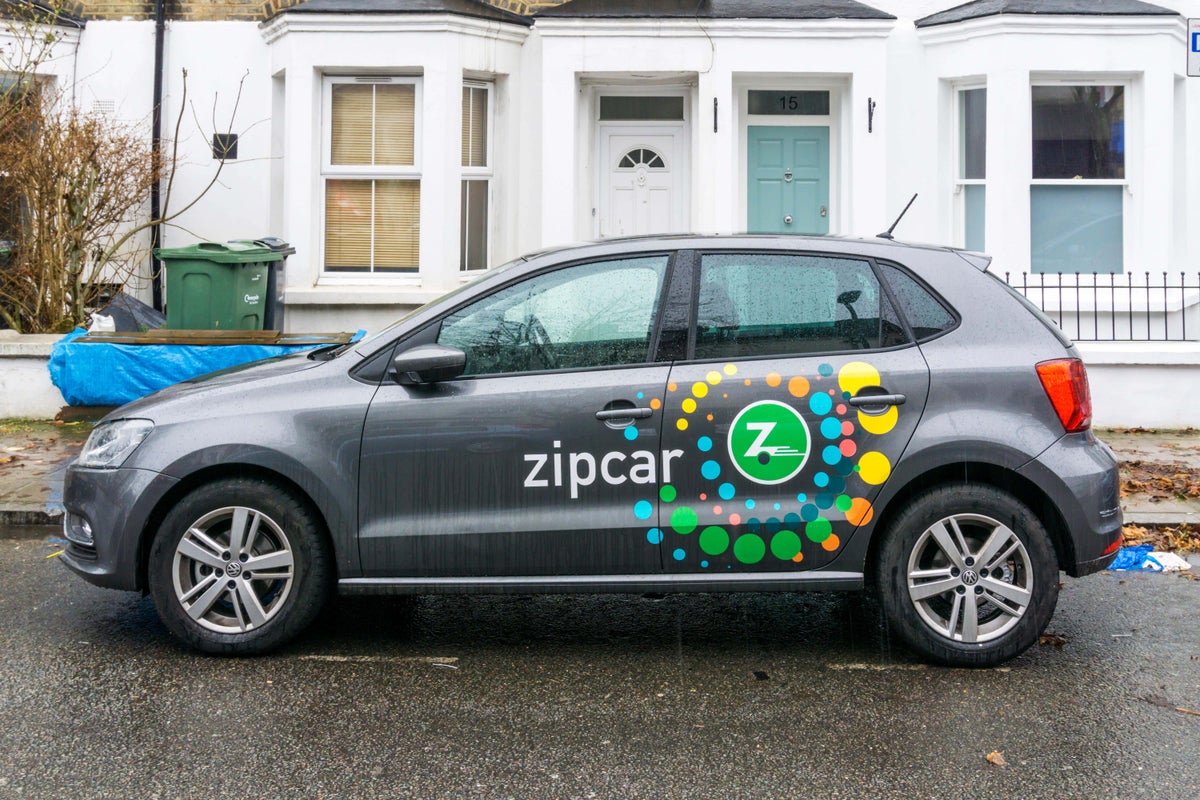
Car-sharing firm Zipcar has confirmed it is stopping operations in the UK after launching a consultation late last year.
The move will hit the company’s roughly 650,000 drivers across the country.
On December 1, the US-based company told customers in the UK that it planned to suspend new bookings temporarily at the turn of the year.
The business, which had 71 UK employees at the end of 2024, launched a formal consultation with staff as a result.
On Friday, in a fresh email to customers, the business said it “can now confirm that Zipcar will cease operating in the UK”.
The company added: “In accordance with clause 7.5 of the member terms, please take this as your written notice that we will formally close your account in 30 days’ time.
“It’s not possible to make any new bookings with Zipcar UK at this time, but your account will remain open until February 16.”
It added that customers will be entitled to a pro-rated refund for any remaining periods on current plans or subscriptions, from the start of 2026.
Zipcar said this will be done automatically and will not require any action from users.
Accounts showed that the van and car hire firm saw losses deepen to £5.7 million in 2024 after a decrease in customer trips.
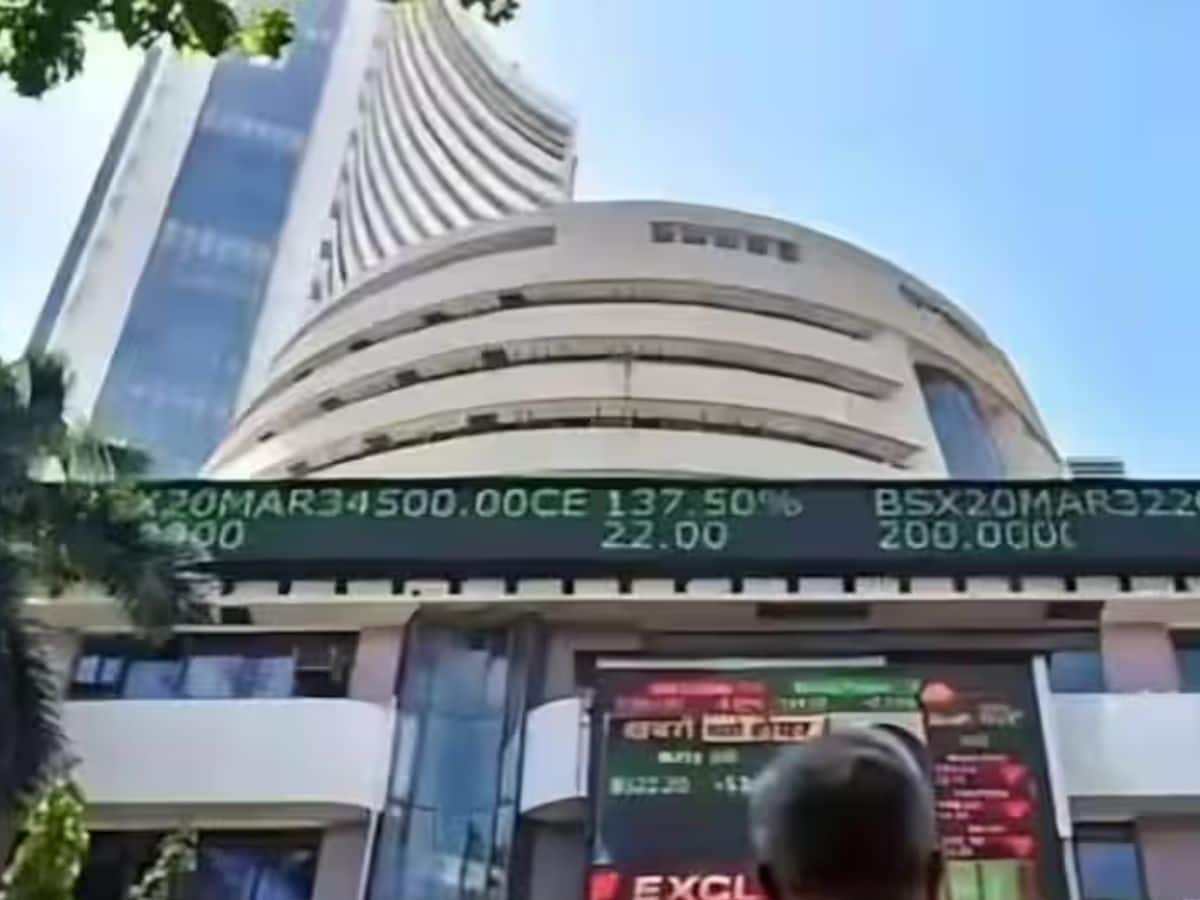
New Delhi: Good news for investors and market watchers! Even though February 1 falls on a Sunday this year, the Indian stock markets will remain open for trading on Budget Day. Both the BSE and NSE announced on January 16 that trading will take place as per normal market hours on February 1 for Budget 2026. This special arrangement ensures that investors can react to Budget announcements in real time, without waiting for the next trading session.
The NSE clarified the special trading arrangement in a circular, stating, “On account of the presentation of the Union Budget, members are requested to note that Exchange shall be conducting live trading session on February 01, 2026, as per the standard market timings (9:15 am-3:30 pm),” said NSE in a circular.
Union Budget 2026 to be presented on February 1 at 11 am
The Union Budget for 2026 will be presented at 11 am on Sunday, February 1, the Lok Sabha Speaker confirmed on January 12. In recent years, February 1 has become the fixed date for the annual Budget presentation, a trend that continued with the 2025 Budget as well. The upcoming Budget will also be a significant milestone for Finance Minister Nirmala Sitharaman, as it will be her ninth consecutive Union Budget, placing her among finance ministers with the longest uninterrupted Budget tenures.
Trading details for Budget Day explained
While most core market segments will remain open during regular trading hours on Budget Day, some services will stay shut. The BSE has clarified that the T+0 settlement session and the auction session meant for settlement defaults will not be operational. At the same time, the NSE confirmed that trading in capital markets and derivatives will continue as usual.
Stock market holiday list remains the same
The stock market holiday calendar for 2026 remains unchanged, with Indian exchanges observing 16 public holidays apart from weekends. The next scheduled market closure this month will be on January 26. In the first half of the year, markets will remain shut on key occasions such as Holi (March 3), Ram Navami (March 26), Mahavir Jayanti (March 31) and Good Friday (April 3). Trading will also be suspended on Ambedkar Jayanti (April 14), Maharashtra Day (May 1) and Bakri Id (May 28).
In the second half of the year, markets will close on Muharram (June 26), Ganesh Chaturthi (September 14), Gandhi Jayanti (October 2), Dussehra (October 20), Diwali Balipratipada (November 10) and Guru Nanak Jayanti (November 24). Christmas, on December 25, will be the final market holiday of 2026.
Last Updated:
Reliance Industries Q3 FY26 Financial Results | Earnings remained resilient during the December quarter despite pressure in upstream oil & gas exploration and production business.



Reliance Industries Q3 Results.
Reliance Industries Ltd reported a resilient performance in the fiscal third quarter, with consolidated revenue rising 10 percent from a year earlier to Rs 2.94 lakh crore, led by growth in its digital services, oil-to-chemicals (O2C) and retail businesses.
Net profit (pre minority) for the fiscal third quarter rose 1.6 percent from a year earlier to Rs 22,290 crore, while profit before tax increased 3.7 percent to Rs 29,697 crore.
Consolidated EBITDA rose 6.1 percent to Rs 50,932 crore, supported by earnings growth in the digital services and O2C segments, helping offset weakness in the upstream oil and gas business.
“Reliance’s consolidated performance in 3Q FY26 reflects consistent financial delivery and operational resilience across businesses,” said Mukesh Ambani, Chairman and Managing Director, Reliance Industries Ltd, in a statement on Friday.
The O2C business benefited from a sharp increase in transportation fuel cracks, which rose 62-106 percent from a year earlier during the third quarter. This improvement was partly offset by lower downstream chemical margins and higher feedstock freight rates. Overall, O2C EBITDA rose 15 percent from a year earlier to Rs 16,507 crore, helped by higher volumes and a continued ramp-up in fuel retail operations.
The Jio-bp fuel retailing business maintained its growth momentum, with fuel volumes rising 24 percent, supported by strong growth in gasoline and high-speed diesel sales. The retail network expanded further, with Jio-bp operating 2,125 outlets at the end of December, a 14 percent increase from a year earlier.
“Robust growth in O2C business was led by significantly higher fuel margins with favorable demand-supply dynamics, along with operational flexibility. I am happy to highlight the strong growth in our fuel retailing business, with continuing expansion of the Jio-bp network,” Ambani added.
The digital services business delivered strong growth, with revenue rising 12.7 percent to Rs 43,683 crore. EBITDA from the segment grew 16.4 percent YoY to Rs 19,303 crore, aided by accelerated subscriber additions and a 170-basis-point expansion in margins.
Reliance Jio’s subscriber base increased to 515.3 million, with its 5G user base crossing 250 million during the quarter. Total home connects crossed 25 million, while JioAirFiber became the first fixed wireless access service globally to surpass 10 million subscribers, ending the quarter with 11.5 million users. Average revenue per user (ARPU) rose 5.1 percent from a year earlier to Rs 213.7.
“This quarter, Jio expanded its subscriber base further, through attractive propositions enabled by its comprehensive, indigenous technology stack tailored for Indian markets. The business delivered a robust financial performance with 16.4% growth in EBITDA,” said Ambani.
JioStar continued to report strong operational performance, maintaining leadership across key platforms and genres.
In contrast, the oil and gas business weighed on overall performance, affected by lower production from the KGD6 block due to natural decline in the reservoir and weaker price realisations, along with higher operating costs related to periodic maintenance activity. EBITDA declined 13 percent from a year earlier to Rs 4,857 crore. Revenue from the segment fell 8.4 percent to Rs 5,833 crore.
The retail business posted revenue of Rs 97,605 crore, an increase of 8.1 percent from a year earlier. Growth, however, was impacted by the distribution of festive demand between the September and December quarters, the demerger of Reliance Consumer Products Ltd, and GST rate rationalisation. Despite these, retail EBITDA rose to Rs 6,915 crore. During the quarter, Reliance Retail operated 19,979 stores, with a total operational area of 78.1 million sq ft, while hyper-local delivery operations saw a near fivefold jump in average daily orders.
“Our Retail business also had an eventful quarter, strengthening its portfolio with the onboarding of fresh new brands and product ranges. The demerger of consumer products business came into effect this quarter. With a broad and diverse product basket ranging from classic Indian brands to new age labels, the consumer products vertical is progressing on its accelerated growth trajectory with a focused organizational structure,” said Ambani.
During the quarter, capital expenditure stood at Rs 33,826 crore, which was fully covered by cash profits of Rs 41,303 crore. Net debt declined sequentially to Rs 1.17 lakh crore as of December 31, reflecting balance sheet stability.
Disclaimer:Network18 and TV18 – the companies that operate news18.com – are controlled by Independent Media Trust, of which Reliance Industries is the sole beneficiary.
 Click here to add News18 as your preferred news source on Google.
January 16, 2026, 19:28 IST
Read More


Former USDS Leaders Launch Tech Reform Project to Fix What DOGE Broke

UK GDP expected to grow 1.4% in 2026: Goldman Sachs Research
Zipcar to end UK operations affecting 650,000 drivers

-

 Politics1 week ago
UK says provided assistance in US-led tanker seizure
-

 Entertainment1 week ago
Does new US food pyramid put too much steak on your plate?
-

 Entertainment1 week ago
Why did Nick Reiner’s lawyer Alan Jackson withdraw from case?
-

 Sports6 days ago
Clock is ticking for Frank at Spurs, with dwindling evidence he deserves extra time
-
 Business1 week ago
Trump moves to ban home purchases by institutional investors
-

 Sports1 week ago
PGA of America CEO steps down after one year to take care of mother and mother-in-law
-

 Tech4 days ago
New Proposed Legislation Would Let Self-Driving Cars Operate in New York State
-
Sports7 days ago
Commanders go young, promote David Blough to be offensive coordinator