

Business
Rachel Reeves sets out plan for UK to align with more rules set in Brussels


The UK should follow more of the European Union’s rules to boost trade and cut prices, Rachel Reeves has claimed.
The Chancellor warned the UK risked being “stranded” between rival trading blocs unless it sought a closer relationship with Brussels.
She said the UK would still diverge from the EU’s regulations in some areas but they would be “the exception, not the norm”.
The Chancellor, delivering the annual Mais Lecture at the Bayes Business School in London, put greater economic co-operation with Europe at the centre of her plan to kickstart the UK’s weak growth.
“The prize is considerable,” Ms Reeves said, claiming closer alignment would help bring down prices and inflation.
Brexit had created “profound uncertainty” and left the UK facing the risk of being “stranded between powerful trading blocs as globalisation retreats”, she warned.
“Our fate as a country is inescapably bound with that of Europe,” the Chancellor added.
Setting out the “deep damage” of Brexit, Ms Reeves said it had hit gross domestic product (GDP) – a measure of the size of the economy – by up to 8% and contributed to higher prices for businesses and consumers.
She insisted she was not trying to “turn back the clock” on Brexit but to build a “new and stable future relationship” with Brussels.
“Where it is in our national interest to align with EU regulation, we should be prepared to do so, including in further areas of the single market,” the Chancellor said.
“A decision to align should be taken where it would mean higher growth and investment, more jobs and consumer benefits, where the future direction of policy is stable and compatible with the UK’s values and objectives and where the UK’s economy and national security and resilience are preserved or enhanced.
“When those principles are satisfied, alignment should be forward-looking and durable, providing the certainty that businesses on both sides need to invest and grow.
“Now, there are areas in which regulatory autonomy may be necessary for sectors with unique characteristics or strategic importance for the UK, but that should be the exception, not the norm.”
Ms Reeves acknowledged she would have to “make and win the political argument”, with Brexit supporters viewing the ability to diverge from Brussels as one of the key benefits of the UK’s exit from the EU.
She said: “The truth is this: Britain’s future prosperity will not be built in isolation, but through partnerships with those who share our interests, share our values and share our ambitions.
“And no partnership is more important than that between the UK and our European neighbours.”
Closer alignment with Brussels “is the right course for our country, a course chosen as a sovereign nation, a course chosen in our national interest”.
Ms Reeves also set out plans to increase regional economic growth, including by giving local elected leaders greater spending powers, with proposals to hand them a share of income tax and other national levies to invest in their areas.
“What most distinguishes Britain from our closest peers is the relative underperformance of our major cities outside of London compared to their European counterparts,” she said.
“There are huge gains to be made if we can only close that gap, if we back Manchester and Liverpool and Leeds to match and overtake Stuttgart, Turin and Lyon.”
Ms Reeves said a plan for future fiscal devolution, setting out proposals to give regional leaders control of a share of national taxes, would be published along with the budget later this year.
The Chancellor also set out “city investment funds” backed by £2.3 billion of funding, focused on northern England and the West Midlands, giving regional leaders control of “long-term, self-sustaining capital” to invest, with a commitment to the retention of business rates.
Ms Reeves also promised action to support artificial intelligence (AI) and other advanced technologies.
A £500 million sovereign AI unit is intended to help AI firms grow and stay in the UK, an AI adoption summit will be held in June and a new AI Economics Institute will examine the impact of the technology on jobs.
Up to £2 billion will be spent over the next decade on quantum technology.
Shadow chancellor Sir Mel Stride claimed the focus on Brexit was an attempt to distract from the damage done by Labour in office.
He said: “Rachel Reeves wants to blame everybody else but herself for her dreadful management of the economy.
“After £66 billion in tax rises, growth has stalled, business confidence has collapsed, inflation is higher and unemployment is rising.
“But instead of owning the damage she’s done, Reeves is dragging us back into the old Brexit arguments.
“The Chancellor is utterly deluded and gaslighting the public to cover her own failures.”
Naomi Smith, chief executive at Best for Britain – which campaigns for closer UK-EU ties, welcomed the Chancellor’s “overdue shift in tone”.
She said: “While alignment on food, drink and energy are excellent first steps, they barely move the growth needle, because the real boon for the UK and the EU comes from deeper co-operation across the board: aligning all industrial and service sectors would claw back half of the GDP the OBR calculates the UK lost since Brexit.”
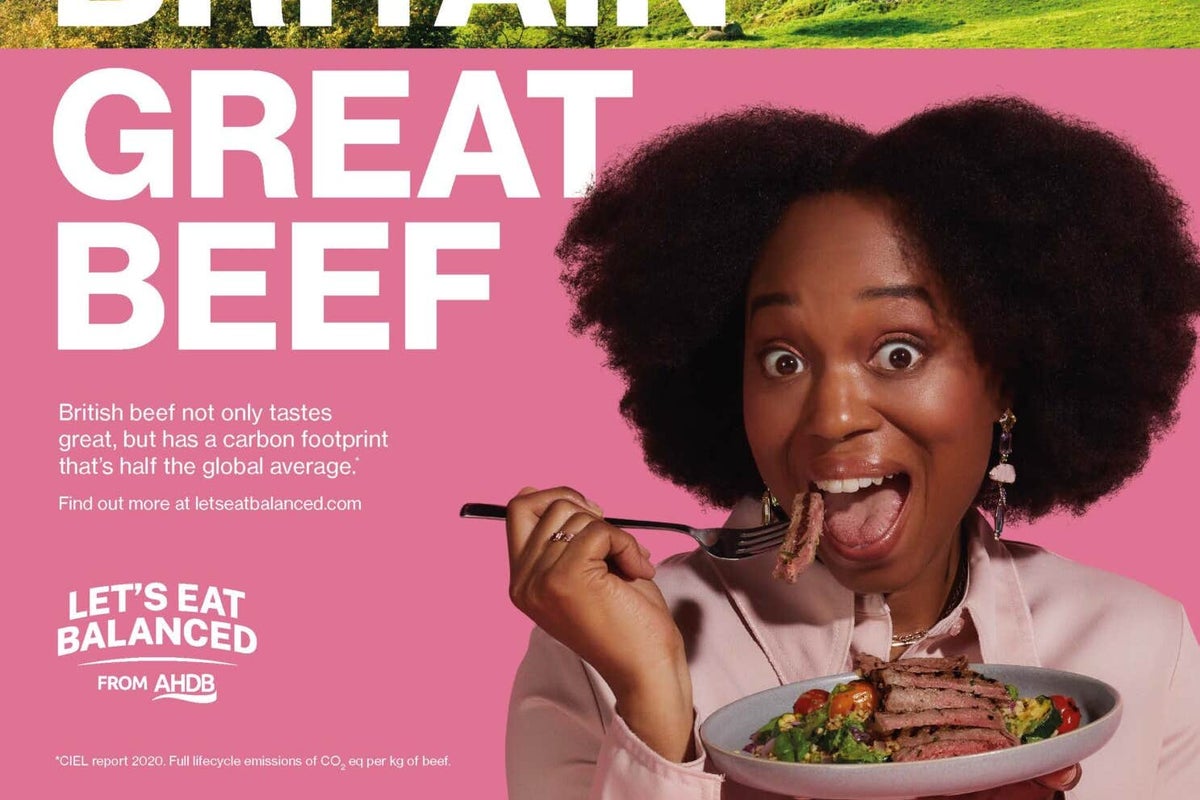
Two ads promoting British beef and milk have been banned after television presenter and environmental campaigner Chris Packham complained that they misled consumers about the products’ carbon footprints.
Both ads for the Agriculture and Horticulture Development Board’s (AHDB) Let’s Eat Balanced campaign used the carbon footprint of British beef and milk to promote the products, firstly stating: “British beef not only tastes great, but has a carbon footprint that’s half the global average*.”
The asterisk linked to text that stated: “Full lifecycle emissions of CO2 eq (carbon dioxide equivalent) per kg of beef.”
The ad for milk stated: “British milk not only tastes good, but is also produced to world-class standards, and has a carbon footprint a third lower than the global average.”
Packham complained to the Advertising Standards Authority (ASA) that the ads, and specifically the carbon footprint claims, were misleading as they did not reflect the full environmental impact of British meat and dairy.
The AHDB said the ads’ mention of carbon emissions would be understood in relation to the environmental impact of beef and milk that occurred between the “cradle-to-retail” stages.
But the ASA said the average consumer “being reasonably well-informed, observant and circumspect” would understand the claims to apply beyond the retail stage and include actions such as cooking and wastage.
The ASA said: “While we acknowledged the potential difficulties in producing post-retail emissions data, the claims in the ads suggested those emissions were included and we therefore expected the evidence provided to also include them.
“We therefore concluded that the evidence presented was insufficient to support the full life-cycle claims in the ads, which was how the average consumer was likely to interpret them.
“We reminded AHDB that environmental claims should be based on the full life cycle unless the ad stated otherwise.”
AHDB’s director of communications and market development, Will Jackson, said: “Let’s Eat Balanced is doing what it was designed to do, providing clear, factual, evidence-led information about British food, nutrition and farming standards.
“Since the investigation began, we have conducted independent consumer research which found that the majority of respondents interpreted these adverts as relating to the production phase only, from farm to retail.
“This research provides important insight into consumer understanding and supports our belief that consumers were not misled by the information we shared in these two specific adverts.”
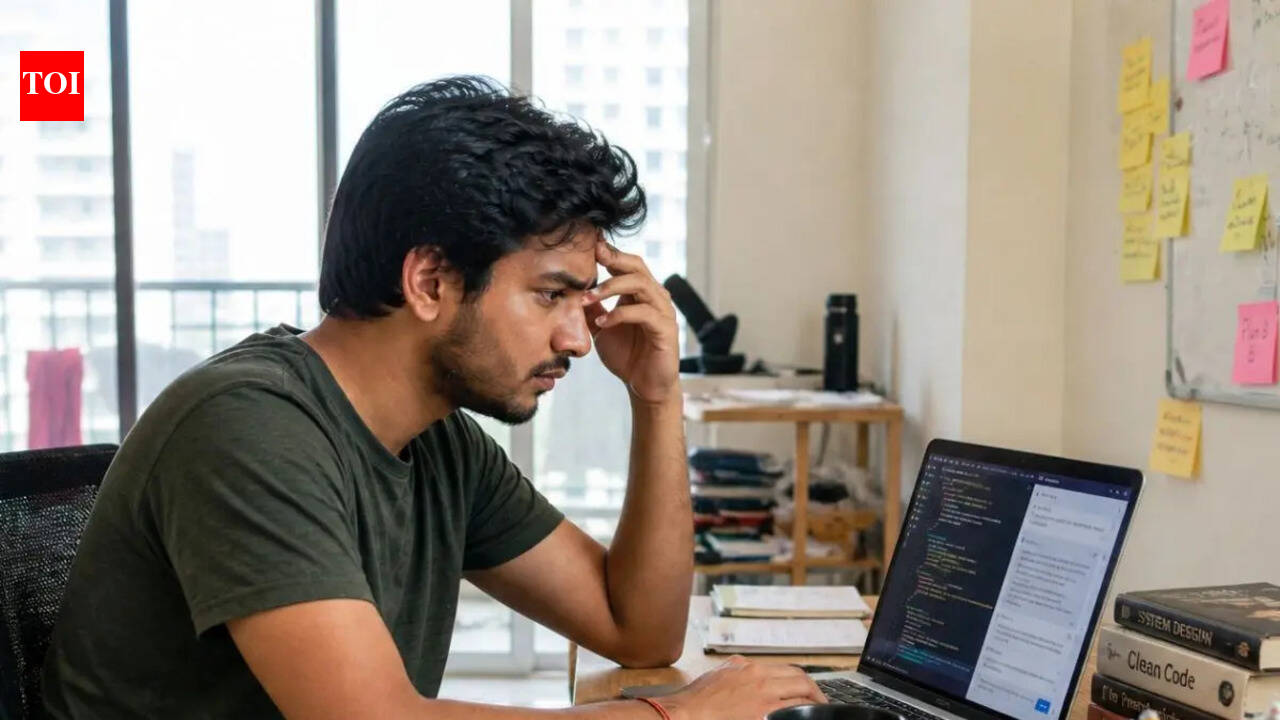
BENGALURU: India’s Gen Z workforce is embracing what experts describe as “portfolio careers” – balancing multiple professional identities and income streams simultaneously. New research from LinkedIn shows that 75% of Gen Z entrepreneurs in India now manage multiple income streams, significantly higher than the 62% among Gen X entrepreneurs. The findings point to a growing preference among younger professionals for flexibility, autonomy and diversified sources of income. “We’re also seeing the rise of the ‘portfolio era’, with more professionals creating multiple income streams and redefining what a career can look like. This shift is making entrepreneurship more accessible than ever before,” said LinkedIn India country manager Kumaresh Pattabiraman.Rather than depending on a single full-time role, many professionals are simultaneously building businesses, freelancing, consulting, creating online content and monetising specialised skills through digital platforms. The trend comes amid a broader rise in entrepreneurial activity in India. LinkedIn recorded a 104% year-on-year increase in members adding “Founder” to their profiles – the highest growth among all global markets.AI is also emerging as a major enabler of this shift. The report found that 85% of Gen Z entrepreneurs consider AI and digital tools important to their business operations.

Sam Altman said Elon Musk tried many times for total control of OpenAI, which he’s now suing.
Source link


Will LeBron James retire after current season?

South Korea reviews phased support for Strait of Hormuz security efforts

New Jersey Gov. Mikie Sherrill announces another NJ Transit World Cup ticket cut days after first reduction

-

 Tech1 week ago
DHS Demanded Google Surrender Data on Canadian’s Activity, Location Over Anti-ICE Posts
-
 Business1 week ago
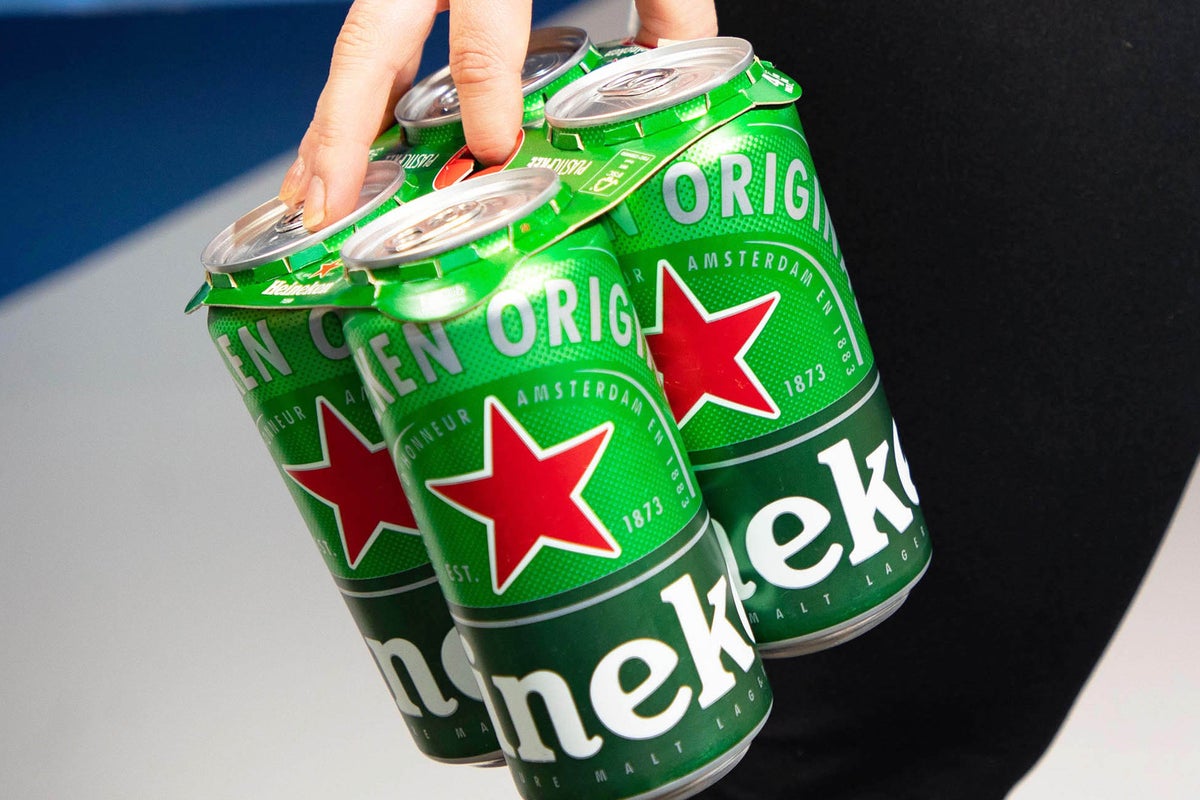
Heineken plans huge investment in hundreds of UK pubs ahead of World Cup
-

 Tech5 days ago
A new frontier: Identity stack evolves for agentic systems | Computer Weekly
-

 Tech4 days ago
‘Orbs,’ ‘Saucers,’ and ‘Flashes’ on the Moon: Pentagon Drops New UFO Files
-

 Sports5 days ago
Shaheen Afridi achieves landmark feat during opening Test against Bangladesh
-
 Business1 week ago
India among most resilient large EMs, better placed for future global shocks; policy reforms & strong buffers help: Moody’s – The Times of India
-

 Tech5 days ago
What Microsoft Executives Really Thought About OpenAI in 2018
-
 Fashion5 days ago
New orders in German manufacturing up 5% MoM in Mar 2026: Destatis