

Business
Rate hike signals deeper concern | The Express Tribune

KARACHI:
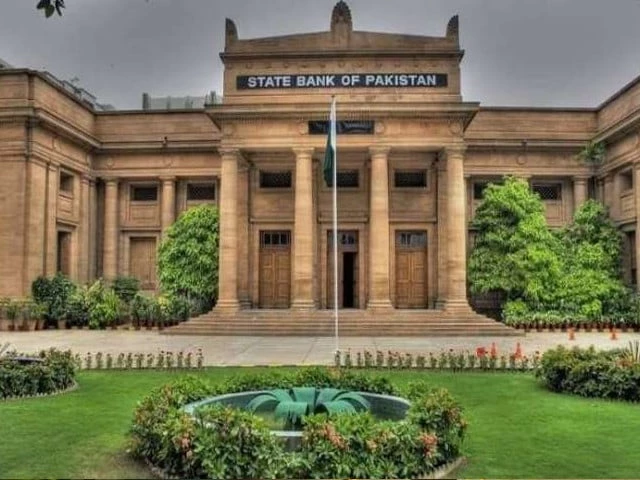
Few remarks capture the ambiguity of central banking as sharply as former Fed Chair Alan Greenspan’s oft?quoted line: “I know you think you understand what you thought I said, but I’m not sure you realise that what you heard is not what I meant.” It is a fitting lens through which to view the State Bank of Pakistan (SBP)’s recent 100 basis points increase in the policy rate – an action that, beyond its stated intent, has left markets and industry grappling with what exactly the central bank is trying to signal.
On one level, the decision is grounded in conventional monetary logic. Inflation has edged higher, core measures remain sticky, and global uncertainties – particularly stemming from geopolitical tensions and elevated energy prices – pose clear upside risks. The central bank’s own assessment suggests that inflation may remain above target in the coming quarters, warranting a tighter stance to anchor expectations and prevent second?round effects. Yet, in Pakistan’s context, the significance of monetary policy lies not merely in its intent but in its interpretation. A large and unexpected rate hike is seldom viewed as a technical adjustment. It is read as a signal – often a warning – that policymakers see risks beyond what is immediately visible in the data.
If the macroeconomic narrative is one of cautious stabilisation – with a manageable current account position, improving reserves and moderate growth recovery – then the scale of the hike appears disproportionate. On the other hand, if risks are indeed intensifying to justify such urgency, then the absence of explicit communication about those risks creates uncertainty rather than reassurance. In such an environment, markets tend to assume the worst.
The policy debate is further complicated by underlying structural realities highlighted in recent commentary. Monetary tightening in Pakistan carries a disproportionate fiscal cost. With government borrowing dominating the credit landscape, higher interest rates translate directly into a surge in debt servicing obligations, which already constitute the single largest component of public expenditure.
This dynamic raises a critical question: to what extent is monetary policy targeting inflation, and to what extent is it reshaping fiscal pressures? When the cost of servicing debt rises sharply, it crowds out development spending and constrains growth – potentially undermining the very stability that policy seeks to achieve. Moreover, the transmission of monetary policy to the real economy remains uneven. Private sector credit constitutes a relatively small share of total lending, while key industries have already been operating under tight financial conditions. Evidence suggests that high borrowing costs, combined with elevated input prices, have contributed to widespread industrial stress, including factory closures in major sectors.
This concern is echoed by industry stakeholders, who argue that the rate hike risks stifling a nascent recovery. For businesses, particularly small and medium enterprises, access to affordable financing is critical. Higher interest rates not only increase the cost of working capital but also deter new investment, limit expansion and erode competitiveness. More fundamentally, there is scepticism about the effectiveness of monetary tightening in addressing Pakistan’s inflation. A significant portion of price pressures is supply?driven – stemming from energy costs, exchange rate pass?through and structural inefficiencies. In such a context, higher interest rates may suppress demand without meaningfully resolving the root causes of inflation.
In the treasury auction immediately after the monetary policy announcement, the Ministry of Finance rejected all bids for Pakistan Investment Bonds and Ijarah Sukuk. This was a rare move, effectively refusing to accept the higher yields demanded by investors in response to the tightening stance. The implication was clear: while the central bank raised rates, the government signalled that it was unwilling to lock in borrowing at those elevated levels.
On one hand, monetary policy is attempting to enforce tighter financial conditions. On the other, fiscal authorities appear to be betting that such conditions are temporary and that rates may have peaked. For investors, this creates confusion about the future trajectory of interest rates. Should they align expectations with the central bank’s current stance, or with the government’s apparent resistance to higher yields?
Such mixed signals complicate market behaviour. In the fixed?income space, they disrupt price discovery and may lead to higher risk premiums. In the real economy, they reinforce caution. Businesses interpret the rate hike as a warning, while the auction outcome suggests that prevailing rates may not be sustainable. The result is a hesitancy that affects investment, production and hiring decisions. The equity market reflects a similar tension. Higher interest rates exert downward pressure on valuations by increasing discount rates and shifting investor preference towards fixed?income instruments. At the same time, uncertainty about policy direction weighs on sentiment. The combination of a surprise rate hike and an unexpected auction outcome creates ambiguity, particularly for leveraged sectors sensitive to borrowing costs.
Even the banking sector, often considered a beneficiary of higher rates, faces a nuanced outlook. While margins may improve, the broader economic slowdown and potential deterioration in asset quality could offset these gains. At a deeper level, the episode highlights the challenge of policy coherence. Monetary and fiscal authorities may operate with different objectives, but their actions are interpreted collectively. When those actions appear misaligned, the result is not balance but uncertainty.
The central bank’s own policy statement underscores the importance of fiscal reforms, including expenditure rationalisation and structural adjustments, to ensure long?term sustainability. Yet, without visible progress on these fronts, monetary tightening alone risks becoming an incomplete solution – one that addresses symptoms rather than causes.
None of this suggests that the SBP’s decision is inherently flawed. Policymakers are often required to act pre?emptively in the face of uncertainty, particularly when external shocks threaten to unanchor inflation expectations. Indeed, delaying action has historically proven costly. However, the effectiveness of such action depends not only on its economic rationale but also on how it is perceived. This brings us back to Greenspan’s observation. The gap between what is said, what is meant and what is heard can carry profound consequences. In the present case, that gap appears to have widened. The rate hike may have been intended as a measure of caution, but in the absence of clear and consistent signalling, it risks being interpreted as a sign of deeper concern.
THE WRITER IS A FINANCIAL MARKET ENTHUSIAST AND IS ASSOCIATED WITH PAKISTAN’S STOCKS, COMMODITIES AND EMERGING TECHNOLOGY





Heineken has announced a substantial investment exceeding £44 million into hundreds of its pubs across the UK, a move expected to create approximately 850 jobs.
The Dutch brewing giant’s Star Pubs operation, which manages 2,350 sites nationwide, is undertaking this significant financial commitment despite a challenging period for the pub sector.
The industry has faced considerable pressure over the past year, grappling with escalating labour costs and increases in national insurance contributions.
Concurrently, consumer spending has been constrained by concerns over inflation and rising unemployment, further impacting pub revenues. However, pubs did receive additional business rates support from the government last month, aimed at alleviating some of these financial burdens.
Lawson Mountstevens, managing director of Star Pubs, indicated that the investment strategy is partly designed to bolster revenues and help the group navigate the recent “sustained increases in running costs”.
This year, £44.5 million will be allocated to upgrades for 647 pubs. A notable 108 of these venues are earmarked for particularly significant cash injections, with each transformation costing at least £145,000.
Heineken clarified that while the majority of its pubs are group-owned, they are independently operated by local licensees. A key focus for this investment, particularly in the lead-up to the 2026 football World Cup, will be on sports-focused venues.
The pub firm and brewer has a history of significant investment in British pubs, having pumped £328 million into the sector since 2018. Work has already commenced at 52 locations, including eight projects dedicated to reopening boarded-up pubs that have endured lengthy closures.
Mr Mountstevens also urged the government to reduce the tax burden on pubs, arguing it would ease cost pressures and foster further job creation within the industry.
He stated: “We can only do so much; the root-and-branch reform of business rates that the industry has been calling for over many years is urgently required, as well as a lowering of the burden of taxation on pubs, including VAT and beer duty.”
He concluded with a direct appeal: “We are calling on the Government to support us in bringing out the best in the Great British pub.”

GameStop’s boss Ryan Cohen says he sees potential to make eBay a much bigger rival to Amazon.
Source link
It comes as the US said on Monday it will begin to help “guide” vessels out of the Strait of Hormuz.
Source link


Met Gala 2026 “Costume Art” red carpet pictures from New York City

Jack Brooksbank opts for intimate celebration as new baby brings fresh focus

White House briefly locked down after Secret Service shooting in Washington

-

 Tech1 week ago
A Brain Implant for Depression Is About to Be Tested in Humans
-
 Business1 week ago
Pakistan’s oil market is fuelling the crisis | The Express Tribune
-

 Tech1 week ago
Almost 90% of women leave tech industry within 10 years | Computer Weekly
-
 Business1 week ago
‘I had £20,000 stolen and had to fight a 13-month fraud reporting rule to get it back’
-

 Sports6 days ago
Pro wrestling star Steph De Lander reveals how colleague’s advice helped lead her to title triumph at ACW
-

 Entertainment1 week ago
Norway joins Type 26 Frigate Programme to boost NATO naval power
-

 Entertainment1 week ago
Melania Trump says ABC should ‘take a stand’ on late-night host Kimmel
-

 Tech7 days ago
This Ambitious Laptop Doesn’t Leave Much Room for Your Hands