

Sports
Ready for Sunday? We have last-minute Week 2 sleepers, surprises, trends to watch and more

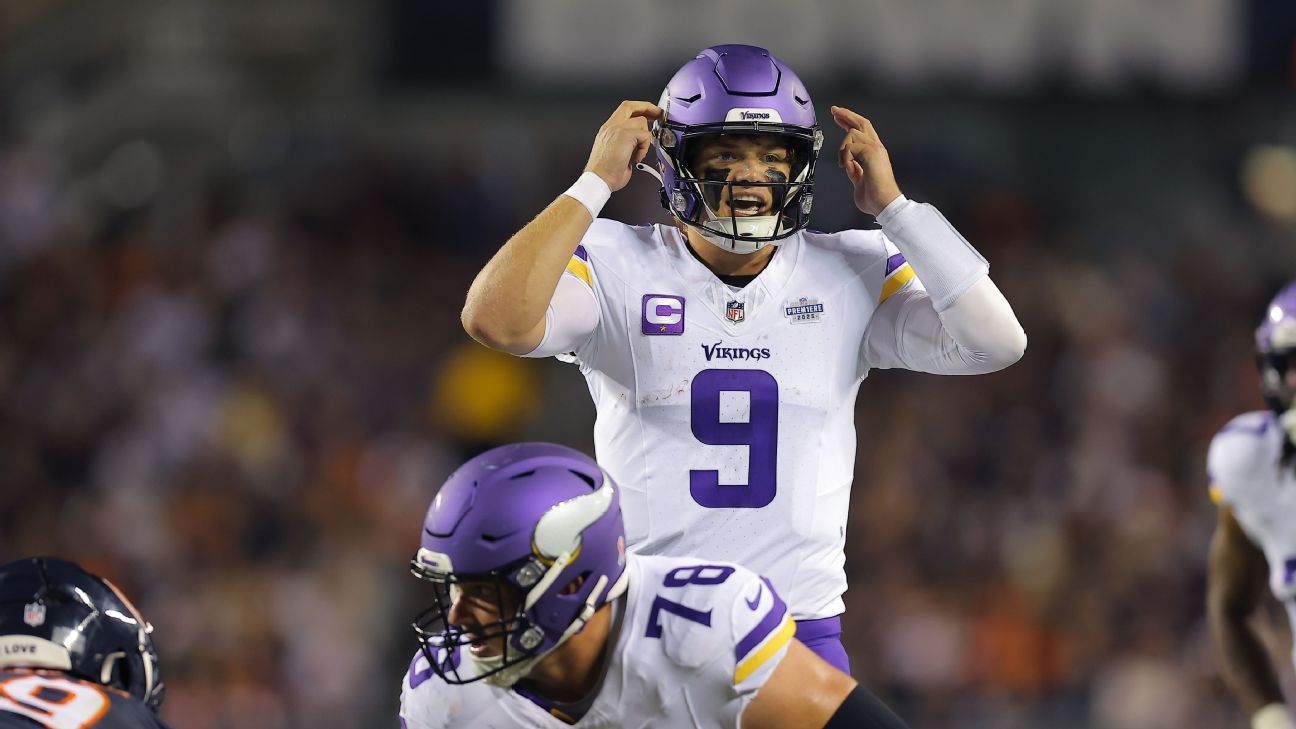
Week 2 of the 2025 NFL season is here, and our NFL analysts have you covered at the 11th hour. Don’t miss our last-minute prep for a loaded slate.
First, analytics writer Seth Walder breaks down three stat trends that could be pivotal this weekend. Then fantasy football writer Eric Moody runs through five players who are rostered in under 50% of ESPN fantasy football leagues as of Saturday and could be started in a jam. That’s followed by NFL analyst Ben Solak predicting three potentially big surprises and NFL analyst Matt Bowen picking one key matchup to watch. Finally, sports betting analyst Pamela Maldonado gives her favorite bet of Week 2.
Can J.J. McCarthy find ways to beat Jessie Bates III in the Vikings’ pass game? Does Juwan Johnson have fantasy upside this week? Could James Conner have a big rushing day? And which NFC South team could pull an upset? Let’s dive in.
Jump to:
Stat trends | Fantasy sleepers
Potential surprises | Key matchup
Best bet of the week
Walder: Three key stat trends that could determine Week 2 winners

Can QB Caleb Williams fix accuracy issues against the Lions?
Williams’ accuracy woes were on full display in Week 1. He recorded a 29% off-target rate and a negative-13% completion percentage over expectation (CPOE), which were both the worst among all quarterbacks per NFL Next Gen Stats.
What stands out the most about Williams’ career accuracy numbers is that the problems are particularly pronounced when throwing outside the numbers. He actually is roughly average when throwing between the numbers, with a 0% CPOE since the start of last season. But outside the numbers, that drops to minus-4%. And his 28% off-target rate outside the numbers is outdone only by Colts QB Anthony Richardson Sr.
In general, this actually makes me slightly more bullish on Chicago because of Williams’ new coach. No team threw more between the numbers last season than Ben Johnson’s Lions. But facing Detroit’s defense might not be the ideal matchup. The Lions faced throws between the numbers only 46% of the time last season, the third-lowest rate in the league. We don’t yet know if the Lions will deter middle-of-the-field targets in the same way under new defensive coordinator Kelvin Sheppard, but the pattern largely held Week 1 against Green Bay (41% of targets between the numbers).

Can the Rams’ interior line hold off Titans DT Jeffery Simmons?
Injuries hit the Rams hard at guard in Week 1, with both Steve Avila and Kevin Dotson getting hurt in that game (though Avila returned in Dotson’s stead). Both are now week-to-week, and if at least one cannot play, that presumably means Beaux Limmer will step in again. Limmer played 870 snaps at center as a rookie, but his guard debut was shaky last week. He was beaten clean by Folorunso Fatukasi for a sack. The matchup will be tougher this time around against Simmons and the Titans.
Simmons ranked 10th in pass rush win rate as an interior rusher last season (12%) and eighth in Week 1 (14%). He would be a threat to QB Matthew Stafford against even the best guards, so this could be a challenging day with the Rams’ backups in there.

Will the Texans get their running game going against the Buccaneers?
Houston’s change at offensive coordinator from Bobby Slowik to Nick Caley has meant a dramatic shift in the team’s run scheme. The Texans ran outside zone 47% of the time last season (sixth-most) and barely any duo (8%) — but the team’s duo rate jumped to a league-high 55% in Week 1 this season.
This change in scheme might not be ideal this week. Since the start of last season, the Buccaneers have allowed just 3.5 yards per carry against duo runs — third-lowest in the league. Perhaps it’s just variance due to a small sample, but it also might be a credit to the players on the defensive front under Todd Bowles (especially Vita Vea). Tampa Bay hasn’t had much turnover from last season’s defensive front (edge rusher Haason Reddick was the only major addition), so this strength should continue.

Moody: Five fantasy sleepers you need to pick up — and can start this week

Cedric Tillman, WR, Cleveland Browns (46.1% rostered)
Tillman saw eight targets and posted 16.2 fantasy points against the Bengals in Week 1, matching wide receiver Jerry Jeudy in snaps and routes. With quarterback Joe Flacco projected for a lot of passing volume and Cleveland likely playing from behind versus Baltimore, Tillman remains firmly on the flex radar in most leagues.

Juwan Johnson, TE, New Orleans Saints (37.6% rostered)
Johnson led the Saints in receiving against the Cardinals with eight receptions for 76 yards, hinting at a big role in new coach Kellen Moore’s offense. With no Taysom Hill (torn ACL) in the mix, Johnson could remain a reliable target and sneaky sleeper despite a tough 49ers matchup.

Trevor Lawrence, QB, Jaguars (36.1% rostered)
I had Lawrence in this section last week, but he didn’t have to do much against the Panthers since the Jaguars built a huge lead and leaned heavily on running back Travis Etienne Jr. Lawrence should outperform his 10.3 fantasy points from the opener in Week 2, as the Bengals-Jaguars game is expected to be one of the higher-scoring games on the slate. Jacksonville will likely rely on the passing game against Cincinnati, especially targeting wide receivers Brian Thomas Jr. and Travis Hunter.

Michael Penix Jr., QB, Atlanta Falcons (26.8% rostered)
Penix was superb in the season opener against the Buccaneers, finishing with 24.0 fantasy points. The second-year QB showed solid command of the Falcons’ offense in just his fourth career start. Wide receiver Darnell Mooney‘s status is uncertain (shoulder), but Drake London is expected to play against the Vikings after leaving the Week 1 game early with his own shoulder injury. The Bears’ Caleb Williams posted 24.2 fantasy points against Minnesota’s defense, so Penix has the potential for a similar performance.

Kareem Hunt, RB, Kansas City Chiefs (20.3% rostered)
Running back Isiah Pacheco didn’t have the Chiefs’ backfield on lockdown against the Chargers, playing just 51% of snaps and logging seven touches for 4.8 fantasy points. Hunt basically matched him with seven touches and 4.6 fantasy points in fewer snaps (38%). Hunt is capable of contributing as a runner, receiver and blocker; he can also handle short-yardage and goal-line work. Since his fantasy projection against the Eagles isn’t far off from Pacheco’s, it might be worth taking a risk on Hunt this weekend.
Solak: Don’t be surprised if …
The Bears run a trick play. There were no classic Ben Johnson whirligig plays against the Vikings (end-of-game prayer notwithstanding). But against his former team in Week 2, I would wager Johnson has something goofy planned. Nothing embarrasses a defense quite like a receiver throwing a touchdown pass to an offensive tackle (or something like that).

The Bills score 40-plus points again. The Jets’ secondary was a mess against the Steelers — corners falling down, blown coverage assignments and missed tackles. The last time Josh Allen‘s Bills played Aaron Glenn’s defense, they put 48 on the Lions. All of the man coverage Glenn likes to run is an issue against a Bills team that trusts so many receivers to win matchups and has a deadly scrambling quarterback. If Justin Fields and the Jets’ rushing attack torch Buffalo’s shaky rush defense, this one could get crazy.
1:08
Schefter: ‘The road to the Super Bowl will go through Buffalo’
Adam Schefter and Damien Woody explain why the Bills are now the team to beat in the AFC.

Cardinals running back James Conner leads the league in rushing this week. Including last season, the Panthers have given up over 200 rushing yards in seven straight games. Now, they face a Cardinals team with one of the more creative rushing attacks in the league. It certainly doesn’t help that their new defensive tackle Tershawn Wharton is out for the next few weeks with a hamstring injury. If the Cardinals start to mount a large lead, Conner could rack up ridiculous garbage-time production.
Bowen: Key matchup to watch

Minnesota Vikings QB J.J. McCarthy vs. Atlanta Falcons safety Jessie Bates III
McCarthy can benefit from the schemed throws in Kevin O’Connell’s offense, but identifying Bates post-snap will be a critical aspect of this game. With 14 interceptions over the past three seasons, Bates has the range and ball skills to make splash plays from both post and split-field alignments.
McCarthy played his best football in the second half of the Monday night win over the Bears, completing eight of 12 attempts for two touchdown passes (not to mention his third score on a designed rushing attempt). The poise and confidence is clearly there for the second-year QB returning from knee surgery. But he will be tested by Bates in the middle of the field Sunday night.
Maldonado: My favorite bet for Week 2

Tampa Bay Buccaneers +2.5 at Houston Texans
Houston’s offense isn’t fully clicking yet. Against the Rams, quarterback C.J. Stroud recorded 7.0 yards per pass attempt with no touchdowns to his depleted receiver room. And the team’s rebuilt offensive line gave up three sacks.
Meanwhile, Bucs QB Baker Mayfield quietly delivered enough explosive plays to wide receivers Emeka Egbuka and Mike Evans to defeat the Falcons. Running back Bucky Irving flashed efficiency, too, giving this offense balance. Defensively, the Texans are solid, but takeaways were their bread and butter last season (fifth-most in the NFL with 29). Though some regression is expected, they had none in Week 1.
The Bucs’ third-down success — 50% in Week 1 — could be the difference in a possession-driven game. Tampa Bay has the healthier skill players, steadier OL and more ways to win. I’m having flashbacks to the 2023 season, when Stroud threw five touchdowns and beat the Bucs by only two points. Back Tampa.
NEWYou can now listen to Fox News articles!
The beauty of each World Cup is the attention to detail and how each edition weaves in the traditions and characteristics of the host nations.
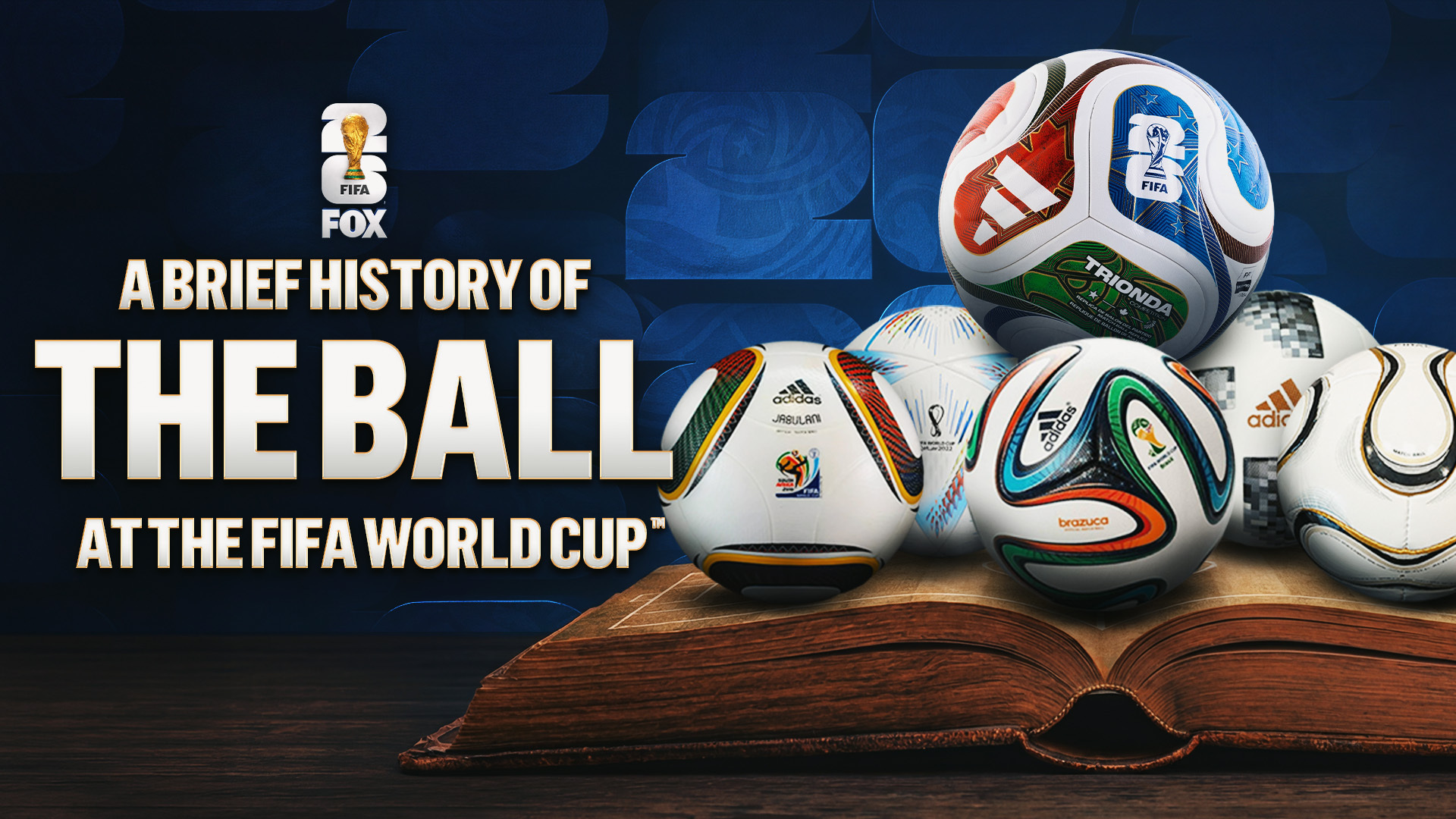
And that’s especially true with the official match ball. Take for instance the recently released TRIONDA ball, which all eyes will be on next year at the 2026 FIFA World Cup, which will be hosted in three nations – Canada, Mexico, and the United States.
Since 1970, adidas has supplied the official match ball for the World Cup. Before then, the match balls were provided by manufacturers from the host countries. Get a low down on each ball from 1930.
Let’s take a deeper dive into each World Cup ball, including how they got their names and what made them stand out, starting with the earliest version at the inaugural tournament:
1930 – Tiento/T-Model (Uruguay)
(Photo by KARIM JAAFAR/AFP via Getty Images)
The tournament had no official ball as multiple ones were used throughout the games. And the final itself between the neighboring rivals of Uruguay and Argentina included an argument over which ball to use. The compromise? Argentina’s “Tiento” for the first half and Uruguay’s heavier “T-Model” for the second half. Argentina were 2-1 up before Uruguay scored three goals with their larger ball to win 4-2.
1934 – Federale 102 (Italy)

The Italian ECAS (Ente Centrale Approvvigionamento Sportivi, the government’s bureau for sport supplies) produced the ball that had 12 hand-stitched leather panels with visible laces. It also marked FIFA’s first standardized World Cup ball. The laces were made of softer material to make them lighter and more manageable, especially for headers.
1938 – Allen (France)

Produced by a French manufacturer, the Allen ball used 13 leather panels hand-stitched with cotton laces and a visible seam. It also had to be hand-stitched and hand-inflated to get the spherical finish.
1950 – Superball Duplo T (Brazil)

The return of the World Cup tournament after a 12-year absence due to World War II featured a ball that had 12 hand-stitched panels – but introduced hidden laces with a rubber valve that could be inflated with a single hand pump. It was the first World Cup ball that did not require reinflation through an external seam during play.
1954 – Swiss World Champion (Switzerland)

This 18-panel ball made by Kost Sport removed laces entirely, featuring interlocking panels for a truer, more consistent shape. FIFA approved it as an official match standard, setting the stage for the modern, seamless football era to come.
1958 – Top Star (Sweden)

Selected from over 100 submissions, the Top Star (made by machine manufacturer Sydlader AB) was made of high-grade leather with 18 panels and no laces. Its consistent bounce and lighter feel allowed for faster, more precise play – fitting the tournament that introduced Pelé to the world. But France forward Just Fontaine is more synonymous with this ball, having scored 13 goals in six matches, a record for a single tournament that still stands.
1962 – Crack (Chile)

The Crack featured 18 panels with a deeper seam pattern to help aerodynamics. It was golden-brown in color and locally manufactured by Señor Custodio Zamora of San Miguel, but the inconsistent quality of each ball led to complaints.
1966 – Slazenger Challenge 4-Star (England)

Made by Slazenger, this 25-panel hand-stitched leather ball had no laces with a bright orange version used for visibility on television and for the final. It utilized a latex valve and was selected by tournament officials in a blind test before the tournament.
1970 – Telstar (Mexico)

Named after a U.S. satellite, this ball was the first that featured the now-iconic black-and-white “truncated icosahedron” panel design, which helped it stand out on televisions. The 32-panel Telstar combined leather with revolutionary visibility and became the most recognizable ball design globally.
1974 – Telstar Durlast (West Germany)

The Durlast featured a new coating to protect against water absorption. The design remained black-and-white for visibility on TV and marked a leap forward in ball technology from the tournament four years prior.
1978 – Tango (Argentina)

One of the most iconic balls in all sport, the Tango (named after the traditional dance in the host nation) introduced a bold, elegant design with interconnected triads, giving the illusion of 12 identical circles across 20 panels. It became adidas’ flagship look for decades and also helped improve the visibility of the ball for players.
1982 – Tango España (Spain)

Building on 1978’s Tango, the España featured stronger waterproofing and polyurethane coating, enhancing performance in variable Spanish conditions. It was also the last ball to be fully leather before synthetic materials became the norm.
1986 – Azteca (Mexico)

The first fully synthetic World Cup ball, Azteca incorporated polyurethane for consistent touch, durability, and reduced water absorption. Its 32-panel design drew inspiration from Aztec murals and architecture, paying tribute to Mexico’s heritage.
1990 – Etrusco Unico (Italy)

The first ball with an internal layer of black polyurethane foam for greater responsiveness and durability. Its design paid homage to Italy’s Etruscan history, featuring lions’ heads in classical motifs across its 20 triangular panels.
1994 – Questra (United States)

The Questra utilized a space-themed design that celebrated the quest for stardom by being inspired by NASA’s Apollo missions and America’s space legacy. It also followed the “Tango” design that had been used in previous editions and utilized pentagonal designs.
1998 – Tricolore (France)

The first multicolored World Cup ball, Tricolore integrated France’s national blue, white, and red. It also symbolized modernity, national pride, and a willingness to depart from traditional monochrome styles. It was also the last of the “Tango” designs that had been in use for the World Cup since 1978.
2002 – Fevernova (Japan/South Korea)

Breaking away from previous patterns, Fevernova introduced a radical triangular flame design in gold and red that ws inspired by a Japanese “tomoe” symbol. It also included red streaks meant to resemble the ancient art of calligraphy.
2006 – Teamgeist (Germany)

The ball (German for “team spirit”) revolutionized ball construction with just 14 curved panels, creating a rounder, more seamless surface for consistency. Its white design with black-and-gold accents fit the host nation’s aesthetic. It was the first ball to have a different version used for the knockout stages.
2010 – Jabulani (South Africa)

The Jabulani ball had only eight thermally bonded panels but was noted for some of its aerodynamic quirks when in flight. Decorated with African-inspired designs with the name from a Zulu phrase of “be happy,” it symbolized South Africa’s culture and remains among the most iconic. A special gold-accented version was introduced for the final in Johannesburg.
2014 – Brazuca (Brazil)

The Brazuca (the name was decided by a public vote) was made from six bonded panels and was inspired by Bahia lembrança bands, the traditional Brazilian good luck bracelets composed as colorful pieces of cloth and given as gifts. A special version was used in the final with the green, red and blue accents replaced by green, gold and black.
2018 – Telstar 18 (Russia)

A modern homage to the 1970 Telstar, it featured pixelated black graphics referencing Russia’s digital era. Equipped with a chip inside, it was the first smart World Cup ball. It was composed of six panels that provided for a smoother surface, with a differently designed “Mechta” version of the ball utilized during the knockout rounds.
2022 – Al Rihla (Qatar)

Meaning “The Journey” in Arabic, Al Rihla included 20 panels and featured a suspended chip inside the ball that tracked in-game data. Its design drew inspiration from Qatari culture and maritime traditions, with the bonded bails hearkening to the Dhow boats found in the Persian Gulf waters. It also was the first official ball produced entirely with water-based inks.
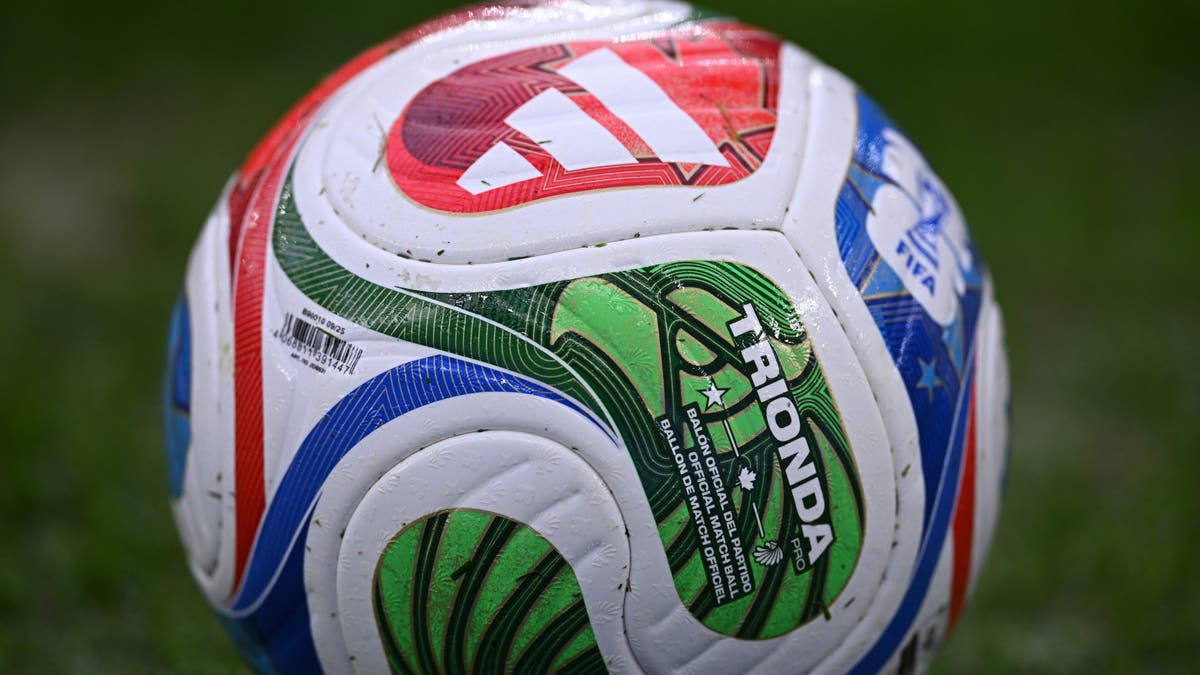
2026 – Trionda (Canada/Mexico/USA)
(Photo by Ben Roberts – Danehouse/Getty images)
The official match ball highlights and features the three nations – Canada, Mexico, and the U.S. – that will host the tournament. The colors on the ball’s panels (red, green, and blue) coincide with the three host nations, while being accented with gold to represent the FIFA World Cup trophy. The ball’s graphics also represent the three nations (a star for the U.S., an eagle for Mexico, and a maple leaf for Canada), which are used in embossed symbols across the surface. The name is an amalgamation of the term “tri-” (for the co-hosts) and the Spanish word onda, meaning wave or vibe.
NEWYou can now listen to Fox News articles!
LIV Golf star Bryson DeChambeau would probably beat most 90-year-olds handily in a push-up contest, but not Gary Player.
Player, 90, took on DeChambeau in a push-up contest on the White House lawn as President Trump watched Tuesday.
The nine-time major champion got down and went push-up for push-up with the 32-year-old.
CLICK HERE FOR MORE SPORTS COVERAGE ON FOXNEWS.COM
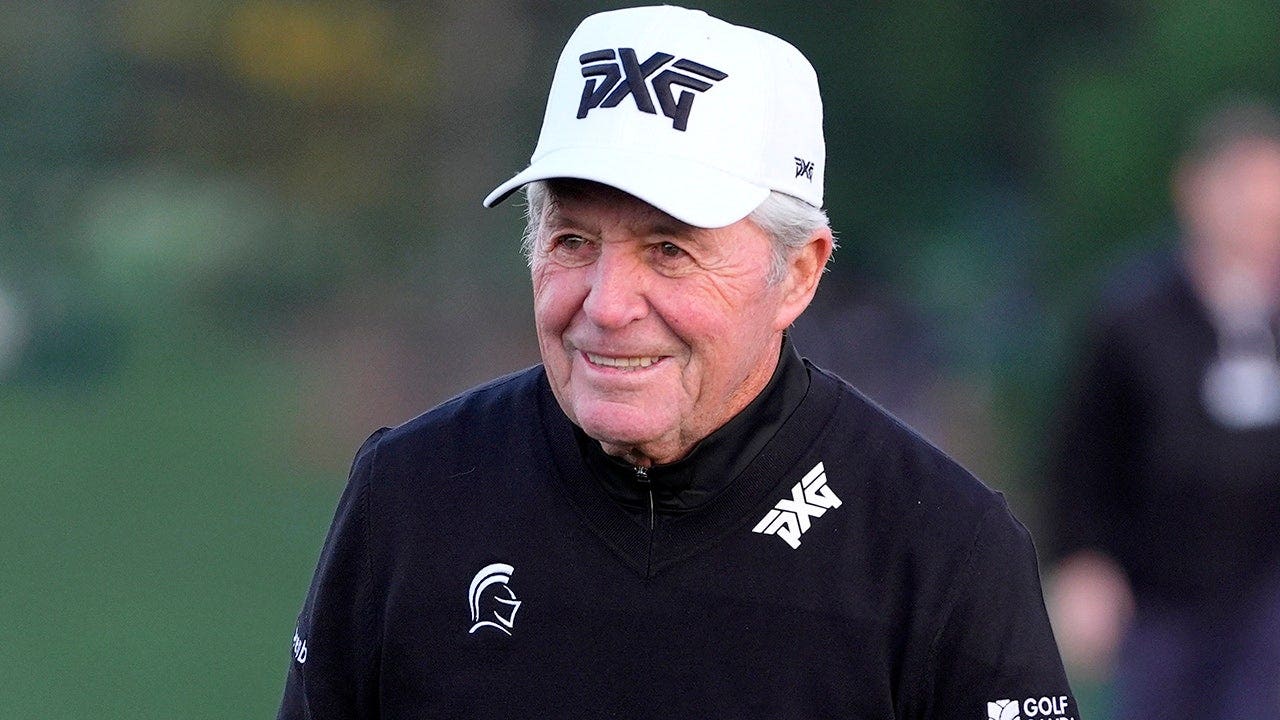
Honorary starter Gary Player reacts after teeing off on the first hole during the first round of the Masters Tournament at Augusta National Golf Club in Augusta, Georgia, on April 9, 2026. (Katie Goodale/Imagn Images)
Player and DeChambeau were at the White House on Tuesday as Trump signed a presidential memorandum that restored the Presidential Fitness Test Award, which revives a competitive school-based fitness program that was phased out in the Obama administration.
The move echoed the Trump administration’s broader “Make America Healthy Again” push.
Player certainly looked healthy during The Masters, when he piped his ceremonial tee shot right down the middle of the fairway last month. Player had a message for the youth while speaking at the Oval Office on Tuesday.
“I say to the young people, just love this country because you don’t realize what’s going on around the world,” Player said.
ZERO BS. JUST DAKICH. TAKE THE DON’T @ ME PODCAST ON THE ROAD. DOWNLOAD NOW!
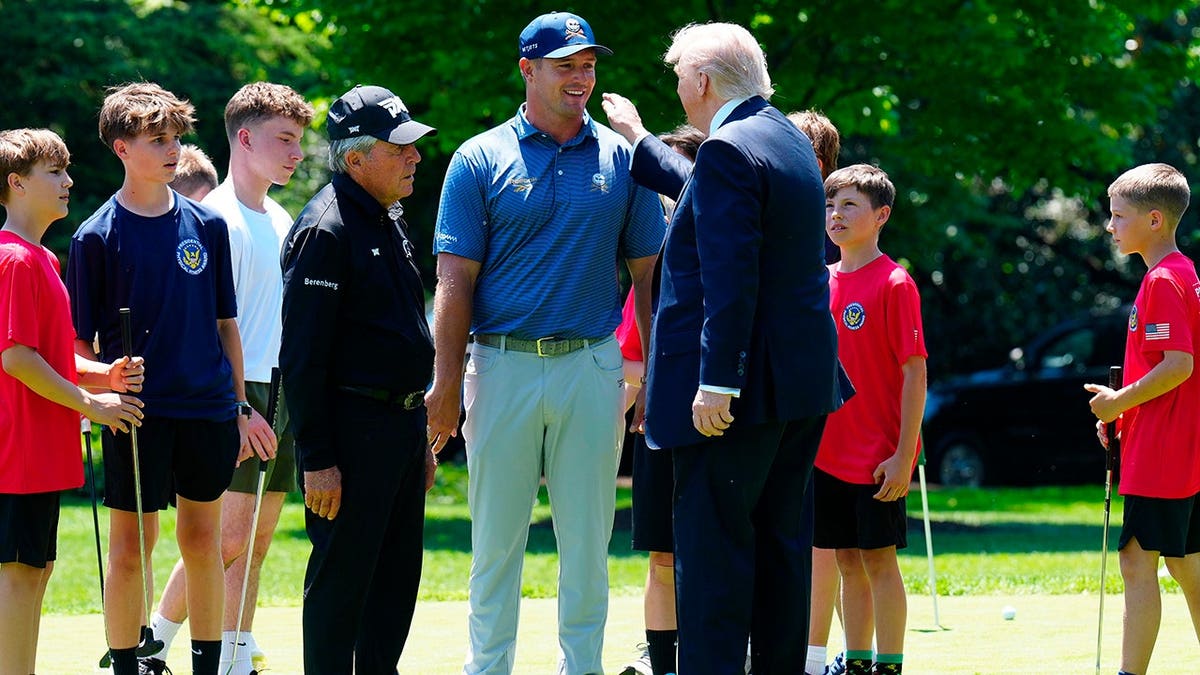
Golfers Bryson DeChambeau and Gary Player speak with President Donald Trump as children observe on the South Lawn of the White House in Washington, District of Columbia, on May 5, 2026. (Jacquelyn Martin/AP Photo)
“There is a silent war taking place against America today, and what we’ve got to do is make these kids realize that freedom, exercise and education start with reading some books.
“What you put in your body is so important. What a wonderful job [Trump] has done. And to all your Cabinet members, I say thank you for maintaining this great word — this cherished word: freedom.”
Player, who is in tremendous shape, said his body is that of a 60-year-old.
CLICK HERE TO DOWNLOAD THE FOX NEWS APP
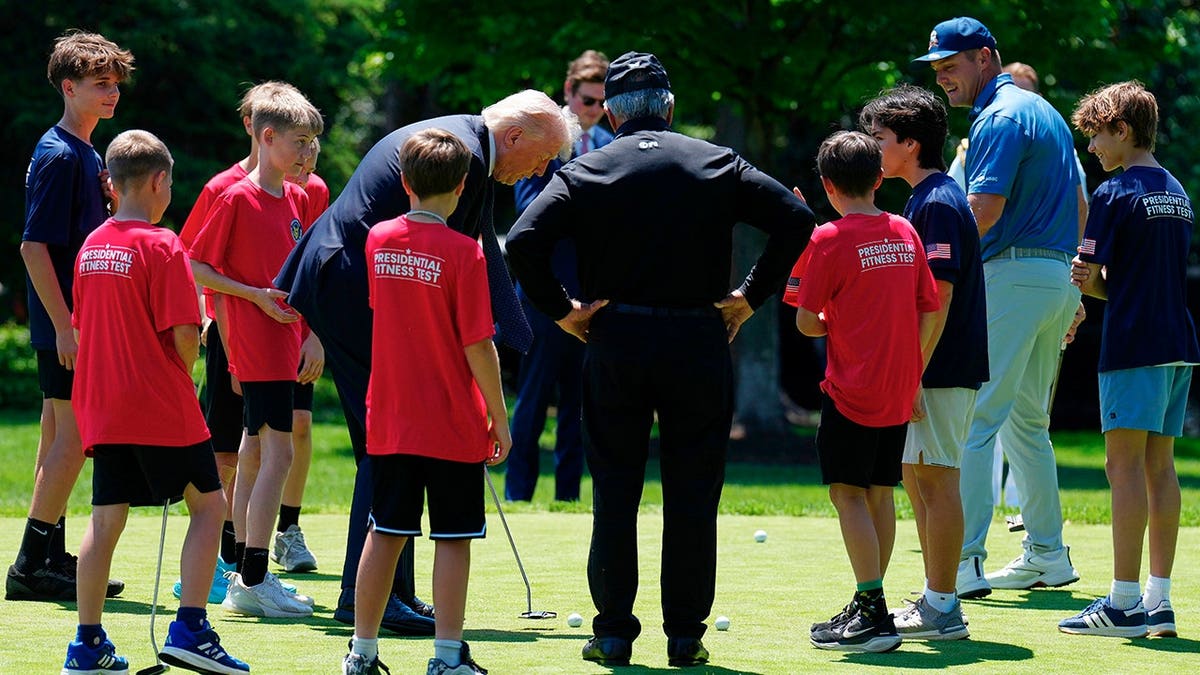
President Donald Trump gives children putting lessons on the South Lawn of the White House in Washington, District of Columbia, on May 5, 2026, as golfers Bryson DeChambeau and Gary Player watch. (Jacquelyn Martin/AP Photo)
“I don’t think of 90,” Player told The Palm Beach Post last year. “I am 90! But really, my body is a man of, I’d say 60.”
Player said he hopes to live until he is 100-years-old and stays active by playing or working out as many days as possible.
With his impressive showing against DeChambeau in a push-up contest, Player looked like someone who has spent a lot of his days working out.
Fox News’ Ashley J. DiMella contributed to this report.
Follow Fox News Digital’s sports coverage on X, and subscribe to the Fox News Sports Huddle newsletter.
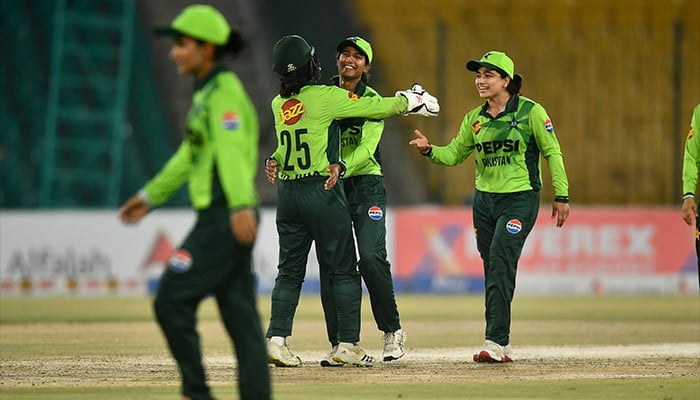
Pakistan women produced a dominant all-round performance to defeat Zimbabwe by 206 runs in the second ODI, sealing an unassailable 2-0 lead in the three-match series at Karachi’s National Bank Stadium on Wednesday.
Chasing 344, Zimbabwe were bowled out for 137 in 39 overs, courtesy of an exceptional bowling performance from the national team’s attack.
Runyararo Pasipanodya top-scored for her side and remained unbeaten with 33 runs from 62 deliveries, striking five fours, while opener Kelis Ndhlovu made 32 off 51 balls, hitting six boundaries.
Beloved Biza scored 29 off 51 deliveries, including four boundaries, while Lindokuhle Mabhero added 20 runs as well.
Fatima Sana led the Pakistan bowling attack, finishing with figures of 3/15 in eight overs. Syeda Aroob Shah, Rameen Shamim and Momina Riasat claimed two wickets each, while Diana Baig also chipped in with a wicket.
Batting first, the Women in Green posted a formidable total in their 50 overs, driven by outstanding centuries from openers Sadaf Shamas and Gull Feroza.
The opening pair set the tone from the outset, piling on runs with an aggressive yet controlled approach to propel Pakistan to a massive score.
Both batters crossed the 150-run partnership mark, with Gull Feroza bringing up her maiden ODI century, while Sadaf Shamas also registered a well-crafted ton in the 50-over format.
The 189-run opening stand was eventually broken when Lindokuhle Mabhero dismissed Feroza for a brilliant 100 off 95 deliveries, an innings featuring 13 boundaries. The partnership also marked the second-highest opening stand in Pakistan Women’s ODI history.
Shamas continued the momentum, reaching her maiden ODI century before falling shortly after for 101 off 112 balls, striking 10 fours and a six.
Sidra Amin and captain Fatima Sana then stabilised the innings with a composed partnership.
Amin recorded her 15th ODI half-century and remained unbeaten on 59 off 58 deliveries, including six boundaries. Fatima contributed a quick 25 off 13 balls, hitting one four and two sixes, before being dismissed by Nomvelo Sibanda.
Aliya Riaz added a brisk 27 off 14 deliveries, striking five boundaries before being removed by Christine Mutasa, while Ayesha Zafar finished unbeaten on 18 off eight balls, hitting three fours to push the total further.
For Zimbabwe, Nomvelo Sibanda, Lindokuhle Mabhero, Christine Mutasa and Olinder Chare claimed one wicket each.


India updates rules to clear FDI proposals within 12 weeks

Justin Baldoni on settlement with Blake Lively: ‘Very pleased’

Looking back on nearly a century of World Cup balls.

-

 Sports1 week ago
Pro wrestling star Steph De Lander reveals how colleague’s advice helped lead her to title triumph at ACW
-
 Tech1 week ago
This Ambitious Laptop Doesn’t Leave Much Room for Your Hands
-
 Business1 week ago
PSX plunges over 4,800 points | The Express Tribune
-
Uncategorized1 week ago
[CinePlex360] Some plugins have failed to updat
-

 Tech7 days ago
Almost half of UK businesses hit by cyber attacks | Computer Weekly
-
 Fashion6 days ago
Canada’s Lululemon appoints Esi Eggleston Bracey to board of directors
-

 Tech6 days ago
This Indigenous Language Survived Russian Occupation. Can It Survive YouTube?
-

 Tech1 week ago
OpenAI Really Wants Codex to Shut Up About Goblins