

Business
Real estate titan Barry Sternlicht says he will ‘have to’ drop employees in favor of AI


A version of this article first appeared in the CNBC Property Play newsletter with Diana Olick. Property Play covers new and evolving opportunities for the real estate investor, from individuals to venture capitalists, private equity funds, family offices, institutional investors and large public companies. Sign up to receive future editions, straight to your inbox.
Billionaire Barry Sternlicht, chairman and CEO of Starwood Capital Group, is a legendary, legacy real estate investor. Brendan Wallace is an entrepreneur who co-founded Fifth Wall, a venture capital firm investing in property technology and decarbonizing real estate. The pair first met in the gym. Now, Wallace can say Sternlicht is a mentor – as well as a Fifth Wall investor – and Sternlicht jokes that Wallace is his trainer.
Together they gave CNBC Property Play a rare glimpse into how old-school commercial real estate investing is pivoting to a new tech-driven world order and how that new world order still relies on lessons learned in the past.
Here are some of the highlights from the conversation, edited for clarity and length:
On CRE investing
Sternlicht: We endured a 500 basis point, fairly rapid increase in rates, and most people who were invested had to pay some price for that, whether the yields on property went up or they weren’t properly hedged. Your costs went up, your expenses, and they drained a lot of cash flow from assets that might have gone into fixing the assets up. That’s behind us now, and there’s no doubt that interest rates are going down. … In May of next year, Jerome [Powell] will be out [as Federal Reserve Chairman], and nobody’s getting that job without agreeing to lower rates.
I think they should lower rates. I think inflation that we’re seeing is tariff related. It will continue. It’ll get worse, probably, in the fourth quarter, when the new inventories hit the shelves and the tariffs can no longer be ignored.
Wallace: The rate increases that Barry was mentioning, those impacted prop tech definitionally, because all tech companies, all loss-making businesses, rerated all at the same time. And at the same time, the demand from commercial real estate stopped.
I would say an overlay on top of it was also that a big part of where real estate companies were investing in the last four years was around decarbonization efforts, so trying to conform to new carbon neutrality laws … and anticipating this kind of wave of decarbonization. And I feel like with [President Donald] Trump‘s election, it kind of felt like they got a hall pass, certainly for four years.
On AI and data centers
Sternlicht: We’ve probably got $20 billion dedicated to [the data center] space. I think it’s a different issue than you think. Most of us don’t build until we get a hyperscaler lease. So we get the lease from Amazon, Microsoft, Google, Oracle. What we’re watching now is the credit worthiness of the tenant, and particularly Oracle, because Oracle is doing all these deals back-ended to [ChatGPT], and Chat is a startup that doesn’t make money and requires hundreds of billions of dollars to grow to the scale they want to be.
There’s no question AI is going to change the entire world and do it much faster than anything we’ve ever seen before, much faster than the internet, certainly faster than the Industrial Revolution. That is terrifying to me. I mean, I’m not so complacent. I look at … how we spend money, and what I can do with AI agents that I do with humans today, and it’s terrifying for the people. I think we have to let people go, right? Jobs of 15 people can be done with a chatbot that costs me $36 a month.
Wallace: I was trying to trace all these pretty Byzantine and somewhat incestuous commitments that are happening between the large tech companies, between the digital infrastructure providers, and it’s actually very hard to trace who’s going to ultimately pay for it all, but ultimately it has to be paid for in the economy.
The way to just acid test whether it makes sense is if you looked at the amount of AI compute that will be required to fill all the data centers that are in production or have been announced to go into production, and then you assume that the tech companies have to make some profit on top of that to justify it, which they’re not today, but let’s assume they have to. Take any margin you want, assume that’s the revenue that’s then therefore flowing to large language models and AI. What percent of U.S. GDP would that be today if you ran that math? My fear is that it might be like 120% of U.S. GDP.
On their next bets
Sternlicht: We’re heavily investing in Europe, actually. Not here. They’ve done the stimulus package. They have low rates. They don’t have, really, inflation. They don’t have tariffs. It’s amazing, having returned from Europe and the Middle East, I can buy everything cheaper in Europe than I can here now.
Wallace: New York City. People overestimate the durability of these political vibe shifts. Within two years of electing Trump, we elected [Zohran] Mamdani to run New York, and I just think these things move dialectically. Over the long term, New York is going to be super valuable. So if I were a betting person, I didn’t have to make a return in the next four years, I would bet on New York.





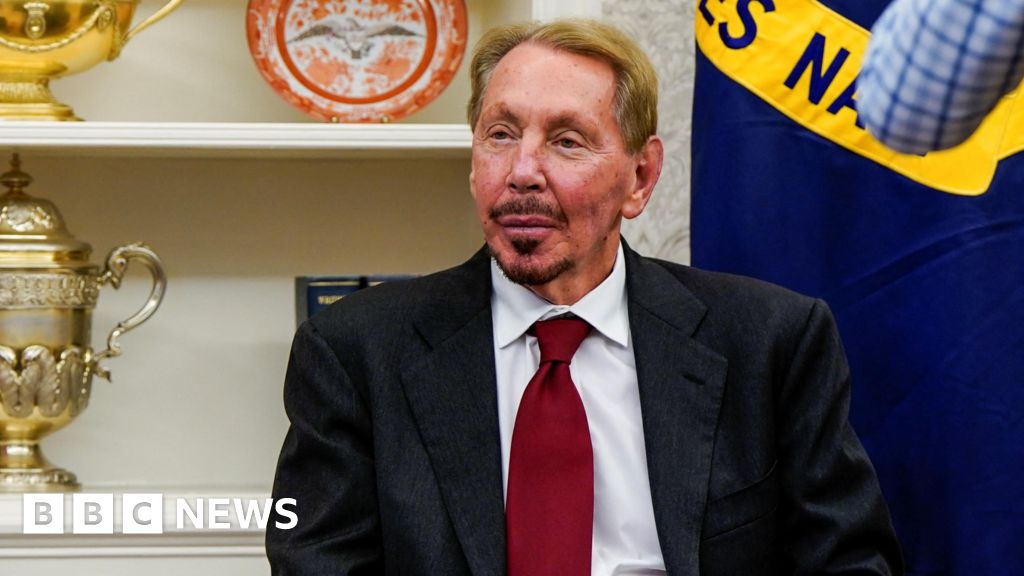
It is thought that thousands of people may have lost their jobs at Oracle, one of the world’s largest tech companies.
Source link

The US-Israel Iran war has halted almost all traffic in a key waterway and the price Brent crude has surged.
Source link

Crunch talks between resident doctors and the Government are set to continue in a bid to avert strike action.
Sir Keir Starmer has given the resident doctors committee of the British Medical Association (BMA) a deadline to reconsider a deal on pay and jobs which includes an offer of thousands of extra NHS training posts.
It is understood the proposal will be removed from the deal if resident doctors in England press ahead with a six-day strike from April 7 in a row over jobs and pay.
Dr Jack Fletcher, chairman of the resident doctors committee of the union, said: “It is wrong for Government to withhold desperately-needed jobs as part of negotiating tactics.
“Anyone who works in the NHS knows that patients need these 4,000 jobs created as soon as possible.
“We made that very clear to Government in our meetings today.
“We are not interested in arbitrary deadlines – we will be looking to get this dispute ended right up to the last minute.
“We believe there is a deal there to be done if Government is willing to withdraw the changes it made at the last minute that reduced the funding for pay rises. Talks continue.”
It comes as senior medics announced they were escalating their disputes with the Government.
Consultants and other senior doctors are to be balloted on industrial action after ministers announced they would be getting a 3.5% pay award.
Simultaneous ballots of consultants and specialist, associate specialist and specialty (SAS) doctors will run from May 11 until July 6.
Addressing resident doctors, Prime Minister Sir Keir Starmer wrote in The Times: “The truth is this: no-one benefits from rejecting this deal.
“Resident doctors will be worse off. Instead of improved pay, progression and support, they will receive the standard pay award this year, with none of the reforms that would have strengthened their working lives.”
The deal sets out a minimum of 4,000 new additional specialty posts to be delivered over the next three years.
NHS England boss Sir Jim Mackey confirmed the offer to expand training places will “come off the table” if an agreement is not reached.
The walkout, which is due to run from 7am on April 7 until 6.59am on April 13, will be the 15th round of strikes by resident doctors in England since 2023.
In a letter to health leaders, Mike Prentice, national director for emergency planning at NHS England, wrote: “We expect this round to be challenging as there is a shorter notice period, bank holidays within the notice period and the action itself falling during the Easter holidays.
“This will represent a significant strain on staffing resources to provide safe cover.”


Wrigley Field to host Big Ten/SEC volleyball doubleheader
Tech giant Oracle makes ‘significant’ job cuts

Romelu Lukaku facing disciplinary action after missing Napoli training

-

 Politics1 week ago
Afghanistan announces release of detained US citizen
-

 Sports1 week ago
Broadcast industry CEO says consolidation is ‘essential’ to compete for NFL soaring media rights prices
-

 Entertainment1 week ago
UN warns migratory freshwater fish numbers are spiralling
-

 Tech1 week ago
Can a Home Appliance Fix the Problem of Soft-Plastic Waste?
-
 Business1 week ago
Property Play: Home flippers see smallest profits since the Great Recession, real estate data firm says
-
 Business1 week ago
Gold prices soar in Pakistan – SUCH TV
-

 Fashion1 week ago
ICE cotton slips on weaker crude, profit booking
-
 Business1 week ago
More women are entering wealth management, but few are in advisory roles, study finds