

Business
Reeves defends Budget tax and spending choices as ‘fair and necessary’

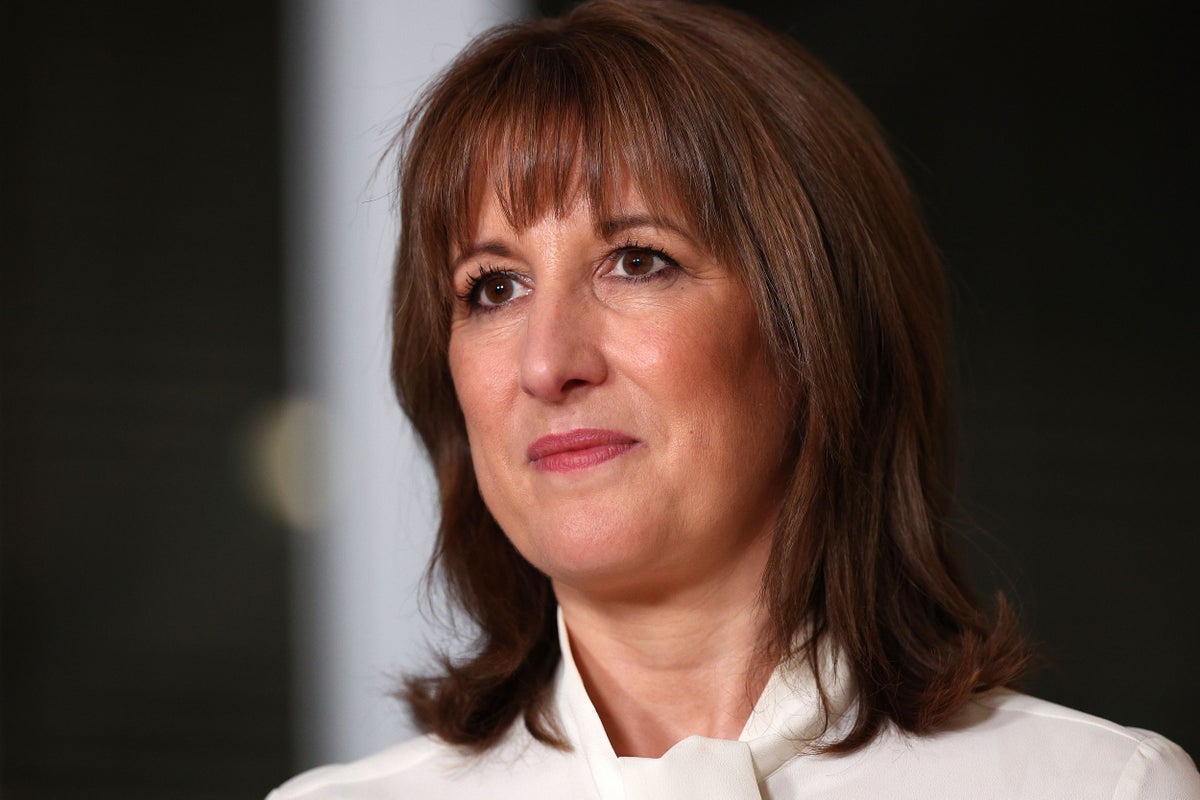
Rachel Reeves defended her recent Budget as “fair and necessary”, saying more of the economic “burden” of her decisions should fall on the wealthy.
In an interview with The Guardian, she said she had made choices to increase taxes and improve public infrastructure, and had “chosen to protect public spending”.
“I wasn’t willing to cut public services, because people voted for change at the election,” she said.
Ahead of the Budget, warnings suggested that Rachel Reeves could face a fiscal gap of up to £20 billion in meeting her self-imposed rule of not borrowing for day-to-day spending.
The debate intensified after the Office for Budget Responsibility (OBR) revealed on Friday it had informed the Chancellor as early as September 17 that the gap was likely smaller than initially expected.
Ms Reeves said: “People often talk about what chancellors do in their budget, but sometimes what’s more important are the things you don’t do. One of the things I didn’t do was cut the investment that I put into capital spending, new schools and hospitals, new energy infrastructure, rail infrastructure.
“It would have been the easiest thing to do to say the OBR’s done this downgrade, you need to cut our cloth accordingly.”
Ms Reeves also denied claims that working-age people were being asked to carry the bulk of the economic burden.
“It’s quite clear that the economic burden in the budget was not about age. It was about wealth,” she said.
“People who bear more of the burden are those with big incomes and assets… so I don’t accept that.”
Conservative leader Kemi Badenoch said the revelation from the OBR showed Ms Reeves had “lied to the public” and should be sacked.
Downing Street was asked on Friday whether Ms Reeves’ warnings of coming difficult decisions despite the OBR’s improved forecasting meant she had misled the public and the markets in the run-up to the Budget.
“I don’t accept that,” the Prime Minister’s official spokesman said.
He added: “As she set out in the speech that she gave here (Downing Street), she talked about the challenges the country was facing and she set out her decisions incredibly clearly at the Budget.”
On November 4, Ms Reeves set the scene for the Budget with a Downing Street speech that suggested tax rises were needed to secure the UK’s economic future and that poor productivity growth would have “consequences for the public finances” in terms of lower tax revenue.
But a letter from the OBR to the Treasury Select Committee of MPs published on Friday appeared to suggest an improved tax take from growing wages and inflation meant that gap had diminished before she even made the speech.
Dame Meg Hillier, Labour chairwoman of the committee, asked OBR chief Richard Hughes to set out a timeline for its pre-Budget forecast process, which informed the Chancellor’s decision-making.
The OBR’s first fiscal forecast ahead of the Budget, received by Treasury officials on September 17, suggested the black hole was £2.5 billion.
The watchdog’s final forecast on October 31 then suggested that it had been eliminated altogether and that there was now a £4.2 billion net positive above the Chancellor’s day-to-day spending plans.
The prospect of a hike in income tax rates – which was trailed for several weeks – was dropped on November 13, with the Treasury citing improved forecasting.
However, the OBR suggested it had provided ministers with no new forecasting in November.
“No changes were made to our pre-measures forecast after October 31,” the watchdog’s letter to the Treasury Select Committee said.
At the Budget on Wednesday, Ms Reeves hiked taxes by £26 billion, including by freezing thresholds on income tax.
The tax hikes come in response to downgraded economic forecasts but also increased welfare spending because of the abolition of the two-child benefit cap and the Labour revolt over attempts to curb the benefits bill.
Ms Reeves also used some of the tax take to build herself a bigger buffer against her borrowing rules.
The Chancellor also told the newspaper the leak of the OBR’s Economic and Fiscal Outlook (EFO), published more than half an hour before the Chancellor delivered her Commons statement, was “a bit of a scary moment”.
“My worry was that the budget is a story as well as a set of numbers … but in the end it was, I think, OK,” she said.
OBR chairman Richard Hughes has launched an investigation involving a cybersecurity expert, and said he would be prepared to resign if the Chancellor and MPs on the Treasury Committee lost confidence in him.
Business
India’s $5 Trillion Economy Push Explained: Why Modi Govt Wants To Merge 12 Banks Into 4 Mega ‘World-Class’ Lending Giants
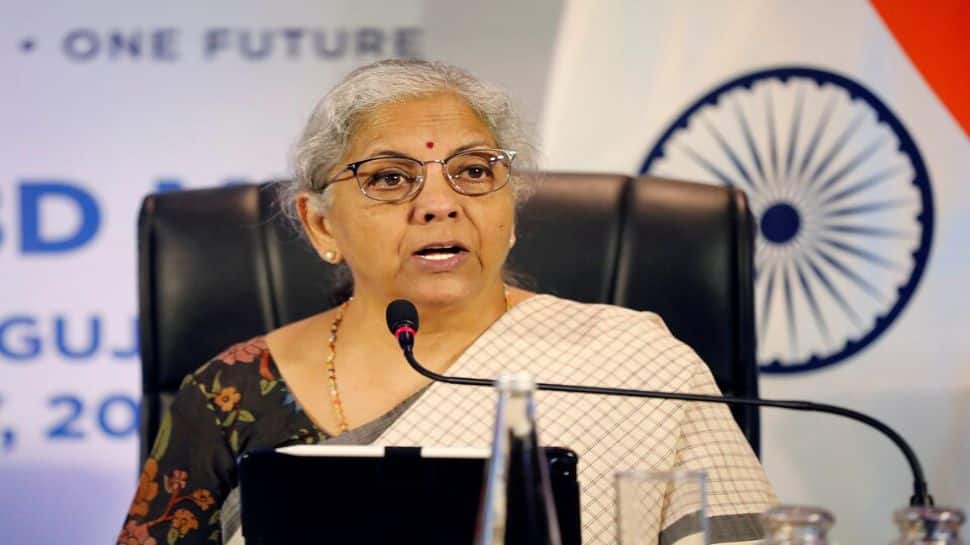
India’s Public Sector Banks Merger: The Centre is mulling over consolidating public-sector banks, and officials involved in the process say the long-term plan could eventually bring down the number of state-owned lenders from 12 to possibly just 4. The goal is to build a banking system that is large enough in scale, has deeper capital strength and is prepared to meet the credit needs of a fast-growing economy.
The minister explained that bigger banks are better equipped to support large-scale lending and long-term projects. “The country’s economy is moving rapidly toward the $5 trillion mark. The government is active in building bigger banks that can meet rising requirements,” she said.
Why India Wants Larger Banks
Sitharaman recently confirmed that the government and the Reserve Bank of India have already begun detailed conversations on another round of mergers. She said the focus is on creating “world-class” banks that can support India’s expanding industries, rising infrastructure investments and overall credit demand.
She clarified that this is not only about merging institutions. The government and RBI are working on strengthening the entire banking ecosystem so that banks grow naturally and operate in a stable environment.
According to her, the core aim is to build stronger, more efficient and globally competitive banks that can help sustain India’s growth momentum.
At present, the country has a total of 12 public sector banks: the State Bank of India (SBI), the Punjab National Bank (PNB), the Bank of Baroda, the Canara Bank, the Union Bank of India, the Bank of India, the Indian Bank, the Central Bank of India, the Indian Overseas Bank (IOB) and the UCO Bank.
What Happens To Employees After Merger?
Whenever bank mergers are discussed, employees become anxious. A merger does not only combine balance sheets; it also brings together different work cultures, internal systems and employee expectations.
In the 1990s and early 2000s, several mergers caused discomfort among staff, including dissatisfaction over new roles, delayed promotions and uncertainty about reporting structures. Some officers who were promoted before mergers found their seniority diluted afterward, which created further frustration.
The finance minister addressed the concerns, saying that the government and the RBI are working together on the merger plan. She stressed that earlier rounds of consolidation had been successful. She added that the country now needs large, global-quality banks “where every customer issue can be resolved”. The focus, she said, is firmly on building world-class institutions.
‘No Layoffs, No Branch Closures’
She made one point unambiguous: no employee will lose their job due to the upcoming merger phase. She said that mergers are part of a natural process of strengthening banks, and this will not affect job security.
She also assured that no branches will be closed and no bank will be shut down as part of the consolidation exercise.
India last carried out a major consolidation drive in 2019-20, reducing the number of public-sector banks from 21 to 12. That round improved the financial health of many lenders.
With the government preparing for the next phase, the goal is clear. India wants large and reliable banks that can support a rapidly growing economy and meet the needs of a country expanding faster than ever.
Business
Stock market holidays in December: When will NSE, BSE remain closed? Check details – The Times of India

Stock market holidays for December: As November comes to a close and the final month of the year begins, investors will want to know on which days trading sessions will be there and on which days stock markets are closed. are likely keeping a close eye on year-end portfolio adjustments, global cues, and corporate earnings.For this year, the only major, away from normal scheduled market holidays in December is Christmas, observed on Thursday, December 25. On this day, Indian stock markets, including the Bombay Stock Exchange (BSE) and National Stock Exchange (NSE), will remain closed across equity, derivatives, and securities lending and borrowing (SLB) segments. Trading in currency and interest rate derivatives segments will continue as usual.Markets are expected to reopen on Friday, December 26, as investors return to monitor global developments and finalize year-end positioning. Apart from weekends, Christmas is the only scheduled market holiday this month, making December relatively quiet compared with other festive months, with regards to stock markets.The last trading session in November, which was November 28 (next two days being the weekend) ended flat. BSE Sensex slipped 13.71 points, or 0.02 per cent, to settle at 85,706.67, after hitting an intra-day high of 85,969.89 and a low of 85,577.82, a swing of 392.07 points. Meanwhile, the NSE Nifty fell 12.60 points, or 0.05 per cent, to 26,202.95, halting its two-day rally.
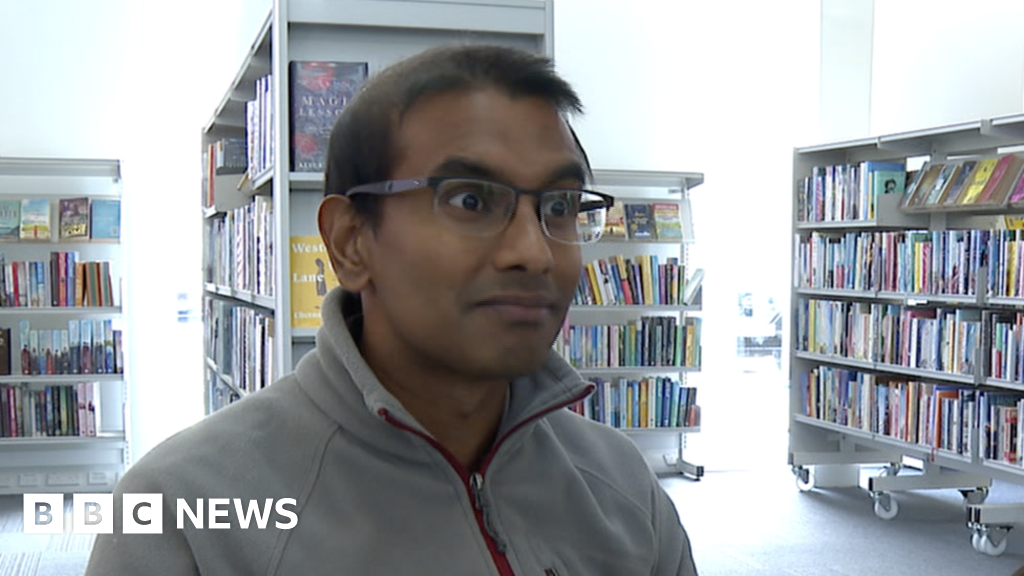
A GP says patients are presenting with mental health problems because of stress they feel over their levels of personal debt.
According to Citizens Advice, north-east England has the second highest number of people who require professional assistance with debt problems – only London is higher.
Debt charity StepChange said in 2024 the highest concentration of their clients were in the North East, with 37 clients per 10,000 adults.
Dr Kamlesh Sreekissoon, who works as a GP in North Tyneside, said people were juggling “three or four jobs” in the build up to Christmas in order to manage and subsequently struggling with their mental health.
The most common reason for personal debt as reported by Stepchange’s North East clients is a rise in the cost of living (19.3%) and a lack of control over finances (19%).
Both these statistics outstrip the UK figures of 17.7% and 17.9% respectively.
Citizens Advice said thousands of people were falling deeper into debt to meet the cost of basic essentials such as food and fuel, rather than luxuries, but that people also felt under pressure to provide for Christmas.
Dr Sreekissoon said the stress caused by the debt people faced was compounded by issues relating to their family situations.
“At this time of year you will see people juggling three or four jobs, also after caring for elderly relatives, parents, [they’re] stressed out and unfortunately struggling with their mental health,” said Dr Sreekissoon.
He said the debt his patients described was not caused by buying unnecessary things, but by simply struggling to make ends meet.
“It’s more the basics,” he said. “I see people taking on working long hours, doing two or three jobs, and just being kind of stretched out, not being able to see their kids, and that just burns people out which is really sad to see”.


Every Model of this New Snoopy MoonSwatch Is Different—And You Can Only Get One When It Snows

Panthers reach 7 wins for first time since 2022 with upset victory over Rams

Chanel debuts A$AP Rocky as ambassador, with Margaret Qualley teaser video

-

 Sports7 days ago
WATCH: Ronaldo scores spectacular bicycle kick
-

 Entertainment7 days ago
Welcome to Derry’ episode 5 delivers shocking twist
-

 Politics7 days ago
Washington and Kyiv Stress Any Peace Deal Must Fully Respect Ukraine’s Sovereignty
-
 Business7 days ago
Key economic data and trends that will shape Rachel Reeves’ Budget
-

 Tech5 days ago
Wake Up—the Best Black Friday Mattress Sales Are Here
-

 Fashion7 days ago
Canada’s Lululemon unveils team Canada kit for Milano Cortina 2026
-

 Tech5 days ago
The Alienware Aurora Gaming Desktop Punches Above Its Weight
-

 Politics7 days ago
53,000 Sikhs vote in Ottawa Khalistan Referendum amid Carney-Modi trade talks scrutiny