

Business
Renewables in focus over oil crisis | The Express Tribune


Pakistan has stepped up efforts to address the energy security challenge. Photo: file
ISLAMABAD:
As the world fuel crisis deepens in the face of US-Israel and Iran war in the Gulf, different countries, including Pakistan, are mulling over shifting to nuclear and renewable energy as well as electric vehicles.
China has already helped Pakistan set up nuclear power plants, which are producing electricity at the lowest cost when compared with plants running on other fuels. Beijing has also assisted in utilising renewable energy resources such as hydroelectric power to steer Islamabad out of the difficult situation.
US and Israeli airstrikes and counterattacks by Tehran on vital installations, including energy facilities, have not only led to a sharp spike in international oil prices but have also caused energy shortages in scores of countries. The Strait of Hormuz, a critical waterway from where around 20% of the world’s oil and liquefied natural gas (LNG) passes, is lying virtually closed in the aftermath of the war.
Global crude oil prices have crossed $100 per barrel and in Pakistan petrol prices have topped Rs300 per litre, causing ripple effects in almost all sectors of the economy. The runway oil prices are going to trigger a new world order where many countries will increasingly switch to renewable energy sources. Owing to oil rationing in Pakistan, educational institutions have already been shut down and they have shifted to the online mode while many offices are open for only two days a week for physical presence.
Keeping in view the current volatile regional and world situation, the electric vehicles and e-bikes have become a blessing in disguise for the consumers who already own them. To operate these vehicles and two-wheelers, oil consumption is not required as they run on batteries.
Pakistan has different sources of electricity production comprising oil-based plants, coal-fired plants, renewable energy, LNG-run plants and hydroelectric power. Solar net metering is a relatively new addition to the national grid; however, recently, the government has disincentivised this clean energy source, citing the growing burden of capacity payments. Plants powered by LNG also provide clean energy to consumers in the country. For around a decade, Pakistan has been importing around 10 LNG cargoes a month from Qatar but of late the two sides have reached an understanding to shift 24 cargoes to other destinations in the ongoing year due to a sharp drop in demand from power producers.
Moreover, the US-Israel-Iran war has forced the closure of a large LNG production facility in Qatar, which was supplying gas to Pakistan. Now, LNG supply has been halted and Qatar has declared a force majeure. Oil marketing companies (OMCs) too are encountering hurdles in the way of securing cargoes following the blockage of the Strait of Hormuz through which 90% of oil for Pakistan comes. However, Iran has released two crude cargoes, which were stuck during the war, and has also agreed to allow the crossing of Pakistan-bound oil shipments.
Meanwhile, the provision of oil from Saudi Arabia, the United Arab Emirates (UAE) and Kuwait has come under threat as oil facilities in these Gulf nations have been struck during the war. As an all-weather friend of Pakistan, China has helped Pakistan overcome energy scarcity over the past around one decade. Under the China-Pakistan Economic Corridor (CPEC) project, Beijing has invested over $20 billion in the energy sector. By fiscal year 2024-25, Pakistan’s electricity generation capacity had accelerated to 46,605 megawatts, where thermal sources including coal, gas and oil dominated with a share of 55.7%, or approximately 25,900MW.
Hydroelectric power constitutes 24.4%, around 11,300MW, while renewables such as wind and solar account for 12.2%, or about 5,600MW. Nuclear energy makes up the remaining 7.8%, contributing roughly 3,600MW to the overall installed capacity.
Among renewables, China has provided assistance for setting up energy plants having production capacity of 4,800MW. It has helped establish wind plants with total capacity of 400MW. These projects include 50MW Dawood Wind, 100MW UEP Wind, 50MW Sachal Wind and 100MW Three Gorges Wind Plants.
The Quaid-e-Azam Solar Park and cluster projects with a cumulative production capacity of 900-1,000MW have been undertaken with critical support from China. The development of a few hydroelectric power projects, having total capacity of 3,400MW, has also received Beijing’s backing. In total, these renewable projects have a combined production capacity of around 5,000MW – 400MW wind power, 900-1,000MW solar energy and 3,400MW hydel electricity. As the world is moving fast towards nuclear energy, renewables and electric vehicles, Pakistan has also stepped up efforts to address the energy security challenge. China’s top EV brand BYD has already expanded its footprint to Pakistan by introducing its vehicles here.




A United Airlines plane approaches the runway at Denver International Airport on March 23, 2026.
Al Drago | Getty Images
United Airlines flight attendants approved a new five-year labor contract with 31% average raises to base pay by August and other improvements, marking the last of the major carriers with unionized flight crews to reach a deal post-Covid.
The labor deal would give United’s roughly 30,000 flight attendants their first raises in close to six years. The company and the flight attendants’ union reached a preliminary deal in March. Crews had rejected a contract last year.
The union said the contract won 82% approval from the flight attendants, with close to 90% of them voting.
“The contract will immediately change the lives of United Flight Attendants, especially our thousands of new hires who have been hired since the pandemic,” said Ken Diaz, president of the United chapter of the Association of Flight Attendants.
The contract also includes boarding pay, or pay for when the aircraft’s door is open and travelers are getting on. Airlines had for years started flight attendants’ pay clock once the boarding door was closed.
The contract comes with a roughly 7% to 8% increase in compensation and $741 million in back pay, as well as quality-of-life improvements like restrictions on red-eye flights and “sit pay” during disruptions of more than 2½ hours.
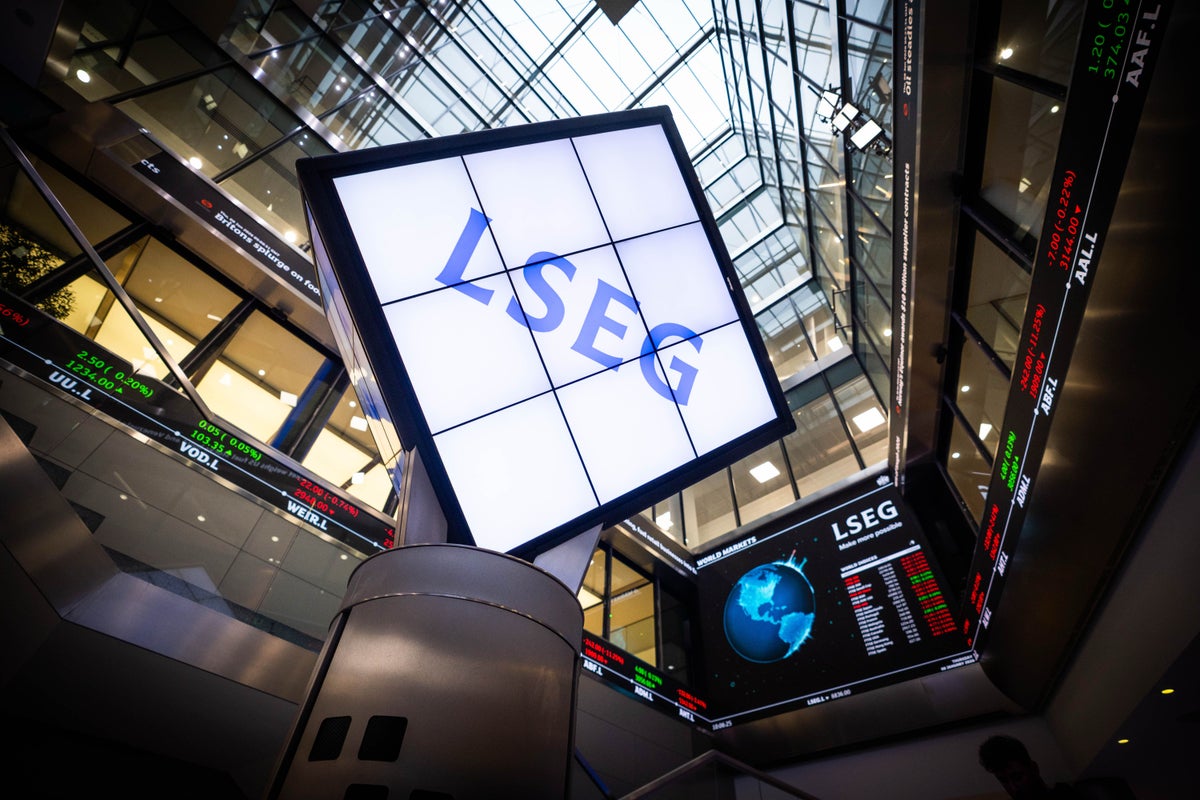
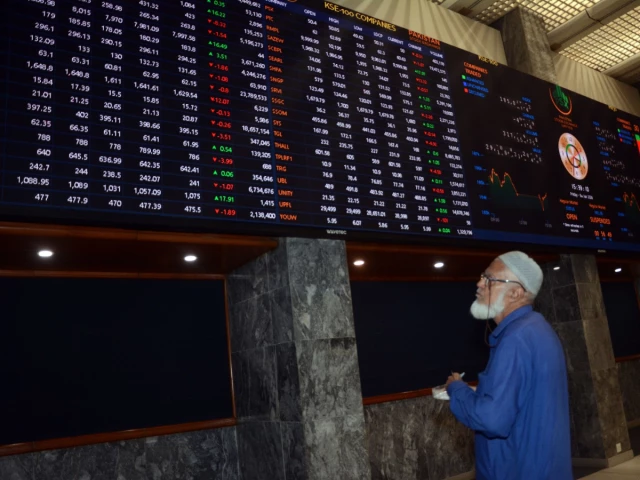
Stocks struggled on Tuesday, although blue chips proved resilient, amid a triple whammy of domestic political strife, surging US inflation and a lack of progress in the Middle East.
The FTSE 100 closed down just 4.11 points at 10,265.32. The FTSE 250 ended down 341.66 points, 1.5%, at 22,466.20, and the AIM All-Share fell 11.75 points, 1.4%, at 810.66.
The pound fell to 1.3505 dollars on Tuesday afternoon from 1.3651 dollars on Monday. Against the euro, sterling was lower at 1.1517 euros from 1.1584 euros on Monday.
The yield on UK 10-year gilts traded at 5.10%, up from 5.01% the day before.
Prime Minister Sir Keir Starmer defied calls for him to quit, despite a growing number of Labour MPs demanding that he steps aside.
“The Labour Party has a process for challenging a leader and that has not been triggered,” Sir Keir told ministers during crunch talks over his future, as no one person has stepped forward to challenge him yet.
“The country expects us to get on with governing. That is what I am doing and what we must do as a Cabinet,” he added.
More than 80 of Labour’s 403 MPs have now called for Sir Keir to quit immediately, or to set out a timetable for his resignation, including some ministers.
Banks sold off, amid reports of a possible windfall tax on the sector should there be a change at the top of the Government.
“Banks narrowly avoided a higher tax rate at the last budget, but our base case now assumes the UK banking surcharge to increase from 3% to 5%,” said the banking team at JPMorgan.
NatWest fell 3.2%, Lloyds Banking Group dipped 4.4% and Barclays declined 3.6%.
Meanwhile, the surging bond yields weighed on interest rate-sensitive housebuilders, with Barratt Redrow down 4.1% and Taylor Wimpey 2.4% lower.
Adding to the uncertain mood was another spike in the oil price as the impasse in the Middle East carried on.
Iran’s chief negotiator said on Tuesday that Washington must accept Tehran’s latest peace plan or face failure, after US President Donald Trump warned a truce was on the brink of collapse.
“Relations between Washington and Tehran appear to be more strained than at any time since the original ceasefire was announced just over a month ago,” observed David Morrison at Trade Nation, suggesting that hostilities could “resume at any time”.
Brent crude for July delivery was trading at 108.07 dollars a barrel on Tuesday, up compared with 103.70 dollars at the time of the equities close in London on Monday.
In Europe on Tuesday, the CAC 40 in Paris ended down 1.0%, and the DAX 40 in Frankfurt declined 1.6%.
In New York, the Dow Jones Industrial Average was down 0.5%, the S&P 500 fell 1.0% while the Nasdaq Composite was 1.7% lower.
The yield on the US 10-year Treasury widened to 4.46% on Tuesday from 4.39% on Friday. The yield on the US 30-year Treasury stretched to 5.02% from 4.97%.
The impact of the Iran war was reflected in soaring US inflation figures for April.
Annual CPI inflation sped up to 3.8% in April from 3.3% in March, above FXStreet-cited expectations of a 3.7% rise.
Monthly, energy costs were up 5.6% in April after a 21.3% jump in March.
Excluding food and energy costs, core CPI was up 2.8% year-on-year in April, up from 2.6% in March and higher than an expected 2.7%.
Analysts explained that much of the upside in core inflation came from a spike in shelter costs.
TD Economics said the numbers reinforce why the Fed needs to remain “patient”.
“Even assuming a ‘more normal’ reading on shelter prices last month, core inflation would’ve still firmed relative to March. With secondary price effects from higher energy prices likely to intensify in the months ahead, we’re likely to see core measures of inflation drift a bit higher and hover around 3% through year-end,” the broker said.
While Bank of America said the latest increase means inflation is getting “very uncomfortable” for the Fed.
Following the data, Fed futures now place a 60% probability of a rate hike by March next year.
The euro traded slightly lower against the greenback, at 1.1729 dollars on Tuesday from 1.1782 dollars on Monday. Against the yen, the dollar was trading at 157.73 yen, higher than 157.01 yen.
Back in London, Vodafone fell back 7.0% after mixed full-year results with adjusted earnings short of hopes but adjusted cash flow ahead.
“In the stock market it’s often said that it’s better to travel than arrive, hence why shares in Vodafone dipped on robust-looking full-year results after a strong rally in the past 12 months,” said Dan Coatsworth, head of markets at AJ Bell.
Vodafone shares have risen 60% in the last 12 months.
Intertek led the risers, up 6.4%, as it said it was “reviewing” the latest takeover proposal from suitor EQT Fund Management Sarl.
Intertek has turned down three previous approaches from EQT.
On the FTSE 250, Greggs rose 8.0% after reporting higher sales in the opening weeks of 2026 and maintaining full-year expectations.
But Wickes plunged 12% after reporting mixed trading as wet weather weighed on retail demand at the start of 2026.
Gold traded lower at 4,663.87 dollars an ounce on Tuesday, from 4,733.27 dollars on Monday.
The biggest risers on the FTSE 100 were Intertek, up 320.00p at 5,300.00p, British American Tobacco, up 255.00p at 4,634.00p, Compass Group, up 1.74p at 31.93p, Imperial Brands, up 104.00p at 2,832.00p and London Stock Exchange Group, up 328.00p at 9,348.00p.
The biggest fallers on the FTSE 100 were Vodafone Group, down 8.45p at 111.95p, 3i Group, down 116.00p at 2,400.00p, St James’s Place, down 52.50p at 1,154.50p, Lloyds Banking Group, down 4.28p at 94.06p and Marks & Spencer, down 13.60p at 308.90p.
Wednesday’s global economic calendar has eurozone industrial production and GDP data, the King’s Speech in the UK and US PPI figures.
Wednesday’s local corporate calendar has a trading statement from Spirax Group.
Contributed by Alliance News

Joni Lamb, the president of Daystar Television Network, a televangelism broadcaster she founded with her husband, Marcus Lamb, turning their family into stars of Christian entertainment, died on Thursday. She was 65.
In an announcement posted on Daystar’s website, the company described the cause as “serious health matters” exacerbated by a recent back injury. It did not say where she died.
On a trip to Jerusalem in 1983, shortly after the couple married, Mr. Lamb visited the Mount of Olives and felt God telling him to move to Montgomery, Ala., and start a Christian TV station. He and Ms. Lamb poured their energy and modest finances into the effort and began appearing on the air two years later.
By the time they founded Daystar — in Texas in 1997 — they were experienced entrepreneurs and performers. After just a few years, they owned 24 stations around the country. By 2010, they had become the second-largest Christian broadcaster, after Trinity Broadcasting Network, and were reaching more than 200 countries, The Dallas Morning News reported.
Compared with other televangelists, the Lambs “are younger and come across as more ordinary folks,” David Clark, the president of a rival Christian broadcaster, told The Fort Worth Star-Telegram in 2001. “They come across as being sincere.”
Mr. Clark added: “Marc is sharp, and his wife, Joni, is a big asset.”
The Lambs frequently appeared on their own network in a talk show format, discussing the pleasures and challenges of domestic life in a Christian idiom. Ms. Lamb, who liked to break into song, was Daystar’s leading talk show host, over the decades moderating shows like “Taking a Break With Joni” and “Joni Table Talk.” She would often be surrounded by other female regulars, putting questions to a male guest who had wisdom to impart.
The prominent pastor Jentezen Franklin visited earlier this year, for example, to discuss his new book, “The Power of Short Prayers.” The conversation slipped easily into evangelism.
“For someone watching right now: You’ve been listening; God’s opened your heart,” Ms. Lamb said. “In fact, your heart’s already been opened for some time, as you’ve been looking, searching, and you tried everything else. Always say, ‘Why don’t you try Jesus?’ A simple prayer: That will change your life for eternity.”
During the episode she was flanked, as she often was, by her two daughters, Rachel Lamb Brown and Rebecca Lamb Weiss, and referred to her husband by his first name, as if the viewers at home were family friends.
In 2021, Mr. Lamb died, at 64, of Covid-19, after having frequently suggested that people should pray instead of getting vaccinated. Ms. Lamb announced his death on air.
The travails of the Lamb family were often incorporated into the station’s programming. In 2010, Mr. Lamb admitted on live TV to an extramarital affair and described an attempt to extort millions of dollars in blackmail.
“Christian TV took a soap opera turn,” The Dallas Morning News wrote of the episode.
In 2020, Daystar returned a $3.9 million Paycheck Protection Program loan after the CBS program “Inside Edition” investigated the company’s purchase of a Gulfstream jet used by the Lamb family for beach and golf trips.
Four years later, a panel of Ms. Lamb’s talk show regulars questioned her on air about an accusation by her son, Jonathan, that there had been a coverup of a family member’s sexual molestation of his infant daughter. Ms. Lamb denied that any abuse had occurred, and after an investigation, no charges were filed.
Joni Lynn Trammell was born on July 19, 1960, in Greenville, S.C., where she grew up. Her father, Billy Frank Trammell, worked for a local refrigeration and heating company and would evangelize with friends he made playing basketball. Her mother, Sandra (Hudson) Trammell, competed in the Miss Greenville beauty pageant.
The Lambs met at a Greenville church in 1980, when Mr. Lamb, a traveling Pentecostal preacher, was visiting. They married in 1982.
Their early investments in TV stations came fortuitously, at a time of deregulation that The Star-Telegram would describe as “market bottom.” They later made money buying and selling small broadcast towers, and selling airtime to ministries and churches.
In 2023, Ms. Lamb married Doug Weiss, a sex therapist who became a co-host on Daystar. He survives her; other survivors include her three children and several grandchildren.
On air earlier this year, Ms. Lamb told viewers that the Christian faith guaranteed a posthumous reward.
“When you pray that prayer, and you receive Jesus, he forgives your sins,” she said. “When you die, you’re going to heaven.”


OpenAI chief Altman says Elon Musk wanted control of ChatGPT maker, denies betrayal
United Airlines flight attendants ratify new contract with 31% raises this summer

Jacob Fatu chooses to acknowledge violence, AAA Mega Championship makes WWE history and more from Raw

-

 Politics1 week ago
Iran weighs US reply delivered via Pakistan as Trump signals opposition to deal terms
-

 Tech1 week ago
DHS Demanded Google Surrender Data on Canadian’s Activity, Location Over Anti-ICE Posts
-
 Business1 week ago
Heineken to invest £44.5m in hundreds of pubs creating 850 jobs
-

 Entertainment1 week ago
Jelly Roll reacts to daughter Bailee Ann’s major life milestone
-
 Business1 week ago
Heineken plans huge investment in hundreds of UK pubs ahead of World Cup
-

 Tech4 days ago
A new frontier: Identity stack evolves for agentic systems | Computer Weekly
-

 Tech4 days ago
‘Orbs,’ ‘Saucers,’ and ‘Flashes’ on the Moon: Pentagon Drops New UFO Files
-
 Business1 week ago
India among most resilient large EMs, better placed for future global shocks; policy reforms & strong buffers help: Moody’s – The Times of India