

Tech
SAP TechEd 2025: Make AI real, grind in data | Computer Weekly


At SAP TechEd 2025 in Berlin, a troika of technical executives unveiled artificial intelligence (AI)-driven features in the supplier’s SAP Build platform, disclosed more agents in its Joule AI assistance portfolio and pointed to expanded partnerships with data specialist companies, most notably and recently Snowflake.
These relationships betoken, according to SAP, a commitment to opening up its platforms to build a strong foundation for AI among its customers. The main theme of the event was “getting real” about AI.
Revisiting the “flywheel” concept SAP trumpeted at its Sapphire conference in May, Muhammad Alam, executive board member and product and engineering senior vice-president at the company, said: “Innovations across SAP’s unique flywheel of applications, data and AI put developers in the driver’s seat – where they belong.”
Michael Ameling, president of SAP Business Technology Platform, stated that the supplier’s in-memory, columnar database, Hana, is the “database AI has always been looking for”.
SAP chief technology officer Philipp Herzig highlighted predictive use cases, which are the province of traditional machine learning rather than large language models. He stressed that building AI-based applications “at scale, for large, multinational” companies is of a higher order than building small applications for simpler organisations.
SAP Build, the supplier’s low-code platform for enterprise application development and automation, now enables developers to use agentic development tools such as Cursor, Claude Code, Cline and Windsurf with SAP development frameworks, using Model Context Protocol Servers.
Visual Studio Code users will be able to access SAP Build directly in their development environment with a new extension, said SAP.
The supplier also said developers will now be able to build new agents grounded in SAP business data that can act autonomously based on changing business conditions.
SAP Business Data Cloud, announced in February 2025, has been extended to use Snowflake as well as Databricks and Google. The SAP Snowflake extension brings Snowflake’s managed data and AI capabilities directly to SAP users, giving them the flexibility to choose the right compute and storage for each data and AI workload, while maintaining governance, interoperability and business context, according to SAP.
The supplier also announced a capability in the SAP Hana Cloud knowledge graph engine that maps relationships across SAP database tables, columns and data models, revealing how data fits together. SAP maintained that developers will be able to see how their data connects across systems and uncover underlying business insights.
The supplier announced what it calls an enterprise relational foundation model, described as a new class of AI that predicts business outcomes rather than the next word in a sentence. SAP-RPT-1 is said to be able to make fast and accurate predictions for common business scenarios, such as delivery delays, payment risk or sales order completion. It launched a free playground environment for developers.
The company also pledged to equip 12 million people worldwide with AI-ready skills by 2030, through a partnership with online learning platform Coursera.
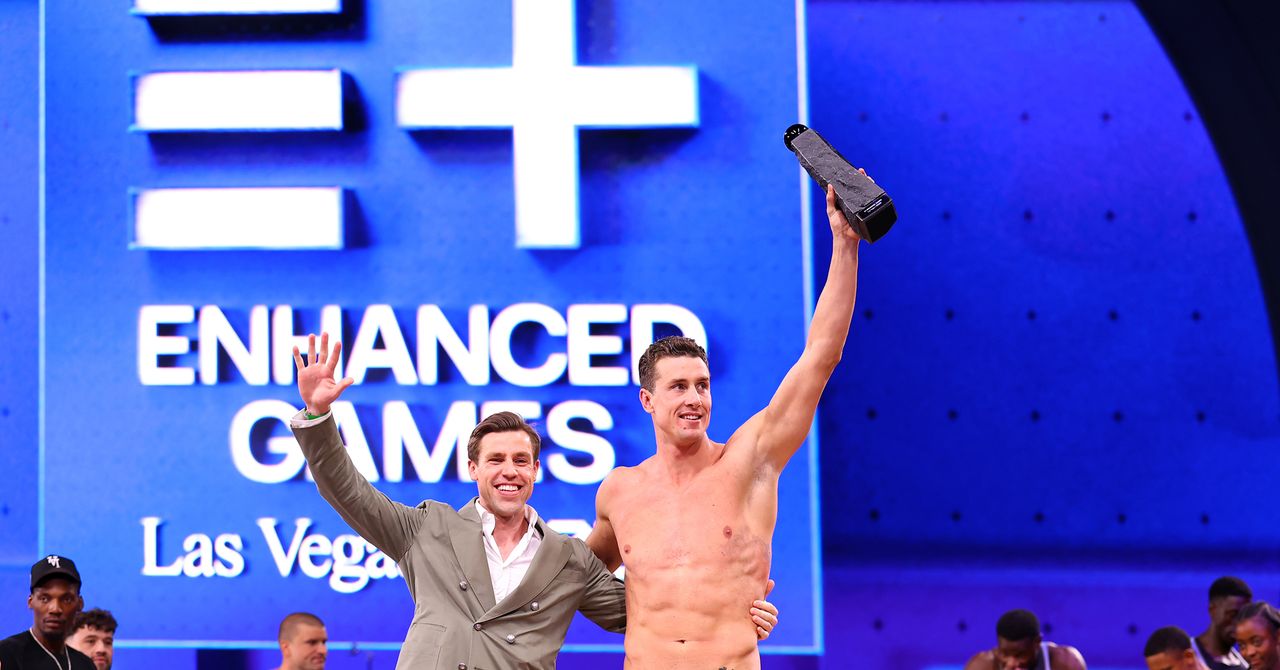
“Now I’m being taught how to do it the right way,” Ryan says. “And I’m being paid to do it.”
Ryan hopes Enhanced can pave the way for a separation of truly “clean” events and transparently juiced competitions. He even calls on events like the Olympics to increase testing strictness.
“What we’re doing is completely separate,” Ryan said during Friday’s media availability. “It’s marketing, it’s show business. And it should be separate.”
The financial argument and the idea of helping aging athletes prolong their careers make up the most compelling case I hear for Enhanced on its face—at least in terms of athletes’ motivations. But it’s the business side of the organization where some conflicts of interest become tougher to ignore.
Photograph: Etienne Laurent/Getty Images
Head to the products page of the Enhanced website and you’ll find what appears to be the organization’s spinoff of telehealth company Hims, but for PEDs. Products like copper peptides, sermorelin and testosterone injections are available alongside GLP-1s, semaglutide, and tadalafil.
Martin is open about the mission: To bring these products to the masses. He talks up required medical intake forms and regular check-ins with certified company doctors to avoid risks of mis- or over-use.
But if the Enhanced mission is successful, and PEDs become a bigger and more financially appealing part of sports, assuming these products will only be sought after and used in responsible ways is just as naïve as pretending doping hasn’t happened in the past at supposedly “clean” events. If anything, athletes in particularly disadvantaged financial situations might prioritize doping even more.
That’s where the dystopian feel bubbling below the surface becomes more palpable. There’s a distinctly MAHA undertone here, from investors like Thiel and Donald Trump Jr. to Enhanced Games founder Aron D’Souza describing RFK Jr. as “pro–human enhancement.”
While organizers wouldn’t give me any specifics on how much of Enhanced’s future will rely on product sales to fund prize pools and operations, it’s probably safe to assume investors like these will expect returns to remain involved.
It’s fair to wonder whether this is truly an attempt to remove stigmas and change sport. The overconfidence on display prior to the actual contests only drove home the feeling that this was more an elaborate money-making scheme than anything else.
So will the Enhanced Games usher in a new era of athletic capability and prowess? Maybe—at least if you can afford it.

I’ve been covering deals since 2013, and I still think Memorial Day sales are worth checking out. There are so many made-up shopping holidays these days that it can be difficult to ascertain when items are actually cheaper than usual. Now is one of those times. To help you out, I’ve scoured through our buying guides full of hand-tested items to find gadgets and gizmos that are discounted—and worth buying. If you’re in the market for something we’ve tested, keep checking in through May 26 to see if you can snag a deal. We’ll update this post again between now and then.
Make sure to check out our various buying guides for recommendations on the best laptops, the best printers, and more. You might also be interested in the rest of our Memorial Day deals coverage.
Updated May 25: I’ve added 5 new deals, removed expired discounts, and checked for accuracy throughout.
WIRED Featured Deals:
Birdfy Lite Smart Bird Feeder (Lifetime AI, No Solar) for $120 ($110 off)
A few different combinations of our favorite smart bird feeder are on sale. You can choose a version with or without solar charging. There’s also the option of buying a model that comes with lifetime AI bird identification; otherwise, if you decide you want it later, it’ll cost you $5 per month, but it isn’t required for enjoyment. This bird feeder is equipped with a 1080p camera that can capture decent footage of whoever comes to snack. It has a wide field of vision as well, and the feeder is easy to clean and refill.

You could argue, and people have, that the top gay dating apps are now optimized for monetization and juicing engagement loops. Increasingly overrun with bots, they are at times even devoid of actual connection.
Grindr, with its 15 million monthly active users, is drowning in ads while pushing expensive upsells on users. (In February, as part of its “gAI” overhaul, the company announced a new premium monthly subscription tier for $500.) Sniffies was beloved by cruisers until the seismic reaction in April to Match Group’s $100 million investment sparked concerns that another queer space could get absorbed into a larger dating conglomerate.
As public backlash against popular queer apps continues to mount, a batch of tech entrepreneurs are scrambling to meet the demand by doubling down on privacy-conscious, community-driven alternatives.
Calum Bowden, who posts under the internet persona @donjackoghue, launched MeetMarket in March. Currently only available as a web app, MeetMarket includes all the core features of your typical hookup app—a customizable profile, a grid of nearby users—with one major difference. It was built on a decentralized identity system, meaning MeetMarket doesn’t store users’ emails, passwords, or personal information. Users store everything on their device, giving them full control and ownership over their data and how it’s shared. Messages on the platform are end-to-end encrypted, and Bowden says it will always be ad-free, even for nonpaying members. (A monthly membership costs €12, or $13.99.)
“Decentralization and data privacy make a lot of sense for queer people in general, and especially in hostile legal environments or in the US right now, where you don’t really know what digital platforms actually have your best interest in mind,” says the 34-year-old PhD student in Berlin who studies the sociology of technology and organization.
Within the first 48 hours of MeetMarket’s launch on March 24, over 12,000 people had signed up, and some 60,000 people have used it since. The app averages 5,000 weekly visitors, according to Bowden, though there is not a lot of concurrent activity in the same cities. “It’s become more social than necessarily driving an immediate hookup.” But casual encounters do still happen, he says. “The Midwest bottom jockeys are eating meet market up,” one user noted on X.
Bowden didn’t anticipate public sentiment would sour on Sniffies just a few weeks after his launch. Still, the timing of it couldn’t have been more serendipitous. “When Sniffies announced their investment from Match Group, I was like, how are they fueling my fire?” he asks. “This is exactly the model that venture capital leads to. This is exactly why these economic models for technology are so bad, because they basically force the gentrification of a digital platform.” Sniffies did not immediately respond to a request for comment.
A self-described “utopian conspirator,” Bowden is the cofounder of Trust, a nonprofit that operates as a kind of incubator to prototype ideas “as a critique of technology and the status quo,” he says. With MeetMarket, he wanted to create an app that gave users more agency over their experience without cheapening it.
It can sometimes seem like Big Dating wants people to believe that it is the only answer to cure their romantic woes—Bumble CEO Whitney Wolfe Herd recently told Axios that there isn’t much longevity in niche apps—but the opposite is proving just as true, as people seek out more specificity and intention in their online dating experience.
“Gay men have tribes, subcultures, aesthetics, and different ways they want to be seen,” says Justin Finnegan, a 35-year-old software engineer in Toronto who last year created Chunkr, a gay hookup app that has resonated with bears, chubs, cubs, and their admirers despite originally being for all gay men.


Adam Copeland, Christian Cage snap 25-year drought, win AEW Tag Team Championship at Double or Nothing

Bracket set, regionals begin May 29

A Swimmer Broke a World Record at the “Steroid Olympics”

-

 Tech1 week ago
Why Is Your Grill So Dumb? The Best Grills Set Temp Like an Oven
-

 Tech1 week ago
This Solar-Powered Smart Sprinkler Keeps My Lawn Watered Without Any Power Cables
-

 Fashion5 days ago
US cotton planting advances to 41%, concerns persist in Texas
-

 Fashion4 days ago
ICE cotton sees mixed trend as rain forecasts weaken sentiment
-

 Fashion1 week ago
Turkiye’s current account deficit expected to widen in 2026: Minister
-

 Entertainment1 week ago
Princess of Wales praised as ‘step ahead’ of royal family
-

 Sports5 days ago
Todd Monken says Shedeur Sanders has ‘come miles’ as Browns quarterback competition heats up
-

 Fashion1 week ago
India’s Pearl Global’s FY26 revenue crosses $521 mn milestone