

Entertainment
Saudi, Iraqi companies halt crude sales to Indian refiner, say sources

- Nayara misses 3m barrels monthly supply from Gulf exporters.
- Sanctions create payment issues for Iraqi crude oil purchases.
- Nayara refinery runs at 70–80% capacity amid sanctions.
Saudi Aramco and Iraq’s state oil company SOMO have stopped selling crude oil to India’s Nayara Energy in the aftermath of sanctions imposed in July by the European Union on the Russian-backed refiner, three sources familiar with the matter said.
The halting of supply from the two Gulf exporters means Nayara, majority-owned by Russian entities including oil major Rosneft, relied entirely on Russia for its crude oil imports in August, according to sources and LSEG shipping data.
Nayara typically receives around 2 million barrels of Iraqi crude and 1 million barrels of Saudi crude each month, but did not receive shipments from either of the two suppliers during August, shipping data from Kpler and LSEG showed.
SOMO and Nayara did not respond to requests for comment. Saudi Aramco declined to comment.
Two of the sources said that the sanctions had created payment problems for Nayara’s purchases from SOMO, without providing further details.
The most recent cargo of Basra crude from SOMO was discharged for Nayara by the Kalliopi, a very large crude carrier (VLCC), at Vadinar port on July 29, according to Kpler and LSEG data as well as data obtained from industry sources.
The private refiner received 1 million barrels of Arab Light carried by the VLCC Georgios co-loaded with a similar quantity of Basrah heavy on July 18, its last Saudi delivery, according to LSEG data.
Nayara is receiving direct supplies from Rosneft, an official from the Russian Embassy in New Delhi said last month.
The private company is operating its 400,000 barrel-per-day refinery at Vadinar in western India at about 70-80% capacity due to difficulties in selling its products resulting from the sanctions, sources have said.
Nayara Energy, which controls about 8% of India’s 5.2 million barrel-per-day refining capacity, has been struggling to transport fuel since the EU sanctions, relying on so-called dark fleet vessels after other shippers backed out, according to shipping reports and LSEG data.
The company’s CEO resigned in July. Last week, Nayara announced the appointment of a senior executive from Azerbaijan’s national oil company SOCAR as its chief executive.
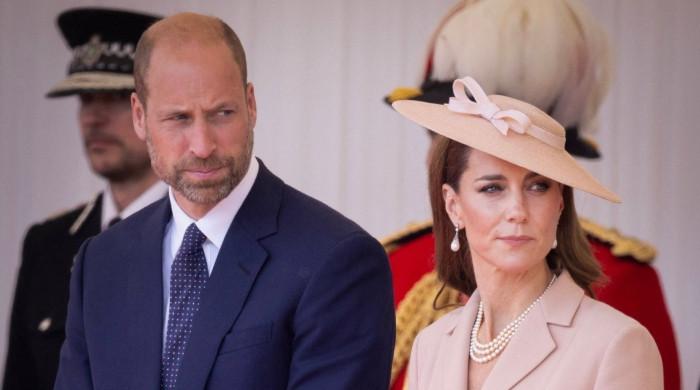
Prince William and Princess Kate made it clear in front of the royal family that they are distancing themselves from Andrew Mountbatten-Windsor and Sarah Ferguson’s daughters.
The future King and Queen plan to lead the royals by focusing on accountability and transparency in their reign.
Princess Beatrice and Princess Eugenie, who were mentioned in shocking emails of Epstein files, have been losing their royal connections just like their parents.
Despite Andrew’s fallout, the sisters were invited by King Charles to celebrate Christmas last year with the royal family at Sandringham.
But the Daily Mail reported that William and Catherine did not give any gifts to Beatrice and Eugenie during the royal gathering.
The source shared, “Notably, there were no presents under the Sandringham tree [this year] for Beatrice and Eugenie from William and Kate – something everyone pretended not to notice.”
It has been confirmed by several royal commentators that William and Catherine are keeping the York sisters at arm’s length.
“William and Kate were apparently polite but stand-offish,” a source said.
Emily Nash said that, like William, the Princess of Wales, “is very aware of public opinion and the risk that this scandal poses to the monarchy’s reputation.”
In order to safeguard the firm, Prince William and Princess Kate aim to go forward with unproblematic royal members.
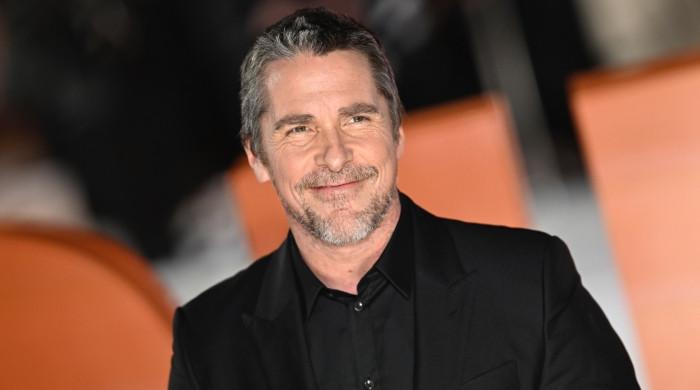
You’d think someone like Christian Bale – an Oscar winner with decades of iconic performances – would spend his downtime watching movies. Turns out… not really.
While attending the New York City premiere of The Bride! On March 3 at The Rose Theater at Jazz at Lincoln Center, the 52-year-old actor made a surprisingly honest confession: he’s actually pretty behind on film watching.
Case in point? He still hasn’t seen Jacob Elordi play Frankenstein in Guillermo del Toro’s upcoming 2025 adaptation of Frankenstein – even though Bale is portraying Frankenstein’s monster himself in The Bride!.
“I hear it’s fantastic,” Bale said.
Then he explained the real reason.
“I just don’t watch that many movies.”
And Elordi’s monster isn’t the only performance he’s missed lately. Bale admitted he also hasn’t seen his The Bride! Co-star Jessie Buckley in Hamnet – a role that’s been generating major awards buzz ahead of the 98th Academy Awards.
“I just know Jessie as The Bride,” he joked.
Buckley, for her part, clearly doesn’t have the same problem keeping up with Blae’s work.
In fact, she’s a full-blown fan.
“I mean, The Fighter, I think, is extraordinary. The Machinist, I mean, I don’t think anybody has created a character like that, that he has,” she said.
Then came the playful compliment every actor probably wishes they’d hear.
“He annoyingly never does a bad performance.”
Buckley added that sharing scenes with Bale raises the bar instantly.
“When you step onto set with Christian, you’re going to work… but I love him dearly.”
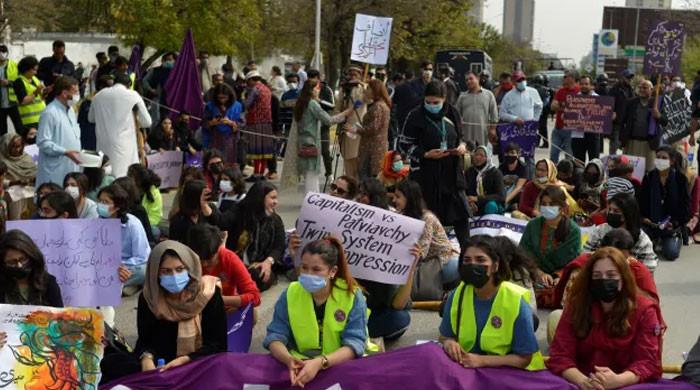
On International Women’s Day 2026, we are reminded that the future of Pakistan and Pakistani women is inseparable from the empowerment of its girls. When we invest in girls, we don’t just change individual lives; we shape the trajectory of economies, societies and nations.
Today, 54 million girls under the age of 18 live in Pakistan, and each day, around 9,200 girls are born into a world where survival, education and protection are far from guaranteed. For too many girls, the journey from vulnerability to opportunity is marked by systemic barriers that begin on day one.
Survival, especially in the early years, is the first barrier.
In Pakistan, 40% of children under five are stunted due to malnutrition, a condition that undermines brain development, weakens immunity and limits lifelong potential. Stunting is linked to nearly three out of four under-five deaths.
Anaemia — affecting over half of adolescent girls and most pregnant women — worsens the consequences of early marriage and pregnancy, increasing the risk of premature and low-birth-weight babies with long-term setbacks for children’s growth and cognitive development. Before many girls ever see the inside of a classroom, their futures are already at risk. The cost of under-investing in maternal and child health is not only measured in lives lost but in potential diminished.
Yet progress is possible. Shabira, a young girl born in Sindh during the devastating 2022 floods, became malnourished and dangerously ill. A mobile health team arrived in her village, screened her and provided essential treatment.
Within two months, her health dramatically improved. Her recovery is proof that timely intervention works. Investing in early childhood health and nutrition is not only lifesaving but also the foundation of human capital and future success.
Once survival is ensured, education becomes the next key to unlocking girls’ futures. Yet, 25 million children in Pakistan remain out of school, half of them are girls, one of the highest rates of educational exclusion in the world.
Even among those who attend, nearly 80% of children cannot read or understand age-appropriate texts by age 10, and many lack opportunities to advance their studies beyond grade 8. This gap reflects entrenched barriers like poverty, gender bias, and underfunded education systems that discourage adolescent girls from attending school.
During a visit to Khyber Pakhtunkhwa, I saw a drawing by an Afghan child: “Let me learn, let me fly”, alongside a white dove of peace. This plea for opportunity resonated deeply as I listened to children, adolescents and parents, all emphasising the central role that education plays in shaping their lives.
Education is not just a right; it is a multiplier. It drives economic growth, creates healthier communities and transforms societies. For Pakistani girls, each additional year of schooling increases their future earnings by up to 10%.
Educated girls marry later, have healthier children, and contribute significantly to their families and communities. Yet, many girls are still denied this fundamental right. Through informal setups, we can expand access to education for those excluded from formal schooling. These flexible, community-based pathways can allow girls to continue their education despite the odds.
But learning alone is not enough. Protection is equally vital.
Nearly one in five girls in Pakistan is married before the age of 18, three times the rate for boys. Early marriage cuts short education, limits economic prospects and traps girls in cycles of poverty.
Adolescence is a critical phase; the right investment can propel girls forward; neglect can leave them permanently behind. Currently, 56% of girls aged 15 to 24 are not in education, employment, or training, a stark contrast to the much lower figure for boys. This disparity represents lost potential at the national level.
The economic case for empowering girls is undeniable. Inclusion is not charity; it is smart economics. As Pakistan’s population is projected to exceed 340 million by 2050, investing in girls is essential to unlocking Pakistan’s demographic dividend. Aligning our policies, budgets and institutions around girls’ health, education and protection is not optional – it is essential for sustainable growth.
Let this decade be remembered not for incremental progress, but for catalytic transformation — systemic, social and sustained. Investing in girls and women is among the most strategic decisions Pakistan can make. It yields returns across generations.
As we mark International Women’s Day, we must move beyond celebration to commitment. The real measure of our resolve will not be in speeches delivered, but in policies enacted, resources allocated, and barriers dismantled. Every girl, regardless of her birthplace or background, deserves the chance to survive, learn, thrive, and lead.
There is reason for hope. Evidence shows that despite systemic barriers, increasing numbers of girls are reaching tertiary education — outperforming expectations and, in many contexts, their male peers. Imagine what would be possible if their potential were matched by equitable investment.
Girls are not born lacking potential; they are born with wings. Too often, it is society that chooses to clip them — through discrimination, neglect and underinvestment. Our task is not to give girls power; it is to remove the barriers that prevent them from using the power they already possess.
The future of Pakistan will be written by the opportunities we choose to create and collectively sustain for girls today. When we give girls the space to soar, we do more than uplift individuals — we elevate a nation.
The writer is the Unicef representative in Pakistan.
Disclaimer: The viewpoints expressed in this piece are the writer’s own and don’t necessarily reflect Geo.tv’s editorial policy.
Originally published in The News

Will John Lewis pay staff an annual bonus for first time in four years?

Police probe man for throwing ‘ignited’ devices near protest in front of Mayor Mamdani’s house

Left-Handed People Are More Competitive, Says Science

-

 Sports1 week ago
LPGA legend shares her feelings about US women’s Olympic wins: ‘Gets me really emotional’
-

 Fashion1 week ago
South Korea’s Misto Holdings completes planned leadership transition
-

 Entertainment1 week ago
Pakistan’s semi-final qualification scenario after England defeat New Zealand
-

 Entertainment1 week ago
Bobby J. Brown, “The Wire” and “Law & Order: SUV” actor, dies of smoke inhalation after reported fire
-
 Business1 week ago
Greggs to reveal trading amid pressure from cost of living and weight loss drugs
-
 Business1 week ago
CNBC To Merge TV And Digital News Operations, Nearly A Dozen Jobs To Be Cut: Report
-

 Entertainment1 week ago
What’s new in Pokémon? Every game, update, surprise from 30th anniversary event
-

 Fashion1 week ago
Italy’s Moncler FY25 revenue reaches $3.69 bn with resilient margins