

Tech
Save $50 on Our Favorite Budget Graphics Card


If you’re building a new gaming PC, I’ve got a sweet deal for you on a graphics card. The PNY Nvidia GeForce RTX 5060 Ti OC (7/10, WIRED Review) is currently marked down to just $379 at Walmart. While prices have been in flux since launch, this is anywhere from $50 to $100 off the usual price, a discount that makes it a much more appealing purchase for gaming at 1080p.
This is the most modest entry from Nvidia’s 50 Series that I think is worth your time, but that doesn’t mean that you’ll be disappointed. The 16GB card can chug right along in most modern games at 1080p, beating 60 FPS in every game in our test suite with the settings cranked up and the ray tracing turned on. It struggled to keep up at 1440p, at least with everything set to ultra, but a little tinkering, or Nvidia’s latest tech, can help with that. Common games like Minecraft, Helldivers 2, and Marvel Rivals all ran over 90 FPS, which is great news for weeknight Squirrel Girl enjoyers like myself.
As an RTX 50 Series card, the 5060 TI supports the latest version of DLSS (Deep Learning Super Sampling) which includes Multi-Frame Generation. For every traditionally rendered frame of gameplay, the GPU can use machine learning to generate up to three extra frames with low overhead. The result is a much smoother experience, with big FPS jumps each time you turn up the setting. The tradeoffs are a slight increase in input lag, as well as the occasional tiny artifact, which I feel makes this a great option for slower, cinematic games, but less optimal for twitchy shooters.
This PNY example isn’t the flashiest, with a plastic housing and only two fans, but I think a lot of gamers will be satisfied with it. It does feature the classic 8-pin PCIe power plug, so it could be an upgrade for an older system too, but I don’t think the performance jump would be that noticeable from the higher-end 30 or even 20 Series cards. If you want to check out your other options, I’ve got a full GPU buying guide that covers the latest from both AMD and Nvidia, from this card all the way up to the $2,000 RTX 5090.
Power up with unlimited access to WIRED. Get best-in-class reporting and exclusive subscriber content that’s too important to ignore. Subscribe Today.











Acer is one of the top largest PC manufacturers in the world, perhaps best known for its gaming line and budget-friendly options. If you’ve already got your eye on an Acer product like a laptop or monitor, and are shopping at the company’s online storefront, you should be using one of these Acer promo codes and coupons to save some cash on your purchase.
Save 40% on Accessories When You Build an Acer Bundle
If you’re buying from Acer, you’re most likely shopping for either a desktop PC or laptop. With this discount, you can get a really solid deal on accessories if you bundle it with a mouse, laptop bag, or headset. When you go to purchase a PC, just click “Build Bundle” and you’ll see some of the eligible options, all of which are reduced by 40%. The Nitro Mechanical Keyboard, for example, goes from $50 to just $30. That 40% is a real discount, too, as that same keyboard costs $50 on Amazon when I checked.
Beyond peripheral add-ons, you can also save 10% off Acer Care Plus extended service plans or McAfee LiveSafe antivirus subscriptions. You can bundle up to five products together to save the most money. If you’re headed off to college (or have a kid in the family), a bundle like this can get you everything you need for a gaming or studying setup on the go.
Shop Rotating Weekly Deals on Monitors and Gaming Gear
Acer’s PC gaming offerings come in either the flagship Predator brand or the budget-tier Nitro. Acer offers rotating weekly deals on everything from monitors to gaming laptops, some of which are my favorites that I’ve tested in their given category. The Acer Nitro V 16, for example, was a budget gaming laptop that I recommended quite a lot last year because of its incredible price. The one I tested was the entry-level version with an Nvidia RTX 5050 inside, but Acer has the RTX 5060 model in its own storefront. It’s $100 off right now at $1,200, which comes with 16 GB of RAM and a terabyte of storage. In fact, it’s only $30 more than the RTX 5050 model, despite offering a significant jump in gaming performance. These discounts are reflected right on the product pages, so there’s no promo code, discount code, or coupon code required.
Acer has a wide selection of monitors available, too, whether that’s a massive 49-incher or a more modest 27-inch gaming workhorse. One of my favorite discounts I saw right now was the Acer Nitro XV2, a 27-inch 1440p display with a 300 Hz refresh rate. It’s 44% off at the time of writing, bringing the price down to just $250. Because these discounts are swapped out on a weekly basis, it’s worth checking back to see if the product you’re eyeing has a new discount.
Select Customers Can Get 15% Off Their Purchase
Acer also offers a number of added discounts at checkout, including 15% off for students. Students will need to verify through Student Beans or SheerID. Because a lot of the devices Acer offers are budget-friendly, they can be attractive for students, and the extra 15% off is the icing on the cake.
We tested the Acer Swift 16 AI last year and really enjoyed the high-resolution, OLED screen and impressively quiet performance. Acer has the smaller version of this same laptop available, the Swift 14 AI, which is currently $150 off. You also might check out the Acer Chromebook Plus 514, a laptop we liked quite a bit when we reviewed it in 2024.
Acer offers this same 15% discount for active duty military, veterans, and their families. It also applies to healthcare professionals, which can be verified through its healthcare discount portal.

The world’s top AI research conference, the Conference on Neural Information Processing Systems—better known as NeurIPS—became the latest organization this week to become embroiled in a growing clash between geopolitics and global scientific collaboration. The conference’s organizers announced and then quickly reversed controversial new restrictions for international participants after Chinese AI researchers threatened to boycott the event.
“This is a potential watershed moment,” says Paul Triolo, a partner at the advisory firm DGA-Albright Stonebridge who studies US-China relations. Triolo argues that attracting Chinese researchers to NeurIPS is beneficial to US interests, but some American officials have pushed for American and Chinese scientists to decouple their work—especially in AI, which has become a particularly sensitive topic in Washington.
The incident could deepen political tensions around AI research, as well as dissuade Chinese scientists from working at US universities and tech companies in the future. “At some level now it is going to be hard to keep basic AI research out of the [political] picture,” Triolo says.
In its annual handbook for paper submissions, issued in mid-March, NeurIPS organizers announced updated restrictions for participation. The rules stated that the event could not provide services including “peer review, editing, and publishing” to any organizations subject to US sanctions, and linked to a database of sanctioned entities. It included companies and organizations on the Bureau of Industry and Security’s entity list and those on another list with alleged ties to the Chinese military.
The new rules would have affected researchers at Chinese companies like Tencent and Huawei who regularly present work at NeurIPS. The database also includes entities from other countries such as Russia and Iran. The US places limits on doing business with these organizations, but there are no rules around academic publishing or conference participation.
The NeurIPS handbook has since been updated to specify that the restrictions apply only to Specially Designated Nationals and Blocked Persons, a list used primarily for terrorist groups and criminal organizations.
“In preparing the NeurIPS 2026 handbook, we included a link to a US government sanctions tool that covers a significantly broader set of restrictions than those NeurIPS is actually required to follow,” the event’s organizers said in a statement issued Friday. “This error was due to miscommunication between the NeurIPS Foundation and our legal team.”
Before they reversed course, the conference organizers initially said that the new rule was “about legal requirements that apply to the NeurIPS Foundation, which is responsible for complying with sanctions,” adding that it was seeking legal consultation on the issue.
Immediate Backlash
The new rule drew swift backlash from AI researchers around the world, particularly in China, which produces a large quantity of cutting-edge machine learning papers and is home to a growing share of the world’s top AI talent. Several academic groups there issued statements condemning the measure and, more importantly, discouraging Chinese academics from attending NeurIPS in the future. Some urged Chinese academics to contribute instead to domestic research conferences, potentially helping increase the country’s influence in relevant science and tech fields.
The China Association of Science and Technology (CAST), an influential government-affiliated organization for scientists and engineers, said Thursday that it would stop providing funding for Chinese scholars traveling to attend NeurIPS and would use the money instead to support domestic and international conferences that “respect the rights of Chinese scholars.”
CAST also said it will no longer count publications at the 2026 NeurIPS conference as academic achievements when evaluating future research funding. It’s unclear if the organization will reverse course now that NeurIPS has walked back the new rule.
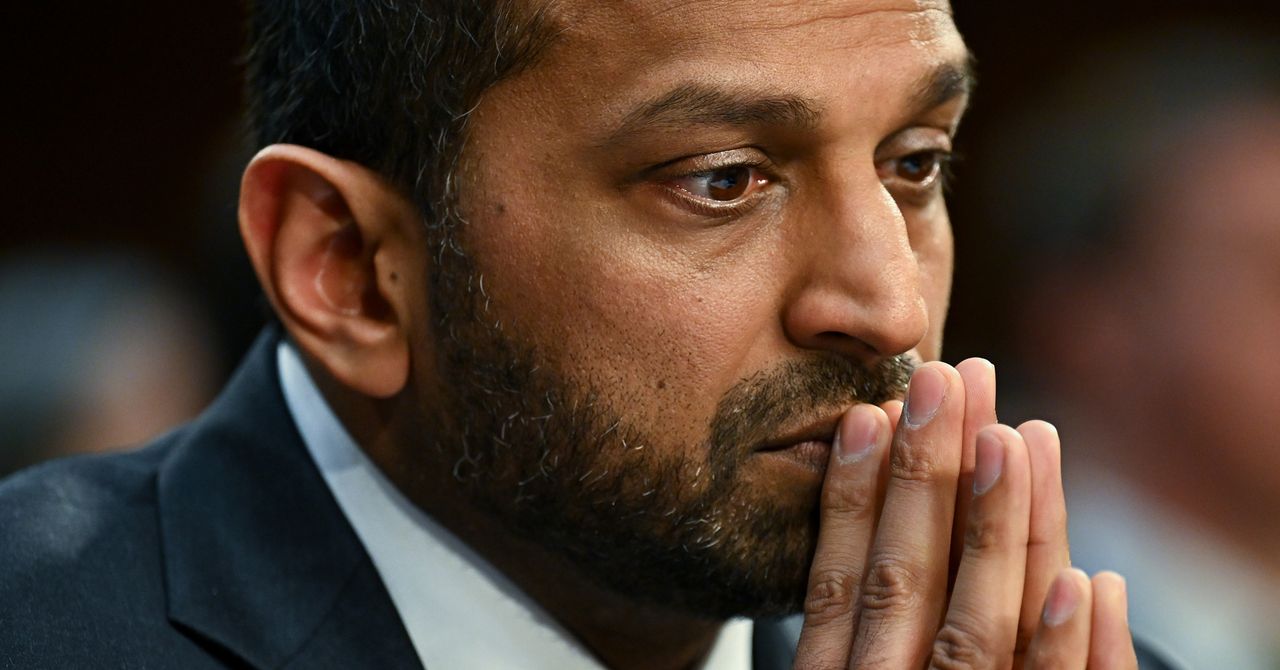
Handala’s second claim, however—that it hacked the FBI—seems, for now, to be fiction. All evidence points to Handala having breached Patel’s older, personal Gmail account. Widely believed to be a “hacktivist” front for Iran’s intelligence agency the MOIS, Handala suggested on its website that the emails contained classified information, but the messages initially reviewed by WIRED didn’t appear to be related to any government work. TechCrunch did find, however, that Patel appears to have forwarded some emails from his Justice Department email account to his Gmail account in 2014.
Handala, which cybersecurity experts have described to WIRED as an “opportunistic” hacker group whose cyberattacks and breaches are often calculated more for their propaganda value than their tactical impacts, has nonetheless made the most of Patel’s embarrassing breach. “To the whole world, we declare: the FBI is just a name, and behind this name, there is no real security,” the group wrote in its statement. “If your director can be compromised this easily, what do you expect from your lower-level employees?”
Handala Hackers Put $50 Million Bounty on Trump and Netanyahu’s Heads
For further evidence of Handala’s bombastic rhetoric, look no further than another post on its website earlier this week (we’re intentionally not linking to it) that offered a $50 million bounty to anyone who could “eliminate” US president Donald Trump and Israeli prime minister Benjamin Netanyahu. “This substantial prize will be awarded, directly and securely, to any individual or group bold enough to show true action against tyranny,” the hackers’ statement read, along with an invitation to any would-be assassins to reach out via the encrypted messaging app Session. “All our communication and payment channels utilize the latest encryption and anonymization technologies, your safety and confidentiality are fully guaranteed.”
That bounty, Handala explained, was posted in answer to a statement about Handala published on the US Department of Justice website last week that offered $10 million for information leading to the identity or location of anyone who carries out “malicious cyber activities against US critical infrastructure” on behalf of a foreign government.
“Our message is clear: If you truly have the will and the power, come and find us!” Handala wrote in its response. “We fear no challenge and are prepared to respond to every attack with even greater force.”
In yet another post on its website this week, Handala also claimed to have doxed 28 engineers at military contractor Lockheed Martin working in Israel and threatened them with personal harm if they didn’t leave the country within 48 hours. When WIRED tried calling the phone numbers included in Handala’s leaked data, however, most of them didn’t work.
Apple says no device with its Lockdown Mode security feature enabled has ever been successfully compromised by mercenary spyware in the nearly four years since its launch. Amnesty International’s security lab head, Donncha Ó Cearbhaill, also says his team has seen no evidence of a successful attack against a Lockdown Mode–enabled iPhone. And Citizen Lab, which has documented several successful spyware attacks against iPhones, says none involve a Lockdown Mode bypass, while in two cases its researchers found the feature actively blocked attacks against NSO Group’s Pegasus and Intellexa’s Predator. Google researchers, meanwhile, found one spyware strain that simply abandons infection attempts when it detects the feature is enabled.
Lockdown Mode works by disabling commonly exploited iPhone features, such as most message attachment types and features like links and link previews. Incoming FaceTime calls are blocked unless the user has previously called that person within the past 30 days. When the iPhone is locked, it blocks connections with computers and accessories. The device will not automatically join nonsecure Wi-Fi networks, and 2G and 3G support is disabled. Apple has also doubled bounties for researchers who detect any Lockdown Mode bypass, with payouts up to $2 million.


King Charles health update leaves Prince William worried: ‘upsetting’

Zayn Malik shares personal video message on ‘Mind of Mine’ 10th anniversary

Alabama’s ‘complicated’ season ends in Sweet 16 defeat

-
 Business1 week ago
Flipkart group CFO to leave co amid IPO plans – The Times of India
-

 Fashion1 week ago
China’s textile & apparel exports surge 17% to $50 bn in Jan-Feb 2026
-
 Business1 week ago
Video: The Effects of High Oil Prices
-

 Sports1 week ago
Rating Adidas’ 2026 World Cup away shirts: Argentina, Spain, Mexico and more
-

 Sports1 week ago
American Conference Commissioner Tim Pernetti thanks Trump for Army-Navy game executive order
-
Tech1 week ago
The Corsair 4000D RS PC Case Keeps Your System Cool
-

 Tech1 week ago
‘Uncanny Valley’: Nvidia’s ‘Super Bowl of AI,’ Tesla Disappoints, and Meta’s VR Metaverse ‘Shutdown’
-

 Tech1 week ago
Gamers Hate Nvidia’s DLSS 5. Developers Aren’t Crazy About It, Either