

Tech
Scientists develop end-to-end encryption for git services

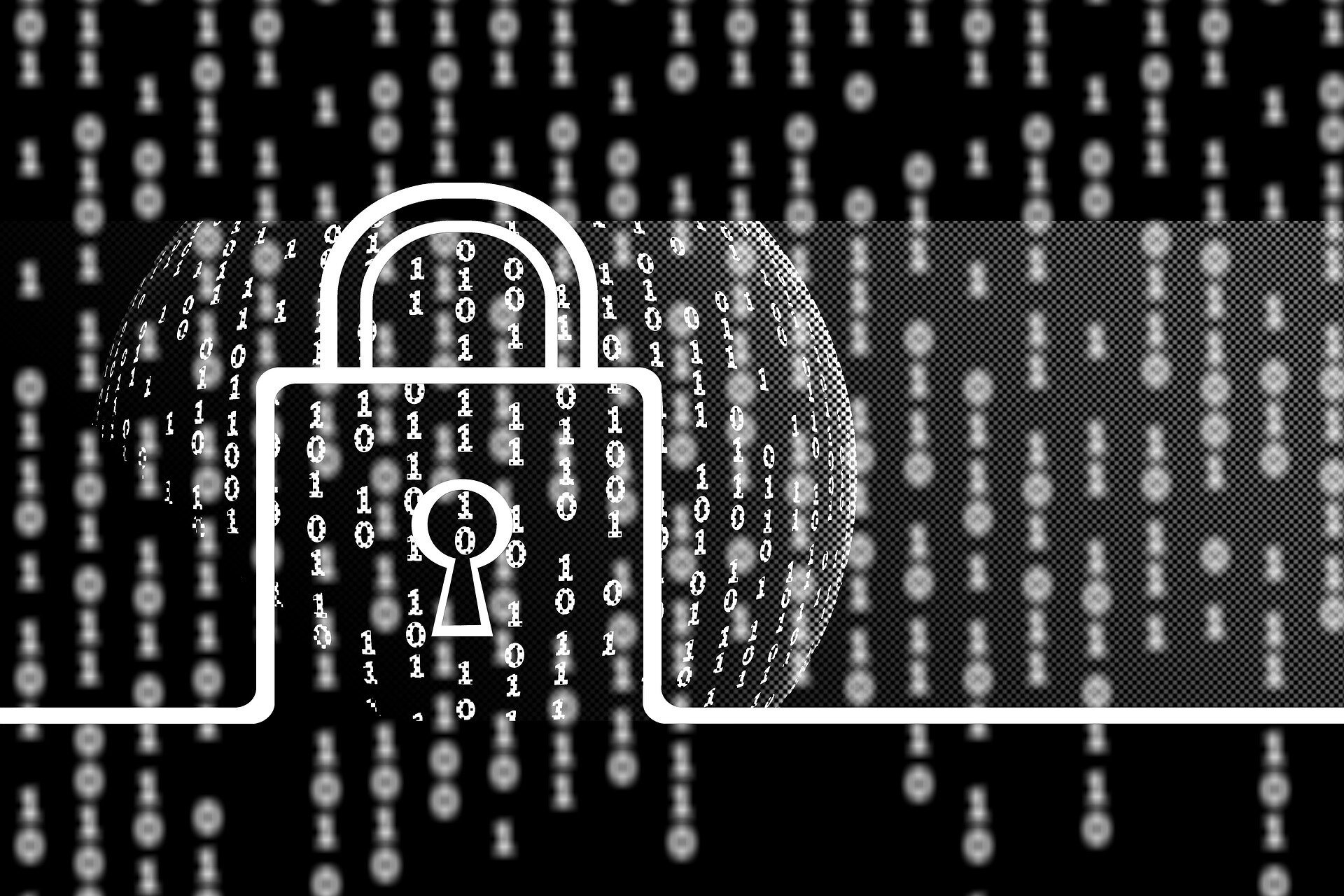
From large technology corporations to startups, from computer science students to indie developers, using git services is as common as opening a word document is for most of the rest of us. Git services are online repositories, indispensable in the IT industry, that manage and store projects that may contain sensitive information or trade secrets such as emerging artificial intelligence models.
However, this makes git services vulnerable to frequent cybersecurity threats. There is also the risk of malicious code being inserted into existing projects without the developer’s knowledge.
University of Sydney researchers are part of a team that have developed end-to-end encryption that can be deployed to protect git services. The encryption is compatible with existing git platforms such as Github and Bitbucket. When it is deployed, the researchers say, it will align seamlessly for storage and the time it takes for data to be synchronized among devices and git servers.
Initial testing on existing git services and public repositories (data sources available for researchers to test algorithms) has been successful.
“Privacy and security of software code has long been a concern for industry and individual users that rely on git services,” said one of the lead developers Associate Professor Qiang Tang, from the School of Computer Science, Faculty of Engineering. “Just like we want our messages to be private and safe, the IT industry also wants their code to be protected. End-to-end encryption is currently the gold standard to protect data.”
End-to-End encryption works by securing data from start to finish, meaning the data sent is protected from the source to the destination, even if the service platform is hacked. It is currently used in messaging services such as WhatsApp.
The researchers say the threat of security breaches to git services is becoming more commonplace. Earlier in the year cryptocurrency exchange CoinBase was a target. In 2022 Okta had source code stolen.
But Associate Professor Tang says current efforts on git security are not strong enough and with large overheads, which means when a significant amount of computational resources such as processing time, bandwidth, or storage is being used.
The researchers hope to introduce the code to git services for widespread use or intend to make it open source. The results will be presented at the ACM Conference on Computer and Communications Security in October.
Collaborator Moti Yung, distinguished research scientist from Google, said that this was an excellent opportunity to protect the git services system and its users.
“The evolution of computing ecosystems always start with a new utility designed for trusted entities: the internet, the mobile networks, chat apps, and so on.
“Therefore, due to these utilities maturing and expanding, one has then to deal with less trusted and malicious players within the ecosystem. git services, enabling collaborations and version control among participants also started without thoroughly taking care of potential bad players, and the system proposed now is a necessary step to its maturity.”
Creating the security box for the world’s code and the rising demand for end- to-end security online
Imagine git services as a giant word document where countless people can write, edit and update content, but for computer code.
“What makes git services such as Github indispensable is their ability to host a large number of collaborators working on the same coding project at the same time, without losing any efficiency,” said Associate Professor Tang. “However, this advantage is also an obstacle that prevented git services from getting end-to-end encryption.”
When you use a messaging service, the content or text remains relatively unchanged, or the edits will be very minor.
But in GitHub, countless lines of code are being written, edited and updated constantly at a such a rapid rate, standard end-to-end encryption cannot keep up. It would constantly need to refresh to encrypt new versions.
“It’s a balancing act—keep the code safe but not where it impacts the user’s computer so much that it becomes a hindrance,” Tang added.
The research team was able to achieve this balance with a tradeoff—by using only small bits of computational power at a time to significantly reduce the level of communication and storage needed. Specifically, using character-level encryption where only edits are treated as new data to be encrypted and appended (added to an existing data collection). In this way, the pressure on computational resources becomes minimal.
Another way of putting it is if you removed a word from a sentence in a document, the code would recognize that and encrypt the change, instead of encrypting the entire document.
By doing this, it would save a large amount of bandwidth and storage otherwise used on each entire new version of the code.
Co-author Dr. Ya-Nan Li from the University of Sydney said another challenge was to identify the necessary security requirements, which at times could be subtle. For example, when to enable the tracking and public verification of the source of all edits.
“With addressing this issue, it leaves the git server vulnerable to the potential injection of malicious code and sometimes can even directly hinder confidentiality,” said Dr. Li.
More information:
Ya-Nan Li et al, End-to-End Encrypted Git Services, (2025). DOI: 10.1145/3719027.3744815. eprint.iacr.org/2025/1208
Citation:
Scientists develop end-to-end encryption for git services (2025, October 7)
retrieved 7 October 2025
from https://techxplore.com/news/2025-10-scientists-encryption-git.html
This document is subject to copyright. Apart from any fair dealing for the purpose of private study or research, no
part may be reproduced without the written permission. The content is provided for information purposes only.








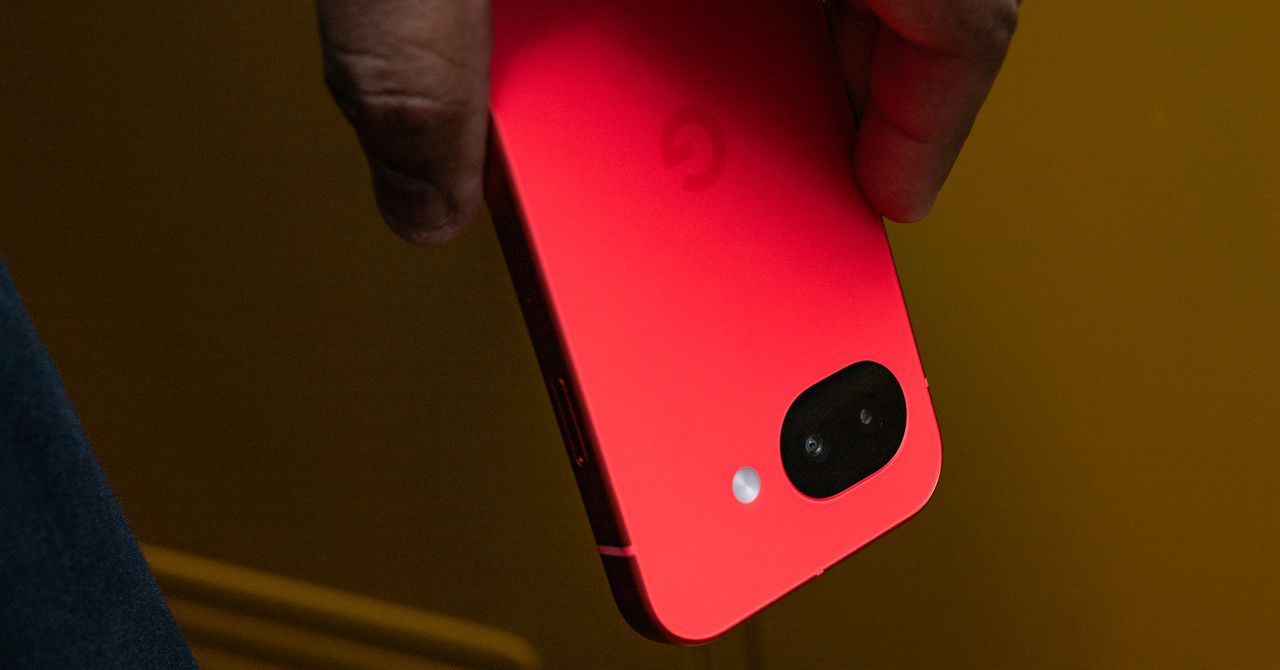
The screen is brighter now, reaching a peak brightness of 3,000 nits, and I haven’t had any trouble reading it in sunny conditions (though it hasn’t been as sunny as I’d like it to be these past few weeks). I appreciate the glass upgrade from Gorilla Glass 3 to Gorilla Glass 7i. It should be more protective, and anecdotally, I don’t see a single scratch on the Pixel 10a’s screen after two weeks of use. (I’d still snag a screen protector to be safe.)
Photograph: Julian Chokkattu
Another notable upgrade is in charging speeds—30-watt wired charging and 10-watt wireless charging. I’ll admit I haven’t noticed the benefits of this yet, since I’m often recharging the phone overnight. You can get up to 50 percent in 30 minutes of charging with a compatible adapter, and that has lined up with my testing.
My biggest gripe? Google should have taken this opportunity to add its Pixelsnap wireless charging magnets to the back of this phone. That would help align the Pixel 10a even more with the Pixel 10 series and bring Qi2 wireless charging into a more affordable realm—actually raising the bar, which wouldn’t be a first for the A-series. After all, Apple did exactly that with the new iPhone 17e, adding MagSafe to the table. Or heck, at least make the Pixel 10a Qi2 Ready like Samsung’s smartphones, so people who use a magnetic case can take advantage of faster wireless charging speeds.
Battery life has been OK. With average use, the Pixel 10a comfortably lasts me a full day, but it still requires daily charging. With heavier use, like when I’m traveling, I’ve had to charge the phone in the afternoon a few times to make sure it didn’t die before I got into bed. This is a fairly big battery for its size, but I think there’s more Google could do to extend juice, akin to Motorola’s Moto G Power 2026.
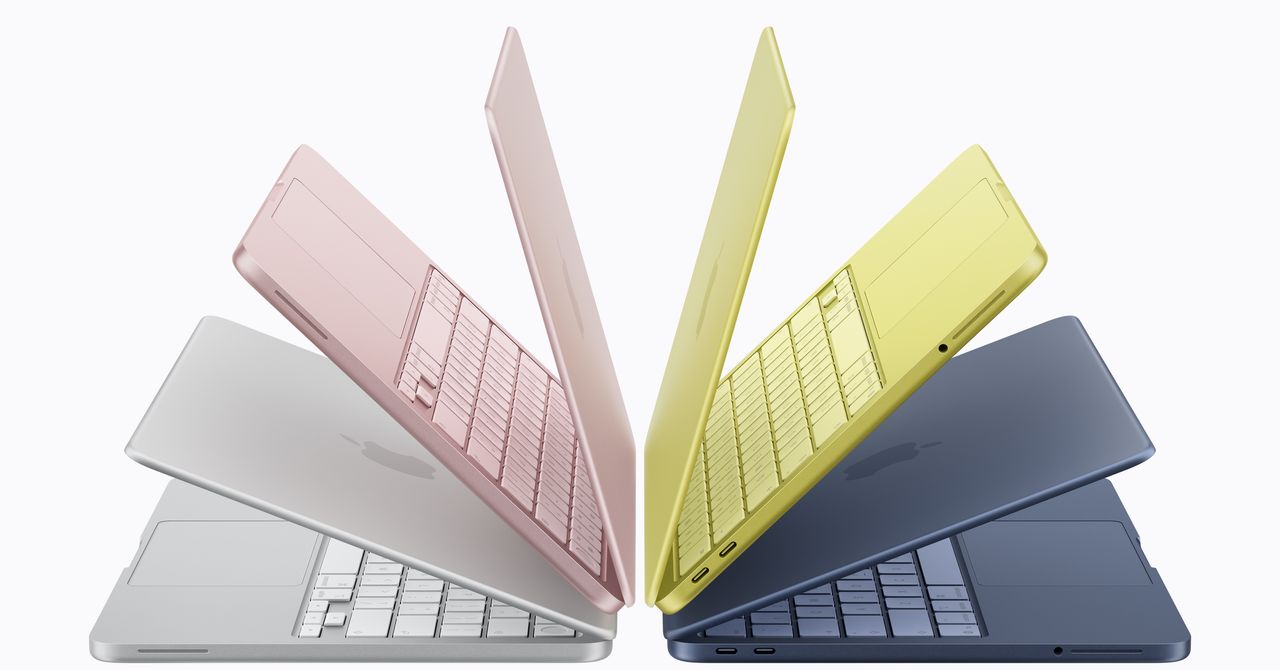
After a week of product announcements—starting with the iPhone 17e, a refreshed iPad Air, and more powerful MacBook Pro models—Apple has unveiled a new category in its laptop lineup for the first time in a while: the “MacBook Neo.”
Photograph: Julian Chokkattu
Positioned below the MacBook Air as an entry-level machine, this new MacBook is the most affordable laptop the company has ever made, with a starting price of $599. While it’s been possible to buy a new MacBook Air at lower prices—like the 2020 M1 MacBook Air Apple sold for several years for $699 exclusively through Walmart—this is officially the cheapest MacBook out the gate.
Aside from the price, its approach to color also makes it unique among the other MacBooks in Apple’s lineup. You have several color options, including Silver, Indigo, Blush, and Citrus. The colors harken back a bit to the iBook G3 of yesteryear and are akin to the current iMac design. In person, the colors aren’t a bright and bold as expected, still exhibiting a more subtle hue. Apple says the aluminum device weighs 2.7 pounds, which is the same as the 13-inch MacBook Air. We’re still waiting on official measurements on the thickness.
Despite its price, Apple doesn’t appear to be cutting corners on the quality of the screen. With a resolution of 2408 by 1506 and up to 500 nits of brightness, Apple boasts that it is “both brighter and higher in resolution than most PC laptops in this price range.” The display doesn’t use a notch for the webcam like the MacBook Air or MacBook Pro. There’s a 1080p camera, a Touch ID sensor, and side-firing speakers with Dolby Atmos. Unfortunately, the Touch ID sensor is only available on the $699 model, which comes with 512 GB of storage.
The MacBook Neo does make plenty of other concessions to hit its aggressive price though. It’s powered by the A18 Pro chip—the same processor inside the iPhone 16 Pro and 16 Pro Max. Yup—you read that right. iPads have used Mac chips for years, but now a MacBook is using an iPhone chip. Still, this processor should deliver more power than the original M1 chip in the MacBook Air. Apple claims the chip gives the MacBook Neo up to 16 hours of battery life. That’s less than the MacBook Air or MacBook Pro. Apple also says the chip is up to 50 percent faster in daily tasks like web browsing than “the bestselling PC with the latest chipping Intel Core Ultra 5.” According to the liner notes, this was based on a Speedometer test, a popular browser-based benchmark.
Other compromises to the device are the use of a mechanical multi-touch trackpad (rather than one that uses haptic feedback), a non-backlit keyboard, and the more limited port selection. The use of the iPhone chip means this MacBook only supports one external monitor through one if its two USB-C ports. Either port can be used for charging. There’s also a headphone jack, located in an odd position next to the side-firing speakers near the front of the device. While technically this is the same amount of USB-C ports as the MacBook Air, it’s missing the magnetic MagSafe 3 charging port, which frees up one of the USB-C ports.

Initially, Gorham used his brain-computer interface for single clicks, Oxley says. Then he moved on to multi-clicks and eventually sliding control, which is akin to turning up a volume knob. Now he can move a computer cursor, an example of 2D control—horizontal and vertical movements within a two-dimensional plane.
Over the years, Gorham has gotten to try out different devices using his implant. Zafar Faraz, a field clinical engineer for Synchron, says Gorham directly contributed to the development of Switch Control, a new accessibility feature Apple announced last year that allows brain-computer interface users the ability to control iPhones, iPads, and the Vision Pro with their thoughts.
In a video demonstration shown at an Nvidia conference last year in San Jose, California, Gorham demonstrates using his implant to play music from a smart speaker, turn on a fan, adjust his lights, activate an automatic pet feeder, and run a robotic vacuum in his home in Melbourne, Australia.
“Rodney has been pushing the boundaries of what is possible,” Faraz says.
As a field clinical engineer, Faraz visits Gorham in his home twice a week to lead sessions on his brain-computer interface. It’s Faraz’s job to monitor the performance of the device, troubleshoot problems, and also learn the range of things that Gorham can and can’t do with it. Synchron relies on this data to improve the reliability and user-friendliness of its system.
In the years he’s been working with Gorham, the two have done a lot of experimenting to see what’s possible with the implant. Once, Faraz says, he had Gorham using two iPads side by side, switching between playing a game on one and listening to music on the other. Another time, Gorham played a computer game in which he had to grab blocks on a shelf. The game was tied to an actual robotic arm at the University of Melbourne, about six miles from Gorham’s home, that remotely moved real blocks in a lab.
Gorham, who was an IBM software salesman before he was diagnosed with ALS in 2016, has relished being such a key part of the development of the technology, his wife Caroline says.
“It fits Rodney’s set of life skills,” she says. “He spent 30 years in IT, talking to customers, finding out what they needed from their software, and then going back to the techos to actually develop what the customer needed. Now it’s sort of flipped around the other way.” After a session with Faraz, Gorham will often be smiling ear to ear.
Through field visits, the Synchron team realized it needed to change the setup of its system. Currently, a wire cable with a paddle on one end needs to sit on top of the user’s chest. The paddle collects the brain signals that are beamed through the chest and transmits them via the wire to an external unit that translates those signals into commands. In its second generation system, Synchron is removing that wire.
“If you have a wearable component where there’s a delicate communication layer, we learned that that’s a problem,” Oxley says. “With a paralyzed population, you have to depend on someone to come and modify the wearable components and make sure the link is working. That was a huge learning piece for us.”


How many countries has US bombed since 9/11, and what has it cost?

Google’s Pixel 10a May Not Be Exciting, but It’s Still an Unbeatable Value

Rupee falls to all-time low of 92.05 against dollar as oil surge, foreign outflows rattle markets – The Times of India

India Us Trade Deal: Fresh look at India-US trade deal? May be ‘rebalanced’ if circumstances change, says Piyush Goyal – The Times of India

Households set for lower energy bills amid price cap shake-up

US arrests ex-Air Force pilot for ‘training’ Chinese military

-
Business5 days ago
India Us Trade Deal: Fresh look at India-US trade deal? May be ‘rebalanced’ if circumstances change, says Piyush Goyal – The Times of India
-
Business1 week ago
Households set for lower energy bills amid price cap shake-up
-

 Politics6 days ago
What are Iran’s ballistic missile capabilities?
-
 Politics7 days ago
US arrests ex-Air Force pilot for ‘training’ Chinese military
-

 Fashion6 days ago
Policy easing drives Argentina’s garment import surge in 2025
-

 Sports1 week ago
Top 50 USMNT players of 2026, ranked by club form: USMNT Player Performance Index returns
-
 Business6 days ago
Attock Cement’s acquisition approved | The Express Tribune
-
 Business1 week ago
Lucid widely misses earnings expectations, forecasts continued EV growth in 2026