

Business
Shell fined after major hydrocarbon release on rig linked to corroded pipework


Shell has been fined £560,000 following a major hydrocarbon release on a North Sea oil rig after it failed to properly maintain pipework for seven years.
The Health and Safety Executive (HSE) said the oil and gas giant neglected pipework on the Brent Charlie platform, causing an explosion risk.
It said the pipework deteriorated to such an extent that contained hydrocarbon fluids escaped, forming a potentially catastrophic explosive and flammable mixture.
Ventilation fans designed to mitigate the effects of escaped hydrocarbon gas did not function properly due to lack of maintenance, leading to a large release of mixed phase crude oil and gas from the corroded pipework, HSE said.
The uncontrolled hydrocarbon release occurred on May 19, 2017 and was the largest reported to HSE that year, involving 200kg of gas and 1,550kg of crude oil.
HSE said 176 staff working on the rig were put at risk from an explosion if the escaping hydrocarbon gas had ignited, but the probability of ignition was assessed to be less than 1%.
HSE also said the platform manager and various emergency teams deserved praise for their decision-making which helped prevent the incident from escalating.
Shell UK pleaded guilty to two charges under the Offshore Installations (Prevention of Fire and Explosion, and Emergency Response) Regulations 1995 and was sentenced on Aberdeen Sheriff Court on Tuesday.
The court heard the release occurred within the return oil line (ROL) pipework inside concrete leg column four.
An HSE investigation found deficiencies in Shell’s safety management system led to the release as the ROL pipework in column four was not properly maintained for several years.
It found the pipework was installed for short-term use and was due to be removed in 2010 but it remained in place for seven years.
After considering mitigating factors, the company was fined £560,000 by Sheriff Ian Duguid.
HSE offshore health and safety inspector Dozie Azubike said: “At more than 1,750kg, Shell Brent Charlie’s hydrocarbon release was the largest reported to HSE in 2017.
“This release occurred in a confined space with limited access – it is simply fortunate that no-one was in the leg at the time, or they could have been asphyxiated from the hydrocarbon-rich atmosphere, quite apart from any fire and explosion risk.
“Although the offshore industry has managed to reduce its overall number of hydrocarbon releases, in most years there are still several which, if ignited, would result in potentially catastrophic consequences.
“This case highlights the importance of oil and gas duty-holders reviewing their current management of change processes for temporary spools and their subsequent removal, strengthening inspection regimes to identify potential internal corrosion within pipework, and ensuring that inspection frequency of safety-critical equipment considers full analysis of the equipment’s maintenance history.”
A Shell spokesperson said: “Shell’s focus on safety and care for our people is deeply ingrained in our culture and drives every decision we make.
“When an alarm alerted us to a gas leak on Brent Charlie in 2017, the emergency procedure was followed immediately and no-one was harmed.
“The prosecutor has accepted our analysis that the risk of the leak igniting was extremely low.
“However, our usual preventative measures did not pick up this problem.
“We have investigated and made sure this cannot happen again.”
Debbie Carroll, who leads on health and safety investigations for the Crown Office, said: “Shell UK Ltd failed to take adequate and appropriate measures to prevent potential fire and explosion.
“By failing to monitor the corrosion of a temporary spool a major release of hydrocarbon happened which had the potential to catch fire or explode causing significant and unacceptable risk.
“This prosecution should remind duty holders that failing to fulfil their obligations in keeping their employees safe can have serious consequences and they will be held accountable for this failure.”
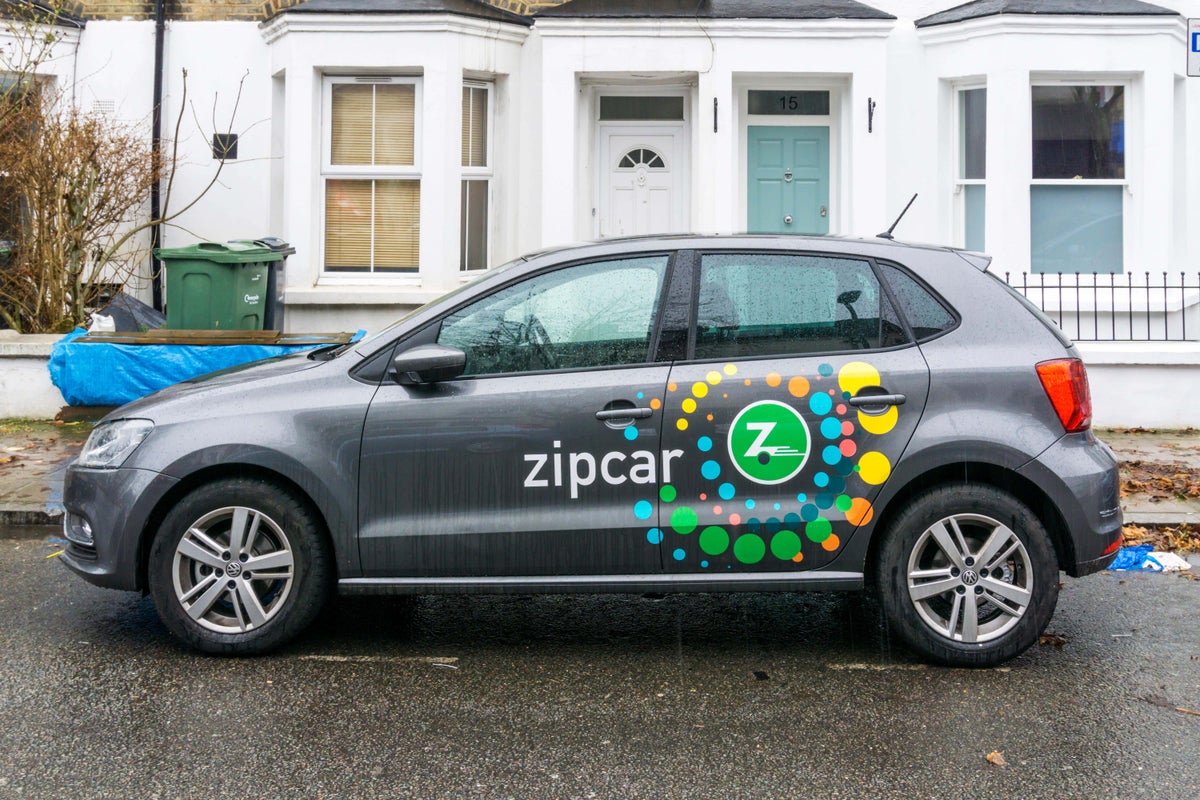
Car-sharing firm Zipcar has confirmed it is stopping operations in the UK after launching a consultation late last year.
The move will hit the company’s roughly 650,000 drivers across the country.
On December 1, the US-based company told customers in the UK that it planned to suspend new bookings temporarily at the turn of the year.
The business, which had 71 UK employees at the end of 2024, launched a formal consultation with staff as a result.
On Friday, in a fresh email to customers, the business said it “can now confirm that Zipcar will cease operating in the UK”.
The company added: “In accordance with clause 7.5 of the member terms, please take this as your written notice that we will formally close your account in 30 days’ time.
“It’s not possible to make any new bookings with Zipcar UK at this time, but your account will remain open until February 16.”
It added that customers will be entitled to a pro-rated refund for any remaining periods on current plans or subscriptions, from the start of 2026.
Zipcar said this will be done automatically and will not require any action from users.
Accounts showed that the van and car hire firm saw losses deepen to £5.7 million in 2024 after a decrease in customer trips.
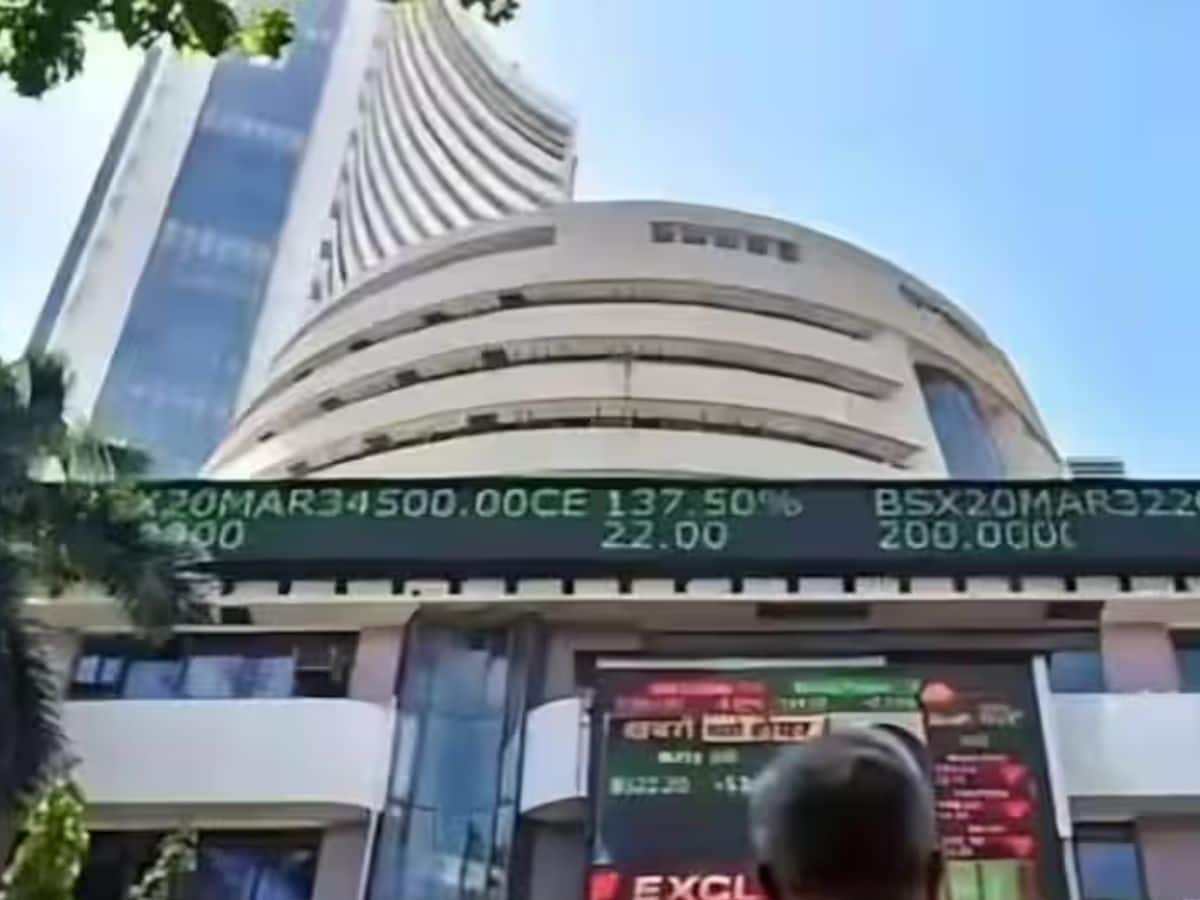
New Delhi: Good news for investors and market watchers! Even though February 1 falls on a Sunday this year, the Indian stock markets will remain open for trading on Budget Day. Both the BSE and NSE announced on January 16 that trading will take place as per normal market hours on February 1 for Budget 2026. This special arrangement ensures that investors can react to Budget announcements in real time, without waiting for the next trading session.
The NSE clarified the special trading arrangement in a circular, stating, “On account of the presentation of the Union Budget, members are requested to note that Exchange shall be conducting live trading session on February 01, 2026, as per the standard market timings (9:15 am-3:30 pm),” said NSE in a circular.
Union Budget 2026 to be presented on February 1 at 11 am
The Union Budget for 2026 will be presented at 11 am on Sunday, February 1, the Lok Sabha Speaker confirmed on January 12. In recent years, February 1 has become the fixed date for the annual Budget presentation, a trend that continued with the 2025 Budget as well. The upcoming Budget will also be a significant milestone for Finance Minister Nirmala Sitharaman, as it will be her ninth consecutive Union Budget, placing her among finance ministers with the longest uninterrupted Budget tenures.
Trading details for Budget Day explained
While most core market segments will remain open during regular trading hours on Budget Day, some services will stay shut. The BSE has clarified that the T+0 settlement session and the auction session meant for settlement defaults will not be operational. At the same time, the NSE confirmed that trading in capital markets and derivatives will continue as usual.
Stock market holiday list remains the same
The stock market holiday calendar for 2026 remains unchanged, with Indian exchanges observing 16 public holidays apart from weekends. The next scheduled market closure this month will be on January 26. In the first half of the year, markets will remain shut on key occasions such as Holi (March 3), Ram Navami (March 26), Mahavir Jayanti (March 31) and Good Friday (April 3). Trading will also be suspended on Ambedkar Jayanti (April 14), Maharashtra Day (May 1) and Bakri Id (May 28).
In the second half of the year, markets will close on Muharram (June 26), Ganesh Chaturthi (September 14), Gandhi Jayanti (October 2), Dussehra (October 20), Diwali Balipratipada (November 10) and Guru Nanak Jayanti (November 24). Christmas, on December 25, will be the final market holiday of 2026.
Last Updated:
Reliance Industries Q3 FY26 Financial Results | Earnings remained resilient during the December quarter despite pressure in upstream oil & gas exploration and production business.



Reliance Industries Q3 Results.
Reliance Industries Ltd reported a resilient performance in the fiscal third quarter, with consolidated revenue rising 10 percent from a year earlier to Rs 2.94 lakh crore, led by growth in its digital services, oil-to-chemicals (O2C) and retail businesses.
Net profit (pre minority) for the fiscal third quarter rose 1.6 percent from a year earlier to Rs 22,290 crore, while profit before tax increased 3.7 percent to Rs 29,697 crore.
Consolidated EBITDA rose 6.1 percent to Rs 50,932 crore, supported by earnings growth in the digital services and O2C segments, helping offset weakness in the upstream oil and gas business.
“Reliance’s consolidated performance in 3Q FY26 reflects consistent financial delivery and operational resilience across businesses,” said Mukesh Ambani, Chairman and Managing Director, Reliance Industries Ltd, in a statement on Friday.
The O2C business benefited from a sharp increase in transportation fuel cracks, which rose 62-106 percent from a year earlier during the third quarter. This improvement was partly offset by lower downstream chemical margins and higher feedstock freight rates. Overall, O2C EBITDA rose 15 percent from a year earlier to Rs 16,507 crore, helped by higher volumes and a continued ramp-up in fuel retail operations.
The Jio-bp fuel retailing business maintained its growth momentum, with fuel volumes rising 24 percent, supported by strong growth in gasoline and high-speed diesel sales. The retail network expanded further, with Jio-bp operating 2,125 outlets at the end of December, a 14 percent increase from a year earlier.
“Robust growth in O2C business was led by significantly higher fuel margins with favorable demand-supply dynamics, along with operational flexibility. I am happy to highlight the strong growth in our fuel retailing business, with continuing expansion of the Jio-bp network,” Ambani added.
The digital services business delivered strong growth, with revenue rising 12.7 percent to Rs 43,683 crore. EBITDA from the segment grew 16.4 percent YoY to Rs 19,303 crore, aided by accelerated subscriber additions and a 170-basis-point expansion in margins.
Reliance Jio’s subscriber base increased to 515.3 million, with its 5G user base crossing 250 million during the quarter. Total home connects crossed 25 million, while JioAirFiber became the first fixed wireless access service globally to surpass 10 million subscribers, ending the quarter with 11.5 million users. Average revenue per user (ARPU) rose 5.1 percent from a year earlier to Rs 213.7.
“This quarter, Jio expanded its subscriber base further, through attractive propositions enabled by its comprehensive, indigenous technology stack tailored for Indian markets. The business delivered a robust financial performance with 16.4% growth in EBITDA,” said Ambani.
JioStar continued to report strong operational performance, maintaining leadership across key platforms and genres.
In contrast, the oil and gas business weighed on overall performance, affected by lower production from the KGD6 block due to natural decline in the reservoir and weaker price realisations, along with higher operating costs related to periodic maintenance activity. EBITDA declined 13 percent from a year earlier to Rs 4,857 crore. Revenue from the segment fell 8.4 percent to Rs 5,833 crore.
The retail business posted revenue of Rs 97,605 crore, an increase of 8.1 percent from a year earlier. Growth, however, was impacted by the distribution of festive demand between the September and December quarters, the demerger of Reliance Consumer Products Ltd, and GST rate rationalisation. Despite these, retail EBITDA rose to Rs 6,915 crore. During the quarter, Reliance Retail operated 19,979 stores, with a total operational area of 78.1 million sq ft, while hyper-local delivery operations saw a near fivefold jump in average daily orders.
“Our Retail business also had an eventful quarter, strengthening its portfolio with the onboarding of fresh new brands and product ranges. The demerger of consumer products business came into effect this quarter. With a broad and diverse product basket ranging from classic Indian brands to new age labels, the consumer products vertical is progressing on its accelerated growth trajectory with a focused organizational structure,” said Ambani.
During the quarter, capital expenditure stood at Rs 33,826 crore, which was fully covered by cash profits of Rs 41,303 crore. Net debt declined sequentially to Rs 1.17 lakh crore as of December 31, reflecting balance sheet stability.
Disclaimer:Network18 and TV18 – the companies that operate news18.com – are controlled by Independent Media Trust, of which Reliance Industries is the sole beneficiary.
 Click here to add News18 as your preferred news source on Google.
January 16, 2026, 19:28 IST
Read More


PSL 11 to kick off from March 26, says PCB

Former USDS Leaders Launch Tech Reform Project to Fix What DOGE Broke

UK GDP expected to grow 1.4% in 2026: Goldman Sachs Research

-

 Politics1 week ago
UK says provided assistance in US-led tanker seizure
-

 Entertainment1 week ago
Does new US food pyramid put too much steak on your plate?
-

 Entertainment1 week ago
Why did Nick Reiner’s lawyer Alan Jackson withdraw from case?
-

 Sports6 days ago
Clock is ticking for Frank at Spurs, with dwindling evidence he deserves extra time
-
 Business1 week ago
Trump moves to ban home purchases by institutional investors
-

 Tech4 days ago
New Proposed Legislation Would Let Self-Driving Cars Operate in New York State
-

 Sports1 week ago
PGA of America CEO steps down after one year to take care of mother and mother-in-law
-
Sports7 days ago
Commanders go young, promote David Blough to be offensive coordinator