

Business
Small businesses are being crushed by Trump’s tariffs, and economists say it’s a warning for the economy


President Donald Trump listens during a Cabinet meeting at the White House on April 30, 2025 in Washington, DC.
Andrew Harnik | Getty Images
Viresh Varma can’t sleep.
The CEO of AV Universal Corp., a small footwear company that sells through retailers like Macy’s, Nordstrom and DSW, said he needed to take out a $250,000 loan to pay his tariff bill on a container of shoes he imported from India for the holiday shopping season.
Varma didn’t have the cash on hand to pay the duties, which he said used to be around $7,500 for a similar-sized container before President Donald Trump‘s new tariffs. But without the financing, he wouldn’t have anything to sell during the holidays.
So the 64-year-old said he was faced with a choice: take on the line of credit— which came with onerous terms like weekly payments and a 32% interest rate — and raise prices to pay it back, or close the business he’s spent the last nine years building. He decided to take out the loan.
“Everybody believes that I’m a fighter, so I’m fighting it,” Varma told CNBC in an interview. “We’ve reduced some salaries. We had planned to hire some people we’re not going to hire anymore. … If things don’t look good, especially after increasing the prices, and we don’t get the sales, then obviously we may lay off some people, as well.”
AV Universal is just one of the many small businesses that are buckling under Trump’s global trade war, struggling to pay the sudden increase in duties and forecast what’s ahead as policy evolves. Businesses of all sizes have raised prices and negotiated with vendors to weather the tariff storm and many larger retailers have so far proven resilient, with minimal impact to their profitability and future growth outlooks. Better-than-expected quarterly reports have led investors to largely shrug off the tariff threat, as the S&P 500 hovers near record highs.
But the higher costs have hit smaller companies harder because they have fewer levers to pull than their larger competitors. Their margins are slimmer, their supply chains less diverse and their negotiating power with vendors dampened by the smaller sizes of their orders.
Small businesses owners interviewed by CNBC said they largely expect to be able to manage higher costs from tariffs by raising prices, but only if it doesn’t cause shoppers to buy less — which most are already starting to see.
Often called the backbone of the U.S. economy, small businesses routinely represent more than 40% of the nation’s GDP and employ nearly half of the American workforce, according to the U.S. Chamber of Commerce.
Trump says his tariffs allow the U.S. to reduce its trade deficits with other nations and encourage domestic manufacturing, but some of the small business owners who spoke to CNBC said that’s happening partially at their expense.
The struggles they’re facing could be a warning sign for the rest of the economy and bigger businesses in 2026, said Kent Smetters, a professor of business economics and public policy at the University of Pennsylvania’s Wharton School.
“The small businesses … they’re kind of like the canary in the coal mine here,” said Smetters, the faculty director of the Penn Wharton Budget Model. “They’re going to get hit first, and then I think you’re going to see more of an impact with some delay on larger businesses.”
Larger retailers have been able to manage higher tariff costs in part because they had the foresight and ability to order extra inventory before the new duties went into effect, said Smetters. At a certain point, that stock will run out and push costs higher, and those companies only have so many low-tariff countries where they can produce goods.
The fate of many of Trump’s tariffs is unclear after a federal court ruled them illegal, prompting an appeal from the White House that the Supreme Court is now reviewing. The nation’s highest court, which includes three Trump appointees and has a 6-3 conservative majority, agreed to hear the appeal on a faster-than-normal timeline with arguments scheduled for the first week of November. It’s unclear how fast the justices will issue a ruling, and the tariffs remain in effect during the appeal.
CNBC spoke with around a dozen business owners to better understand how tariffs are affecting them. Here’s how much the duties are costing some of those companies — and what the businesses are doing to offset them.
AV Universal Corp.
Total tariffs paid in 2024: $45,000
Total tariffs expected in 2025: $353,125
Employees: 10
Supply chain: India 80%, Vietnam 15%, Europe 5%
Varma, AV’s CEO, spent much of his career in corporate America before deciding to get into the footwear business about a decade ago. He built three brands from scratch that are now sold online by Amazon, Macy’s, DSW, Nordstrom and other retailers. Varma was in the process of sending orders for the 2025 holiday season — which typically accounts for about 40% of AV’s annual revenue — when Trump announced tariffs on dozens of trading partners on April 2.
Thinking the president was bluffing, Varma placed an order for 20,000 pairs of shoes from his manufacturer in India, but ultimately only shipped half because he couldn’t line up the financing necessary to pay the expected tariff bill on the entire order. Varma expects holiday sales to drop about 30% because he’ll have less inventory to sell, but that decline could get worse if consumers balk at the higher prices he implemented. Since he increased prices earlier this year, sales fell about 30% in August and September.
Varma has searched across the globe to escape the Trump administration’s 50% tariff on Indian goods and is now considering moving his manufacturing to China, as long as Trump walks back his latest threat to raise tariffs on Chinese imports to 100%.
Talus Products
Total tariffs paid in 2024: ~$223,000*
Total tariffs expected in 2025: ~$499,000*
Employees: 9
Supply chain: primarily China
*The figures are adjusted for order volume
Talus Products co-founder and CEO David McClees (middle left) pictured with his team during the holidays.
Handout
David McClees, co-founder and CEO of Talus Products, opened his business 38 years ago with a single product: an inflatable travel pillow. The company has since expanded into a range of items, including car organizers and other travel accessories, that it distributes through retailers like The Container Store, Amazon and airport gift shops.
McClees said he’s not worried about having to shut down operations, but said he expects tariffs to put a “severe crimp” in his annual profitability. The company raised prices on certain products to offset tariffs, but is waiting until January to hike again, partially over concerns it could dampen consumer demand during the holiday shopping season. Sales on Amazon, which account for more than half of Talus’ revenue, have already been “soft” in recent weeks, he said.
“We’re nervous,” said McClees. “We don’t typically offer huge discounts on Prime Day, but we do see a bump from their increased traffic, and that was smaller than what we would normally see. It seems like buyers are being very cautious.”
McClees attempted to move some of Talus’ production to Mexico and Vietnam, but said he ultimately decided it was too expensive.
Village Lighting
Total tariffs paid in 2024: less than $50,000
Total tariffs expected in 2025: at least $1 million
Employees: between 11 and 17, depending on season
Supply chain: 50% spread across Vietnam, Cambodia, Indonesia, Myanmar and Thailand, the other 50% in China
Village Lighting CEO Jared Hendricks (center, pictured in white) with his wife, children and son-in-law.
Handout
Jared Hendricks, founder and CEO of Village Lighting, started his business 20 years ago making Christmas lighting and decorations before expanding into holiday storage, selling directly to consumers via his website and through big-box stores like Walmart and Target. Since his business is centered around the holidays, his buying and cash flow needs are unique compared with others in the retail industry.
Every year, just before Christmas, he said he uses a $2 million line of credit he took out against his home to buy the inventory he needs for the following year’s holiday and then uses that eventual revenue to pay back the debt. This year, he had to use that line of credit to pay his tariff bill.
“Hopefully I can turn around and mark things up enough for people to buy them from me so I can pay back my tariff debt,” said Hendricks. “It’s to the point now where it could kill us, it could take us down, and I could lose everything. I can’t afford to not bring stuff in because I’ll have nothing to sell. So that’s a game over scenario.”
Because of Village Lighting’s unique buying schedule, the company had to take a loss on about 40% of its annual sales because the orders and pricing were already contractually agreed upon when many of the new duties went into effect. Hendricks said he hopes to make it up by raising prices on his website and wholesale customers. Sales so far this season have been down between 8% and 10% and he owes millions of dollars to his suppliers, who have agreed to accept late payments. Hendricks said the situation has created massive stress for him and his wife, adding that the challenges the Covid-19 pandemic posed to his business feel like “a piece of cake” compared with now.
“I call them my demons. They’re my two or three o’clock in the morning demons, where they just wake me up in a panic, like, ‘how am I going to pay for this? Or how am I going to make this work? What have I done? Should I have quit last April and just cashed in?'” said Hendricks. “Being a small business owner isn’t worth it when your country turns on you.”
Picnic Time
Total tariffs paid in 2024: $950,000
Total tariffs expected in 2025: $2.25 million
Employees: 75
Supply chain: 85%-90% in China, the remainder in India
Picnic Time CEO Paul Cosaro, shown in a gray shirt, with his family outside of the company’s headquarters.
Handout
Paul Cosaro’s family business, Picnic Time, was started 43 years ago by his father, an Italian immigrant on a mission to sell high-quality picnic baskets. The company now sells a wide range of products, from coolers to beach chairs, to major retailers like Kohl’s, Target and Macy’s. Since Trump’s new tariffs went into effect, Picnic Time had to freeze hiring and capital expenditures, limiting its ability to produce and release new products, Cosaro said.
“It absolutely has stifled innovation,” he said. “You don’t want to take risks anymore … there’s no room for error.”
Cosaro said he attempted to move his supply chain to other countries during Trump’s first term, hiring additional staff and conducting sourcing missions in India and Mexico. But years later, he was only able to move about 10% of production. He said he raised his prices earlier this year to account for the new tariffs and the third quarter has so far been “very, very, very soft.” Sales are down about 20% and key retailers have pulled back on orders. The holiday season is always important to Picnic Time, as it accounts for about 35% of annual revenue, but this year it feels like the company is putting “all of our eggs in one basket,” said Cosaro.
“For us, it’s critically important,” he said. “We’re literally going to be waiting until the last day of the year to find out if this is going to be a profitable year or not.” For now, Cosaro said he will keep his supply chain primarily in China. He’s considered moving some of it to the U.S., but said he doesn’t have the budget available to take the risk.
Citibin
Total tariffs paid in 2024: $67,883
Total tariffs expected in 2025: $380,000
Employees: 8
Supply chain: 90% Vietnam, 5% China, 5% U.S.
Frank Picarazzi, the chief operating officer of Citibin (left) with his wife Liz Picarazzi, the company’s founder and CEO (right).
Courtesy: Frank Picarazzi
When Liz Picarazzi first started Citibin, which makes rat-proof trash enclosures for cities, parks and homes, the company manufactured in the U.S. After a few years, she said she found U.S. producers couldn’t meet her expectations on price, quality or lead time. She moved production to China and for several years, the business enjoyed manageable tariffs and reliable partners. However, in the lead-up to the 2024 election, she and her husband Frank Picarazzi, Citibin’s COO, started looking for other options over concerns that either candidate would raise tariff rates.
“I told Frank two days after the election, ‘we’re going to Vietnam, like, as soon as we can,'” Liz Picarazzi said.
The couple spent the next few months moving most of their production to Vietnam, only to learn of Trump’s decision to raise tariffs on all aluminum and steel imports to 50%. That raised costs for just about every product Citibin sells. Though her supply chain is now more diversified, Liz Picarazzi said that moving to Vietnam was “somewhat pointless” as a result.
Meanwhile, she said higher costs are affecting talent retention, research and development, and revenue. The company has added a 15% tariff surcharge to products to offset the cost of tariffs. Frank Picarazzi said it has contributed to a 25% decline in sales to homeowners, which the company expects will account for about 50% of overall revenue this year.
Reekon Tools
Total tariffs paid in 2024: $65,000
Total tariffs expected in 2025: more than $400,000
Employees: 20
Supply chain: Malaysia, Thailand, Vietnam and China
Christian Reed, founder and CEO of Reekon Tools, on a job site holding the T1R Hybrid Laser Tape Measure
Handout
Research and development is critical for Christian Reed’s tool startup Reekon. He said the company had to cut back R&D spending by 20% because of tariffs.
“This certainly put a thorn in the side of our hiring plan for the rest of the year around engineers for R&D activities,” said Reed. “That’s something that will continue to have to either be paused or completely canceled if nothing changes.”
The hundreds of thousands of dollars Reed planned to use to hire between three and five designers and engineers is now going to tariffs instead, he said. The company, which makes innovative products like digital tape measures for tradespeople, needs to ensure every tool it produces is effective and able to withstand tough conditions on worksites.
“There’s a unique combination of making a product that you can feed up, throw on the concrete, you know, slam around and not break, and at the same time add this digital aspect,” said Reed. “So that puts a very high burden on the testing, the research we have to do … it’s a very costly product as most of the products we’re making are new to [the] world.”
Reed said he’s avoided raising prices on most items, choosing to take the hit to profit margins, but recently increased the price of a new tool – a smaller version of its digital tape measure. Initially, Reekon wanted to price it at $99 and while the margins would’ve been slim, the company expected to be able to make it up in volume, Reed said. However, after tariff rates rose, the company priced it at $119 when it launched in September to help it offset losses in other parts of the business. While the product has been well received, sales so far have fallen short of the company’s projections.




Tesco Pet Insurance, who provided the cover, says “the cost of claims is one of a number of factors that can affect the price of a policy at renewal” and also noted Tilly’s age had been reflected in the quote. It says the couple had a more comprehensive policy, which typically costs more than basic levels of cover, and that alternative options were presented to Fawcett and Neild.
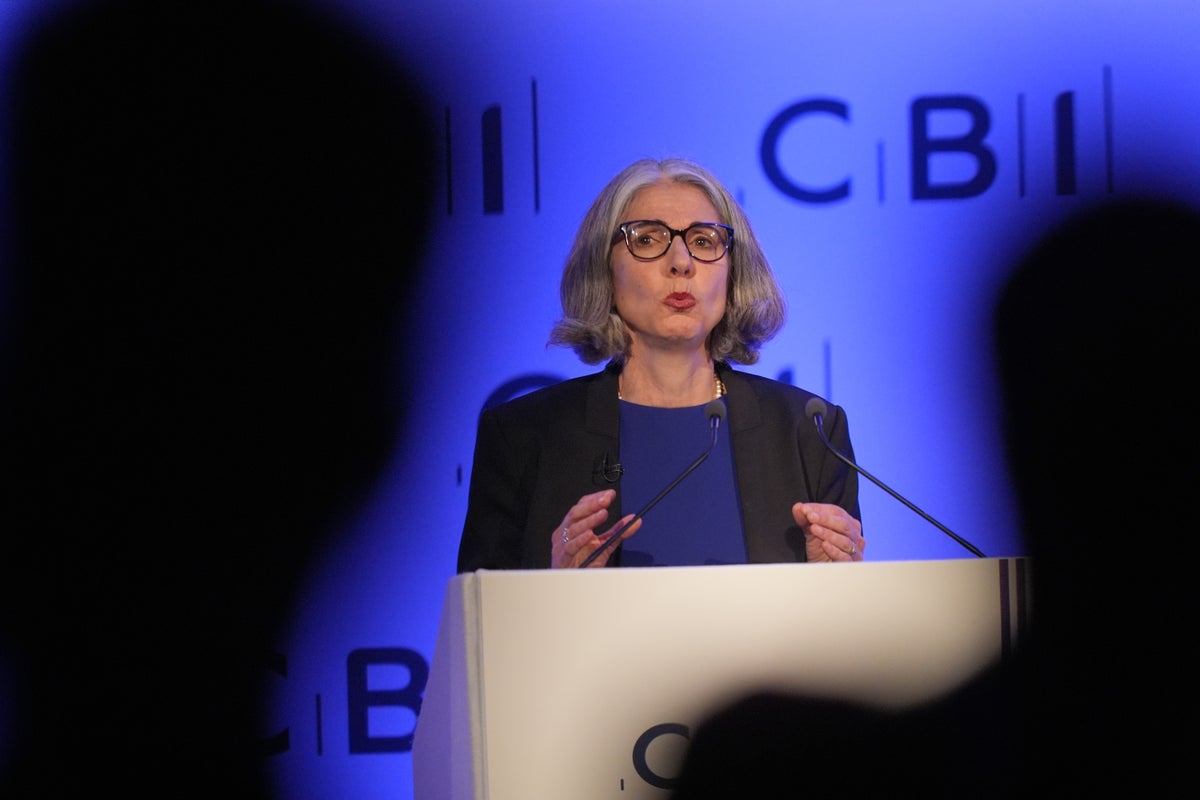
The UK must not “cut ourselves off” from trade opportunities in China despite security and business risks, the head of the Confederation for British Industry has warned.
CBI chief Rain Newton-Smith highlighted that British businesses see increased trade with Chinese firms as an opportunity to drive growth.
Her remarks came as business leaders were questioned by MPs on Parliament’s Business and Trade Select Committee regarding the UK’s economic relationship with China.
Last December, Prime Minister Sir Keir Starmer admitted China poses security threats to the UK but urged for greater business ties.
Ms Newton-Smith, chief executive of one of the UK’s largest business groups, was positive about the Government’s engagement with China.
“You can’t have a growth strategy without a strategy for China,” she said.
“China has the biggest contribution to global growth, is the third largest trading partner, and the world’s largest consumer market.
“The UK is second largest exporter of trade and services.
“We are mindful as all businesses are of security risks but it is really important that we have a strategy towards China.
“This Government has increased the economic engagement with China and including business within this does help us as a country.”
She added: “If we think about the future economy, there is a huge market in China and I think we mustn’t cut ourselves off from some of the opportunities there, even if in some areas there are difficult conversations and negotiations that need to be had.”
Peter Burnett, chief executive of the China-Britain Business Council, told the committee: “There are risks associated with technology advancement, AI, industrial development that they need to assess.
“Increasingly you will find them saying that they need to engage more in China to understand those risks and to develop some of the technologies along some of those risks themselves.”
Business
Trump says he’d be disappointed if Fed pick doesn’t cut rates; Warsh vows to be ‘independent actor’ – The Times of India
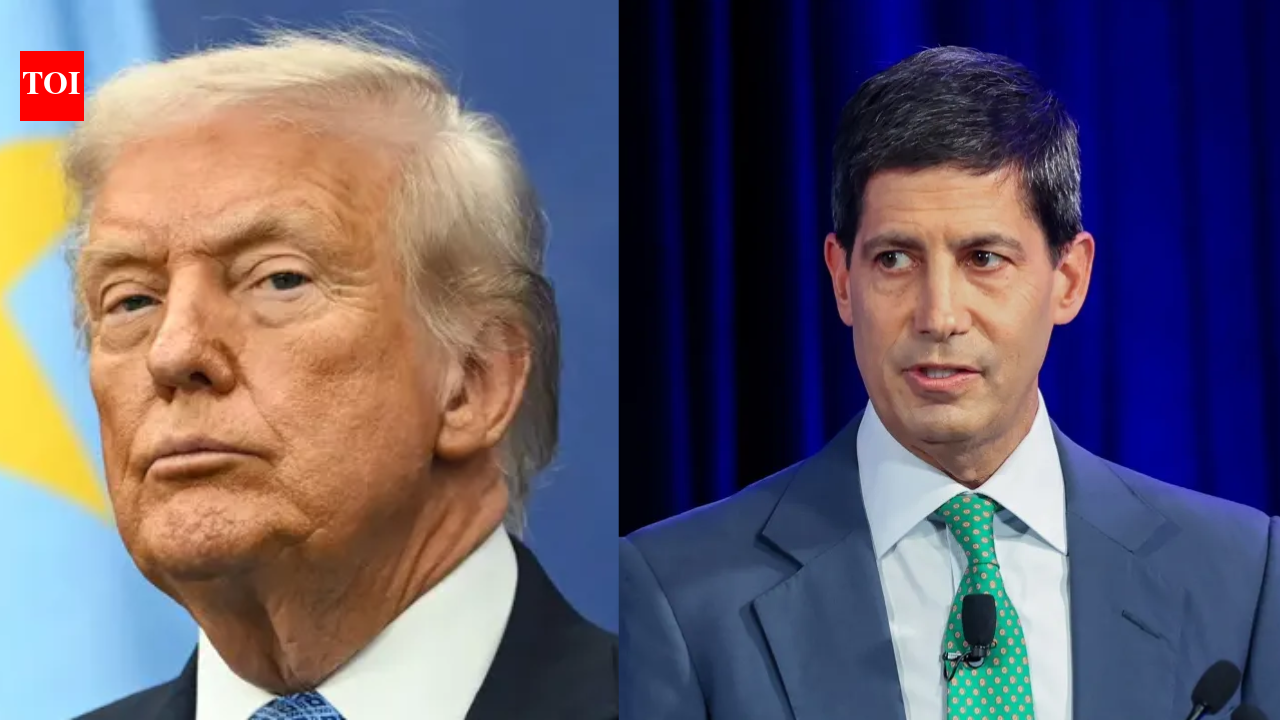
US President Donald Trump on Tuesday said he would be disappointed if his nominee for Federal Reserve chair, Kevin Warsh, does not cut interest rates right away after taking office if confirmed by the Senate. Trump, during an interview with CNBC’s “Squawk Box,” also said “we have to find out” about the construction costs of the new Federal Reserve building.Warsh, a former Federal Reserve official and financier, is currently facing Senate confirmation hearings where he has stressed his independence from political pressure.“The president never once asked me to commit to any particular interest rate decision, and nor would I agree to it if he had,” Kevin Warsh said under questioning by the Senate Banking Committee, as quoted by LA Times. “I will be an independent actor if confirmed as chair of the Federal Reserve.”Warsh told lawmakers that fighting inflation would be one of his main priorities if confirmed.“Congress tasked the Fed with the mission to ensure price stability, without excuse or equivocation, argument or anguish,” Warsh said. “Inflation is a choice, and the Fed must take responsibility for it.”The comments come as investors closely watch his confirmation hearing, with inflation remaining at 3.3% annually and global tensions, including the war in Iran pushing up gas prices, adding pressure on the economy. Higher inflation typically leads the Federal Reserve to keep interest rates steady or raise them rather than cut them, as rate changes affect mortgages, auto loans, and business borrowing.Democrats on the Senate Banking Committee accused Warsh of shifting his stance on interest rates over time, supporting higher rates under Democratic presidents and lower rates during Trump’s presidency.Warsh, if confirmed, would take over at a time when inflation pressures make it difficult for the Federal Reserve to cut rates, even as Trump continues to push for lower borrowing costs. Trump has repeatedly urged rate cuts and has long clashed with current Fed chair Jerome Powell over monetary policy. Powell has also been the subject of a Department of Justice criminal probe after refusing Trump’s requests for faster rate cuts. Trump told CNBC that he does not plan to pressure the Justice Department to end that probe.


Trump repeats call for Congress to rein in college sports
I was left with an £8,000 vet bill when my insurer cancelled my pet policy

Reese Witherspoon breaks silence after AI support controversy

-

 Fashion6 days ago
France’s LVMH Q1 revenue falls 6%, shows resilience amid Iran war
-

 Sports1 week ago
The case for Man United’s Fernandes as Premier League’s best
-

 Entertainment1 week ago
Palace left in shock as Prince William cancels grand ceremony
-
 Business1 week ago
UK could adopt EU single market rules under new legislation
-

 Entertainment6 days ago
Is Claude down? Here’s why users are seeing errors
-

 Fashion1 week ago
Energy emerges as biggest cost driver in textile margins
-
 Business1 week ago
Delta Air Lines unveils first new Delta One suite in premium cabin arms race
-
 Fashion1 week ago
Asia claims largest share of markets on Kearney FDI Confidence Index