Business
Small Cars Poised To Clock Double-Digit Surge In Sales Due THIS Reason
New Delhi: The sales of entry-level cars are expected to record a robust double-digit growth year-on-year in the forthcoming festive season due to the GST rate cut that kicks in from Monday, according to a report by HSBC Research. “The passenger vehicle segment is now expected to grow by double digits (YoY) during the upcoming festive season compared to single digits before the GST cut announcement,” the report states.
The report is based on an interaction with more than 10 dealers across geographies in India and calls to a larger dealer. It points out that the market leader, Maruti Suzuki, has announced its new price list after the announcement of the GST cut. Consequently, enquiries have increased significantly, both online and walk-in, across segments by 15-20 per cent, and more for entry-level cars (K10, Celerio, S-presso and Wagon R) in Tier-1 cities.
The share of first-time buyers increased by 5-7 per cent in total bookings so far. The premium hatchback segment (Swift, Baleno, etc.) is also seeing a decent uptick, the report further states.
Maruti Suzuki has announced steep price cuts to the tune of 11-21 per cent on its entry-level portfolio, 9-11 per cent on premium hatchbacks and up to 8 per cent on Brezza (Exhibit 1), which is more than the GST cut of 3.5-8 per cent on these models. This should support a revival of the entry-level segment and keep Brezza competitive as well. Brezza’s cost differential with competing models such as Nexon, Venue, Sonet and 3XO had increased by 5-6 per cent following the GST cut, and now this should normalise post price cut, the report states.
WagonR continues to lead in the entry-level cars segment, though the yellow board (cabs) percentage has increased over time. WagonR is strong among personal-use vehicle customers in Tier 2 cities. Interestingly, it had started sliding in Tier 1 cities last year, but an increase in enquiries and bookings post GST cut announcement suggests a trend reversal towards growth now, the report points out.
The new Maruti SUV ‘Victoris’ is getting a good response from customers. However, there might be some cannibalisation of Grand Vitara (GV) as pricing is similar. We expect it to add 5,000-6,000 units per month net of cannibalisation. The Victoris also introduces an entry-level hybrid priced at INR 1.64m to the Maruti stable, which is available only in Toyota HyRyder and not in Grand Vitara, the report further states.
It also observes that the entry-level two-wheeler segment is seeing a healthy uptick from the rural market with a double-digit increase in enquiries. Credit-based approvals have also increased over the past 1-2 months, which is positive for overall two-wheeler retail sales.
Business
Why Warner Bros. Discovery shareholders might opt for Paramount’s offer — and why they might not
Ted Sarandos, CEO of Netflix and David Zaslav, CEO of Warner Bros. Discovery.
Mario Anzuoni | Mike Blake | Reuters
Hours before Warner Bros. Discovery agreed to sell its studio and streaming assets to Netflix, Ted Sarandos, the co-CEO of Netflix, called WBD CEO David Zaslav to inform him Netflix wouldn’t be bidding any higher.
WBD shareholders now have a chance to call Sarandos’ bluff.
WBD shareholders have until Jan. 8 to tender their shares to Paramount for $30 in cash, though that deadline may be artificial. Paramount can extend it all the way to WBD’s annual meeting, which hasn’t been set yet but this year took place June 2.
If Paramount acquires 51% of outstanding WBD shares, it would control the company, even though the WBD board already agreed to sell the company’s studio and streaming assets to Netflix. Both Netflix and Paramount can use the coming days and weeks to speak with WBD shareholders to gauge whether they’d like to take Paramount’s offer or stick with the board’s recommendation to sell to Netflix.
To tender or not to tender, that is the question. There are sound arguments for both sides. The decision also presents a game theory element for shareholders who may simply want a bidding war rather than caring about the right buyer.
To tender
There are two overarching reasons why a shareholder might tender their holdings to Paramount.
The first is if the investor believes Paramount’s $30-per-share, all-cash offer for the entirety of WBD is more valuable than Netflix’s $27.75-per-share bid for just the Warner Bros. film studio and HBO Max streaming business. The second is a belief that tendering shares is the best way to force a bidding war between Netflix and Paramount.
A shareholder could decide Paramount’s current offer is better than Netflix’s if they think it has a higher likelihood of regulatory approval or if they believe Discovery Global — the portfolio of linear cable networks including CNN, TNT, Discovery, HGTV and TBS that’s set to be spun out — will have minimal value as a publicly traded company.
Paramount Skydance CEO David Ellison told CNBC earlier this month he values Discovery Global at $1 per share, given his prediction on the likely multiple (2 times earnings before interest, taxes, depreciation and amortization) at which it will trade based on current valuations for similar linear cable networks. If WBD doesn’t agree to sell the entire company to Paramount, it plans to split Discovery Global out as its own publicly traded entity in mid-2026.
Paramount’s argument is that $30 per share is already greater than Netflix’s $27.75-per-share offer plus $1 for Discovery Global.
David Ellison, CEO of Paramount Skydance, exits following an interview at the New York Stock Exchange (NYSE) in New York City, U.S., December 8, 2025.
Brendan Mcdermid | Reuters
Paramount’s bid is also all cash, while Netflix’s bid includes 16% equity with a so-called “collar,” which means shareholders won’t know exactly how much Netflix stock they’ll actually receive until the deal closes.
As for regulatory approval, Paramount has played up arguments that a combined Netflix and HBO Max streaming business would be anticompetitive. Netflix has more than 300 million global paying customers. The idea of the largest streamer buying HBO Max has already raised concerns with politicians, including President Donald Trump, who said there may be a “market share” issue with a Netflix deal.
While Paramount would combine Paramount+ with HBO Max, Paramount+ has about 80 million subscribers, presenting less of a risk to competition.
The second, more nuanced argument to tender is to maximize upside even if the assets ultimately go to Netflix.
Ellison has already made it known Paramount’s $30-per-share offer isn’t best and final. Tendering could cause Netflix to come back with a higher offer, which may then prompt Paramount to raise its bid as well.
GAMCO Investors chairman and CEO Mario Gabelli told CNBC earlier this month “the notion of Company A and Company B having a bidding war — that’s what we like as part of the free market system.”
He added last week that while he was previously leaning toward tendering his shares to Paramount, “the most important part is to keep it in play.”
Not to tender
Other shareholders may believe, in contrast, that not tendering is the best way of jumpstarting a bidding war. If Paramount sees that it’s not getting traction with shareholders as the annual meeting gets closer, it may raise its bid to get more shareholders on board.
There are additional reasons not to tender. Shareholders may want the Netflix and Discovery Global equity portion of the Netflix proposal.
In a WBD filing last week, the company said a mystery “Company C” proposed to acquire Discovery Global and its 20% stake in WBD’s streaming and studios business for $25 billion in cash. That bid was rejected by the WBD board as “not actionable.”
Still, the mystery bid suggests there may be an interested buyer in all of Discovery Global if it gets spun out, which could result in far more than $1 per share, according to Rich Greenfield, an analyst at LightShed Partners. That’s a good reason not to tender, he said, because it makes the Netflix offer much more valuable than Paramount’s bid.
Ensuring WBD splits Discovery Global is also the safe play for shareholders in case regulators block a Paramount-WBD merger, Greenfield said. Since the Paramount deal is for all of WBD, including CNN, Ellison’s bid — which includes roughly $24 billion from Middle Eastern sovereign funds — may run into regulatory and political hurdles, Greenfield noted.
“You want the split to happen,” Greenfield said in an interview. “If the Paramount deal doesn’t get regulatory approval, now you’ve prevented the split from happening. You’re stuck in 2027 with declining cable networks, and you haven’t spun them off. Does the U.S. really want a company funded by more Middle Eastern money than money from the Ellisons owning CNN?”
‘Where’s Poppa?’
WBD’s board has argued part its reasoning for rejecting Paramount’s $30-per-share bid was its concern with financing, noting more funding comes from Middle Eastern sovereign wealth funds than the Ellison family, which has committed about $12 billion.
Paramount altered the terms of its deal Monday to help address funding concerns. Oracle founder Larry Ellison, the father of David and one of the world’s five wealthiest people, agreed to provide “an irrevocable personal guarantee of $40.4 billion of the equity financing for the offer and any damages claims against Paramount,” should the existing financing fall through, Paramount said in a statement.
Paramount also said Monday it will publish records confirming the Ellison family trust “owns approximately 1.16 billion shares of Oracle common stock and that all material liabilities of the Ellison family trust are publicly disclosed.” Paramount has said the family trust will backstop the financing. WBD’s board had previously argued the trust is an “opaque entity,” preferring a direct commitment from the Ellisons.
Notably, even with the Monday announcement, the Ellisons haven’t increased their personal equity investment, which still stands at $12 billion. Internally, some WBD executives have cited the 1970 Carl Reiner movie “Where’s Poppa?” when speaking about the bid, according to a person familiar with the matter. WBD has pushed for the Ellisons to commit more personal money to the deal.
Still, a WBD shareholder may not care where the funding is coming from as long as it’s there. The three SWFs involved in the deal are the Saudi Arabian Public Investment Fund (PIF), Abu Dhabi’s L’imad Holding Company and the Qatar Investment Authority (QIA). The PIF and QIA, in particular, are known institutions that have contributed billions of dollars to other U.S.-based deals.
Business
From Banking To Salaries, Here’s What All Changes From January 1, 2026
Last Updated:
The 8th Pay Commission is expected to come into force from January 1, 2026, following the conclusion of the 7th Pay Commission on December 31
A new income tax return (ITR) form is likely to be introduced in January 2026.
With just days left for the curtain to fall on 2025, the arrival of the new year will bring more than fresh calendars and resolutions. From January 1, 2026, a host of policy and regulatory changes are set to kick in, directly impacting farmers, salaried employees, young people and the wider public. Banking rules, social media regulations, fuel prices and government schemes are all in line for an overhaul.
While every new year ushers in tweaks to existing rules, 2026 is expected to see several big-ticket changes. The government’s renewed push on data protection and social media oversight, along with revisions in banking norms, is likely to alter how people transact, spend and access services.
Banking rules set for overhaul
One of the key changes will be in how credit scores are updated. Credit bureaus will now be required to refresh customer data every week instead of once every 15 days, making credit histories more dynamic and responsive.
Several major banks, including SBI, PNB and HDFC, have already reduced loan interest rates, a move that is expected to benefit borrowers in the new year. Revised fixed deposit (FD) interest rates will also come into effect from January 2026.
Banks have further tightened norms related to UPI and digital payments, along with stricter enforcement of PAN-Aadhaar linking. From January 1, PAN-Aadhaar linkage will be mandatory to access most banking and government services; failure to comply could lead to denial of services.
SIM verification rules have also been made more stringent, particularly for messaging platforms such as WhatsApp, Telegram and Signal, in a bid to curb fraud and misuse.
Social media and traffic curbs in focus
The Centre is considering stricter social media regulations for children below 16 years, on the lines of measures introduced in countries such as Australia and Malaysia. Discussions are underway on age-based restrictions and parental controls.
On the mobility front, several cities are preparing to impose fresh curbs on diesel and petrol commercial vehicles to combat rising pollution levels. In parts of Delhi and Noida, plans are being discussed to restrict deliveries using petrol-powered vehicles.
Relief for government employees
The 8th Pay Commission is expected to come into force from January 1, 2026, following the conclusion of the 7th Pay Commission on December 31. This is likely to bring a revision in pay structures for central and state government employees.
In addition, dearness allowance (DA) is set to rise from January 2026, providing a salary boost amid persistent inflation. Some states, including Haryana, are also expected to review and raise minimum wages for part-time and daily-wage workers.
Key changes for farmers
In states such as Uttar Pradesh, farmers are being issued unique IDs that will be mandatory to receive installments under the PM-Kisan scheme. Without the ID, beneficiaries may not receive the credited amounts.
Under the PM Kisan Crop Insurance Scheme, farmers will now be eligible for compensation if crops are damaged by wild animals. However, losses must be reported within 72 hours to claim insurance benefits.
What it means for the general public
A new income tax return (ITR) form is likely to be introduced in January, pre-filled with details of banking transactions and expenditure, simplifying compliance but increasing scrutiny.
Prices of LPG and commercial gas cylinders will be revised from January 1, while aviation turbine fuel (ATF) prices will also be updated the same day, changes that could have a ripple effect on household budgets and airfares.
December 22, 2025, 20:42 IST
Read More
Business
Gold price once again records a big increase, what is the price per tola? – SUCH TV
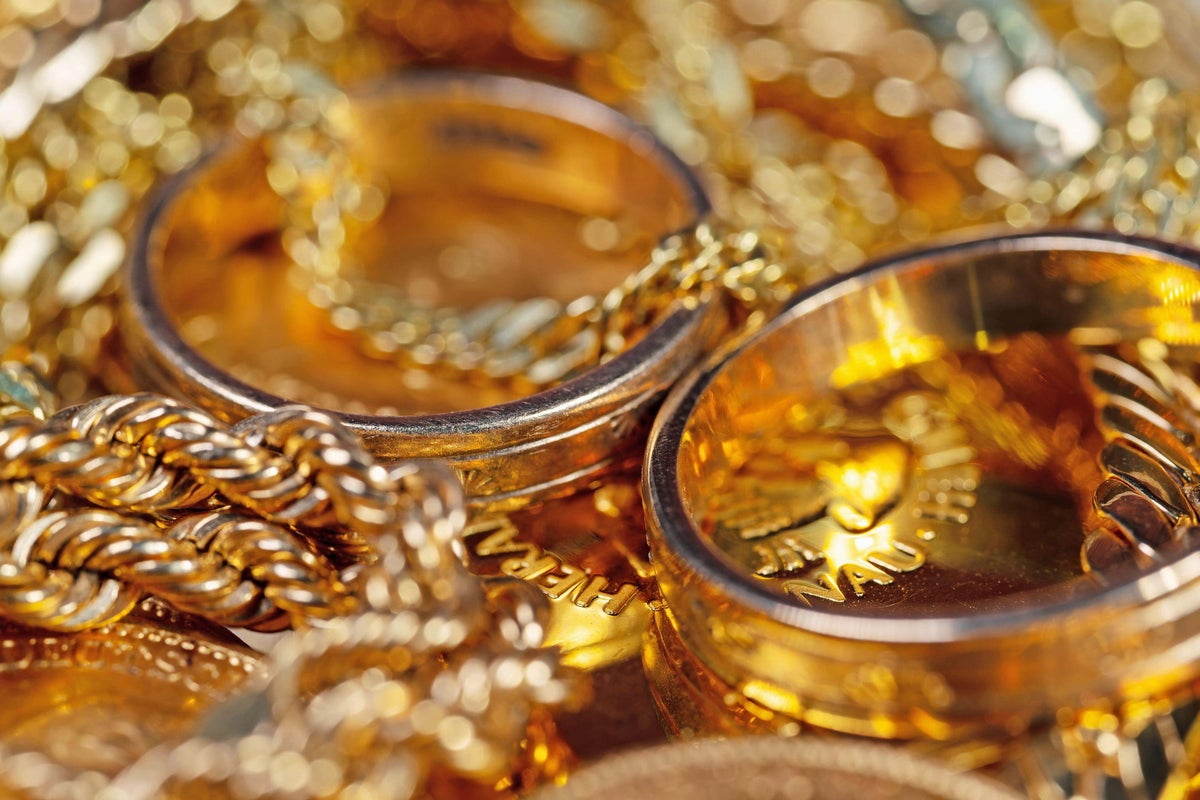
The prices of gold and silver hit record highs after nine weeks, as both metals hit record highs in both global and local gold markets.The price of gold surged for the second consecutive session in both global and Pakistani markets on Monday after a slight drop.
According to the All Pakistan Sarafa Gems and Jewellers Association (APSGJA), the price of 24-karat gold increased by a massive Rs6,200 per tola, reaching Rs462,362, as global rates rose amid steady investor demand.
The price of 10 grams of gold also climbed by Rs5,315 to be sold for Rs396,400, according to the APSGJA.
The price of 10g of 22-karat gold increased by Rs4,872 to reach Rs363,379.
In the international market, gold prices increased by $62 per ounce to settle at $4,400. The uptick reflects sustained global interest in precious metals amid economic uncertainty and shifting currency trends.
Silver followed a similar trajectory, with the price per tola of 24-karat silver rising by Rs218 to Rs7,205. The price of 10 grammes of 24k silver hiked by Rs187 to be sold for Rs6,177.
Internationally, gold jumped past the $4,400-per-ounce level for the first time on Monday, riding on growing expectations of further US rate cuts and strong safe-haven demand, with silver also joining the rally to hit an all-time high.
Spot gold was up 1.4% at $4,397.16 per ounce, as of 0502 GMT, after breaking the $4,400 barrier to hit a record high of $4,400.29 earlier in the day. Spot silver climbed 3.3% to hit a historic high of $69.44.
US gold futures for February delivery rose 0.98% to $4,430.30 per ounce.
Bullion has gained 67% so far this year, shattering multiple records and breaching the $3,000 and $4,000 per-ounce milestones for the first time. It is poised for its biggest annual gain since 1979.
Silver has surged 138% year-to-date, vastly outperforming gold, underpinned by robust investment inflows and persistent supply constraints.
GOLD RATES
The prices of gold and silver hit record highs after nine weeks, as both metals hit record highs in both global and local gold markets.
The price of gold surged for the second consecutive session in both global and Pakistani markets on Monday after a slight drop.
According to the All Pakistan Sarafa Gems and Jewellers Association (APSGJA), the price of 24-karat gold increased by a massive Rs6,200 per tola, reaching Rs462,362, as global rates rose amid steady investor demand.
The price of 10 grams of gold also climbed by Rs5,315 to be sold for Rs396,400, according to the APSGJA.
The price of 10g of 22-karat gold increased by Rs4,872 to reach Rs363,379.
In the international market, gold prices increased by $62 per ounce to settle at $4,400. The uptick reflects sustained global interest in precious metals amid economic uncertainty and shifting currency trends.
Silver followed a similar trajectory, with the price per tola of 24-karat silver rising by Rs218 to Rs7,205. The price of 10 grammes of 24k silver hiked by Rs187 to be sold for Rs6,177.
Internationally, gold jumped past the $4,400-per-ounce level for the first time on Monday, riding on growing expectations of further US rate cuts and strong safe-haven demand, with silver also joining the rally to hit an all-time high.
Spot gold was up 1.4% at $4,397.16 per ounce, as of 0502 GMT, after breaking the $4,400 barrier to hit a record high of $4,400.29 earlier in the day. Spot silver climbed 3.3% to hit a historic high of $69.44.
US gold futures for February delivery rose 0.98% to $4,430.30 per ounce.
Bullion has gained 67% so far this year, shattering multiple records and breaching the $3,000 and $4,000 per-ounce milestones for the first time. It is poised for its biggest annual gain since 1979.
Silver has surged 138% year-to-date, vastly outperforming gold, underpinned by robust investment inflows and persistent supply constraints.
-
Business1 week agoStudying Abroad Is Costly, But Not Impossible: Experts On Smarter Financial Planning
-
Business1 week agoKSE-100 index gains 876 points amid cut in policy rate | The Express Tribune
-
Fashion5 days agoIndonesia’s thrift surge fuels waste and textile industry woes
-
Sports1 week agoJets defensive lineman rips NFL officials after ejection vs Jaguars
-
Business5 days agoBP names new boss as current CEO leaves after less than two years
-
Tech1 week agoFor the First Time, AI Analyzes Language as Well as a Human Expert
-
Entertainment1 week agoPrince Harry, Meghan Markle’s 2025 Christmas card: A shift in strategy
-
Tech5 days agoT-Mobile Business Internet and Phone Deals