Business
Srinagar-Jammu National Highway: Disruption Hits Life In Kashmir, Fruit Growers Fear Huge Losses
Srinagar-Jammu National Highway: The continued disruption of the Jammu-Srinagar national highway has adversely affected the availability of essential supplies in Kashmir, and the fruit growers and traders fear irreparable loss to the industry unless the highway is restored to heavy vehicular traffic immediately.
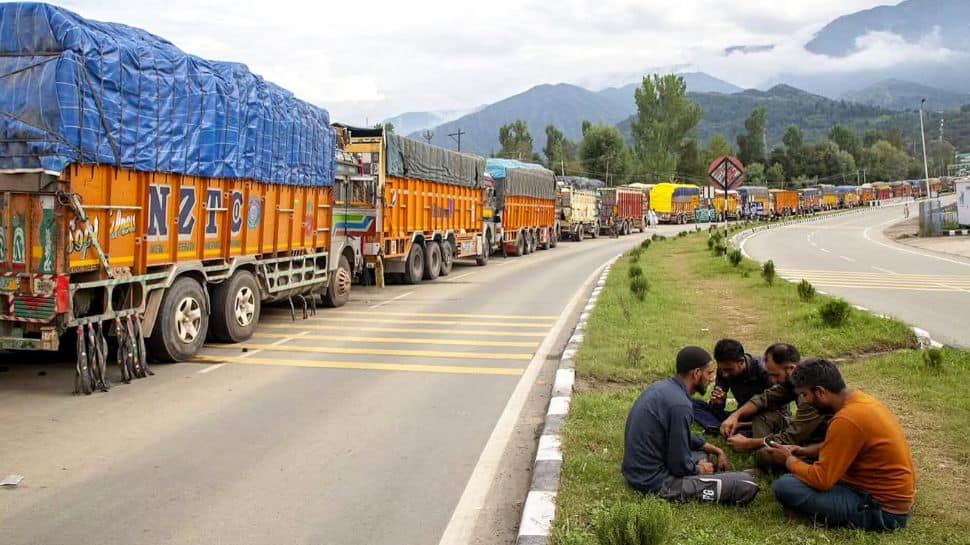
The traffic department advisory said only light vehicles would be allowed to move on the Srinagar-Jammu highway on Tuesday. Hundreds of apple-laden trucks have been stranded on the highway for many days, as the consignments are likely to rot unless the highway opens without further delay.
These trucks are parked at different places on the highway, unable to move beyond Udhampur due to the sinking of a portion of the highway at Tharad. A major sinking stretch of the road, measuring approximately 50-60 meters near the Tharad Bridge, has caused the highway to close for traffic, with efforts to clear debris and restore the road continuing amidst further damage and unstable terrain.
Fruit growers have already suffered huge losses due to the NH closure, as the apple consignments in the stationary trucks have rotted. Growers are living life on the edge in the Valley, fearing that unless the highway is immediately restored, the horticulture industry would have suffered irreparable losses in Kashmir.
Chief minister Omar Abdullah said on Monday on X, “Just spoke to Union Minister @MORTHIndia @nitin_gadkari Sb regarding the situation along NH 44 & the lack of connectivity with the rest of the country along this vital link. The frustration of fruit growers is understandable. They have been very patient for the first few days but watching their hard work rot because @nhidcl is unable to stabilise the highway, their patience has worn thin & that is totally understandable. Some concrete steps will be taken within the next 24 hours to address this problem but I will wait for that to happen before I say any more about the proposed plan of action.”
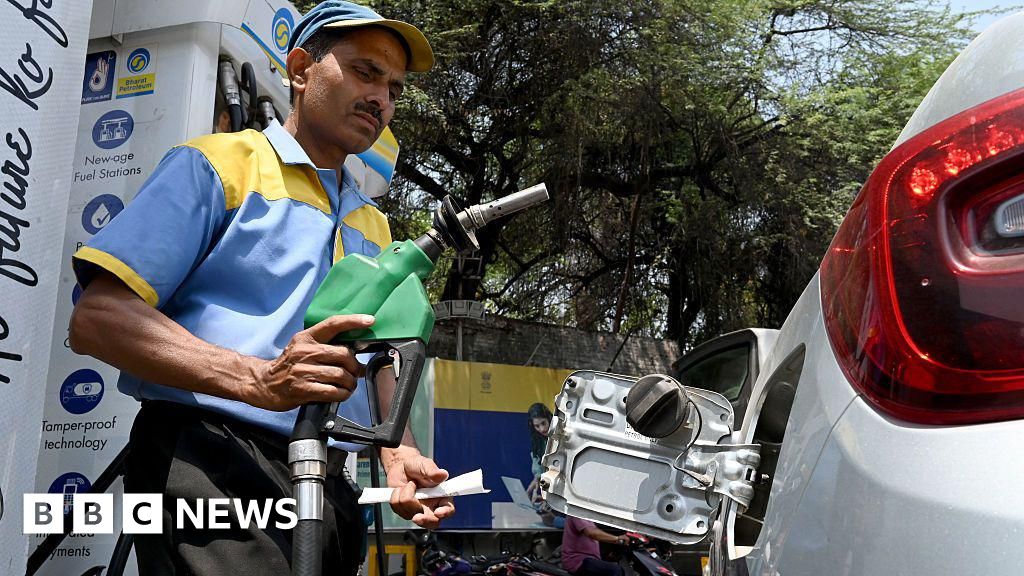
Affected by the disruption of the supply chain, most petrol refilling stations in the Valley operated with thin stocks as many put up boards stating that they had exhausted their stocks on Monday.
Long queues of vehicles at the petrol refilling stations added to the fear of the common citizen. Edibles are also being sold by the traders at self-imposed prices, taking refuge under the highway blockade. Chicken was sold at Rs 190 per kg while eggs cost a buyer Rs 240 per dozen in Srinagar city.
The scarcity is already hitting household budgets. Prices of vegetables and other edibles have begun to climb steeply in local markets. Traders say rates of onions, tomatoes and other essentials have doubled in some areas within a week, while milk and poultry are also becoming costlier. So far, medicines and foodgrains are freely available, and there has been no hoarding of these items in the Valley.

Business
Tariff jitters: US consumer confidence slips in December; inflation and jobs worries deepen – The Times of India
US consumer confidence weakened in December, sliding to its lowest level since President Donald Trump rolled out sweeping tariffs earlier this year, as households grew more anxious about high prices, trade levies and job prospects, according to a survey by the Conference Board.The Conference Board said its consumer confidence index fell 3.8 points to 89.1 in December from an upwardly revised 92.9 in November, AP reported. The reading is close to the 85.7 level recorded in April, when the Trump administration introduced import taxes on key US trading partners, AP reported.Consumers’ assessment of current economic conditions saw a sharper drop. The present situation index fell 9.5 points to 116.8, reflecting growing unease about inflation and employment conditions. Write-in responses to the survey showed that prices and inflation remained the biggest concern for consumers, alongside tariffs.Short-term expectations for income, business conditions and the labour market were little changed at 70.7, but remained well below 80 — a threshold that can signal a recession ahead. This was the 11th straight month that expectations stayed under that level.Perceptions of the job market also weakened. The share of consumers who said jobs were “plentiful” fell to 26.7% in December from 28.2% in November, while those who said jobs were “hard to get” rose to 20.8% from 20.1%.The softer sentiment follows recent labour market data showing mixed signals. Government figures released last week showed the US economy added 64,000 jobs in November after losing 105,000 jobs in October. The unemployment rate climbed to 4.6% last month, its highest level since 2021.Economists say the labour market is stuck in a “low hire, low fire” phase, as companies remain cautious amid uncertainty over tariffs and the lingering effects of high interest rates. Since March, average monthly job creation has slowed to about 35,000, down from 71,000 in the year ended March. Federal Reserve chair Jerome Powell has said he suspects those figures could be revised even lower, AP reported.
Business
Government waters down farm inheritance tax plan
Kate WhannelPolitical reporter
PA MediaGovernment proposals to tax inherited farmland have been watered down, with the planned threshold increasing from £1m to £2.5m.
The climbdown follows months of protests by farmers and concern from some Labour backbenchers.
At last year’s Budget, ministers said they would start imposing a 20% tax on inherited agricultural assets worth more than £1m from April 2026, ending the 100% tax relief that had been in place since the 1980s.
In an announcement put out after MPs had left Parliament for the Christmas recess, Environment Secretary Emma Reynolds said: “We have listened closely to farmers across the country and we are making changes today to protect more ordinary family farms.”
“It’s only right that larger estates contribute more, while we back the farms and trading businesses that are the backbone of Britain’s rural communities, ” she said.
Head of the National Farmers’ Union Tom Bradshaw welcomed the change, telling BBC Radio 5 Live it “takes out many family farms from the eye of a pernicious storm”.
Gavin Lane, president of the Country Land and Business Association, said: “The government deserves credit for recognising the flaws in the original policy and changing course.
“However, this announcement only limits the damage – it doesn’t eradicate it entirely.
“Many family businesses will own enough expensive machinery and land to be valued above the threshold, yet still operate on such narrow profit margins that this tax burden remains unaffordable.”
Ben Ardern, a farmer from Derbyshire, told the BBC said it was “a step in the right direction”.
He said the government should “drop it [the tax] for family farms… and just tax the people who have got the money to tax.
“The big corporations who have just buried money into land – they’re not farmers, they have just done it to avoid tax. Farmers haven’t bought land to avoid tax, we’ve bought land to farm it and grow food.”

In the 14 months since the initial proposal was announced, there have been regular protests by farmers outside Parliament.
Some Labour MPs in rural areas have also expressed concern. At a recent parliamentary vote on the plan, a dozen backbenchers abstained and one, Markus Campbell-Savours, voted against.
Campbell-Savours was subsequently suspended for voting against the government, meaning he now sits as an independent MP.
Conservative leader Kemi Badenoch said in a post on social media: “This fight isn’t finished.
“Other family businesses are still affected by Labour’s tax raid, and we will keep pushing until the tax is lifted from them too.”
Liberal Democrat spokesperson Tim Farron MP said: “It is utterly inexcusable that family farmers have been put through over a year of uncertainty and anguish since the government first announced these changes.
“We demand that the government scraps this unfair tax in full and if they refuse to, Liberal Democrats will submit amendments in the new year to bring it down.”
Reform UK deputy leader Richard Tice said: “This cynical climbdown – whilst better than nothing – does little to address the year of anxiety that farmers have faced in planning to protect their livelihoods… with British agriculture hanging by a thread, the government must go further and abolish this callous farms tax.”
In her first Budget in 2024, Chancellor Rachel Reeves announced she would be reversing the 100% inheritance tax relief on agricultural assets that had been in place since the 1980s.
The move would have seen inherited agricultural assets worth over £1m taxed at 20%, half the standard inheritance tax rate, raising an estimated £520m annually by 2029.
The government had argued that the change would protect smaller farms while stopping wealthy investors from buying farmland as a tax loophole.
However, it has now stepped back from the original proposal raising the threshold level to £2.5m.
Coupled with an exemption which allows farmers to pass on assets to their spouses tax-free, this new government concession means a couple could pass on up to £5m in qualifying assets, without paying tax.
Above the threshold, a 50% relief will be applied to the remaining assets.
According to the government, the number of estates in the UK expected to pay more inheritance tax in 2026/27 will be reduced from around 2,000 under the original plans to 1,100 under the new proposal.
The climbdown is the latest in a series of U-turns the government has made since being elected in July 2024.
Earlier this year the government eased cuts to winter fuel payments and backtracked on plans to make £5bn of cuts to the welfare bill.
Business
US economy grows at fastest pace in two years
The US economy picked up speed over the three months to September, as consumer spending jumped and exports increased.
The world’s largest economy expanded at an annual rate of 4.3%, up from 3.8% in the previous quarter. That was better than expected, and marked the strongest growth in two years.
The figures offer a clearer picture of the state of the US economy heading into the end of the year, after data collection had been delayed by the US government shutdown.
The report showed consumer spending rising by 3.5%, compared with 2.5% in the previous quarter.
-
Business1 week agoStudying Abroad Is Costly, But Not Impossible: Experts On Smarter Financial Planning
-
Fashion5 days agoIndonesia’s thrift surge fuels waste and textile industry woes
-
Business1 week agoKSE-100 index gains 876 points amid cut in policy rate | The Express Tribune
-
Sports1 week agoJets defensive lineman rips NFL officials after ejection vs Jaguars
-
Business5 days agoBP names new boss as current CEO leaves after less than two years
-
Entertainment1 week agoPrince Harry, Meghan Markle’s 2025 Christmas card: A shift in strategy
-
Tech6 days agoT-Mobile Business Internet and Phone Deals
-
Sports5 days agoPKF summons meeting after Pakistani player represents India in kabaddi tournament