

Business
Starmer faces cabinet revolt over Budget tax rises driving wealthy away

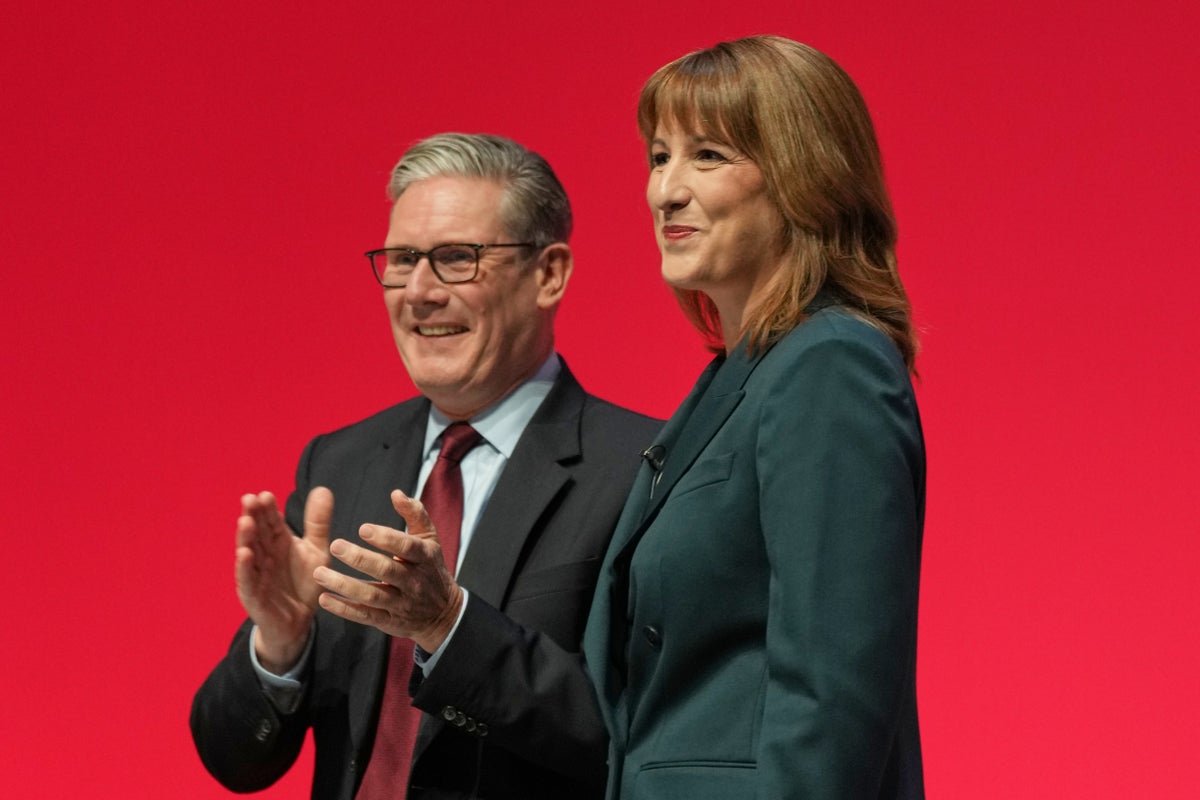
Sir Keir Starmer’s cabinet is deeply divided over economic policy, with senior ministers fearful further measures to target the rich in next month’s Budget could accelerate the wealth exodus from Britain.
Cabinet ministers have told the The Independent they believe Rachel Reeves has already gone too far with measures targeting the wealthy and businesses, and have urged the chancellor to change course if she is to have any hope of achieving growth.
They cited “anti-aspiration” measures such as the abolition of non-dom status and VAT on private school fees as key drivers of wealth away from the UK, saying they are “harming this country”. Further measures reportedly being considered include a property tax on high-value homes and a new bank profits tax.
Ministers have instead urged the prime minister and Ms Reeves to consider “efficiency savings” and cuts to fill a Budget black hole estimated to be between £30bn and £40bn.
Those on the left in Labour have noted that the recent reshuffle has “handed more power to the right of the party” while left-wingers who support wealth taxes have been demoted or pushed out.
But a powerful group within cabinet on the right of the party believes the government is failing to rein in spending and needs to be more ready “to reform the state in a Labour way.”
One minister said: “The trouble is we have crossed a line in trying to encourage aspiration. The non-dom change and the VAT on school fees have sent the opposite message.”
Noting the record number of millionaires leaving London in particular, the minister added: “It’s doing a lot of harm to the country.”
Another cabinet minister said: “I just think the non-dom changes made no real sense. Why do we want people with money to move it out of the country? It is really bad for London.”
Ms Reeves is currently refusing to budge on the manifesto promise not to raise VAT, income tax or employee national insurance contributions, but is facing mounting pressure is mounting there too.
However, one of her firmest allies in sticking to this pledge is new welfare secretary Pat McFadden, who has warned colleagues that “election wins are hard to come by and that manifesto promise was key to achieving it”.
He is in charge of trying to revive welfare reform after the government’s plans to slash disability payments were derailed by a massive rebellion by Labour MPs before the summer.
However, there is another faction within the cabinet that is backing growing calls from unions and Labour members for wealth taxes to plug the hole in the nation’s finances, such as a property tax that would hit those who have high-value homes.
There are others who are supporting the TUC’s campaign for a new bank profits tax and to hit the super-rich with a wealth tax.
One minister said: “It only seems fair that the rich carry the burden.”
However, question marks have been raised over whether so-called wealth taxes can fill the Budget black hole or would do more damage.
Professor Stephen Millard, deputy director of the National Institute of Economic and Social Research (NIESR), has warned that Ms Reeves will eventually have to break her manifesto promise not to raise any of the big taxes – VAT, income tax or employee national insurance contributions.
The NIESR estimates that the black hole will be above £40bn, and Prof Millard warned: “It is likely that, absent any change in policy, the chancellor will have a large gap to fill to meet her fiscal rules; a reduction in spending would be hard to achieve given we’ve just had a comprehensive spending review.
“It is likely that any change to the rules enabling the chancellor to increase borrowing would result in an adverse market reaction; so the chancellor will need to raise taxes.
“Given our estimate of the extent of the gap, we do not think that the Chancellor will be able to fill it by ‘tinkering’ with lots of changes to the non big four taxes; so we think she will have to raise either income tax, NICs or VAT.”
Isaac Delestre, senior research economist at the Institute for Fiscal Studies (IFS), warned: “If the Office for Budget Responsibility (OBR) forecast deteriorates and the chancellor wants to stick to her fiscal rules she will either need to deliver spending reductions or tax increases.”

KARACHI: The Pakistan Stock Exchange rallied on Thursday after Saudi Arabia assured Pakistan of facilitating crude oil shipments through the Red Sea port of Yanbu Port, easing concerns over potential fuel supply disruptions.
The benchmark KSE-100 Index climbed sharply during the trading session, rising 4,439.93 points (2.85%) to reach an intraday high of 160,217.14 points.
Market Recovery
Analysts attributed the market rebound to renewed institutional buying and improving investor sentiment after Saudi assurances on oil supplies.
Market expert Ahsan Mehanti, CEO of Arif Habib Commodities, said easing fuel supply concerns played a key role in the recovery.
He added that rising global crude prices, expectations of a new International Monetary Fund loan tranche for Pakistan, and positive economic indicators also boosted investor confidence.
Alternative Oil Route
Pakistan sought an alternative supply route after Iran announced the closure of the Strait of Hormuz, a crucial global oil transit corridor.
Federal Petroleum Minister Ali Pervaiz Malik held talks with Nawaf bin Said Al-Malki, requesting Saudi support for uninterrupted energy supplies.
Saudi authorities reportedly assured Pakistan that oil shipments could be routed through Yanbu, and one crude vessel has already been prepared for dispatch.
Global Oil Market Impact
Oil prices continued to rise amid tensions in the Middle East conflict involving Iran, Israel and the United States.
Brent crude: up 3.26% to $83.99 per barrel
West Texas Intermediate (WTI): up 3.70% to $77.42 per barrel
Energy markets remain volatile as shipping disruptions threaten supply through the Strait of Hormuz, a route that handles nearly 20% of global oil trade.
Analysts say the Saudi assurance helped calm fears about Pakistan’s energy supply chain, contributing to the strong recovery at the PSX.
Business
Asian stocks today: Markets inch higher mirroring Wall Street gains; Kospi jumps 10%, Nikkei up 1,400 points – The Times of India

Asian stocks inched higher on Thursday, after days of trading in red amid ongoing Middle East tensions. This comes as equities were lifted by a rebound on Wall Street as oil prices paused their recent spike and economic updates painted a more positive picture of the American economy. In South Korea, Kospi hit a pause on its downward rally to add a whopping 10% or 513 points, to reach 5,606. Japan’s Nikkei 225 also climbed 2.7% to 55,713. Hong Kong’s HSI also traded in green, rising 353 points to 25,603 as of 9:10 am. Shanghai and Shenzhen added 0.9% and 1.7% respectively. Gains elsewhere in the region were more modest. Australia’s S&P/ASX 200 added 0.3% to 8,927.20, while New Zealand’s benchmark index moved 0.9% higher. In contrast, US futures indicated a subdued start ahead. Futures linked to the Dow Jones Industrial Average were almost unchanged, while S&P 500 futures ticked up 0.2%. The S&P 500 advanced 0.8% on Wednesday, clawing back much of the decline seen since the onset of the Iran conflict. The Dow Jones Industrial Average rose 0.5%, and the Nasdaq Composite outperformed with a 1.3% gain. Globally, market sentiment has remained sensitive to developments in the Middle East, with oil price swings continuing to steer trading direction. Crude prices eased during Wednesday’s session. Brent crude briefly moved above $84 a barrel before settling at $81.40, roughly matching the previous day’s level. US benchmark crude edged up 0.1% to finish at $74.66 per barrel. By early Thursday, however, oil was on the rise again. Brent crude climbed 2.4% to $83.32 per barrel, while U.S. benchmark crude jumped 2.5% to $76.53 per barrel.
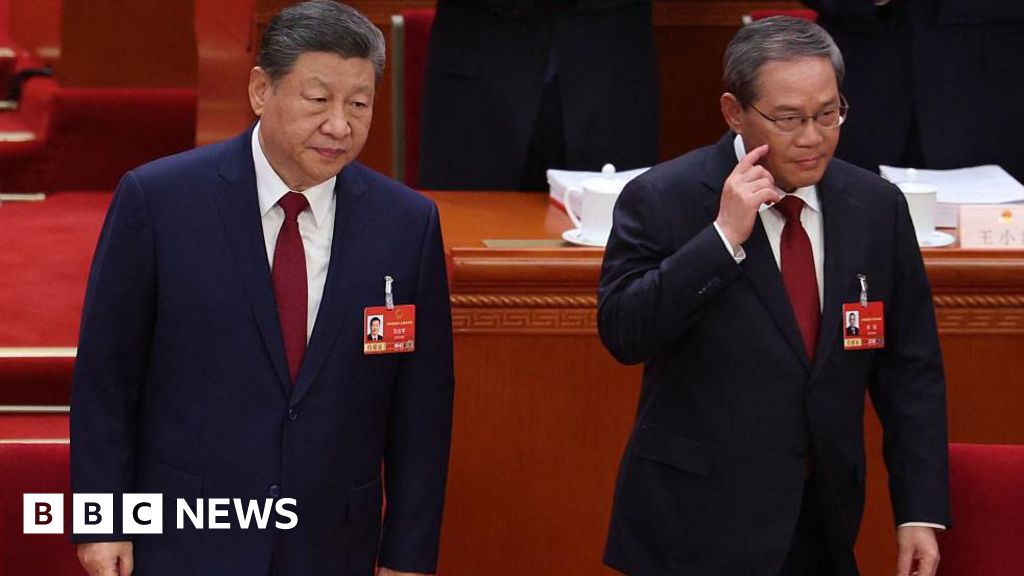
It is also the first time the target has been lowered since it was cut to “around 5%” in 2023.
Source link


US’ Wolverine Worldwide 2025 revenue rises 6.8% on Active Group growth

Brooklyn Beckham finally reacts to special birthday wish

Extreme heat threatens health, jobs in Indian textile sector: Report

India Us Trade Deal: Fresh look at India-US trade deal? May be ‘rebalanced’ if circumstances change, says Piyush Goyal – The Times of India

What are Iran’s ballistic missile capabilities?

Attock Cement’s acquisition approved | The Express Tribune

-
Business6 days ago
India Us Trade Deal: Fresh look at India-US trade deal? May be ‘rebalanced’ if circumstances change, says Piyush Goyal – The Times of India
-
 Politics7 days ago
What are Iran’s ballistic missile capabilities?
-
Business7 days ago
Attock Cement’s acquisition approved | The Express Tribune
-
 Business1 week ago
Households set for lower energy bills amid price cap shake-up
-

 Politics1 week ago
US arrests ex-Air Force pilot for ‘training’ Chinese military
-
 Fashion1 week ago
OECD GDP growth slows to 0.3% in Q4 amid mixed trends
-

 Fashion7 days ago
Policy easing drives Argentina’s garment import surge in 2025
-

 Sports6 days ago
LPGA legend shares her feelings about US women’s Olympic wins: ‘Gets me really emotional’