

Business
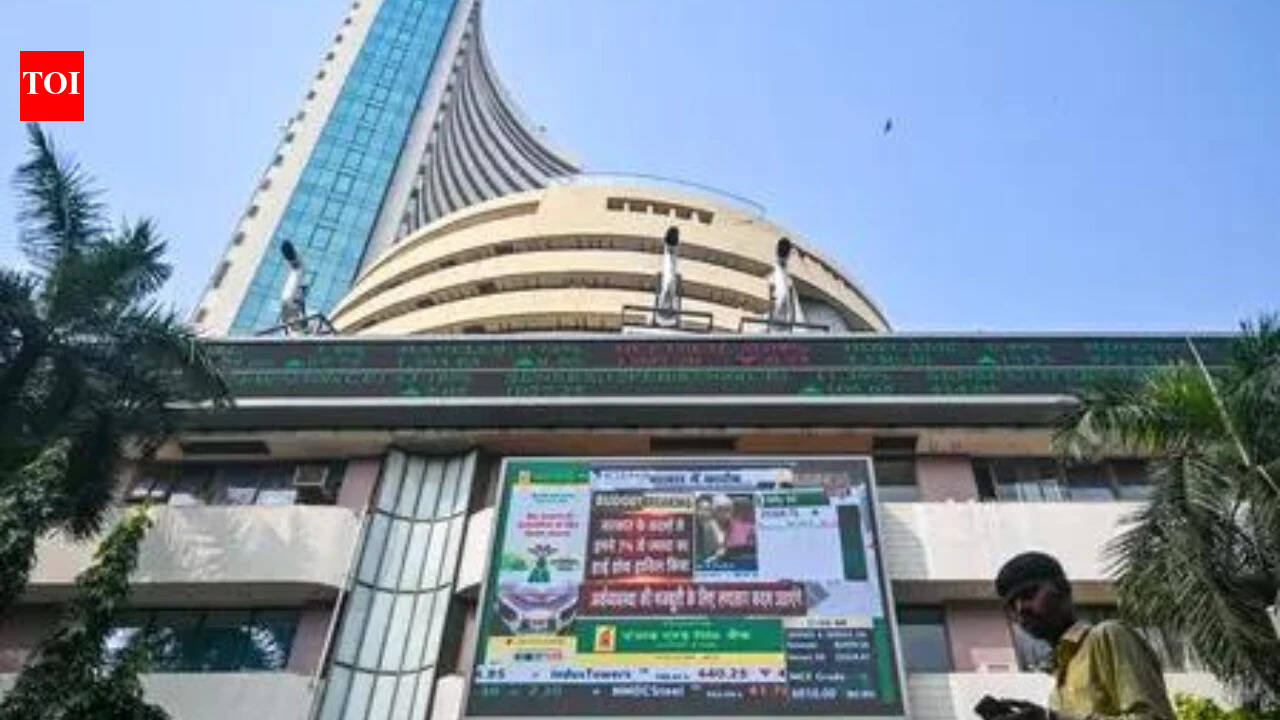
Stock markets at lifetime highs: What should investors do? Six mistakes to avoid – The Times of India


When optimism is in the air, it’s easy to lose discipline. Here are six behavioural traps that can quietly sabotage your wealth.
Letting overconfidence override disciplineThe powerful rally of the past 18–20 months has turned even reluctant investors into equity enthusiasts. Portfolio values have doubled in some cases, and many now believe they have cracked the code of stock selection. But much of the recent upside has come from broad market momentum, not superior research or clairvoyant stock picking. This misplaced confidence can quickly morph into reckless behaviour: bigger position sizes, riskier small-cap bets, and an urge to “prove” one’s skill by chasing more aggressive returns. Markets don’t reward bravado for long. A period of consolidation is often all it takes to expose the difference between luck and skill. Keeping position sizes modest and sticking to a process is more important now than ever.Exiting in panic after making gainsAt the other end of the spectrum are investors who want to cash out completely after earning healthy returns. Partial profit-booking is sensible, especially if valuations look stretched. But a total retreat from equities is rarely wise. Stocks remain the only mainstream asset class with a long-term track record of beating inflation and growing wealth meaningfully. Shifting entirely to fixed income at a time when real returns are thin can drag down your long-term portfolio performance. A better approach: trim frothy positions, rebalance, and keep your strategic equity exposure intact.Rushing in due to FOMOThose who stayed on the sidelines are now watching markets soar without them, and the temptation to “catch up” is intense. This is when investors make the costliest mistakes: lump-sum entries at overheated valuations, buying anything that’s moving, or mistaking rising prices for safety. Remember, even the best blue-chip stock can be a poor investment if you overpay for it. Valuations still matter. If you’re entering now, stagger investments, stick to high-quality names, and don’t let regret dictate your asset allocation.Falling for Tips in a Hot MarketA buoyant market is fertile ground for rumour-mongers, WhatsApp tipsters, and pump-and-dump operators. Scamsters exploit investor optimism by circulating narratives of “undiscovered multibaggers” and “guaranteed up-moves.” The trap is subtle: early tips may seem to work, reinforcing belief in the next one. But these operations are structured to benefit manipulators, not retail investors who get left holding worthless stocks. A simple rule: if you didn’t do the research, you shouldn’t buy the stock.Ignoring portfolio diversification and rebalancingWhen a particular asset class, especially equities, runs up sharply, portfolios can drift far from the original asset allocation. A portfolio that was meant to hold 60% equity may now be 75-80%, exposing the investor to far more risk than intended. Rebalancing forces discipline: it nudges you to sell what has become expensive and buy what is relatively undervalued. Yet very few investors actually do it. A concentrated portfolio may deliver higher returns in good times, but it can unravel just as quickly when markets correct. Investing with borrowed money: The Margin TrapOne of the most dangerous mistakes at market highs is buying stocks with borrowed money through margin trading facilities offered by brokers and banks. Leverage magnifies both gains and losses, and while it can seem tempting in a rising market, the risk-reward equation is brutally asymmetric. A 10-15% market decline, not unheard of during volatile phases, is enough to trigger margin calls, forcing investors to liquidate positions at a loss. In sharp corrections, even blue-chip stocks can fall faster than expected, wiping out capital and leaving the investor with debt to repay. Margin trading should be avoided entirely by long-term investors. If you do not have the cash to buy a stock, you are not ready to own it.Market highs are a test of temperament. Staying grounded, avoiding extreme decisions, and sticking to asset allocation are far more valuable than hunting for the next big winner. In investing, controlling behaviour is often more rewarding than predicting the market.






Advocates attend a news conference about the “impact of incarcerating those charged with marijuana-related offenses,” and policy reform ideas, outside the U.S. Capitol on April 20, 2026.
Tom Williams | CQ-Roll Call, Inc. | Getty Images
A White House executive order on psychedelics, signed by President Donald Trump on Saturday, aims to speed up research on drugs like psilocybin, MDMA and ibogaine, helping to legitimize an industry that’s long lived largely underground.
But it also raises a broader question: Will psychedelics fall victim, like cannabis has, to a slow-moving federal process?
The latest executive order comes roughly four months after an effort by President Trump to reschedule cannabis, opening the door to greater research and investment opportunities. But since that directive, progress to reclassify cannabis has largely stalled, with the Drug Enforcement Administration review still ongoing and no final decision on moving marijuana from Schedule I to the lesser Schedule III.
The delay reflects how drug policy often slows once it enters interagency review, where scientific evaluation, legal standards and politics meet.
“The process has certainly been slow and frustrating for stakeholders when you consider they have spent decades fighting marijuana’s outrageous 1970s-era misclassification,” said Shawn Hauser, partner at cannabis law firm Vicente LLP.
Vicente LLP also serves as legal counsel for the National Compassionate Care Council, or NCCC, a coalition of health-care stakeholders focused on evidence-based cannabis policy.
The psychedelics order, however, focuses on research acceleration rather than legalization. It directs agencies like the U.S. Food and Drug Administration to expand clinical trials and “Right to Try” access for patients with serious mental health conditions, while leaving drug scheduling unchanged.
AtaiBeckley is among a number of psychedelics-focused drug developers whose stock is rallying since the order was signed over the weekend, up roughly 25% Monday. Several smaller-market cap stocks also jumped, including Compass Pathways, Definium Therapeutics and U.S.-listed shares of Cybin.
Hauser said the recent psychedelics order reflects a broader shift in Washington toward a medical-first framework and could mark a path forward for cannabis rescheduling.
“The science-, patient-, health-care-first approach is winning in Washington right now,” she said.
“The psychedelic pathway — built on physician-led protocols, clinical research and compassionate use frameworks — is actually a model cannabis advocates should be studying and adopting more aggressively,” Hauser said.
Safety first
Trump’s psychedelics measure has drawn particular attention for its inclusion of ibogaine, a powerful, naturally occurring psychoactive compound with long-standing safety concerns.
The drug is being studied for its applications with post-traumatic stress disorder, depression and addiction, but cardiac risks flagged by Nora Volkow of the National Institute on Drug Abuse remain a major barrier.
That tension is heightened by the expansion of “Right to Try” access, a federal law allowing patients diagnosed with life-threatening diseases or conditions to try experimental drugs when no other treatments work. This distinction typically applies only after Phase I trials are successful.
Ibogaine has struggled to meet that criteria, since most of the research into the drug has been conducted outside the U.S.
Psychedelic industry leaders say the order is meaningful, but the full impacts are still unknown until implementation catches up to prove scientific value.
“The opportunity now is not hype, it’s execution: rigorous science, disciplined safety standards, physician-led protocols and real-world outcome data,” said Tom Feegel, CEO of clinical neurohealth center Beond.
Beond, based in Cancun, Mexico, specializes in ibogaine therapy.
Feegel added that while the executive order signals legitimacy at the highest level of government, the next phase is critical.
Psychedelics still lack a commercial market, though clinical-stage developers, like AtaiBeckley, Compass and GH Research, are emerging. Many prioritize research around less controversial psychedelics like psilocybin and MDMA derivatives for mental health treatment.
U.S. states have been weighing the space, too. Colorado advanced regulated psychedelic access for its residents in 2022, while a Massachusetts ballot measure failed in 2024 with 56% of voters rejecting the access.
Cannabis, by contract, already has a multibillion-dollar adult-use industry across dozens of states, giving it a significant head start even as federal rescheduling remains unresolved.
Hauser argued the two industries are ultimately reinforcing one another.
“The two regulatory tracks aren’t in conflict,” she said. “Both are advancing the broader legitimacy of plant-based alternative medicines, and the infrastructure being built for one will inevitably support the other.”

Christmas is still eight months away, but artificial tree maker Lou Liping is already worried about a bad holiday season due to the Iran war.
Lou’s company, Kitty Christmas Factory, has been making artificial trees for the U.S. and European markets for nearly three decades. Her facility is based in the city of Yiwu, known as China’s Christmas capital.
“Many customers … are holding off on orders,” she told CNBC last Friday at her showroom in the city’s international expo center. The center houses hundreds of manufacturers that contribute to the country’s vast production of the world’s artificial trees, tinsel, ornaments and other decorations.
An estimated 87% of Christmas decor sold in the U.S. is sourced from China, according to the American Christmas Tree Association, with much of it from Yiwu.
Lou said the disrupted shipping in the Strait of Hormuz and high oil prices due to the Iran conflict have raised her costs per tree by 10%. The base material of her trees is PET plastic derived from oil. The price of the PET in her artificial pine needles is up 5%, and the cost of the plastic used as packaging for shipments is up 15%, she said.
Lou said her revenue is down roughly 12% because of the lost orders.
Yiwu’s factories normally gear up in the spring to make sure that their products are on store shelves for the Christmas shopping season.
“The war happened at a bad time — right when we need to get our shipments out,” tinsel maker Yun Zhuomei told CNBC from her booth at the expo center. “It’s very painful for us manufacturers.”
Yun said plastic prices for her tinsel are up as much as 40%.
Chen Lian, who makes Christmas lights, said she fears further price increases, with suppliers all moving up delivery schedules to accommodate customers worried about transport delays.
“Everyone needs to deliver between May and August so demand is concentrated,” Chen said. “Material prices are bound to go up.”
To adjust, artificial tree maker Lou said she has accelerated shipments. And when her contracts with customers allow, she passes on some cost. For next year, she said she aims to design a wider variety of lower-end trees so more people can afford her products.
But for this season, Lou said American shoppers will likely be stuck paying at least 15% more.
“The price of Christmas trees in the U.S. will definitely go up,” she said. “It is unavoidable.”

Savers across the UK are being offered a record number of accounts and products and with interest rates still well above 4 per cent on the most competitive options, should make sure their cash is working hard.
Data from Moneyfacts shows the number of savings accounts has risen to 2,486, including ISAs, the highest number on record. Cash ISAs alone, meanwhile, also saw the largest monthly rise since May 2024 and, with 712 offers in total, is the most since Moneyfacts started recording.
Both numbers come as the final tax year gets underway in which all savers are able to deposit a full £20,000 annual allowance into a cash ISA.
Starting from April 2027, under-65s will only be able to save a maximum of £12,000 into the tax-free savings wrappers, with the additional £8,000 reserved for investment purposes, such as a stocks and shares ISA.
That’s as part of a wider push from the government to encourage more people to invest, to build future wealth.
High interest rates are important not only to earn a good return on cash, but to ensure money doesn’t lose its value, or buying power, when measured against rising prices; in other words, inflation, which currently sits at around 3 per cent and is set to rise.
That means consumers should whenever possible look to be beating that rate as a minimum when it comes to their saving accounts, and plenty of places are still offering 4.5 per cent and even higher right now.
“This year the competition around ISA season was particularly strong, fuelled by the fact that for savers under 65 it’s the final year for them to utilise their full £20,000 allowance. Providers have been enticing new deposits with attractive deals,” said Caitlyn Eastell, personal finance analyst at Moneyfacts.

Get a free fractional share worth up to £100.
Capital at risk.
Terms and conditions apply.
ADVERTISEMENT
Get a free fractional share worth up to £100.
Capital at risk.
Terms and conditions apply.
ADVERTISEMENT
“Savers should be taking advantage of this all-time high, and it may be especially timely as the new tax-year is the perfect window to review their current deal and switch to ensure they can maximise their returns before thresholds tighten.
“The number of savings deals paying above the Bank of England base rate has surged to its highest level since December 2021. While this could largely be driven by base rate remaining unchanged several months, providers have also been proactively adjusting rates in response to shifting interest rate expectations.
“Fixed rates reflect this change, with the average one-year ISA rising to over 4 per cent, reaching its highest point since May 2025, while its non-ISA counterpart saw its biggest increase since September 2023. Savers may enjoy more competitive returns in this environment; however, it can be a tricky balancing act because sharp spikes to household bills and inflation could quickly catch up, meaning savers may be left out of pocket.”
Meanwhile, thisbank has pointed to growing evidence showing that many households have multiple money accounts, but no clear overview of their true financial position.
Reviewing accounts – including joint and old current accounts – can turn up unexpected cash reserves, help families realise which subscriptions they are paying for but are no longer using and aid better budgeting, the bank says, giving a better understanding of where income and expenses match up.
“For many households, financial stress is exacerbated by complexity. By taking a simple, step-by-step approach, people can implement structure and clarity in their everyday financial management,” said Chris Waring, CEO of thisbank, while recommending each savings account has a particular role, such as everyday spending, long-term emergency buffer or fixed-term saver accounts with strong rates for predictable returns.
Underlining the need to be aware of where consumers are choosing to put their cash, analysis by savings app Spring shows that a huge majority of premium, paid-for accounts come with poorer returns, tiered interest rates or withdrawal restrictions.
Under a quarter (23 per cent) of easy access savings accounts on premium current accounts on the market are free of additional restrictions, their research showed, which included lower returns after £4,000 in an account with one, a paltry 1.35 per cent on balances under £100,000 elsewhere and nearly a third (30 per cent) having withdrawal limits.


Singer D4vd charged with murder in death of 14-year-old found in his car

Christina Applegate exhibits strength amid ‘health issues’

Stephen A. Smith makes brutal gaffe while talking about the Golden State Warriors

-

 Fashion5 days ago
France’s LVMH Q1 revenue falls 6%, shows resilience amid Iran war
-

 Sports1 week ago
The case for Man United’s Fernandes as Premier League’s best
-

 Entertainment1 week ago
Palace left in shock as Prince William cancels grand ceremony
-
 Business1 week ago
UK could adopt EU single market rules under new legislation
-

 Entertainment5 days ago
Is Claude down? Here’s why users are seeing errors
-

 Fashion1 week ago
Energy emerges as biggest cost driver in textile margins
-
 Business1 week ago
Delta Air Lines unveils first new Delta One suite in premium cabin arms race
-

 Tech1 week ago
A Lot of Shops Won’t Fix Electric Bikes. Here’s Why