

Business
Stocks post modest gains while gold pushes higher

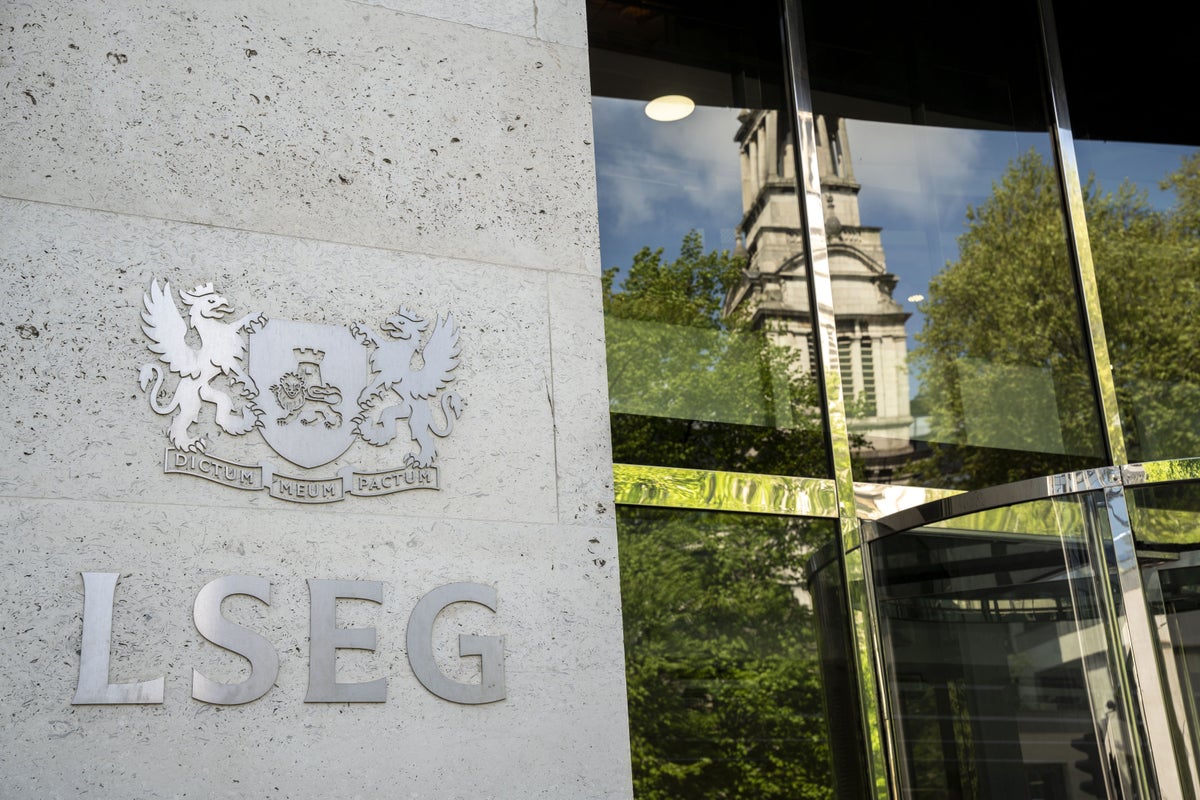
The FTSE 100 made steady progress on Monday with a boost from defence stocks and gold miners partially offset by falls in utility stocks.
The FTSE 100 index closed up 9.0 points, 0.1%, at 9,196.34. The FTSE 250 ended 27.97 points higher, 0.1%, at 21,633.69 and the AIM All-Share finished up 4.54 points, 0.6%, at 768.64.
In Europe, the CAC 40 in Paris up 0.1%, while the DAX 40 in Frankfurt closed 0.6% higher.
Financial markets in New York were closed on Monday for Labor Day.
This week’s US calendar is packed with labour market data, culminating in Friday’s August jobs report.
FactSet consensus looks for a nonfarms figure of 110,000 in August compared to 73,000 in July, and an unchanged unemployment rate of 4.2%.
Attention will focus on the extent of revisions to the prior month’s figures, given the hefty revisions in July’s report.
June was revised down from 147,000 to just 14,000, the worst monthly reading since January 2021, when 183,000 jobs were shed. May’s reading was downwardly revised to 19,000 from 144,000. In total, employment in May and June combined was 258,000 lower than previously reported.
The pound firmed to 1.3548 dollars late on Monday afternoon in London, compared to 1.3510 dollars at the equities close on Friday. The euro rose to 1.1705 dollars, against 1.1699 dollars. Against the yen, the dollar was trading higher at 147.27 yen compared to 146.92 yen.
There was mixed news on the UK housing market, with a stronger-than-forecast rise in mortgage approvals in July offset by a surprise drop in house prices in August.
Data from the Bank of England showed net mortgage borrowing by individuals fell to £4.5 billion in July from £5.4 billion in June, but mortgage approvals for house purchases edged up slightly to 65,400 from 64,600, beating FXStreet consensus for a fall to 64,000. Approvals for remortgaging fell to 38,900 from 41,600.
But separate figures from Nationwide showed UK annual house price growth softened in August as affordability concerns continue to weigh on buyers.
The Nationwide house price index showed a 0.1% monthly decline in seasonally adjusted UK house prices in August, weakening from 0.5% growth a month earlier.
This underperformed against an FXStreet-cited consensus of 0.2% growth.
RBC Capital Markets analyst Anthony Codling said transaction volumes are “more important” to housebuilders than house prices.
“It doesn’t matter how high the price is if no one is buying, but with mortgage approvals just above their 10-year average, there are plenty of willing home buyers in the housing market and mortgage lenders are willing to approve the mortgages required to complete those purchases,” he added.
This points to a picture of a “healthy” housing market, he said.
On the FTSE 100, housebuilders Taylor Wimpey, Persimmon and Berkeley Group rose 0.3%, 1.0%, 0.1% respectively.
Elsewhere, a report showed the downturn in the UK manufacturing sector sharpened in August, as the sector contracted for the 11th month running.
Data from S&P Global showed the manufacturing purchasing managers’ index fell to 47 points in August from 48 in July, remaining below the 50-point neutral mark. It also slightly underperformed the flash reading of 47.3 points.
Weak market conditions, tariff uncertainty and subdued client confidence contributed to a sharp drop in new order intake in August, as both domestic and overseas demand fell.
BAE Systems rose 1.9% after the UK government announced on Sunday that Norway had selected the firm’s Type 26 frigate for its anti-submarine requirement for five ships, worth about £10 billion.
Analysts at Citi said the Norwegian order is worth about 10p to 15p per share for BAE Systems.
Rolls-Royce climbed 2.8% after reports suggested it is speaking to advisers about funding options for its small nuclear reactor business, which could include an initial public offer of shares.
Endeavour Mining and Fresnillo benefited from the rising gold price, advancing 3.5% and 2.1%.
Gold climbed to 3,476.94 dollars an ounce against 3,445.38 dollars on Friday.
Tesco rose 2% as analysts at UBS and JPMorgan issued positive research notes.
UBS raised its share price target to 475p from 435p and thinks robust first-half results, due in October, will set the tone for further earnings upgrades.
The broker expects the food retailer to lift the lower end of group earnings before interest and tax guidance, currently £2.7 billion to £3 billion, though likely to maintain the top end for now.
Kainos jumped 23% as it said it expects revenue to be at the top end of expectations after a strong start to the financial year.
The London-based Workday partner and provider of IT services to public sector, commercial and healthcare customers said it delivered a sequential improvement in the period from April 1 to date, building on a “solid” fourth-quarter 2025 performance.
As a result, Kainos now expects revenue for the financial year ending March 31 at the upper end of the consensus range of forecasts of £378 million to £393.4 million, which would be growth of as much as 7.1% from £367.2 million the year prior.
Shore Capital analyst Martin O’Sullivan reckons “resilient, well-managed” Kainos is primed to capitalise on the upturn in digital services that is beginning to materialise.
Flying high, shares in Immupharma leapt 99% as it announced the filing of a “ground-breaking” new patent application for its lead asset P140, the world’s first immunormalizer.
London-based Immupharma said the patent application, which provides the potential for 20 years of commercial exclusivity, discloses a novel diagnostic test and precision treatment approach.
The new diagnostic test is expected to shorten the time to diagnosis, improve patient selection for clinical trials, and enable smaller, faster and more successful trials, significantly increasing the probability of regulatory approval.
A barrel of Brent traded at 68.63 dollars (£50.68) late Monday afternoon, up from 67.41 dollars (£49.78) on Thursday.
The biggest risers on the FTSE 100 were Endeavour Mining, up 88p at 2,624p; IAG, up 11.5p at 393.6p; Rolls Royce, up 30p at 1,100p; Fresnillo, up 37p at 1,825p and Babcock International Group, up 21p at 1,037p.
The biggest fallers on the FTSE 100 were SSE, down 53.5p at 1,676.5p; United Utilities, down 28.5p at 1,121.5p; National Grid, down 21.5p at 1,019.5p; BT Group, down 4.3p at 212.2p and Severn Trent, down 48p at 2,538p.
Tuesday’s local corporate calendar sees full-year results from Alumasc and half-year numbers from Oxford Nanopore, Johnson Service Group and Uniphar.
The global economic calendar on Tuesday has US manufacturing PMI data and a eurozone inflation print.
Contributed by Alliance News.

NEW DELHI: The West Asia conflict is pushing govt to look at a faster transition towards renewable energy, including the possibility of increasing ethanol blending in petrol from 20-25%, although in a calibrated manner. This will come along with increased refining capacity within the country, so that there is a buffer in the system and greater domestic resilience, those familiar with the discussions said, pointing out that sustaining refineries at 100% capacity is not sustainable.While Barmer refinery has begun operations, expansion at Numaligarh is underway and work on integrated refineries on the west coast is also under focus. Apart from a mega refinery in Maharashtra, a new facility in Gujarat is also planned.Officials said rising use of renewables, biofuels and hydrogen in the energy mix was no longer just an environmental issue, but a strategic necessity in a situation like the present one, where the military conflict in West Asia has disrupted global energy supplies, triggering a supply crisis and a surge in oil and gas prices.According to officials, 20% ethanol blending has helped India save 4.5 crore barrels of crude annually and reduce foreign exchange outflow by around ₹1.5 lakh crore so far. Given the concerns over fuel efficiency and impact on vehicles, govt is expected to take a gradual approach that addresses the anxiety on ethanol blending. The third pillar on energy is expanding the strategic petroleum reserves.

A cup of coffee and strawberry frosted donut with sprinkles at a Dunkin’ Donuts location in Los Angeles, Sept. 6, 2017.
Patrick T. Fallon | Bloomberg | Getty Images
Dunkin’ and Buffalo Wild Wings owner Inspire Brands has confidentially filed for an initial public offering, the company announced on Friday.
If Inspire goes public, it will be one of the biggest-ever restaurant offerings. Private equity firm Roark Capital, which backs Inspire, is reportedly seeking a valuation of roughly $20 billion.
Inspire was founded in 2018 through a merger between Arby’s and Buffalo Wild Wings. Acquisitions followed: Sonic Drive-In later in 2018 and Jimmy John’s in 2019. And in 2020, Inspire took Dunkin’ and its sister chain Baskin Robbins private in an $11 billion deal.
Across those six chains, Inspire has more than 33,300 restaurants worldwide and $33.4 billion in annual sales, according to the company’s website.
Inspire isn’t the only restaurant company pursuing an IPO. Last month, Jersey Mike’s also announced that it had confidentially filed with the Securities and Exchange Commission.
The market for initial public offerings has been tepid, although that could change later this year. Market volatility, economic uncertainty and recent poor performance among IPO stocks has led to a backlog of listings.
However, several blockbuster IPOs, such as the SpaceX offering that could value the company at more than $1 trillion, are anticipated in the coming months.
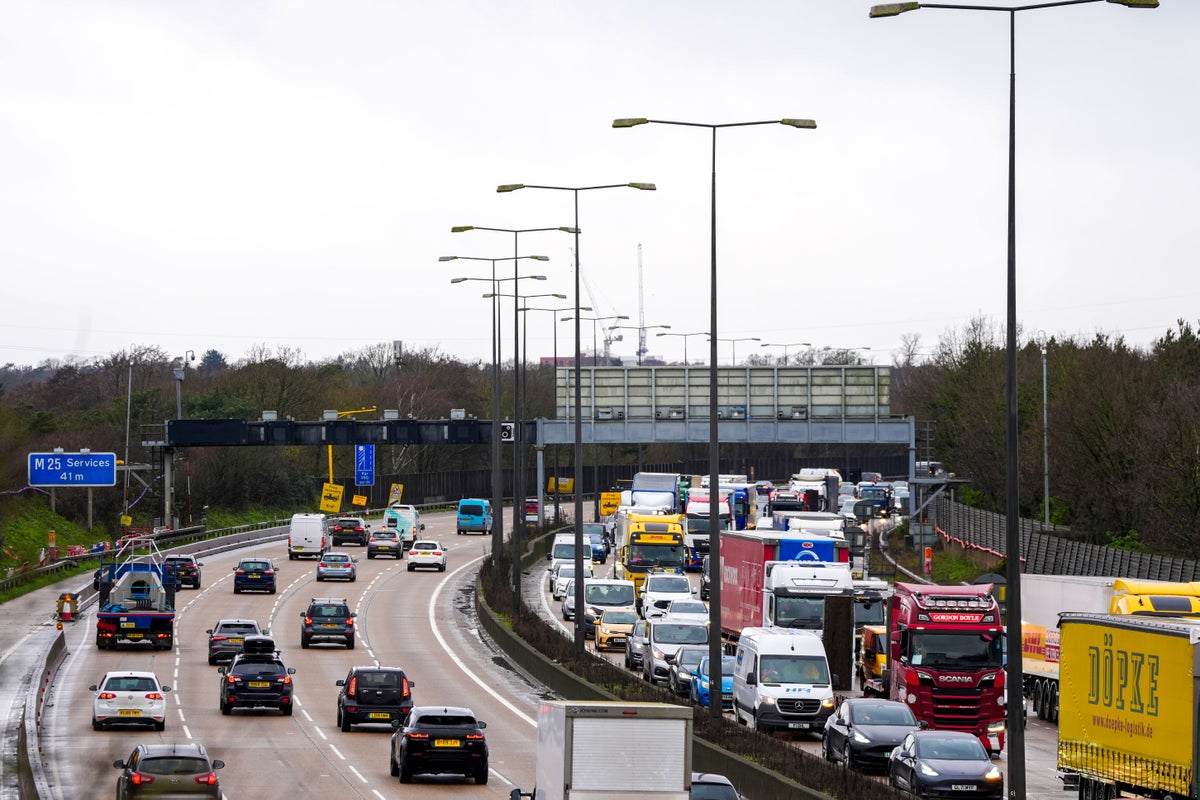
Millions of car finance payouts are in jeopardy after the UK’s financial watchdog indicated its compensation scheme faces significant delays, changes, or even collapse.
This uncertainty stems from four legal challenges against the Financial Conduct Authority (FCA).
The FCA has advised motor finance firms to prepare for the possibility that its redress scheme, which could see an average payout of £829, may not proceed.
The regulator stated that while a hearing date is unclear, these cases are unlikely to be heard before October.
In the meantime, it is in discussions about the “possibility of suspending some elements” of its compensation scheme, while still urging lenders to prepare for payouts.
But the regulator said it was also considering its options should parts of the scheme be quashed by the courts, including proceeding with a revised version or asking lenders to plan for a scenario where “there would be no scheme”.
This could mean lenders need to be ready to respond to complaints from car finance customers individually, rather than under the rules of an industry-wide programme set by the FCA.
“Many people will be frustrated that the legal action will delay payouts due to begin this year,” the FCA said.
“We remain committed to ensuring consumers receive any compensation owed as promptly as possible.”
The FCA set out the final details of its compensation scheme in March, which it estimated could cost the industry about £9.1 billion in total.
It had been expecting millions of claims to be paid out this year and the vast majority settled by the end of 2027.
The financial services arms of carmakers Volkswagen and Mercedes-Benz and the car finance arm of French bank Credit Agricole, as well as Consumer Voice, a group representing consumers, are asking the courts to quash the scheme, arguing the rules are unlawful.
“Between the four separate legal challenges, it is claimed in effect that the FCA’s approach to establishing the schemes has been both unduly favourable to consumers and unduly favourable to lenders,” the watchdog said.
At least one claim alleges that the FCA has breached the rights of lenders under the 1998 Human Rights Act, according to the watchdog.
Despite the uncertainty of the legal cases, the watchdog is still advising consumers to complain directly to their lender if they think they might be owed compensation, which they can do for free using a template letter on its website.


Rory McIlroy slams LIV golfers who don’t want to come back to PGA Tour—but why now?

Iran could withstand blockade for four months, claims CIA report, as tensions flare
[CinePlex360] Please moderate: “Texas orders im

-

 Politics6 days ago
Iran weighs US reply delivered via Pakistan as Trump signals opposition to deal terms
-

 Tech1 week ago
Almost half of UK businesses hit by cyber attacks | Computer Weekly
-

 Tech1 week ago
This Indigenous Language Survived Russian Occupation. Can It Survive YouTube?
-
 Fashion1 week ago
Canada’s Lululemon appoints Esi Eggleston Bracey to board of directors
-

 Fashion1 week ago
US’ J.Jill, Inc. appoints Kimberly Wallengren as CMO
-

 Entertainment1 week ago
David Allan Coe, country singer who wrote “Take This Job and Shove It,” dies at age 86
-
 Business1 week ago
Government hikes jet fuel prices by 5% for international airlines – The Times of India
-
 Business1 week ago
Apollo Sports Capital and Tom Dundon make landmark $225 million investment in pickleball