

Business
Stocks retreat as oil surge raises inflation fear


The FTSE 100’s decline accelerated on Tuesday, alongside European peers, amid fears that soaring energy prices will reignite inflationary pressures and hamper economic growth.
“European markets are being hit hard, as the full inflationary impact of the war in Iran truly comes home to roost,” said Joshua Mahony at Scope Markets.
The FTSE 100 index ended down 295.98 points, or 2.8%, at 10,484.13.
The FTSE 250 ended down 729.43 points, 3.1%, at 22,694.21 and the AIM All-Share closed 29.46 points lower, 3.6%, at 786.43.
New strikes were reported Tuesday across the Middle East, including Israeli bombardment on Lebanon and a drone attack on the US embassy in Saudi Arabia’s capital Riyadh.
The conflict started with US and Israeli strikes on Iran over the weekend, which sparked retaliatory Iranian attacks and showed no sign of abating as it entered its fourth day.
Iran has unleashed missiles and drones across the Middle East, including at Saudi Arabia, Qatar and Dubai, while threatening explicitly to drive up global energy costs.
A general in Iran’s Revolutionary Guards threatened to “burn any ship” seeking to navigate the Strait of Hormuz.
In European equities on Tuesday, the CAC 40 in Paris closed down 3.5%, as did the DAX 40 in Frankfurt.
On Wall Street, markets also fell heavily. The Dow Jones Industrial Average was down 1.7%, the S&P 500 index was 1.6% lower, while the Nasdaq Composite declined 1.7%.
Brent oil traded higher at 83.06 dollars a barrel on Tuesday afternoon, up from 77.92 dollars at same time on Monday.
“The longer oil and natural gas prices remain elevated, the greater the risk of a meaningful impact on inflation which could mean higher interest rates, an event that’s typically negative for equity markets,” said Dan Coatsworth, head of markets at AJ Bell.
Mr Mahony at Scope Markets explained the recent removal of insurance coverage for ships passing through the Strait of Hormuz provided an effective closure of the key shipping lane.
“While the US claims that the Strait of Hormuz remains open following the destruction of much of the Iranian navy, the cancellation of insurance coverage and Iranian threats that ships will be set ablaze for passing through the passage mean that journeys have slowed to a trickle,” he said.
“This means that oil prices are likely to rise as long as this conflict rages on, with this key bottleneck proving to be one of Iran’s most important points of leverage as they seek to pressure the US president through higher inflation and destruction of key facilities for US allies in the region.”
The dollar extended recent gains. The pound was lower at 1.3305 dollars on Tuesday afternoon, from 1.3360 dollars at the equities close on Monday.
The euro stood lower at 1.1585 dollars, from 1.1672 dollars. Against the yen, the dollar was trading slightly higher at 157.80 yen, compared with 157.73 yen.
In Europe, eurozone consumer price inflation surprisingly accelerated, a preliminary reading showed on Tuesday, as service price growth quickened.
Eurostat’s flash reading said the annual consumer price inflation rate in the single currency bloc picked up to 1.9% in February, from 1.7% in January. The rate of inflation had been expected to remain at 1.7%, according to consensus cited by FXStreet.
The yield on the US 10-year Treasury widened to 4.07% on Tuesday from 4.05% on Monday. The yield on the US 30-year Treasury stretched to 4.71% from 4.70%.
The yield on UK-10 year gilts leaped to 4.48% from 4.30% on Monday as rising energy prices dampened hopes for interest rate cuts. Late last week, the yield had fallen to around 4.24%.
The Middle East crisis overshadowed the Government’s spring statement.
Chancellor Rachel Reeves told MPs the Government has “the right economic plan for our country.”
“I am in no doubt how great the rewards will be if we stay the course,” she added.
She said the plan is even more important in a world that has, in the past few days, “become more uncertain”, noting events in the Middle East.
The Office for Budget Responsibility (OBR) lowered its growth forecast to 1.1% in 2026 from the 1.4% projection in November. But it raised projections for 2027 and 2028 to 1.6% from 1.5% before.
The OBR expects the Government to hit its 2% inflation target this year and sees unemployment peaking in 2026.
Ms Reeves said the OBR estimates fiscal headroom has risen to £23.6 billion from the £21.7 billion forecast in November.
Analysts at Lloyds Markets noted that relative to previous fiscal updates, the statement was “purposefully restrained”, consistent with Ms Reeves’ efforts to reduce its profile as a major event.
“The geopolitical situation in the Middle East further diminished its visibility, contributing to an overall sense that the statement was a routine fiscal update rather than a significant policy moment,” they noted.
“This approach underscores the government’s desire for stability in fiscal communications while retaining room for more substantial decisions in the autumn – the scale and direction of which are likely to depend heavily on how events in the Middle East evolve.”
The OBR itself stressed events in the Middle East could have “very significant impacts” on the global and UK economies.
On the FTSE 100, Smith & Nephew led a handful of gainers, among a sea of red, on further consideration of Monday’s results.
S&N rose 3.6%, with others in the green including oil major BP, up 1.1%, accountancy software provider Sage, up 0.9%, and defence contractor Babcock International, up 0.4%.
But British Airways owner IAG fell a further 5.4%, while easyJet fell 4.1%. On the FTSE 250, Wizz Air fell 6.5%. Travel retailer WH Smith declined 6.1%.
Fears that rising inflation will quash hopes for lower interest rates hit housebuilders with Persimmon down 6.0% and Barratt Redrow 4.2% lower.
Miners slumped as fears of slowing economic growth, and the strong dollar, hit metals prices.
Gold slumped to 5,114.94 dollars an ounce on Tuesday from 5,288.00 dollars on Monday. Silver fell 6.9% and copper 1.5%.
Fresnillo, which also reported annual results, fell 5.4%, Endeavour Mining fell 6.2%, Antofagasta fell 5.8% and Anglo American fell 3.8%.
On the FTSE 250, Keller rose 10% as it said it intends to launch a £100 million share buyback programme and reported higher earnings for 2025.
The London-based geotechnical specialist contractor said its results reflect “sustained improvement in operational and financial performance” helped by “geographic diversity, sector agility and resilience”.
The biggest risers on the FTSE 100 were Smith & Nephew, up 47.0p at 1,360.0p, BP, up 5.15p at 493.0p, Sage Group, up 7.4p at 847.4p, Relx, up 21.0p at 2,596.0p and Pearson, up 4.2p at 958.6p.
The biggest fallers on the FTSE 100 were Intertek, down 860.0p at 3,882.0p, DCC, down 325.0p at 4,840.0p, Endeavour Mining, down 319.0p at 4,866.0p, Persimmon, down 87.0p at 1,374.0p and Antofagasta, down 243.0p at 3,915.0p.
Wednesday’s global economic calendar has a slew of composite PMI readings, the Federal Reserve’s Beige Book plus the ISM services PMI in the US.
Wednesday’s UK corporate calendar has full-year results from insurer Beazley, housebuilder Vistry and engineering firm Weir Group.
– Contributed by Alliance News
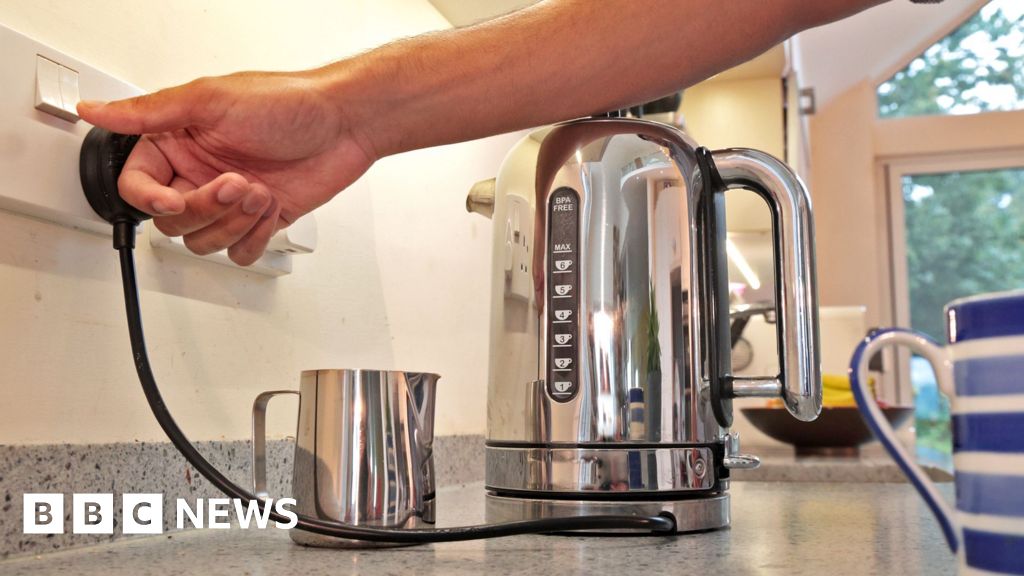
The war in the Middle East has brought renewed attention to Britain’s vulnerability to energy price shocks.
Source link
Business
Gadkari urges shift to 100% ethanol blending, flags energy security and import risks – The Times of India
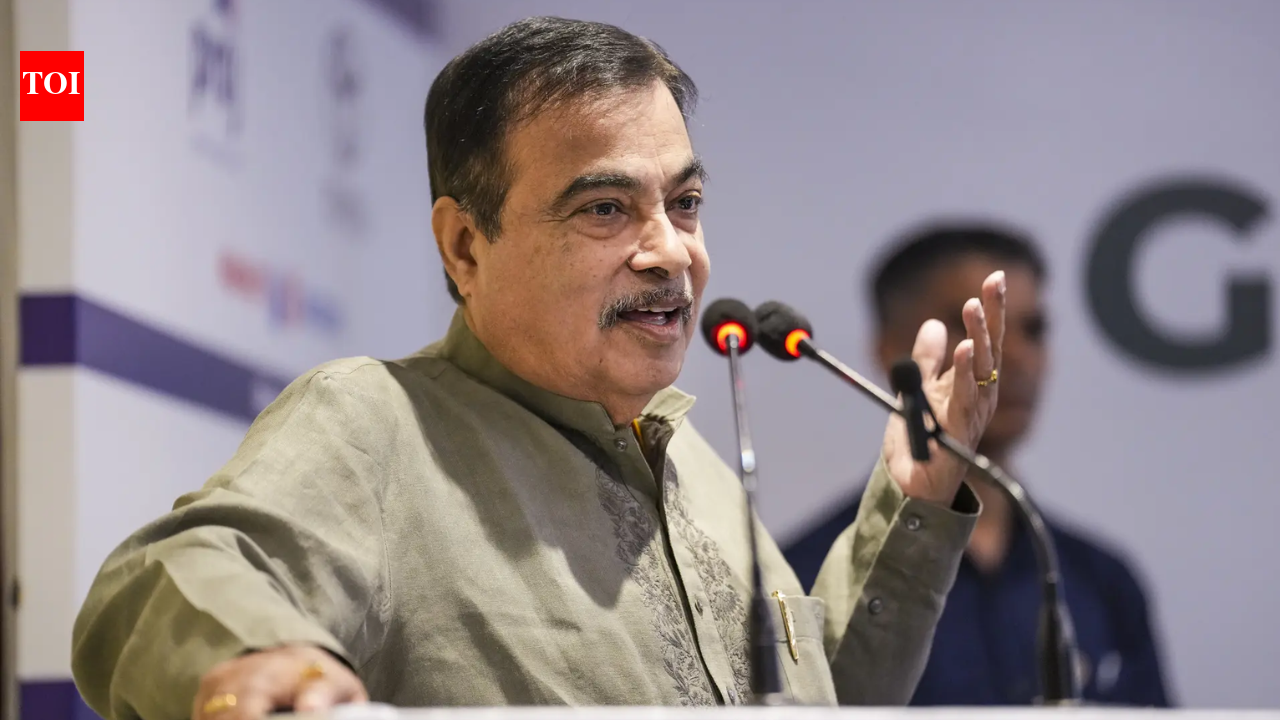
India should aim for 100 per cent ethanol blending in the near future to strengthen energy self-reliance, road transport and highways minister Nitin Gadkari said on Tuesday. He said that vulnerabilities in oil supplies due to the ongoing crisis in West Asia have made it essential for the country to reduce dependence on imports.Speaking at the Indian Federation of Green Energy’s Green Transport Conclave, Gadkari said, “In the near future, India should aspire to achieve 100 per cent ethanol blending… Today, we are facing an energy crisis due to the war in West Asia, so it is necessary for us to become self-reliant in the energy sector,” as quoted by PTI.India currently allows vehicles to run on E20 petrol, which contains 20 per cent ethanol, with minor engine modifications to avoid corrosion and related issues. In 2023, PM Modi launched petrol blended with 20 per cent ethanol. Countries such as Brazil have already achieved 100 per cent ethanol blending.Gadkari noted that India imports 87 per cent of its oil requirements, adding, “We import fossil fuels worth Rs 22 lakh crore, which is also causing pollution… so we need to work on increasing production of alternative fuel and bio-fuel.”On future energy solutions, he stressed the importance of green hydrogen but pointed out challenges in cost and transport. “Transport of hydrogen fuel is a problem. Also, we need to produce 1 kg of hydrogen at $1 dollar, to make India an exporter of energy,” he said, adding that hydrogen production from waste should be explored.The minister also emphasised the role of a circular economy in generating employment opportunities. While calling for reduced reliance on petrol and diesel vehicles, he clarified, “But we can not force people to stop buying petrol and diesel vehicles.”Addressing concerns about E20 fuel, Gadkari said the petroleum sector is lobbying against the move. He also urged automobile manufacturers to prioritise quality over cost to expand into new markets.Last year, Gadkari dismissed criticism against E20 (ethanol-blended petrol), saying a “paid” social media campaign is being run to “target me politically.” He said Society of Indian Automobile Manufacturers and Automotive Research Association of India have shared their findings on ethanol blending in petrol. He added that India’s ethanol programme has benefited farmers, noting that ethanol made from maize has helped them get better prices and led to gains of Rs 45,000 crore.

One petrol retailer says he is experiencing about five drive-offs a week at each forecourt, costing him thousands.
Source link


Matarazzo celebrates Real Sociedad Copa title: ‘Just the beginning’

Germany firms raise investment plans, uncertainty persists: ifo

Jennifer Lopez and Will Smith viral dating claims raise big questions

-

 Fashion5 days ago
France’s LVMH Q1 revenue falls 6%, shows resilience amid Iran war
-

 Sports1 week ago
The case for Man United’s Fernandes as Premier League’s best
-

 Entertainment1 week ago
Palace left in shock as Prince William cancels grand ceremony
-
 Business1 week ago
UK could adopt EU single market rules under new legislation
-

 Entertainment6 days ago
Is Claude down? Here’s why users are seeing errors
-

 Fashion1 week ago
Energy emerges as biggest cost driver in textile margins
-
 Business1 week ago
Delta Air Lines unveils first new Delta One suite in premium cabin arms race
-
 Fashion1 week ago
Asia claims largest share of markets on Kearney FDI Confidence Index