

Business
Sugar exports banned till Sept 30 to check prices


NEW DELHI: Union govt has banned the export of sugar till Sept 30 this year with immediate effect, a move aimed at enhancing domestic availability and preventing any price rise. Earlier, the exports were under a restricted category, under which a licence was required for the outbound shipments. “The export policy of sugar (raw sugar, white sugar and refined sugar)… is amended from ‘restricted’ to ‘prohibited’ with immediate effect till Sept 30, 2026, or until further orders, whichever is earlier,” the directorate general of foreign trade (DGFT) stated in a recent notification.This order, however, does not apply to sugar being exported to the European Union and the US under the CXL and Tariff Rate Quota (TRQ) arrangement, respectively. The arrangements allow exporters to ship specified quantities of sugar to these destinations at significantly reduced or zero customs duties.The DGFT order is also not applicable to the shipments under the advance authorisation scheme, govt-to-govt exports and consignments already in the physical export pipeline.For the 2025-26 sugar marketing year (Oct to Sept), govt initially allowed 15 lakh tonne for exports, and then opened an additional 5 lakh-tonne pool, of which only 87,587 tonne were approved.The food ministry and sugar mills were expecting 7.5-8 lakh tonne of shipments in 2025-26 marketing year.India’s sugar production rose 7.3% to 275 lakh tonne till April in the 2025-26 marketing season, driven by higher output in Maharashtra and Karnataka, according to industry body ISMA. It has projected total production for the 2025-26 marketing season at 293 lakh tonne after ethanol diversion, up from 261 lakh tonne recorded in 2024-25.Banning exports of a commodity helps prevent a rise in prices amid inflation concerns and uncertainty caused by the West Asia conflict.
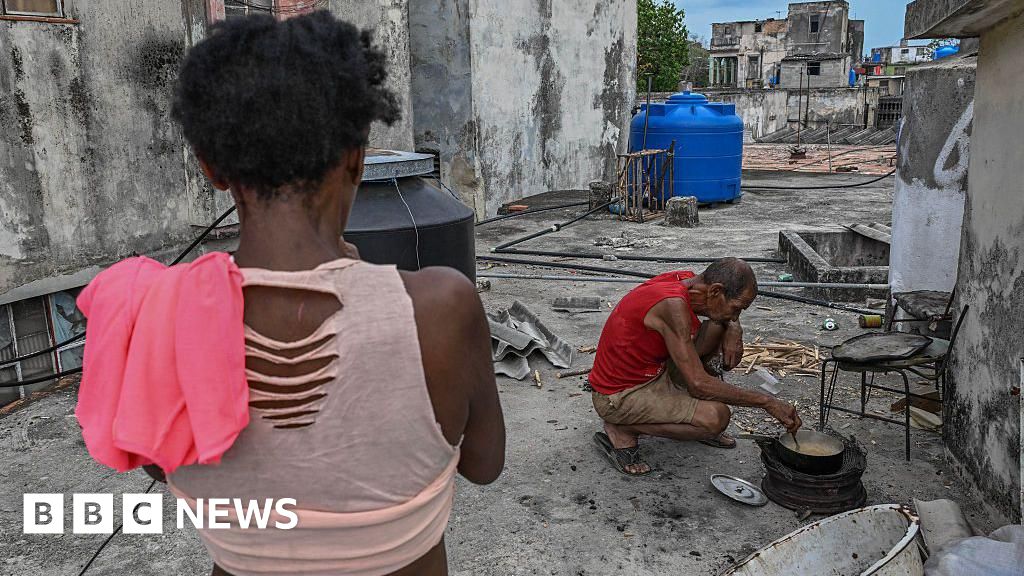
The Communist-run island has seen rare protests over worsening power cuts due to shortages of fuel.
Source link

In this photo illustration Hantavirus samples are seen in Ankara, Turkiye on May 6, 2026.
Arman Onal | Anadolu | Getty Images
The U.S. Centers for Disease Control and Prevention said there are no hantavirus cases in the country as of Thursday, as it monitors 41 people across the U.S. for the virus.
The agency said the risk to the general public remains low in the aftermath of an outbreak on a cruise ship. The CDC advised those who are being monitored to stay at home and avoid people for 42 days.
That includes people from three main groups: passengers who were recently repatriated and are now in Nebraska and Atlanta, passengers who had already left the ship and returned home before the outbreak was identified and people who may have been exposed during travel, “specifically on flights where a symptomatic case was present,” Dr. David Fitter, the incident manager for the CDC’s hantavirus response, told reporters in a media briefing.
The World Health Organization has reported 11 total cases of hantavirus linked to the outbreak, eight confirmed by lab testing, including three deaths.
The spread of the virus has sparked concerns about a potential global health crisis only a few years removed from the devastation of the Covid-19 pandemic. However, public health experts have stressed the risks from the outbreak are limited, and have cautioned that it likely will not cause a widespread health emergency.
The Andes strain of hantavirus associated with the outbreak, unlike other illnesses including Covid, measles and the flu, does not spread easily between people.
Even so, more confirmed cases could emerge in the coming weeks because it has a long incubation period, according to experts.
Some public health experts have said the U.S. response to the spread of hantavirus, slowed by staffing cuts at the CDC and the Trump administration’s decision to leave the WHO, has exposed cracks in its readiness to handle another health crisis.
Business
IMF warns Iran war disruptions are pushing global economy towards ‘adverse’ scenario; growth risks rise
The International Monetary Fund (IMF) on Thursday warned that continued disruptions from the Iran war are pushing the global economy closer to an “adverse” scenario marked by slower growth, tighter financial conditions and rising inflation risks, AFP reported.Last month, the IMF’s World Economic Outlook projected global growth at 3.1 per cent for 2026 under its baseline or “reference” scenario, while cautioning that a prolonged conflict could significantly weaken the outlook.Under the Fund’s “adverse” scenario –where oil prices remain elevated for a longer period, inflation expectations become unstable and financial conditions tighten –global growth could slow to 2.5 per cent.“We are moving into the adverse scenario, but inflation expectations are still reasonably well anchored, and financial conditions still remain accommodative,” IMF chief spokesperson Julie Kozack told reporters in Washington.The IMF has also outlined a more severe scenario under which global growth could slow to 2 per cent while inflation rises to 6 per cent.The multilateral lender is expected to release an updated World Economic Outlook in July.The ongoing US-Israel war on Iran has disrupted the Middle East and sharply escalated tensions across the region, with retaliatory actions by Tehran targeting US regional allies and severely affecting movement through the Strait of Hormuz.The strategic waterway typically handles nearly one-fifth of global oil and gas supplies, and the disruption has triggered a sharp rise in global energy prices.Kozack said the IMF was engaged in “active discussions” with several member countries facing economic pressures from the conflict.“Many countries are actually asking us for support in the policy area,” she said.During the IMF’s spring meetings last month, Managing Director Kristalina Georgieva had indicated that as many as 12 countries may require IMF financial assistance, with total support needs estimated between $20 billion and $50 billion.Kozack said discussions on financial support were continuing but declined to identify the countries involved.The IMF also flagged rising concerns around global food security as fertiliser supplies have been disrupted due to the blockade-linked disruptions in the region.“We know from history that when fertilizer prices increase, that it takes about six months or so for this to translate into increased food prices and, in some cases, reductions in yields and food security issues,” Kozack said.


Pete Davidson, Elsie Hewitt break up 5 months after welcoming baby girl
Sugar exports banned till Sept 30 to check prices

FBI offers $200,000 reward for ex-USAF officer Monica Witt accused of spying for Iran

-

 Tech7 days ago
A new frontier: Identity stack evolves for agentic systems | Computer Weekly
-

 Tech6 days ago
‘Orbs,’ ‘Saucers,’ and ‘Flashes’ on the Moon: Pentagon Drops New UFO Files
-

 Fashion7 days ago
New orders in German manufacturing up 5% MoM in Mar 2026: Destatis
-

 Tech6 days ago
Nick Bostrom Has a Plan for Humanity’s ‘Big Retirement’
-

 Sports6 days ago
Shaheen Afridi achieves landmark feat during opening Test against Bangladesh
-

 Fashion7 days ago
US’ Carter’s taps retail veteran Sharon Price John as new CEO
-

 Entertainment6 days ago
Rihanna embraces new tattoo given by children
-

 Tech7 days ago
The Canvas Hack Is a New Kind of Ransomware Debacle