

Business
Surveillance tech leads workers’ comp claims to plummet at NYC construction sites


New technology is cutting workers’ compensation claims and fraud across industries.
But in construction, the results are on camera.
Working with Arrowsight, a safety technology company specializing in video-based behavioral modification and coaching analytics, specialty cameras are installed around job sites. Those cameras will pick up on things like workers scrambling under a load of lumber suspended from a crane or failing to tie into safety harnesses balanced high above the ground. The videos are flagged by a team and safety supervisors are informed. Workers then get feedback and proper training.
In New York, where both the cost of workers’ compensation insurance and the frequency and severity of claims are among the highest in the nation, the safety improvements from the camera surveillance are so dramatic on construction sites that insurer Zurich North America announced Friday it will only insure construction wrap-up projects that have installed video analytics and coaching from Arrowsight.
A $2 billion, three-year pilot program on nine large-scale New York City construction job sites showed a more than 70% reduction in workers’ comp claims and a near elimination of racketeering charges in NYC when video analytics and coaching from Arrowsight were implemented, the insurer said.
“The dramatic results underscore the power of combining human insight with technology to drive measurable change,” Tobias Cushing, Zurich head of construction, told CNBC. “We saw a virtual elimination of serious injuries and deaths on projects with Arrowsight.”
Arrowsight cameras on-site.
Arrowsight
Arrowsight uses fixed-point cameras that are moveable, battery-powered and cell-enabled that can operate without electricity or internet.
“We have a whole program where we’re using civil engineers overnight to kind of look at all these high-risk work activities and then provide feedback, kind of coaching clips just like you would see on Sports Center to help the supervisors coach the workers to avoid taking these kinds of risks,” Adam Aronson, founder and CEO of Arrowsight, said.
It has increased worker safety compliance rates from around 70% before the implementation of Arrowsight to 97% to 100% in many cases, according to the pilot program data.
Arrowsight’s technology was already in use in a range of other industries, from health-care facilities to meatpacking plants, before Aronson identified construction as an industry that could benefit from video-based tech.
Posillico Civil was the first civil construction company in the U.S. to work with Arrowsight. The four-year pilot study resulted in the company’s Experience Modification Rate (EMR), a key claims-incident rating that factors into workers’ compensation premiums, dropping from 0.65 to 0.25. EMR represents a relative safety score, with scores less than one being favorable.
Arrowsight also signed a master service agreement with Chubb this summer with the primary focus on construction.



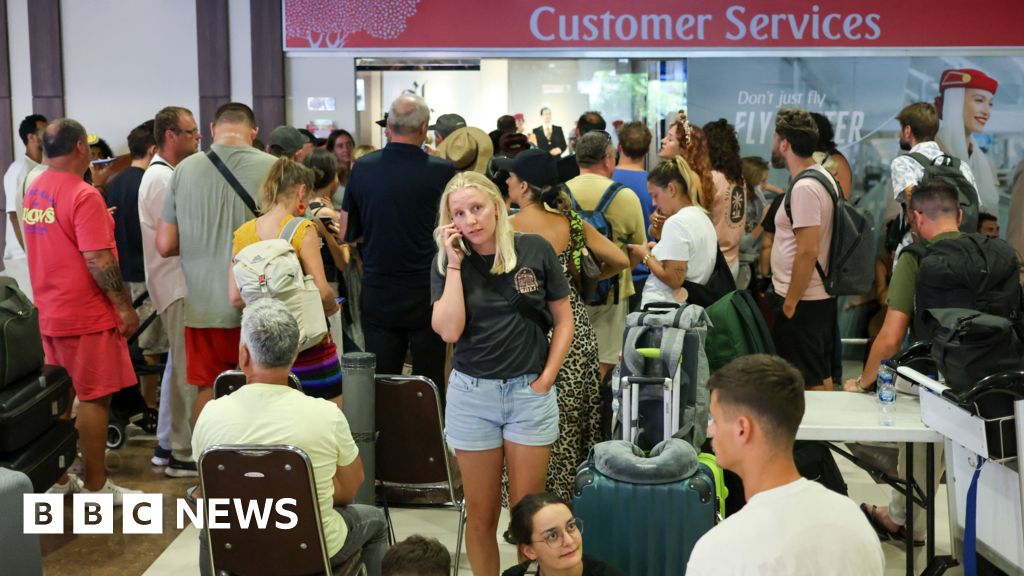
BA and Virgin Atlantic are among major airlines to ground services to the Middle East in light of the attacks.
Source link
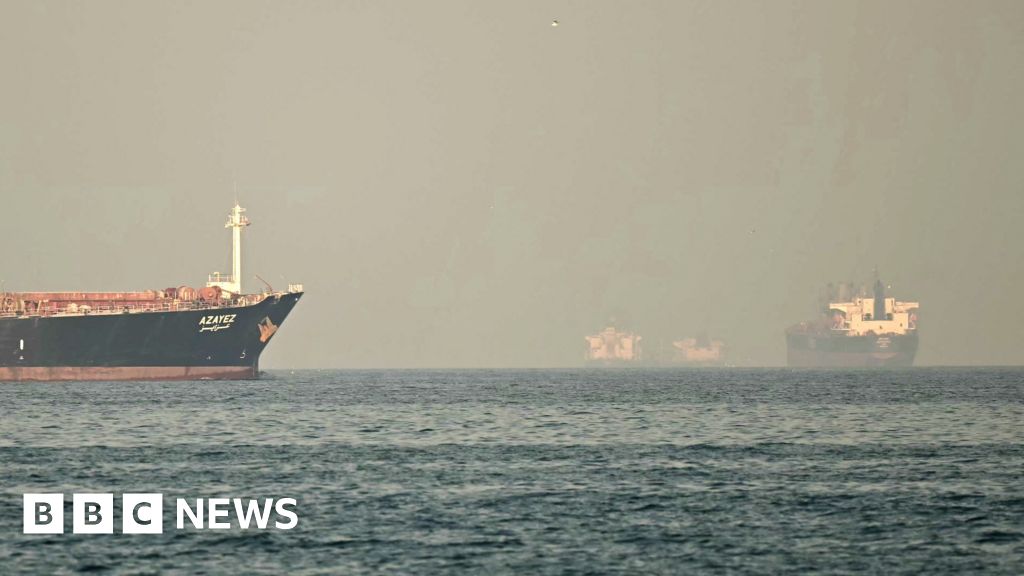
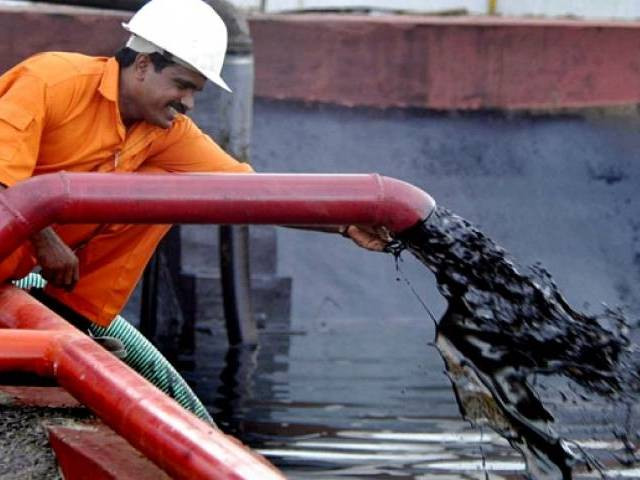
International shipping is said to have come to a standstill at the strait’s entrance, with fears of disruption already pushing up global oil prices.
Source link
Business
Khamenei dead, Middle East on edge: What will be the implications of Trump’s ‘Epic fury’ on stock markets, gold & oil? – The Times of India

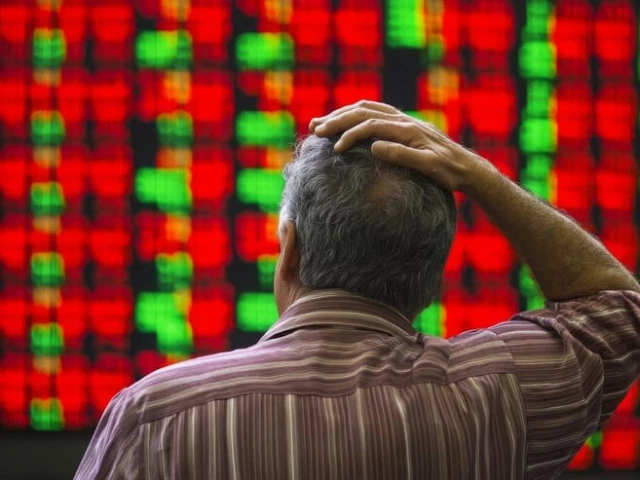
The global markets are in for a phase of enhanced turmoil and uncertainty! The ongoing tensions in the Middle East after US and Israel’s strikes on Iran and Ali Khamenei’s death may have investors running for cover – looking for an asset class that is safer.During the night of February 27–28, the United States and Israel carried out joint aerial strikes on Iran as part of “Operation Epic Fury.” Statements by President Trump openly referring to regime change suggest that the confrontation could evolve into a prolonged campaign rather than remain a limited exchange, say market analysts at Franklin Templeton Institute.What does the situation mean for stock markets, energy markets (oil), gold and other asset classes? Here’s what Franklin Templeton Institute analysts have to say:From a market perspective, the key uncertainty is whether the conflict remains confined to direct military engagement or expands into disruptions affecting energy supplies and logistics networks, which would sustain a higher and more persistent risk premium.At the centre of the ongoing uncertainty from a global market and trade perspective is the Strait of Hormuz. While a complete blockade would carry severe consequences for Iran itself, the country has the capability to disrupt maritime traffic through tactics such as vessel harassment, seizures, drone activity, cyber operations, or the use of proxy forces.
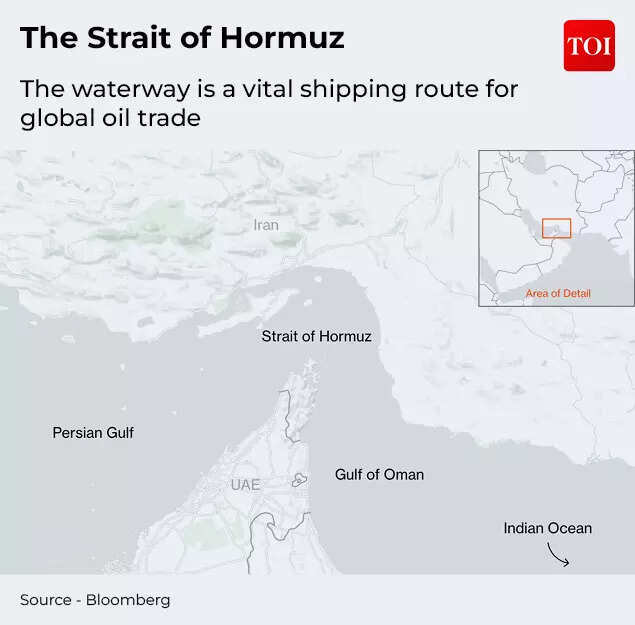
Strait of Hormuz
The most immediate economic impact is expected in energy markets, where crude oil and natural gas prices are likely to move higher, they say. Such actions, feel analysts, will keep geopolitical risk premiums at high levels. In 2024, approximately 20 million barrels per day moved through the Strait of Hormuz, which is around one-fifth of global petroleum liquids consumption. Even a limited interference – which can be caused by delays, rerouting, or isolated seizure – can push prices higher through increased risk perception well before any actual shortages emerge.Liquefied natural gas should not be overlooked in this context. Qatar has the world’s third-largest LNG export capacity, and roughly one-fifth of global LNG shipments pass through the Strait of Hormuz, largely consisting of Qatari exports. As a result, shipping risks in the region affect gas markets as significantly as oil markets.Also Read | US-Israel strikes on Iran: How will India be hit by Strait of Hormuz closure? ExplainedShipping expenses have already begun to rise, with insurance costs acting as a major driver. Insurers have started issuing cancellation notices and revising war-risk premiums for voyages in the Gulf region. Some routes have reportedly seen premium increases of up to about 50%, while earlier periods of tension recorded rises exceeding 60% on important trade corridors. These developments effectively tighten supply conditions even when production levels remain unchanged.The possibility of the conflict spreading across the region is increasing. Franklin Templeton Institute analysts are of the view that across global financial markets, the immediate response to such shocks is usually driven by adjustments in risk perception rather than by underlying economic changes. “The initial market reaction for this type of event would typically see Treasury yields move lower and equities lower—mostly a risk-premium repricing. Impacts on activity/earnings may be delayed and uneven. The US dollar reaction is not guaranteed; gold tends to benefit while bitcoin has been trading like a risk asset (i.e., down with equities), reinforcing that it’s not typically a reliable hedge/diversifier in geopolitical drawdowns,” say Franklin Templeton Institute analysts.However, they note that experience shows markets often come to view geopolitical disruptions as temporary. Initial spikes in risk premiums are frequently followed by the realization that the overall effect on corporate profitability is limited. The duration of the conflict, developments in shipping and insurance costs, and the eventual resolution will be more important than the initial headlines.“We would not yet label this a clean buy-the-dip setup—duration, shipping/insurance mechanics, and the endgame matter more than the first headline,” they say.From an investment perspective, the near-term outlook favours sectors linked to energy markets, as well as companies benefiting from higher shipping and insurance costs, along with defence-related industries, the analysts say. At the same time, caution is warranted toward emerging markets that depend heavily on energy imports and toward cyclical sectors sensitive to fuel and logistics costs, including airlines and certain industrial segments.“For protection, we prefer oil upside/volatility structures and selective gold exposure over broad equity shorts—the path will be driven more by shipping/insurance reality than by the new cycle,” they conclude.


Shia LaBeouf battles addiction amid public and legal pressure

VAR review: Did Chelsea deserve a penalty in loss to Arsenal?

Man United up to third as Sesko’s hot streak of crucial goals continues

Pakistan carries out precision strikes on seven militant hideouts in Afghanistan

Eye-popping rise in one year: Betting on just gold and silver for long-term wealth creation? Think again! – The Times of India

Kansas’ Darryn Peterson misses most of 2nd half with cramping

-
Business1 week ago
Eye-popping rise in one year: Betting on just gold and silver for long-term wealth creation? Think again! – The Times of India
-
 Politics1 week ago
Pakistan carries out precision strikes on seven militant hideouts in Afghanistan
-
 Sports1 week ago
Kansas’ Darryn Peterson misses most of 2nd half with cramping
-
 Business1 week ago
Equinox chairman says ‘health is the new luxury’ as wellness spending soars
-

 Tech1 week ago
The Supreme Court’s Tariff Ruling Won’t Bring Car Prices Back to Earth
-

 Tech1 week ago
These Cheap Noise-Cancelling Sony Headphones Are Even Cheaper Right Now
-

 Entertainment1 week ago
Saturday Sessions: Say She She performs "Under the Sun"
-

 Sports1 week ago
How James Milner broke Premier League’s appearances record