

Fashion
Tariff strategy: Are Chinese manufacturers moving to Bangladesh?

The economic conflict between China and the United States, which began in 2018, has continued to evolve over the years, becoming a defining feature of global trade dynamics. What started as a series of tariffs and trade barriers imposed by Washington on Chinese goods quickly escalated into a full-blown trade war.
Many Chinese companies are investing in Bangladesh to leverage Dhaka’s comparatively lower tariffs and cost-effective manufacturing environment.
Over $160 million in Chinese-backed projects, including garment and accessory factories, are being developed in Bangladesh.
Retaliatory tariffs reached 145 per cent from the US and 125 per cent from China, before reaching a 90-day truce between the two sides.
Though a partial truce in the form of a phase-one agreement was reached in January 2020, the rivalry has intensified again in recent years—especially in 2025, following the return of Donald Trump to the White House for a second term as the President, following which Trump started imposing reciprocal tariffs on countries.
Under the renewed Trump administration, trade tensions were reignited as new tariffs were introduced, not only affecting China but also a host of nations. Both China and the US raised tariffs on each other’s goods to over 100 per cent before briefly stepping back to reduce rates under a temporary truce.
This pause, which was originally scheduled to expire on August 12, was extended by another 90 days until November 10, offering a narrow window for further negotiations. Yet the underlying tensions have remained unresolved. Earlier this year, at the peak of the renewed trade war, the US introduced sweeping retaliatory tariffs of 145 per cent on a broad range of Chinese imports. In response, China retaliated with tariffs reaching 125 per cent on American goods, marking one of the most severe escalations in recent years.
With the threat of steep reciprocal tariffs looming large, Beijing is apparently exploring alternative trade and investment strategies to mitigate risk, and a key part of this strategic pivot seems to be centred on Bangladesh.
Recent developments suggest that China is ramping up investments in Bangladesh as part of a broader plan to establish an alternative production base, potentially enabling Chinese firms to navigate around the US-imposed trade barriers. This trend comes amid Washington’s decision to lower reciprocal tariffs on Bangladeshi exports — Bangladesh secured a 20 per cent tariff rate, comparable to many of its competitors.
However, the availability of affordable manpower and its well-established standing as a manufacturing hub only enhanced the country’s appeal as a destination for manufacturers seeking to hedge against geopolitical uncertainty while also enjoying cost-competitiveness.
The relocation effort appears to be gaining momentum in sectors such as readymade garments and textiles —areas where Bangladesh already holds a competitive edge.
Several Chinese firms have already committed to several large-scale projects in the country, as per reports. Among them, China Lesso Group is reportedly investing $32.77 million in a facility located in the National Special Economic Zone, signalling a long-term manufacturing commitment. Similarly, Kaixi Group is setting up a $40 million apparel and accessories plant within the BEPZA Economic Zone in Mirsarai, a rapidly developing industrial hub.
As per reports, additional investments include Handa (Bangladesh) Garments Co. Ltd, which is channelling $41.3 million into an automated garment manufacturing facility designed to produce 72 million pieces annually. Another notable entrant is Unifa Accessories (BD) Co. Ltd, a joint venture between Chinese and British Virgin Islands stakeholders, which is reportedly investing $48.7 million to manufacture 28 million fashion products a year.
The timing and scale of these investments suggest that China is proactively positioning itself to absorb future trade shocks, particularly those that may arise if the United States imposes further punitive measures after the current tariff reprieve ends. By expanding its footprint in Bangladesh, Chinese firms can continue accessing the lucrative US market through a more favourable trade corridor, thereby insulating themselves from the impacts of higher tariffs.
In light of these developments, the China-Bangladesh trade axis is apparently emerging as a critical component of Beijing’s broader strategy to navigate the complexities of the US-China economic standoff. With Bangladesh offering a combination of tariff advantages, a growing industrial base, and affordable labour, it presents a viable solution for Chinese manufacturers to mitigate the risks posed by an increasingly protectionist US trade policy.
As the November deadline approaches, the investment surge into Bangladesh, many feel, reflects a calculated effort by China to preserve its global trade flows in an era of heightened economic nationalism.
Fibre2Fashion News Desk (DR)








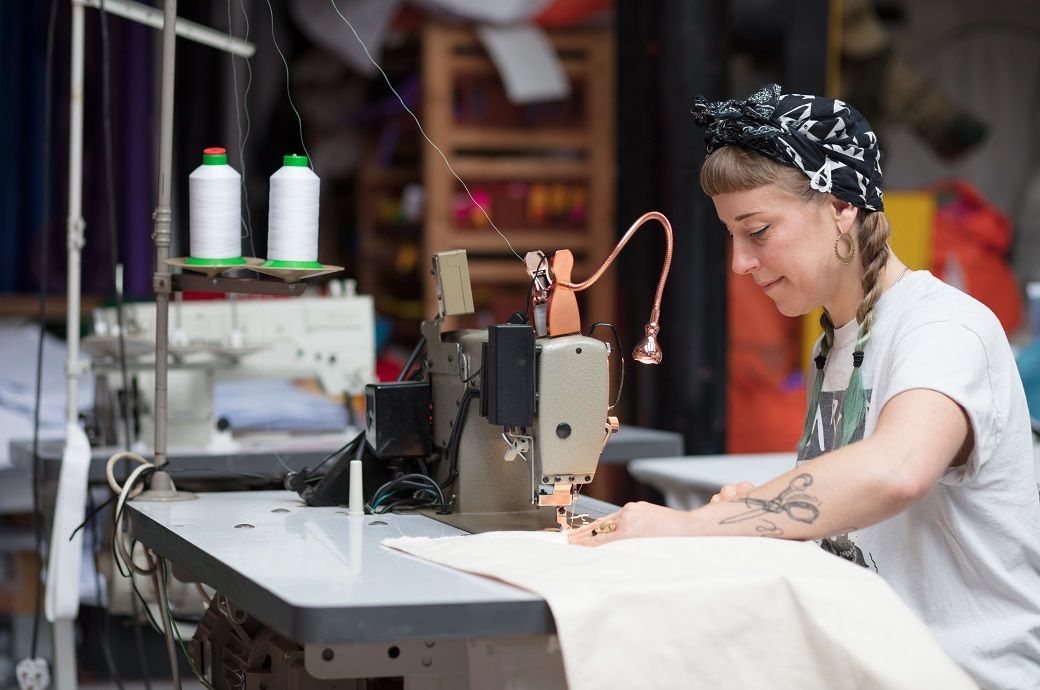
The recommendation follows a survey analysed by researchers from the University of Nottingham and the University of Leicester in collaboration with trade justice charity Transform Trade, which found systemic late payments, last-minute order changes without compensation and post-contract price reductions. Manufacturers reported that such practices shift financial risk from brands and retailers onto suppliers and ultimately workers.
Among respondents, 31 per cent reported order cancellations, while 78 per cent said brands failed to cover costs of last-minute changes to confirmed orders. A further 75 per cent stated prices were not adjusted to reflect minimum wage increases. Additionally, 67 per cent experienced order volumes being reduced without corresponding revisions to unit costs, and 44 per cent faced repeated payment extension requests. Ten per cent reported payments delayed by more than three months beyond agreed terms.
Researchers are urging the UK government to establish a Garment Trading Adjudicator after a survey by the University of Nottingham, University of Leicester and Transform Trade found widespread unfair purchasing practices in UK garment manufacturing.
The study highlights systemic late payments, cancellations and cost pressures affecting manufacturers and workers.
Manufacturers said these pressures had direct workforce consequences, including increased overtime to meet sudden order spikes for 73 per cent of workers, reduced hours following cancellations for 58 per cent, and job terminations for 29 per cent.
The survey also revealed limited confidence in formal dispute mechanisms. Only 22 per cent viewed the legal system as a viable route for redress, and none considered government or multistakeholder initiatives effective. Respondents cited financial and legal barriers, stating that pursuing action against brands was often unaffordable.
Dr Sabina Lawreniuk of the University of Nottingham’s School of Geography said, “Our research shows that current brand purchasing practices directly impact workers, resulting in precarious and insecure work across UK factories. Voluntary codes have proven insufficient. If we are serious about protecting workers and supporting a sustainable UK fashion industry, we need a Garment Trading Adjudicator to enforce fair practices across the sector.”
She added that the findings emphasise the need to rebalance relationships between brands and fashion manufacturers in the UK to support domestic manufacturing, sustainable business models, investment strategies, and to strengthen work and employment in the sector.
Professor Nikolaus Hammer of the University of Leicester also highlighted the importance of rebalancing these relationships to ensure sustainable UK production.
The researchers and Transform Trade said a sector regulator, like the Groceries Code Adjudicator, could help curb unfair purchasing practices and create greater accountability across fashion supply chains.
Fibre2Fashion News Desk (CG)
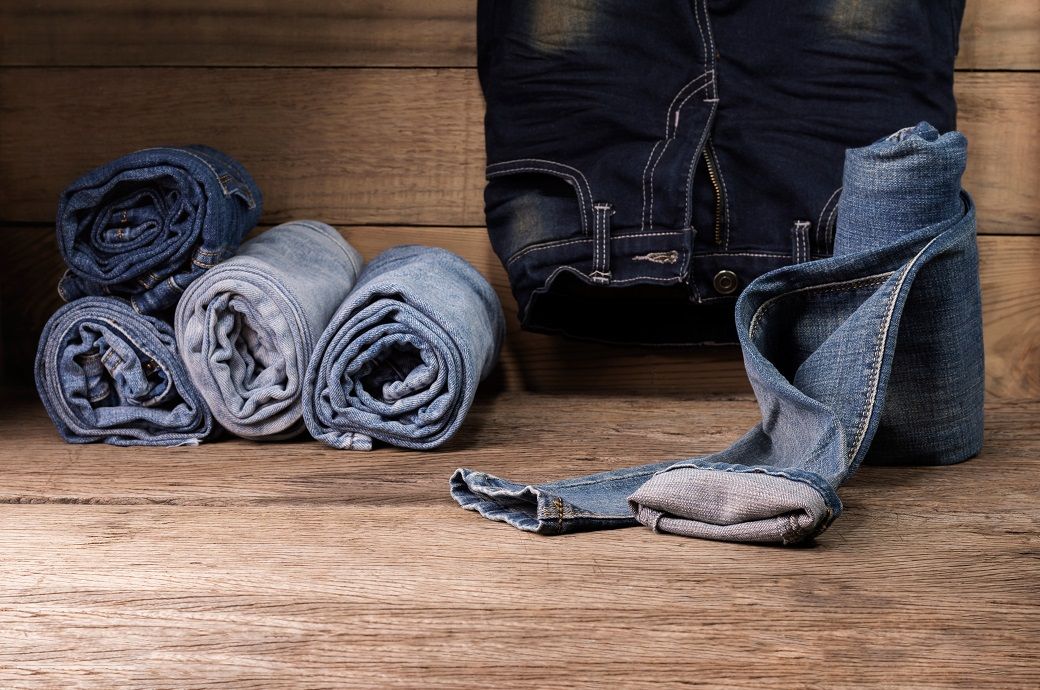
New Zealand’s apparel imports (HS ** and ** combined) declined to NZ$***.** million (~$***.* million) in January **** from NZ$***.** million in January ****, representing a *.* per cent year-on-year decrease. In volume terms, shipments fell to **.** million units from **.** million units, reflecting softer sourcing activity and continued inventory discipline among retailers.
Knitted apparel (HS **) imports declined to NZ$**.** million (~$**.* million) in January **** from NZ$**.** million in January ****, down *.* per cent year on year. Volumes also fell to **.** million units from **.** million units, suggesting weaker replenishment demand and continued emphasis on controlled inventory cycles across the retail segment.


Kornit Digital launches footwear solution at ITMA Asia + CITME 2025

Vin Diesel shares exciting news on 25th anniversary of ‘Fast & Furious’

Create Garment Trading Adjudicator: Researchers tell UK govt

Eye-popping rise in one year: Betting on just gold and silver for long-term wealth creation? Think again! – The Times of India

These Cheap Noise-Cancelling Sony Headphones Are Even Cheaper Right Now

Pakistan carries out precision strikes on seven militant hideouts in Afghanistan

-
Business1 week ago
Eye-popping rise in one year: Betting on just gold and silver for long-term wealth creation? Think again! – The Times of India
-
 Tech1 week ago
These Cheap Noise-Cancelling Sony Headphones Are Even Cheaper Right Now
-
 Politics1 week ago
Pakistan carries out precision strikes on seven militant hideouts in Afghanistan
-

 Sports1 week ago
Kansas’ Darryn Peterson misses most of 2nd half with cramping
-

 Sports1 week ago
How James Milner broke Premier League’s appearances record
-

 Entertainment1 week ago
Viral monkey Punch makes IKEA toy global sensation: Here’s what it costs
-

 Entertainment1 week ago
Saturday Sessions: Say She She performs "Under the Sun"
-
Sports1 week ago
Mike Eruzione and the ‘Miracle on Ice’ team are looking for some company