

Business
Tariffs hit boots, bags and more as leather prices jump — and relief could be years away


Different types of leather are seen at the Rio of Mercedes cowboy boot factory, on July 31, 2025, in Mercedes, Texas.
Ronaldo Schemidt | AFP | Getty Images
Bootmaker Twisted X — known for its Western footwear — was thrown into chaos overnight when President Donald Trump imposed sweeping tariffs on imports in April.
The company turned a conference room at its Decatur, Texas, headquarters into a “tariff war room” as import costs on its finished work boots surged, shipments were paused mid-transit and invoices fluctuated so wildly that staff found themselves recalculating margins by the hour.
“A lot of other leather companies had to pause shipments because of the chaos and it felt like prices were going all over the place before you could take account,” Twisted X CEO Prasad Reddy told CNBC. “It was a very uncertain time.”
Twisted X wasn’t alone. Leather retailers big and small are facing similar challenges, and the result has been higher prices at the register that are unlikely to come down anytime soon.
Pre-tariff inventory is gone, while replacement orders cost far more. The products hitting shelves now were manufactured with more expensive hides, subjected to pricier foreign processing and shipped with higher freight costs than last year’s merchandise, industry experts said.
The Yale Budget Lab projects that leather goods prices will remain elevated by nearly 22% for at least the next one to two years, driven by inflation, supply chain bottlenecks and heavy tariff exposure, particularly across China, Vietnam, Italy and India.
“The reason why leather is hit so hard is twofold,” said John Ricco with the budget lab. “No. 1, some of these tariff rates that are the highest are placed on different countries where we import most leather. The second reason is that we just import a lot of leather, and, more broadly, apparel-related products from these trading partners than we make.”
The costs have already shown up for brands like Tapestry, owner of handbag makers Coach and Kate Spade. Executives told investors in August that tariff-related expenses could total $160 million, warning of “greater than previously expected profit headwinds” moving forward.
Chasing low costs
A pair of Twisted X boots starts the way most U.S. leather goods do: as a raw, salted cow hide from an American ranch. That hide is shipped overseas, usually to Asia, to be tanned into leather. For Twisted X, roughly half of its products are tanned in China, down from 90% in 2017, Reddy said.
Once turned into leather, the material typically is shipped to another factory — often in China, Vietnam, Mexico or India — to be cut, stitched and assembled, before finally returning to the U.S. as a finished product.
Under normal conditions, that global supply chain kept costs low. But reliance on foreign production backfired when the new duties took effect, Reddy said.
“When tariffs happened, everything stopped,” said Kerry Brozyna, president of the Leather and Hide Council of America. “So they [China] couldn’t take shipments in because if they took them in and they computed in the price of the tariff, they wouldn’t be able to sell them.”
Currently, the U.S. leather trade deficit is one of the widest in manufacturing. In 2023, the U.S. imported $1.37 billion in leather apparel while exporting just $92.7 million, a roughly 15-to-1 deficit, according to the Census Bureau. China alone supplies about one-third of all leather goods imported into the U.S.
“Being so reliant on many overseas productions methods ended up hurting many people in the industry in the beginning when they didn’t know exactly what was going to happen,” Reddy said. “At Twisted X, we have been working for a while to reduce reliance on China.”
As the duties took effect, Twisted X and many other leather companies rushed to exit China and encountered new problems: bottlenecks in Cambodia and Bangladesh, longer lead times in Vietnam, and a sudden 50% tariff on many Indian leather exports imposed in August.
By late summer, nearly every leather company was paying more at every stage — for hides, tanning, assembly and re-importation, according to Reddy.
“We saw all our channels to make boots keep getting more expensive until we were able to figure out a good solution,” Reddy said.
Conglomerates like Steve Madden are also feeling the impacts.
“The third quarter was challenging, driven largely by the impact of new tariffs on goods imported into the United States,” Edward Rosenfeld, chairman and CEO of Steve Madden, said on an earnings call in November.
Price increases
Many companies absorbed what they could, but that buffer is fading, Ricco said. Despite rerouting supply chains and moving production, Twisted X said it still had to raise prices around 1% to 3% this year.
“We look at it as a success,” Twisted X’s chief marketing officer, Tricia Mahoney, told CNBC. “Many competitors were looking at bigger increases and but we made sure to prioritize our customers and keep the prices as stable as possible. Next year could be tough but we are more prepared than ever.”
Already, leather luxury prices are up. Chanel’s iconic Classic Flap bag is about 5% more expensive than it was last year, after yet another round of price hikes this spring, according to luxury retail pricing data.
But, by 2026, the leather industry’s price shock will likely be more prominent, Ricco said. Analysts expect prices for leather footwear and accessories to rise roughly 22% over the next year or two and around 7% long term as higher tariffs, freight costs and scarce premium hides move through the system.
“2026 is going to probably be where rubber meets the road,” Ricco said. “They [leather companies] have to make these decisions about whether to pass cost increases on to consumers, whether to cut jobs and whether to reduce payments to shareholders.”
Domestic declines
Workers at the Rio of Mercedes cowboy boot factory put the finishing touches on boots on July 31, 2025, in Mercedes, Texas.
Ronaldo Schemidt | AFP | Getty Images
The decline of a once-booming domestic leather manufacturing industry is also reducing the options companies have to pivot away from the global supply chain.
In the 1950s, manufacturers employed more than 300,000 people in roughly 1,000 tanneries nationwide, mainly spread across the Midwest and Northeast, according to the Leather and Hide Council of America.
The workforce has fallen to around 50,000 in 2025, with the number of tanneries dwindling to a few hundred, per the council.
Reddy said the so-called golden age of domestic manufacturing is long gone.
The burden of tariffs has had the steepest impact on brands that rely on finished goods from Asia — not companies sourcing leather domestically. So far, rather than restoring U.S. manufacturing, as the Trump administration had predicated the tariffs on, many brands have responded by reshuffling suppliers overseas to contain costs, according to industry experts.
Women work in a leather factory in Kolkata, India, on November 25, 2025.
Nurphoto | Nurphoto | Getty Images
Cattle shortages
U.S. leather companies are also dealing with a raw material shortage, as there are simply fewer cattle hides to work with.
The U.S. cattle herd is at its smallest point since the 1950s following prolonged drought, rising feed costs and herd liquidation. Since hides are a mandatory byproduct of dairy and beef production, fewer cattle mean fewer hides — even as global demand for top-grade leather persists for handbags, upholstery and footwear.
“Few cattle means that what hides are left makes it more expensive to produce boots with high-quality leather that we use,” Reddy said.
For shoppers hoping for a discount by trading down for a synthetic, alternatives haven’t been spared either.
Many faux-leather and polyurethane materials rely on petrochemical inputs sourced from Asia, which also fall under the new tariff schedules. Retailers and industry analysts said synthetic footwear and handbags are seeing mid- to high-single-digit cost increases, according to industry estimates.







Joni Lamb, the president of Daystar Television Network, a televangelism broadcaster she founded with her husband, Marcus Lamb, turning their family into stars of Christian entertainment, died on Thursday. She was 65.
In an announcement posted on Daystar’s website, the company described the cause as “serious health matters” exacerbated by a recent back injury. It did not say where she died.
On a trip to Jerusalem in 1983, shortly after the couple married, Mr. Lamb visited the Mount of Olives and felt God telling him to move to Montgomery, Ala., and start a Christian TV station. He and Ms. Lamb poured their energy and modest finances into the effort and began appearing on the air two years later.
By the time they founded Daystar — in Texas in 1997 — they were experienced entrepreneurs and performers. After just a few years, they owned 24 stations around the country. By 2010, they had become the second-largest Christian broadcaster, after Trinity Broadcasting Network, and were reaching more than 200 countries, The Dallas Morning News reported.
Compared with other televangelists, the Lambs “are younger and come across as more ordinary folks,” David Clark, the president of a rival Christian broadcaster, told The Fort Worth Star-Telegram in 2001. “They come across as being sincere.”
Mr. Clark added: “Marc is sharp, and his wife, Joni, is a big asset.”
The Lambs frequently appeared on their own network in a talk show format, discussing the pleasures and challenges of domestic life in a Christian idiom. Ms. Lamb, who liked to break into song, was Daystar’s leading talk show host, over the decades moderating shows like “Taking a Break With Joni” and “Joni Table Talk.” She would often be surrounded by other female regulars, putting questions to a male guest who had wisdom to impart.
The prominent pastor Jentezen Franklin visited earlier this year, for example, to discuss his new book, “The Power of Short Prayers.” The conversation slipped easily into evangelism.
“For someone watching right now: You’ve been listening; God’s opened your heart,” Ms. Lamb said. “In fact, your heart’s already been opened for some time, as you’ve been looking, searching, and you tried everything else. Always say, ‘Why don’t you try Jesus?’ A simple prayer: That will change your life for eternity.”
During the episode she was flanked, as she often was, by her two daughters, Rachel Lamb Brown and Rebecca Lamb Weiss, and referred to her husband by his first name, as if the viewers at home were family friends.
In 2021, Mr. Lamb died, at 64, of Covid-19, after having frequently suggested that people should pray instead of getting vaccinated. Ms. Lamb announced his death on air.
The travails of the Lamb family were often incorporated into the station’s programming. In 2010, Mr. Lamb admitted on live TV to an extramarital affair and described an attempt to extort millions of dollars in blackmail.
“Christian TV took a soap opera turn,” The Dallas Morning News wrote of the episode.
In 2020, Daystar returned a $3.9 million Paycheck Protection Program loan after the CBS program “Inside Edition” investigated the company’s purchase of a Gulfstream jet used by the Lamb family for beach and golf trips.
Four years later, a panel of Ms. Lamb’s talk show regulars questioned her on air about an accusation by her son, Jonathan, that there had been a coverup of a family member’s sexual molestation of his infant daughter. Ms. Lamb denied that any abuse had occurred, and after an investigation, no charges were filed.
Joni Lynn Trammell was born on July 19, 1960, in Greenville, S.C., where she grew up. Her father, Billy Frank Trammell, worked for a local refrigeration and heating company and would evangelize with friends he made playing basketball. Her mother, Sandra (Hudson) Trammell, competed in the Miss Greenville beauty pageant.
The Lambs met at a Greenville church in 1980, when Mr. Lamb, a traveling Pentecostal preacher, was visiting. They married in 1982.
Their early investments in TV stations came fortuitously, at a time of deregulation that The Star-Telegram would describe as “market bottom.” They later made money buying and selling small broadcast towers, and selling airtime to ministries and churches.
In 2023, Ms. Lamb married Doug Weiss, a sex therapist who became a co-host on Daystar. He survives her; other survivors include her three children and several grandchildren.
On air earlier this year, Ms. Lamb told viewers that the Christian faith guaranteed a posthumous reward.
“When you pray that prayer, and you receive Jesus, he forgives your sins,” she said. “When you die, you’re going to heaven.”
Business
US consumer price inflation hits 3.8% in April, highest in nearly 3 years as Iran war fuels energy costs – The Times of India
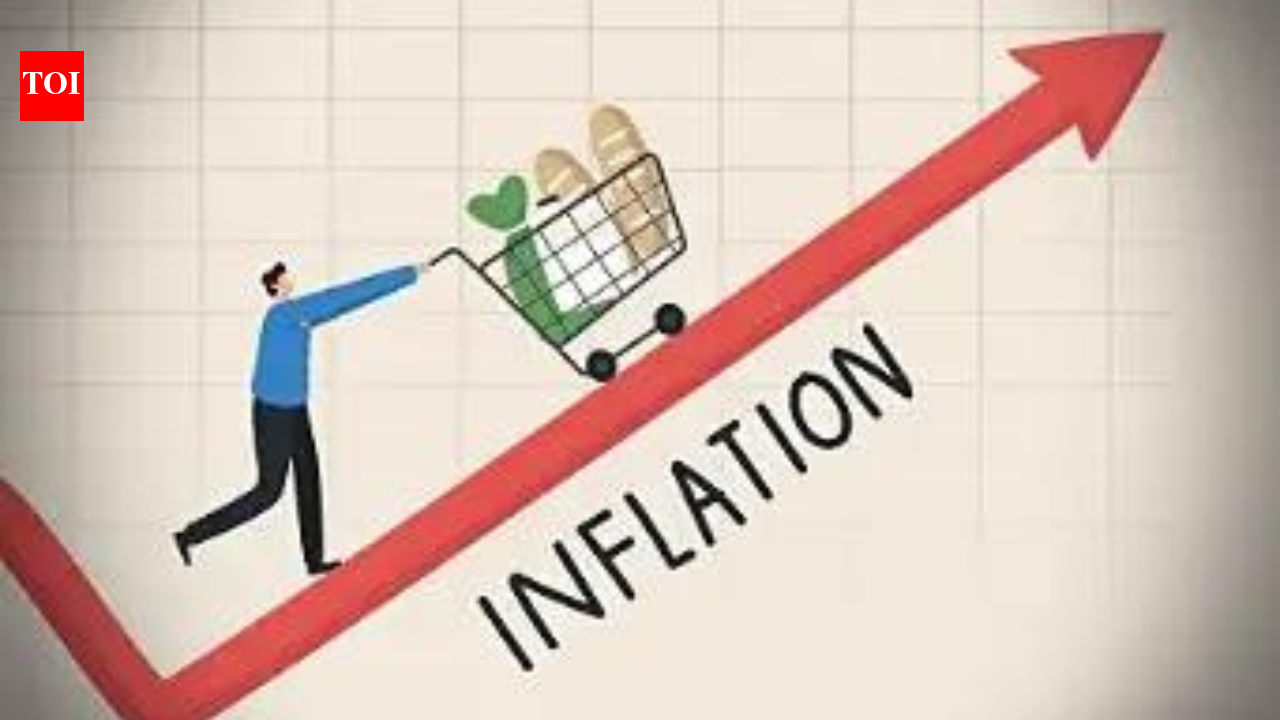
US inflation rose in April to 3.8 per cent as surging fuel costs amid the ongoing Iran-US conflict drove up consumer prices, hitting a three-year high complicating the Federal Reserve’s path on interest rates.Data released by the Labor Department on Tuesday showed the Consumer Price Index (CPI) increased 0.6 per cent in April after a 0.9 per cent jump in March, the biggest monthly rise since June 2022. On an annual basis, inflation accelerated to 3.8 per cent, marking the highest year-on-year increase, since May 2023.Petrol prices in the US are now more than 28 per cent higher than a year ago, according to official data. AAA estimates show average gasoline prices have crossed $4.50 per gallon, roughly 44 per cent above year-ago levels, squeezing household budgets and raising concerns about broader economic fallout.The spike in energy prices follows the escalation of hostilities between the US, Israel and Iran earlier this year. Markets were rattled after Tehran blocked access through the Strait of Hormuz — a critical global energy route that handles nearly one-fifth of the world’s oil and liquefied natural gas supplies.Core inflation, which excludes food and energy prices, remained relatively contained. Core CPI rose 0.4 per cent month-on-month and 2.8 per cent annually, suggesting that higher fuel costs have not yet fully spread across the wider economy.Food prices also edged higher in April. Grocery costs rose 0.7 per cent from March, led by increases in meat prices after a slight decline in the previous month.The latest inflation reading adds to uncertainty for the Federal Reserve, which had earlier been expected to begin cutting interest rates in 2026. Policymakers are now signalling caution amid fears that prolonged geopolitical tensions and elevated oil prices could trigger another wave of inflation.US President Donald Trump has repeatedly criticised the Fed for not lowering borrowing costs faster to support economic growth. Attention is now turning to Kevin Warsh, Trump’s nominee to succeed outgoing Federal Reserve Chair Jerome Powell, whose Senate confirmation is expected this week.Higher fuel costs are also beginning to weigh on corporate America. Appliance maker Whirlpool Corporation said last week that quarterly revenue fell nearly 10 per cent, warning that the war-driven economic slowdown had severely dented consumer confidence.
EBay has turned down a 56 billion US dollar (£41.4 billion) takeover move from GameStop, labelling the proposal as “neither credible or attractive”.
GameStop boss Ryan Cohen launched an unsolicited offer of 125 dollars (£92.40) per share – half in cash and half in GameStop stock – to eBay shareholders last week.
However, the online marketplace’s board confirmed on Tuesday that it had now rejected the move.
In a letter, eBay chairman Paul Pressler said it reviewed the offer but believes that eBay is a “strong, resilient business”.
He added: “We have sharpened our strategic focus, strengthened execution, enhanced our marketplace and seller experience, and consistently returned capital to shareholders.
“With its differentiated global marketplace and a clear strategy, eBay’s board is confident that the company, under its current management team, is well-positioned to continue to drive sustainable growth, execute with discipline, and deliver long-term value for our shareholders.”
GameStop, which runs around 1,600 shops around the US, said it started accumulating eBay shares earlier this year and currently has a 5% stake.
Mr Cohen had previously indicated he would take his proposal directly to eBay shareholders if the company’s board rejected the deal.

Joni Lamb, Whose Christian TV Station Went Global, Dies at 65

USTR tariffs put $333 bn apparel sourcing at risk

Stars of "Dutton Ranch" on reprising their "Yellowstone" roles for the spinoff

-
 Politics1 week ago
Iran weighs US reply delivered via Pakistan as Trump signals opposition to deal terms
-
 Tech1 week ago
DHS Demanded Google Surrender Data on Canadian’s Activity, Location Over Anti-ICE Posts
-
 Business1 week ago
Heineken to invest £44.5m in hundreds of pubs creating 850 jobs
-

 Entertainment1 week ago
Jelly Roll reacts to daughter Bailee Ann’s major life milestone
-
 Business1 week ago
Heineken plans huge investment in hundreds of UK pubs ahead of World Cup
-

 Tech4 days ago
A new frontier: Identity stack evolves for agentic systems | Computer Weekly
-

 Tech4 days ago
‘Orbs,’ ‘Saucers,’ and ‘Flashes’ on the Moon: Pentagon Drops New UFO Files
-

 Tech5 days ago
What Microsoft Executives Really Thought About OpenAI in 2018