

Fashion
Tariffs pushing Myanmar’s RMG sector to the brink?

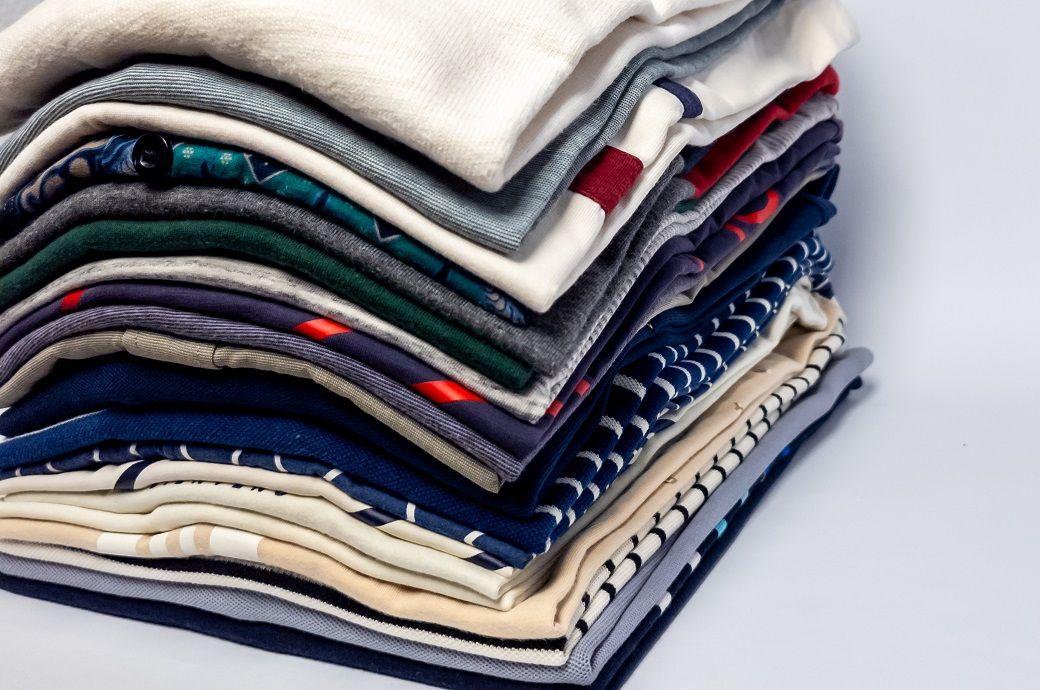
Myanmar’s garment industry, once the beating heart of its export economy, is now reportedly reeling under the weight of US tariffs.
A steep 40 per cent tariff on Myanmar’s garment exports has made its products far less competitive than those from Bangladesh, Cambodia, Indonesia, etc, triggering a sharp decline in US orders.
Beyond tariffs, Myanmar’s apparel sector also faces growing headwinds from political instability, sanctions, poor infrastructure, and global scrutiny over labour rights.
The 40 per cent tariff, slapped on Myanmar, marking a slight reduction from an earlier proposed 44 per cent, has made its products far less competitive, particularly in the face of rising competition from countries like Vietnam, Bangladesh, Cambodia, Indonesia, Malaysia, etc, which enjoy lower—or in some cases, no—tariffs.
For an industry that has already been struggling to stay afloat due to various reasons, the new tariff has come as a hammer blow, compounding an already fragile situation, as per many within the industry.
It may be mentioned here that political instability, for long, remained a major concern area, with the military-led government facing growing international condemnation and sanctions.
The country also reportedly suffers from poor infrastructure, power outages, and limited access to financing, all of which make it a difficult place to do business. On top of that, questions around labour rights and corporate governance are also putting Myanmar’s garments on the radar of the increasingly discerning Western consumers.
In Europe, especially in markets like Germany and the UK, there is reportedly a growing movement to exclude Myanmar-made products due to concerns over labour practices and human rights, even as the International Labour Organization (ILO) also invoked Article 33—its most serious enforcement measure—for Myanmar’s alleged failure to comply with international labour standards.
And now there’s the additional 40 per cent tariffs imposed by the US. The result, as industry insiders claim, notable reduction in fresh orders, pushing factories to downsize, cut shifts, lay off workers, and factory closures in many cases.
In Yangon’s industrial zones, the slowdown is palpable. As per reports, at least six factories have shut down since August, while many others are operating at reduced capacity to survive the downturn.
The Myanmar Garment Manufacturers Association (MGMA) reportedly revealed that by August, 56 of its 589 member factories had suspended operations entirely, while the Federation of General Workers Myanmar (FGWM) has reportedly held the US tariff responsible for triggering the factory closures, pointing out that the increased costs have made it impossible for producers to remain viable.
The ripple effects are hitting the workforce hardest—particularly women, who make up the vast majority of the garment sector’s employees. For years, the industry has been one of the few reliable sources of income and empowerment for women in Myanmar. Now, thousands are reportedly finding themselves out of work as factories shutter or scale back, and those still employed are facing shorter working hours, slashed overtime, and shrinking wages.
So, even if the sector remains a vital part of the country’s economy, with every factory that shuts down and with every worker who loses their job, Myanmar’s path back to recovery seems increasingly difficult.
Fibre2Fashion News Desk (DR)









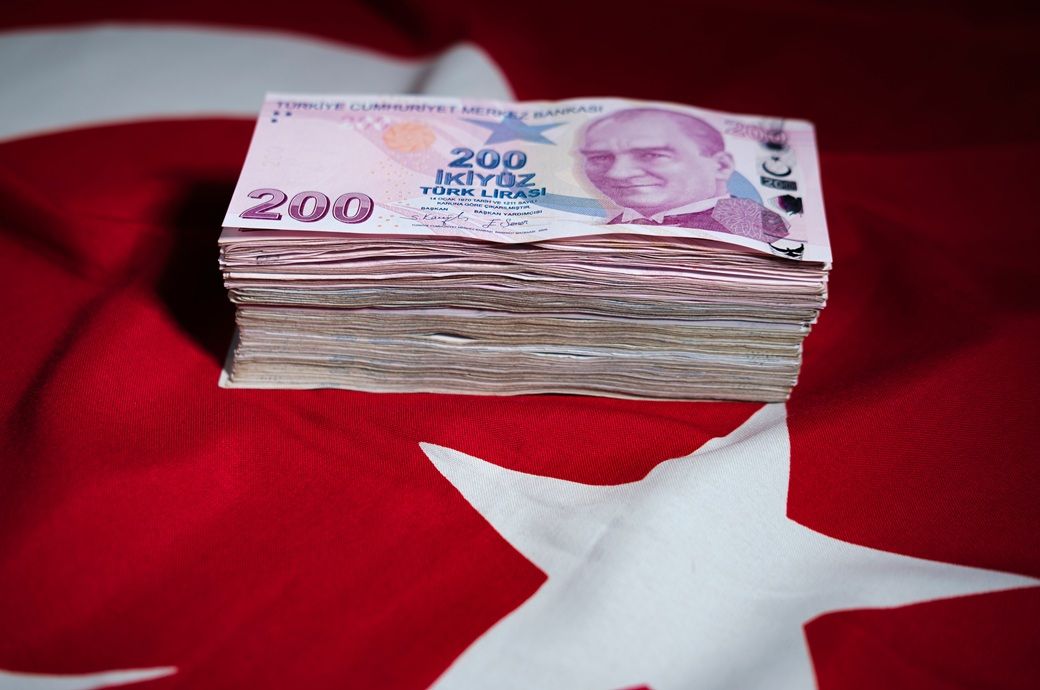
Current account excluding gold and energy indicated net deficit of $3.9 billion, while goods saw a deficit of $9.5 billion.
Turkiye recorded a current account deficit (CAD) of $9.6 billion in March, the country’s central bank said.
Treasury and Finance Minister Mehmet Simsek said the CAD is expected to widen this year, due to high energy and non-energy commodity prices.
Simsek said the deterioration is likely to remain temporary and manageable, thanks to stronger macroeconomic fundamentals and policy gains.
According to annualised data, current account deficit recorded as $39.7 billion (2.6 per cent of gross domestic product) in March, while the goods deficit recorded as $77.8 billion.
Simsek said the deterioration is likely to remain temporary and manageable thanks to stronger macroeconomic fundamentals and policy gains, domestic media outlets reported.
Turkiye is heavily reliant on imported energy, whose prices spiralled due to the Middle East conflict.
Simsek said elevated global commodity prices would put pressure on the external balance, but emphasised that the government’s economic programme had improved resilience against such shocks.
He said foreign direct investment (FDI) inflows totalled $1 billion in March, bringing annualised foreign direct investment to $12.6 billion.
The new investment incentive package under discussion in parliament now is expected to strengthen the country’s financing structure and support long-term capital inflows, he added.
Fibre2Fashion News Desk (DS)

During the first quarter of ****, the UK’s imports of textile fabrics eased down *.** to £*,*** million (~$*,*** million), against £*,*** million in January-March **** but slightly higher from £*,*** million in the fourth quarter of ****. Its imports of fibre were noted at £** million (~$***.** million) steady as £** million in Q*, **** but slightly lower than £** million in Q*, ****.
During the third month of this year, the country’s clothing imports declined *.** per cent to £*.*** billion (~$*.*** billion), compared with £*.*** billion in March ****. But the inbound shipment was slightly higher month on month compared with £*.*** billion in February ****.
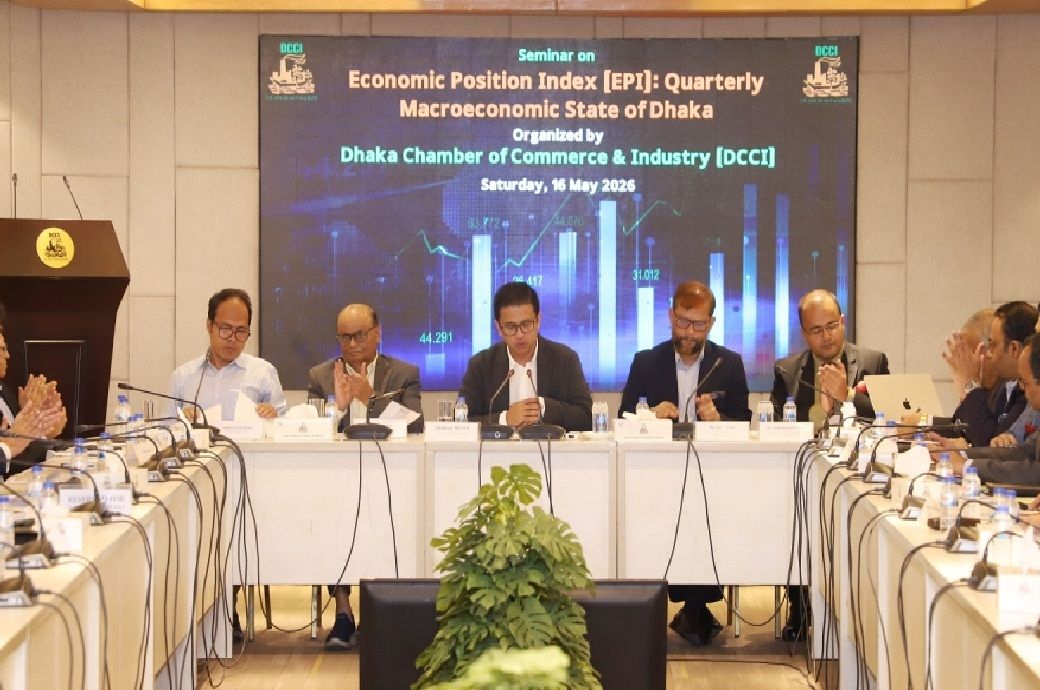
Higher rents, utility bills and fuel prices are eating away at already thin profit margins, it found.
High inflation is cutting deep into Bangladesh consumer spending, with weak demand turning one of the biggest concerns for businesses, DCCI said.
Higher rents, utility bills and fuel prices are eating away at already thin profit margins.
DCCI’s economic position index revealed that consumers have sharply reduced spending as the cost of living continues to rise.
SMEs are feeling the pressure the most.
The chamber’s economic position index (EPI) revealed that consumers have sharply reduced spending as the cost of living continues to rise, putting pressure on retailers, transport operators and other service providers.
Small and medium enterprises (SMEs) are feeling the pressure the most as they struggle to manage higher operating costs without losing customers.
Businesses also cited difficulties in obtaining bank loans, while delays in licensing and other regulatory procedures are adding to costs.
The DCCI report identified a shortage of skilled workers, particularly in technical and customer service roles, as another challenge for the sector.
The country’s inflation rose to 9.04 per cent in April from 8.71 per cent in March, according to official statistics.
Fibre2Fashion News Desk (DS)


Turkiye’s current account deficit expected to widen in 2026: Minister

UK’s clothing imports fall 3% in Q1, sharply lower than Q4 2025
RBI sees no signs of excess credit risk, keeps countercyclical capital buffer inactive

-

 Entertainment6 days ago
Conan O’Brien hat tricks as Oscar host
-

 Tech1 week ago
Could Contact-Tracing Apps Help With the Hantavirus? Not Really
-

 Fashion5 days ago
Italy’s Zegna Group’s Q1 growth boosted by strong organic performance
-

 Sports1 week ago
Bobby Cox, legendary Atlanta Braves manager who led 1995 World Series champions, dead at 84
-

 Entertainment1 week ago
Martin Short: Facing tragedy with joy
-

 Entertainment1 week ago
Tom Brady gets back at Kevin Hart during Netflix roast
-

 Sports1 week ago
Jacob Fatu unleashes vicious assault on Roman Reigns after World Heavyweight Championship loss at WWE Backlash
-

 Entertainment1 week ago
Martha Stewart: How to make an omelet