

Business
Tata Motors, Maruti, Ashok Leyland, Hero: In Auto Stocks Rally, Optimism Over PM Modi’s GST Move


Last Updated:
Shares of auto majors, including Hero MotoCorp, Maruti Suzuki India, Ashok Leyland, TVS Motor and Bajaj Auto, rally 5-8% amid expectations of a GST rate cut.

Tata Motors rose nearly 3% on Monday.
The domestic equity market surged on Monday following Prime Minister Narendra Modi’s announcement on GST reforms, S&P Global’s rating upgrade on India, and other positive global cues. While the benchmark indices, the BSE Sensex and the NSE Nifty, are up by over 1.3% each, the automobile stocks are fuelling the rally the most, with the Nifty Auto Index trading higher by an impressive 4.5%.
Shares of auto majors, including Hero MotoCorp, Maruti Suzuki India, Ashok Leyland, TVS Motor and Bajaj Auto, rallied 5-8% on Monday morning amid expectations that the GST rate on vehicles could be reduced from 28% to 18%.
Maruti Suzuki on August 18 hit its all-time high of Rs 14,048 apiece on the NSE, which is up nearly 8.7% compared with the previous close. Ashok Leyland was up by 7.7% at Rs 131.25, Hero MotoCorp was trading higher by 6.7% at Rs 5,024, TVS Motor Company rose 6.8% to Rs 3,226.8, Hyundai Motor India surged by 8.39% to Rs 2,428 apiece on the NSE.
Tata Motors also rose nearly 3% on Monday to Rs 685 in morning, while Mahindra & Mahindra was up by 4.5% at Rs 3,412. Bajaj Auto was trading higher by 3.7% at Rs 8,521.
Prime Minister Narendra Modi in his Independence Day Speech during the weekend announced a major overhaul in the Goods and Services Tax (GST) structure. Though he did not announce any details, reports said the Centre is considering scrapping the current 12% and 28% GST slabs, realigning most items into the 5% and 18% categories. Certain sin or luxury goods may be placed in a new 40% bracket.
The Centre is reportedly expected to lower the GST on passenger vehicles (PVs) and two-wheelers, enhancing their affordability quotient. Currently, two-wheelers are taxed at 28%. Analysts believe a cut to 18% is highly probable.
Brokerage Notes
Global brokerage firm Jefferies in its note said, “All the listed 2W OEMs – Bajaj, Hero, TVS, and Eicher – should benefit from this cut. We see a low probability of differential GST between entry-level and premium 2Ws.”
In passenger vehicles, small cars currently face an effective tax of 29-31% including compensation cess, making Maruti Suzuki one of the biggest potential beneficiaries of a rate cut. SUVs, however, are taxed at 45-50%, a rate Jefferies said is unlikely to change.
“Hybrid vehicles attract a similar GST rate as ICE vehicles, compared with 5% for EVs. Any reduction in GST on hybrids could be positive for Maruti,” the brokerage added.
Commercial vehicles, also taxed at 28%, may see a reduction to 18%. Ashok Leyland, along with Tata Motors and Eicher Motors, would be key gainers in such a scenario, Jefferies said.
Domestic brokerage firm Motilal Oswal Financial Services in its report on August 18 said automobiles will be one of the key segments that stand to benefit from GST rationalisation.
Passenger vehicle makers Maruti Suzuki and Tata Motors, currently paying 28% GST, are expected to benefit significantly if rates are lowered to 18%. Commercial vehicle maker Ashok Leyland may also see demand tailwinds as GST on trucks and buses comes down to 18% from the current 28%, said Motilal Oswal in the report.
Arun Agarwal, vice-president (fundamental research) of Kotak Securities, said, “The potential GST cuts for the automotive products to 18% would lower on-road prices across segments. We believe lower prices would stimulate demand recovery, and the impact would be more in the mass-market segment. Auto manufacturers (OEM) would gain from higher revenue and potentially higher margin, resulting in possible earnings upgrade.”
Auto ancillaries would also gain from the potential GST cut. However, the impact would vary depending on geographical exposure. Auto ancillary companies having higher revenue exposure in the domestic market stands to benefit more, whereas the gains for global suppliers would be lower given higher export exposure and tariff-related uncertainty, he added.
The government is reportedly planning to propose a simplified two-slab GST structure of 5% and 18%, replacing the current four-tier system of 5%, 12%, 18% and 28%.

Haris is Deputy News Editor (Business) at news18.com. He writes on various issues related to personal finance, markets, economy and companies. Having over a decade of experience in financial journalism, Haris h…Read More
Haris is Deputy News Editor (Business) at news18.com. He writes on various issues related to personal finance, markets, economy and companies. Having over a decade of experience in financial journalism, Haris h… Read More
view comments
Read More

A major beauty brand is enticing all its UK employees to earn a cut of any sales they drive on TikTok Shop in a bid to cash in on the rapid rise of the influencer-led beauty market.
MAC Cosmetics is kitting out shops with mini studios for its makeup artists to host live shopping shows when it launches on TikTok Shop on April 2.
It says it is the first major beauty brand in the UK to give every member of staff the opportunity to opt in as an affiliate and sell on the social media platform.
Those who become faces of the live channel will be offered a percentage of any sale that they drive on TikTok Shop.
The makeup artists will be encouraged to host tutorials and product demonstrations, with items available to buy directly through the app.
MAC, which is part of the Estee Lauder group of beauty brands, said the first live shopping show will stream from its Carnaby Street store in London.
It is hoping that tapping into social media shoppers will also bring more people into its more than 230 standalone shops and concessions.
TikTok Shop burst onto the UK’s retail scene in 2021 and, in recent years, has become a significant force in the world of e-commerce, reaching millions of people who use the video-sharing app and converting many into shoppers with a few taps.
Many content creators can earn a commission on products that they sell through the app when they co-operate with a brand or retailer.
Major retailers like Marks & Spencer and Sainsbury’s are now selling products on the marketplace alongside thousands of smaller businesses and brands.
The app has particularly been part of a boom for the beauty market, with beauty sales on the platform soaring by 60% year-on-year in 2025, fuelled by trends such as Korean skincare.
But the spread of in-app shopping has also prompted concerns about so-called impulse buying, particularly among younger consumers who are often targeted by influencer-led marketing.
Sara Staniford, the vice president and general manager of MAC in the UK and Ireland, said: “MAC has always been driven by our artists and the communities they create.
“TikTok Shop gives us an exciting new way to celebrate that creativity and connect with beauty lovers in real time.
“It puts our artists exactly where they belong, at the centre of the conversation.”

Tax systems designed primarily for extraction eventually undermine revenue due to weak economic growth
A flat tax would eliminate much of the inefficiency from Pakistan’s tax system by both broadening the tax base and significantly lowering the highest marginal tax rates. photo: file
ISLAMABAD:
The federal budget for next fiscal year (2026-27) will be under preparation after Eid holiday. Our policymakers would face an uphill task to balance the budget amidst the 37-month $7 billion Extended Fund Facility (EFF) of the International Monetary Fund (IMF) and shockwaves of the war imposed on Iran by the US and Israel in circumstances.
Regional war has intensified geopolitical risk, commodity markets remain volatile and global financial conditions continue to tighten. For a country already navigating fiscal consolidation under an IMF programme, the margin for policy error has become extremely narrow.
In such moments, governments often resort to familiar instruments: higher tax rates, new levies and additional withholding measures designed to secure immediate revenue. Pakistan’s experience over several decades suggests that this approach rarely produces durable fiscal stability. Slower investment, weaker economic activity and a shrinking tax base often follow temporary revenue gains.
A more sustainable framework for fiscal policy is outlined in the PIDE-PRIME Tax Reforms Commission report titled “Revenue with Growth”. The report argues that Pakistan’s tax system must move away from narrow revenue extraction towards a structure that supports economic expansion. Simplification of taxes, encouragement of investment, protection of exports and modernisation of tax administration form the central pillars of this approach. In the difficult environment facing the country today, this framework offers a practical guide for budget strategy.
Escaping high-tax, low-growth trap
Pakistan’s fiscal dilemma has long been structural. Revenues remain modest relative to the size of the economy while expenditures – particularly debt servicing and defence – continue to rise. Periods of geopolitical tension naturally intensify these pressures.
Historically, the response has been to increase taxes on existing taxpayers rather than expand the underlying economic base. This pattern has created a cycle in which weak growth leads to revenue shortfalls, tax rates are increased to meet fiscal targets, higher taxes suppress investment and economic activity, and slow growth again produces fiscal stress.
The PIDE-PRIME report challenges this cycle by emphasising a basic principle of public finance: tax systems designed primarily for extraction eventually undermine the revenue they seek to maximise. Breaking this pattern requires a shift towards policies that expand the productive economic activity.
Simplifying complex tax system
Pakistan’s tax structure has gradually evolved into a complicated web of withholding taxes, presumptive regimes and special levies such as super tax and turnover taxes. Such complexity raises compliance costs, increases litigation and discourages documentation of economic activity. Simplification therefore becomes the logical starting point for reform.
A tax structure with moderate rates applied to a broader base is more likely to encourage compliance while reducing administrative disputes. Predictability is particularly important in the present environment where businesses already face uncertainty from global geopolitical developments.
Encouraging investment and industrial expansion
Economic growth ultimately depends on investment. Yet Pakistan’s tax policy often raises the cost of investment through high duties on machinery and industrial inputs.
The PIDE-PRIME report recommends removing regulatory duties and additional customs duties and allowing zero-rating of plant, machinery and key intermediate goods. Such measures would reduce the cost of capital investment and support technological upgrading within industry.
For the upcoming budget, this principle carries special significance. Periods of regional instability often lead businesses to delay expansion plans. Clear policy signals encouraging industrial investment can counter that hesitation and strengthen confidence in the economy.
Protecting export competitiveness
Exports remain central to Pakistan’s economic resilience. Yet exporters frequently face liquidity constraints arising from withholding taxes, delayed refunds and administrative bottlenecks.
Budget policy should therefore focus on removing distortions affecting export sectors and ensuring efficient refund mechanisms. Strengthening export competitiveness improves foreign exchange earnings and reduces pressure on the balance of payments – an objective that becomes even more critical during periods of global economic turbulence.
Modernising tax administration
Tax reform cannot succeed without administrative reform. The PIDE-PRIME report emphasises the importance of digitisation, automation and reduced discretionary authority in tax administration.
Modern data-driven systems can minimise direct interaction between taxpayers and officials, reduce opportunities for rent seeking and improve voluntary compliance. Administrative credibility becomes especially important in times of economic stress when taxpayers already face higher costs and uncertainty.
Fiscal discipline and credibility
Credible fiscal management must accompany a growth-oriented tax system. Citizens are more willing to comply with taxation when public expenditures demonstrate discipline and transparency.
The upcoming budget should therefore combine tax reform with efforts to rationalise non-development spending and improve efficiency in public sector operations. Fiscal credibility strengthens the relationship between the state and taxpayers and supports long-term revenue mobilisation.
Turning crisis into reform
Pakistan’s economic history shows that periods of crisis often create the political space for structural reform. The present geopolitical and economic pressures therefore offer an opportunity to rethink fiscal strategy.
Instead of repeating the familiar pattern of incremental tax increases, policymakers could use the upcoming budget to initiate transition towards a growth-oriented tax system. Simplifying taxes, encouraging investment, strengthening exports and modernising administration would gradually expand the economic base and improve long-term fiscal stability.
In uncertain times, the most effective fiscal policy is not the one that extracts the largest revenue in the short term. It is the one that strengthens the productive capacity of the economy and ensures sustainable revenue in the years ahead.
The writer is the Advocate Supreme Court, Adjunct Faculty at LUMS, member Advisory Board, visiting Senior Fellow of Pakistan Institute of Development Economics and holds LLD in tax laws
Business
Coal gasification to boost energy security and cut imports, says G Kishan Reddy – The Times of India
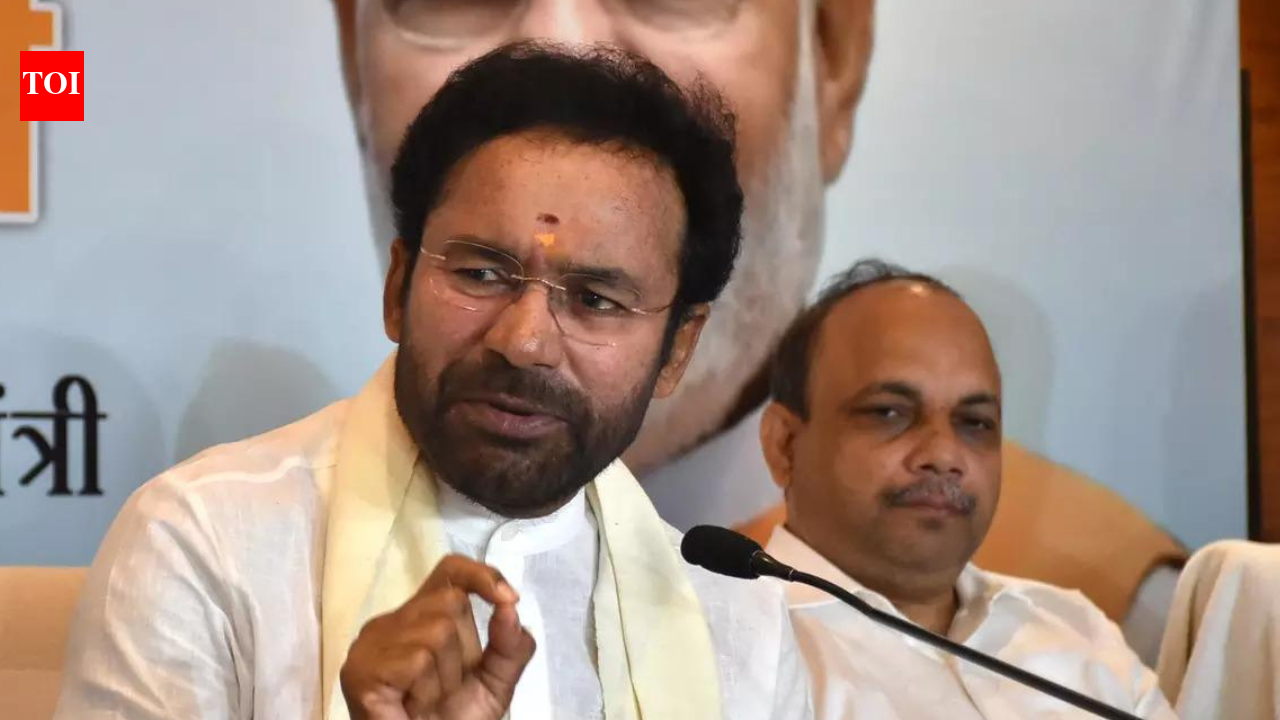
Union coal and mines minister G Kishan Reddy on Sunday said coal gasification will play a critical role in enhancing India’s energy security, reducing import dependence and supporting industrial growth.The renewed push has gained urgency amid the ongoing Middle East conflict, which has led to a surge in global energy prices.Speaking at the Bharat Electricity Summit 2026, the minister described coal gasification as a transformative technology that converts coal into syngas, which can be used to produce cleaner fuels, chemicals, fertilisers and hydrogen, as reported by PTI.He said the approach would enable more efficient and sustainable utilisation of domestic resources while strengthening economic resilience.Reddy highlighted India’s dependence on energy imports, noting that the country imports about 83 per cent of its crude oil requirements, 50 per cent of natural gas and more than 90 per cent of methanol and fertilisers, making energy security a strategic priority.To promote adoption of the technology, the Centre has launched the National Coal Gasification Mission with a target of achieving 100 million tonnes of coal gasification by 2030.“…. An incentive framework of Rs 8,500 crore has been introduced to support public and private sector projects, with several large-scale initiatives already underway and investments exceeding Rs 64,000 crore in the pipeline,” he said.The minister also pointed to advanced technologies such as Underground Coal Gasification, which can help tap previously inaccessible reserves while lowering environmental impact.Calling for greater collaboration, Reddy said coal gasification spans multiple sectors including power, oil and gas and fertilisers, and requires a coordinated ecosystem involving industry, academia, start-ups and research institutions.He reiterated the government’s commitment to streamlined approvals, supportive policies and incentives to encourage early participation and investment.Expressing confidence in India’s potential, the minister said that with innovation, indigenous technology development and coordinated efforts, the country can emerge as a global leader in clean coal technologies while advancing energy security, sustainability and self-reliance.

MAC entices staff to transform into TikTok live shopping hosts

Oil prices surge after Trump issues Iran ultimatum

Tom Holland supports Zendaya for ‘The Drama’ before premiere

Tips and Advice for Buying Used or Refurbished Electronics

UAE savings strategies 2026 explained: Best apps, tools, budget rules and smart money hacks to beat rising cost of living in emirates – The Times of India

Iran threatens US-linked oil facilities after Kharg Island bombed

-
 Tech1 week ago
Tips and Advice for Buying Used or Refurbished Electronics
-
Business1 week ago
UAE savings strategies 2026 explained: Best apps, tools, budget rules and smart money hacks to beat rising cost of living in emirates – The Times of India
-
 Politics1 week ago
Iran threatens US-linked oil facilities after Kharg Island bombed
-

 Sports1 week ago
Japan suffers shocking collapse to Venezuela in World Baseball Classic
-

 Politics1 week ago
How can US get out of Iran war?
-

 Entertainment1 week ago
Strategic oil stocks to be released ‘immediately’ in Asia and Oceania: IEA
-

 Entertainment1 week ago
Iran at war
-

 Sports1 week ago
College Basketball Invitational abruptly cancels 2026 tournament