

Business
Taxpayer left with hefty bill from high UK borrowing costs – report

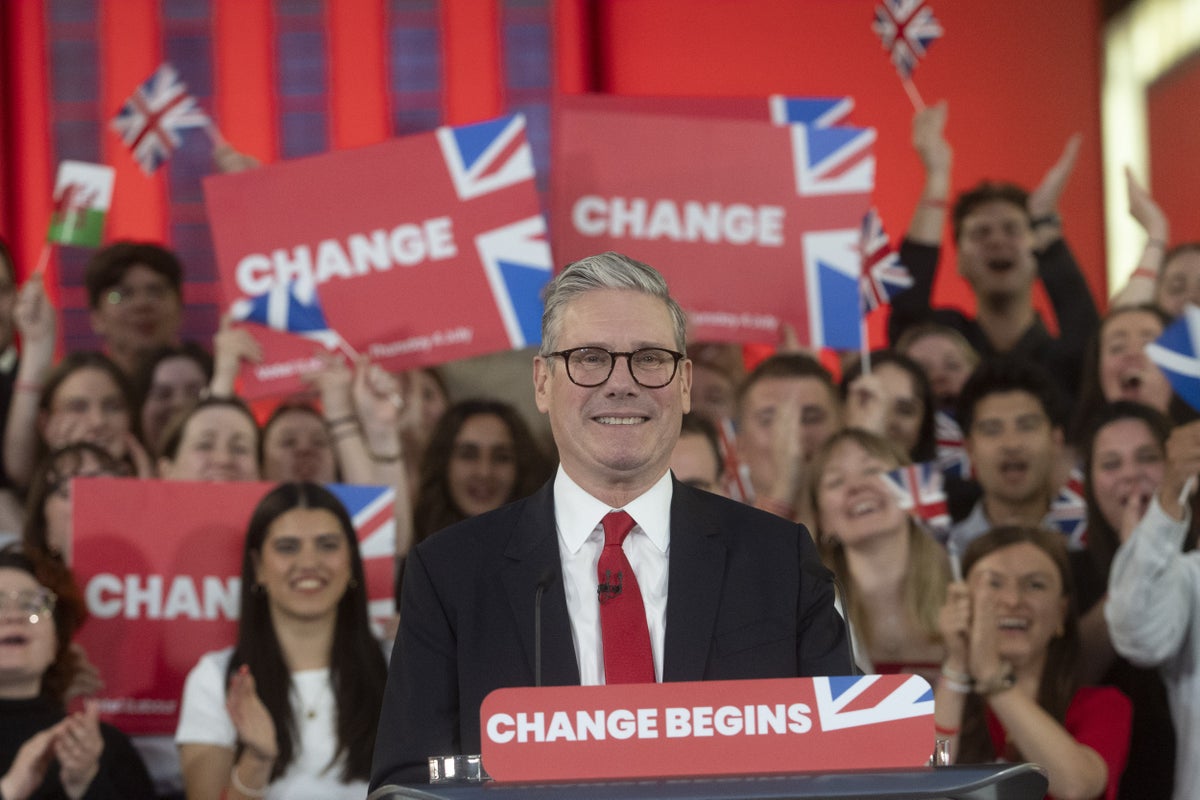
High government borrowing costs since Labour won the election have cost the taxpayer up to £7 billion amid concerns over the state of the UK’s finances, but this “premium” is showing signs of coming to an end, according to a report.
The Institute for Public Policy Research (IPPR) found the UK had seen “uniquely high” borrowing costs when compared to other advanced countries, with yields on government bonds – also known as gilts – having risen steadily since Labour came into power in the summer of 2024.
Yields on gilts, which move counter to the price of bonds, were up to 80 basis points higher than competitors since the election, costing the taxpayer between £2 billion and £7 billion a year, the IPPR said.
Repeated bouts of sell-offs had put gilts under pressure, it found, calculating that, at the peak, UK Government borrowing costs were six times more expensive than before the pandemic.
Former prime minister Liz Truss and her disastrous mini-budget saw gilts yields surge in September 2022 and they have come under renewed pressure over the past year as concerns over UK borrowing resurfaced.
At the recent high point, the yields on long-dated 30-year gilts had risen by 4.1 percentage points since 2022, which is 150 basis points more than the US and 100 basis points higher than for the eurozone, according to the IPPR.
The report said this was likely to have been driven by market doubts over the Government’s plans to bring down UK borrowing and whether they could be delivered.
The Bank of England also added further pressure to gilts with its programme to sell off its stock of government bonds at a faster pace than other central banks, the IPPR added.
But gilt yields have eased back in recent months – noticeably since the Chancellor’s pre-budget speech and falling further since the fiscal event on November 26, when she outlined a series of tax hikes and moves to repair the public finances.
Government borrowing is now forecast to halve over the course of this parliament.
William Ellis, senior economist at the IPPR, said: “The premium on UK borrowing costs appears to be easing, showing that markets are responding to growing confidence in the Government’s fiscal approach.”
With the UK on course to spend £92 billion on interest payments alone this year, the IPPR added that continuing declines in gilt yields could save the taxpayer “billions of pounds in reduced borrowing costs”.
Carsten Jung, associate director for economic policy at the IPPR, said: “With clear, credible fiscal plans, the UK could be a star performer in the G7 – and simply reassuring markets that we’ll stick to those plans could save billions.
“The Bank of England also needs to pull its weight. Actively selling government bonds is adding unnecessary pressure to the gilt market. It should stop – just as every other major central bank has.”
A Treasury spokesman said: ““As the Chancellor has said her fiscal rules are non-negotiable and will get borrowing down while supporting investment.
“Borrowing this year is set to be the lowest for six years as a share of GDP, we’re cutting borrowing more than any other G7 country, and we’ve doubled headroom on the stability rule to over £21.7 billion to drive costs down further.”
The Bank of England has been approached for comment.
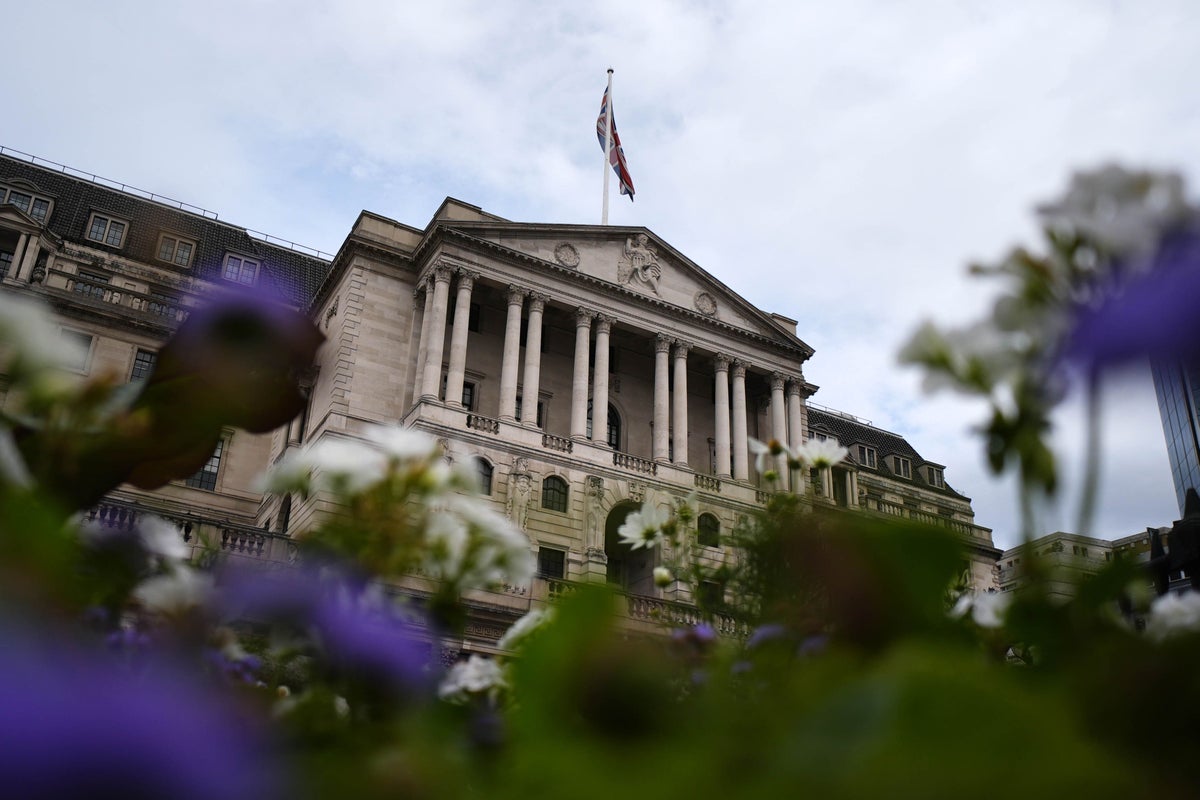
Britain’s long-term borrowing costs have surged to their highest level since 1998, driven by escalating inflation worries and political uncertainty ahead of this week’s local elections.
On Tuesday afternoon, the yield on 30-year UK government bonds, known as gilts, hit a 28-year peak, climbing 0.14 percentage points to 5.798%.
This increase in yield signifies a drop in bond prices, as the two move inversely. Consequently, the government faces higher expenses when seeking to borrow from financial markets.
The yield on 10-year gilts also rose, lifting by 0.15 percentage points to 5.122%, though this remains below recent highs reported last month.
In contrast, US 10-year treasury notes were flat on Tuesday, despite a steady increase over recent weeks.
Gilt yields have grown amid growing predictions that the conflict in Iran will drive higher inflation due to spiking energy costs, which is then likely to cause the Bank of England to increase interest rates.
City traders currently expect the central bank to vote for at least two interest rate hikes in the coming months, despite the Bank maintaining the current rate of 3.75% last week.
The rise in gilt yields means the Government will face higher debt interest costs, providing more strain on the Chancellor’s spending powers.
It comes amid a backdrop of significant pressure on Prime Minister Sir Keir Starmer in the run-up to the UK local elections.
The pound was broadly flat at 1.353 versus the dollar on Tuesday.

The FDA blocked the publication of several studies supporting the safety of vaccines against Covid and shingles in recent months, a Health and Human Services Department spokesperson confirmed on Tuesday.
It’s the latest effort by the Trump administration to challenge safe and effective shots in the U.S. and make them harder to access for some patients. Under Health and Human Services Secretary Robert F. Kennedy Jr., a prominent vaccine skeptic, federal health agencies have softened Covid shot recommendations, cut back research on vaccine development and attempted to overhaul the childhood immunization schedule, among other efforts.
FDA scientists worked with data firms to analyze millions of patient records for the studies, which found side effects of the shots to be rare, the New York Times first reported on Tuesday.
In October, the scientists were directed to withdraw two Covid shot studies that had been accepted for publication in medical journals, the Times reported. In February, top FDA officials did not sign off on submitting study abstracts on Shingrix, a shingles vaccine, to a drug safety conference, the paper added.
The HHS spokesperson told CNBC the recent studies were “withdrawn because the authors drew broad conclusions that were not supported by the underlying data.”
“The FDA acted to protect the integrity of its scientific process and ensure that any work associated with the agency meets its high standards,” they added.
When asked about the shingles vaccine research, the HHS spokesperson said the design of that study “fell outside the agency’s purview.”
Business
Spirit starts monthslong process of dismantling airline after biggest collapse in a generation

Spirit Airlines‘ more than three-decade run ended over the weekend, but on Tuesday it was just starting the monthslong process of dismantling the company after the biggest U.S. airline collapse in a generation.
Spirit and its stakeholders were in bankruptcy court in White Plains, New York, to start that process, which will take months. The hearing included discussions about airport landing fees, aircraft and staffing.
The carrier filed a cumulative wind-down budget of around $217 million, though that number could change.
The budget went out to February 2028. It included more than $52 million in employee costs through July and another more than $52 million for aircraft-related expenses.
The airline had 59 Airbus A320s in service and 63 in storage, as well as 37 of the larger A321s in service, and 13 of them in storage, according to aviation data firm Cirium. More than three-quarters of its fleet was leased.
Spirit shut down operations after years of struggles, most recently from heavy debt loads and a surge in costs.
Spirit’s lawyer, Marshall Huebner of Davis Polk, told a bankruptcy court on Tuesday that the jump in jet fuel prices following the U.S.-Israel attacks on Iran in February left the carrier with no choice but to shut down. That added $100 million in incremental costs for Spirit in March and April, he said.
U.S. bankruptcy court in White Plains, N.Y.
Leslie Josephs/CNBC
Talks for a potential government bailout in the form of a $500 million loan that could have given the government an up to 90% stake in Spirit fell apart late last week, and the carrier officially shut down at 3 a.m. ET on Saturday.
Spirit passengers scrambled to rebook reservations. American Airlines, JetBlue Airways, Southwest Airlines, United Airlines and others said they have flown tens of thousands of Spirit customers who were stranded by the collapse.
Spirit had flown about 50,000 people in the day leading up to its closure. The airline said about 17,000 direct and indirect employees lost their jobs.
“The closing of Spirit Airlines is a sad and unfortunate event that adversely affects many parties, and that’s particularly true for the thousands of folks who are Spirit employees and families who depend on them,” the presiding judge, Sean Lane, said at Tuesday’s hearing.
“The stress level for these employees and affinities is very high, and they likely have many questions,” he continued. “Hopefully there’ll be some information discussed today to provide some answers to some of those questions, or provides information about where to get those answers. Bankruptcy can be a very difficult process, and today is a sad example of that.”

Long-term borrowing costs in UK reach 28-year high amid rising inflation

Jimmy Kimmel roasts Donald, Melanie Trump even after warning

Telehealth Abortion Is Still Possible Without Mifepristone

-

 Tech1 week ago
A Brain Implant for Depression Is About to Be Tested in Humans
-

 Sports1 week ago
Pro wrestling star Steph De Lander reveals how colleague’s advice helped lead her to title triumph at ACW
-

 Tech1 week ago
Almost 90% of women leave tech industry within 10 years | Computer Weekly
-
 Business1 week ago
‘I had £20,000 stolen and had to fight a 13-month fraud reporting rule to get it back’
-

 Entertainment1 week ago
Norway joins Type 26 Frigate Programme to boost NATO naval power
-
 Business6 days ago
PSX plunges over 4,800 points | The Express Tribune
-

 Entertainment1 week ago
Melania Trump says ABC should ‘take a stand’ on late-night host Kimmel
-
 Tech1 week ago
This Ambitious Laptop Doesn’t Leave Much Room for Your Hands